

Quick Summary
Urban consumers are changing the way food is purchased, consumed, and delivered, creating new demands for food packaging. Smaller households, busy lifestyles, grab-and-go eating, food delivery services, and growing health awareness are driving demand for packaging that is portable, portion-controlled, visually appealing, and delivery-friendly. At the same time, sustainability expectations are pushing brands toward more recyclable and resource-efficient solutions. As urbanization continues worldwide, food packaging formats are evolving to better support convenience, freshness, storage efficiency, and modern consumer lifestyles.
Introduction
Urban life is changing the way people eat, and as eating habits evolve, food packaging is evolving with them.
Over the past decade, cities around the world have experienced rapid growth in food delivery, convenience retail, meal-prep services, and grab-and-go dining. Consumers are spending less time preparing meals at home and more time eating in offices, during commutes, or between daily activities.
These changes are creating new expectations for food packaging. Containers are no longer designed only to hold food—they must help consumers carry, store, transport, reheat, and enjoy meals wherever they happen to be.
For food brands, understanding urban consumer behavior has become just as important as understanding the food itself.
The City Has Become the New Dining Room
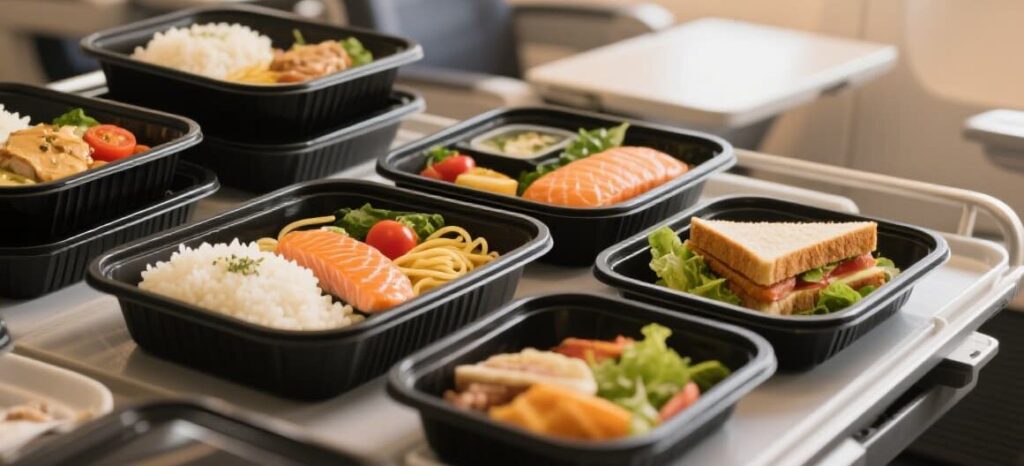
Traditionally, meals were consumed primarily at home or in restaurants. Today, urban consumers eat in a much wider range of locations.
A breakfast sandwich may be eaten on a train. A lunch box may be consumed at a desk. A prepared dinner may arrive through a delivery app and be reheated later in a small apartment.
Because food is now consumed in so many different environments, packaging has become part of the dining experience.
| Consumption Location | Packaging Requirement |
|---|---|
| Office | Easy opening and reheating |
| Public transportation | Leak resistance |
| Outdoor spaces | Portability |
| Delivery services | Structural strength |
| Small apartments | Stackability and storage efficiency |
Packaging that performs well in one environment may not work in another. Urban consumers expect a package to adapt to their lifestyle rather than forcing them to adapt to the package.
Why Traditional Packaging Formats No Longer Fit Urban Lifestyles
Many packaging formats were originally developed for dine-in restaurants or traditional retail environments.
However, modern urban lifestyles create new challenges.
Consumers increasingly want meals that are:
- Easy to transport
- Easy to store
- Easy to reheat
- Easy to eat
- Easy to dispose of
At the same time, food itself has become more complex.
A typical urban lunch may include rice, vegetables, protein, side dishes, sauces, and soup. Placing all of these items into a single container can result in mixed flavors, compromised textures, and a less enjoyable eating experience.
This is why packaging formats are shifting away from simple containers toward more specialized solutions that support both food quality and convenience.
The Rise of Compartment Packaging in Urban Foodservice
One of the most visible responses to urban eating habits is the growth of compartment food packaging.
Consumers increasingly expect meals to remain organized from kitchen to consumption.
For foodservice operators, compartment containers help preserve food presentation while reducing the risk of flavor transfer and moisture migration.
This format has become especially popular in:
- Bento meal programs
- Corporate catering
- Meal-prep services
- Convenience store meals
- School lunches
- Healthy eating concepts
Different ingredients can be separated while remaining within a single package, making the meal more attractive and easier to consume.
For urban consumers who often eat away from traditional dining environments, this added organization significantly improves the overall dining experience.
Case Study: How DASHAN’s Multi-Compartment Containers Address Urban Meal Trends
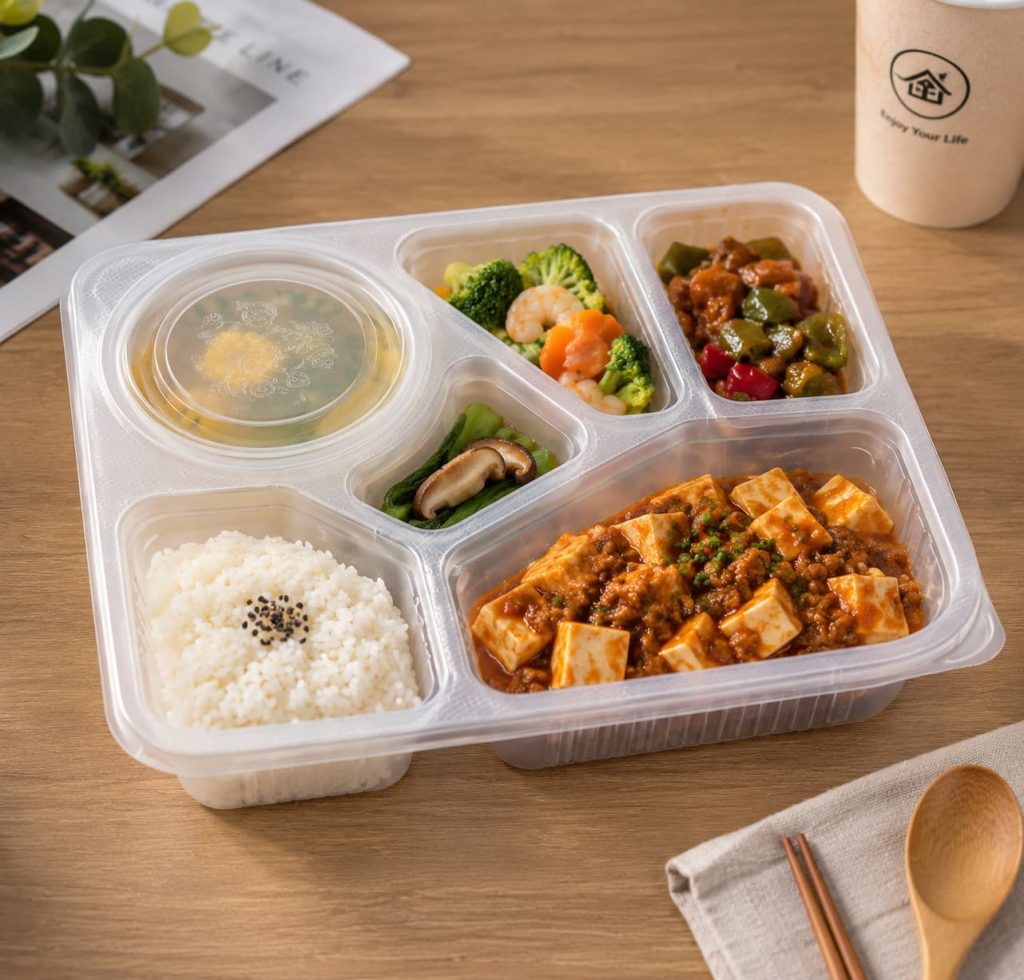
Urban meal programs require packaging that balances convenience, presentation, and operational efficiency.
To meet these requirements, DASHAN has developed multi-compartment PP food containers designed specifically for modern foodservice applications.
Better Meal Organization
A six-compartment meal tray allows different foods to remain separated throughout transportation and storage.
For example:
- Rice can remain dry and fluffy.
- Proteins can be stored separately from vegetables.
- Sauces can be isolated to prevent leakage.
- Side dishes maintain their original texture.
- Soup can be packed in a dedicated bowl.
This structure helps preserve food quality while creating a more visually appealing presentation for consumers.
Improved Delivery Performance
Food delivery has become a major part of urban dining.
During transportation, containers may experience vibration, movement, stacking pressure, and frequent handling.
DASHAN’s compartment containers are designed with reinforced structures that help maintain stability throughout the delivery process.
Key advantages include:
- Secure lid fit
- Strong rim design
- Stackability
- Resistance to deformation
These features help reduce leakage risks and improve customer satisfaction.
Suitable for Multiple Food Programs
Urban foodservice operators often serve different meal formats throughout the day.
The same packaging platform can support a wide range of applications.
| Food Program | Packaging Solution |
|---|---|
| Bento meals | PP six-compartment tray |
| Meal prep programs | Multi-compartment containers |
| Corporate catering | Large-capacity meal trays |
| School meals | Organized compartment packaging |
| Food delivery | Leak-resistant meal boxes |
Why PP Materials Continue to Play an Important Role
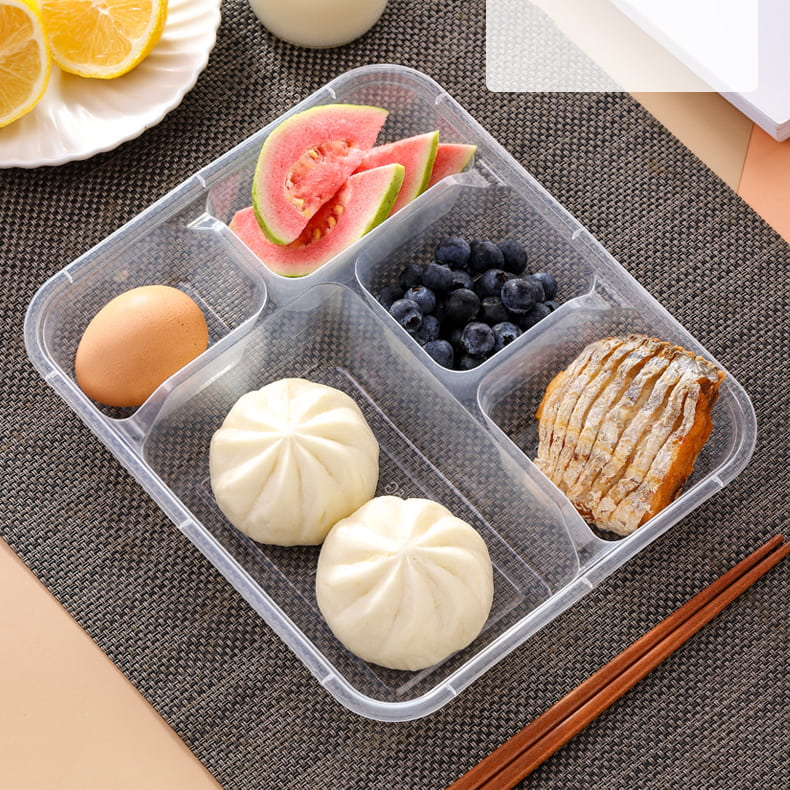
While packaging design is critical, material selection remains equally important.
Urban consumers increasingly expect packaging to withstand transportation and reheating without compromising food quality.
PP (polypropylene) remains one of the most widely used materials for prepared meals because it offers:
- Excellent heat resistance
- Microwave compatibility
- Lightweight durability
- Food-contact safety
- Cost-effective performance
These characteristics make PP particularly suitable for high-volume foodservice programs where operational efficiency and user convenience must work together.
For meal-prep companies, convenience stores, and delivery-focused brands, PP packaging continues to provide a practical balance between functionality and affordability.
The Future of Urban Packaging Will Be Built Around Consumer Behavior
One of the most significant shifts occurring in the packaging industry is a change in design philosophy.
Historically, packaging was developed around products.
Today, successful packaging is increasingly developed around consumer behavior.
Food brands are asking new questions:
- Where will this meal be consumed?
- Will it be delivered?
- Will it be reheated?
- Does it need ingredient separation?
- How much storage space does the consumer have?
The answers to these questions influence packaging structure, size, material selection, and functionality.
As urban populations continue to grow, consumer behavior will become an even more important driver of packaging innovation.
Conclusion
Urban consumers are transforming food packaging in ways that extend far beyond aesthetics.
The growth of delivery services, meal-prep programs, convenience retail, and mobile lifestyles has created demand for packaging that is more functional, organized, and adaptable than ever before.
Compartment packaging, microwave-safe materials, delivery-friendly structures, and space-efficient designs are no longer optional features. They have become essential requirements for modern foodservice operations.
For manufacturers and food brands, understanding how urban consumers live, work, travel, and eat is becoming the foundation of effective packaging design. Companies such as DASHAN are responding to these changes with packaging solutions specifically developed to support the realities of modern urban food consumption.
FAQ
1. How is urbanization influencing food packaging?
Urbanization is changing consumer lifestyles, leading to greater demand for convenience foods, ready-to-eat meals, and food delivery services. Packaging must adapt by becoming more portable, durable, and suitable for modern consumption habits.
2. Why are single-serve packaging formats becoming more popular?
Many urban consumers live in one-person or two-person households and prefer portion-controlled products that reduce food waste and improve convenience. This has increased demand for individual meal trays, snack packs, and beverage containers.
3. How has food delivery changed packaging requirements?
Food delivery requires packaging that can protect food during transportation. Key features include leak resistance, structural stability, food separation, and temperature retention to ensure meals arrive in good condition.
4. Why is portability important for urban consumers?
Many people consume food while commuting, working, or traveling within cities. Packaging must be easy to carry, lightweight, compact, and convenient to use outside the home.
5. How are convenience stores influencing packaging design?
Convenience stores rely heavily on ready-to-eat foods and impulse purchases. Packaging must provide strong shelf appeal, clear product visibility, easy handling, and efficient merchandising.
6. Why is transparency important in modern food packaging?
Consumers often evaluate freshness and quality before making a purchase. Transparent packaging helps showcase ingredients, portion sizes, and product appearance, improving consumer confidence.
7. How do smaller living spaces affect packaging formats?
Urban homes often have limited storage space. Compact, stackable, and space-efficient packaging designs help consumers store food more conveniently while also improving supply chain efficiency.
8. How is sustainability affecting urban food packaging?
Consumers are increasingly concerned about packaging waste and environmental impact. This has encouraged the adoption of recyclable materials, lightweight packaging designs, and recycled-content solutions such as rPET packaging.
Conclusion
Urban consumers are reshaping food packaging formats by changing how, where, and when food is consumed.
The rise of smaller households, grab-and-go eating, food delivery, convenience retail, health-conscious purchasing, and sustainability awareness has created new demands for packaging across the food industry.
Modern packaging must do far more than protect food. It must support convenience, portability, freshness, presentation, and environmental goals while fitting seamlessly into increasingly busy urban lifestyles.
As cities continue to grow and consumer behavior evolves, packaging innovation will remain a key driver of success for food brands, retailers, and packaging manufacturers worldwide.
References
Urbanization & Consumer Trends
- United Nations – World Urbanization Prospects
- World Bank – Urban Development Overview
- OECD – Cities and Urban Development
Consumer Behavior & Food Trends
- McKinsey – The State of Grocery and Consumer Trends
- Innova Market Insights – Food & Beverage Trends
- International Food Information Council (IFIC) – Food & Health Survey
Food Packaging & Sustainability
- U.S. FDA – Food Packaging & Other Substances that Come into Contact with Food
- European Food Safety Authority (EFSA) – Food Contact Materials
- OECD – Global Plastics Outlook
Retail & Convenience Food Markets
Copyright Statement
© 2026 Dashan Packing. All rights reserved.
This article is an original publication by the Dashan Packing team based on industry research, market analysis, and packaging expertise. Unauthorized reproduction, distribution, or copying of this content is prohibited without prior written permission.
Dashan Packing is committed to delivering reliable, original, and professional information for the global food packaging industry.