

Quick Summary
Choosing the right reliable food packaging supplier China is critical for ensuring product quality, compliance, and long-term cost efficiency. This guide explains how to evaluate food packaging manufacturer China options, compare materials like PP, PET, and bagasse, and avoid common sourcing risks such as inconsistent quality and certification issues. It also outlines key steps—from sampling and pricing analysis to production control and logistics—to help buyers build stable, scalable supply chains. Whether you need custom food packaging manufacturer China solutions or wholesale supply, working with an experienced partner like DASHAN can significantly reduce risk and improve operational performance.
Introduction: Why Choosing the Right Supplier in China Matters More Than Ever
Over the past decade, China has become the backbone of the global food packaging supply chain. According to industry estimates, China accounts for more than 30% of the world’s food packaging exports, supplying supermarkets, restaurant chains, airlines, and food delivery platforms worldwide.
However, sourcing from China is not simply about finding the lowest price. Many international buyers encounter recurring challenges:
- Inconsistent product quality across batches
- Delays in production and shipping timelines
- Miscommunication on technical specifications
- Compliance failures with FDA or EU food safety standards
This is why working with a reliable food packaging supplier China is not just a procurement decision—it is a strategic move that directly impacts your brand reputation, operational efficiency, and long-term cost structure.
It is also important to understand that not all suppliers are the same. A supplier may be a factory, a trading company, or a hybrid service provider. Each model comes with different capabilities, risks, and levels of control.
Understanding the Chinese Food Packaging Industry Landscape
Types of Suppliers You Will Encounter
When searching for a food packaging manufacturer China, you will typically encounter four main categories:
- Direct Manufacturers (Factories)
These are production facilities that handle molding, forming, and finishing processes in-house.- Strong cost control
- Better customization capabilities
- Higher MOQ in most cases
- Trading Companies
Intermediaries that source from multiple factories.- Flexible sourcing options
- Faster communication in some cases
- Less control over production quality
- OEM Food Packaging Factory China
Factories specialized in custom branding and private label production.- Strong R&D and tooling capabilities
- Ideal for brand owners
- Wholesale Food Packaging Suppliers China
Focused on bulk distribution with standardized products.- Competitive pricing
- Limited customization
Understanding these distinctions helps buyers avoid common sourcing mistakes, especially when scaling operations.
Key Production Regions in China
China’s food packaging industry is geographically clustered, and each region has specific strengths:
- Guangdong Province
Export-oriented manufacturing with advanced automation and strict quality standards - Zhejiang Province
Known for cost-efficient production and flexible order sizes - Shandong Province
Specializes in plastic trays and thermoforming solutions - Fujian Province
Focused on eco-friendly materials such as bagasse and biodegradable packaging
These clusters create supply chain advantages, including raw material access, skilled labor, and faster lead times.
What Defines a Reliable Food Packaging Supplier?
Certifications and Compliance
A FDA approved food packaging supplier must comply with strict international standards. The most commonly required certifications include:
- FDA (U.S. Food Contact Compliance)
- EU Regulation No. 10/2011
- LFGB (Germany)
- ISO 22000 (Food Safety Management)
- BRC (Global Food Safety Standard)
A food grade packaging manufacturer China should also provide:
- Migration test reports
- Material safety data sheets (MSDS)
- Certificates of analysis (COA)
Failure in compliance can lead to product recalls, customs rejection, or legal penalties.
Production Capabilities & Material Expertise
A reliable supplier must demonstrate strong technical understanding of materials and production processes:
- Injection molding (PP containers, lids)
- Thermoforming (PET trays, blister packaging)
- Pulp molding (bagasse packaging)
Below is a reference table for common material performance:
| Material | Temperature Range | Key Property | Typical Use Case |
|---|---|---|---|
| PP | -20°C to 120°C | Heat resistant | Microwave meals |
| PET | 0°C to 60°C | High clarity | Cold food display |
| RPET | 0°C to 60°C | Recycled content | Sustainable packaging |
| PLA | 0°C to 45°C | Compostable | Cold beverages |
| Bagasse | -10°C to 100°C | Oil resistant | Takeout meals |
Material selection directly affects packaging performance under real-world conditions such as heat, moisture, and transportation stress.
Quality Control Systems
A professional food packaging supplier China factory direct should implement a structured quality control system:
- IQC (Incoming Quality Control) – Raw material inspection
- IPQC (In-Process Quality Control) – Monitoring during production
- OQC (Outgoing Quality Control) – Final inspection before shipment
Most reliable factories follow AQL standards (Acceptable Quality Limit):
- Critical defects: 0
- Major defects: 2.5
- Minor defects: 4.0
Step-by-Step: How to Work with a Chinese Supplier Efficiently
Step 1 – Define Your Product Requirements Clearly
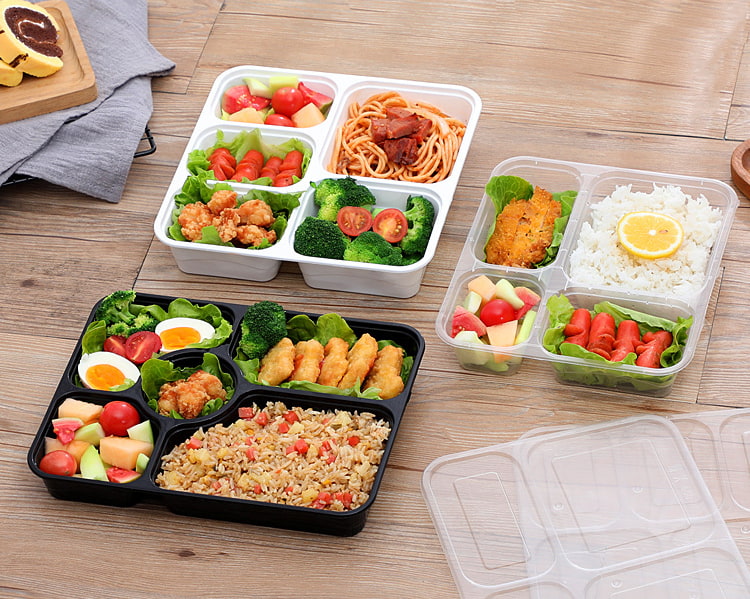
Before contacting a custom food packaging manufacturer China, clearly define:
- Food type (hot, cold, oily, liquid)
- Packaging environment (delivery, retail, airline)
- Required certifications
- Expected shelf life
Clear specifications reduce sampling cycles and prevent costly redesigns.
Step 2 – Request Samples and Validate Quality
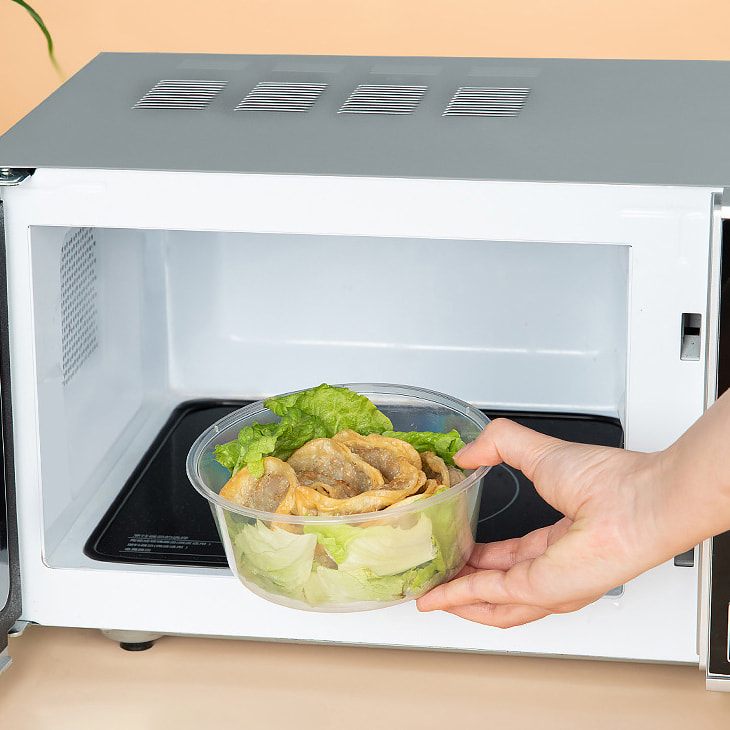
Sampling is essential. Key testing metrics include:
- Heat resistance (microwave or oven testing)
- Compression strength (stacking during logistics)
- Sealing integrity (leak-proof performance)
For example, PET trays used in cold chain logistics can crack at low temperatures if material thickness is insufficient.
Step 3 – Evaluate Pricing Beyond Unit Cost
Many buyers focus only on unit price when sourcing from a food packaging wholesale China price supplier. However, the total cost includes:
- Tooling or mold fees
- Packaging and logistics costs
- Defect rate and replacement costs
- Import duties
A lower unit price often leads to higher long-term costs if quality issues arise.
Step 4 – Confirm Lead Time and Production Stability
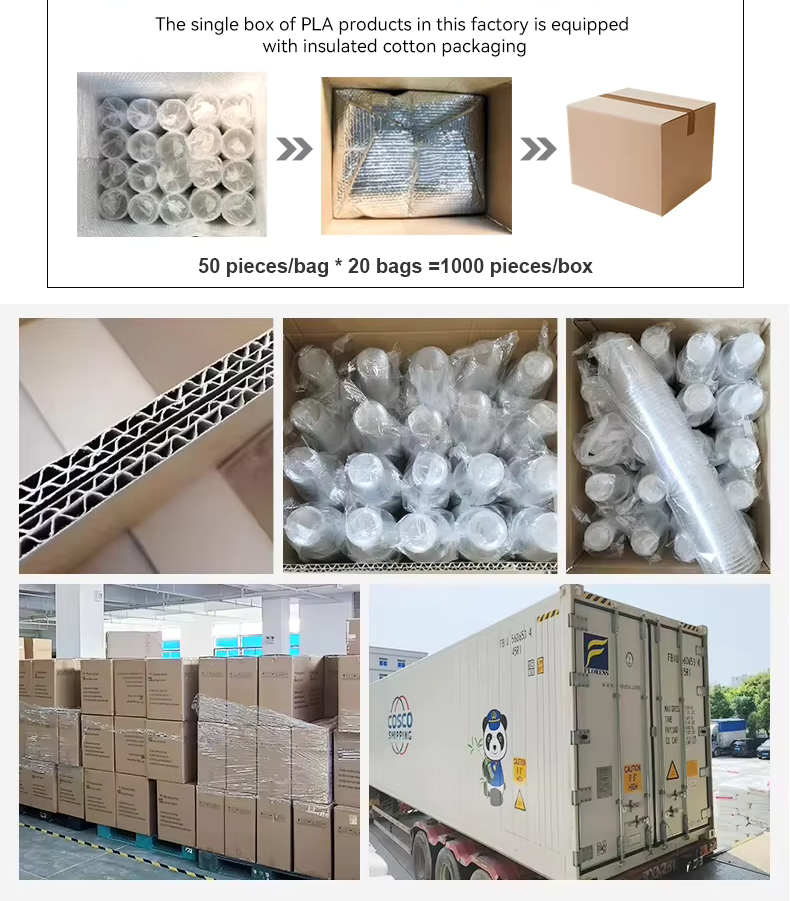
Typical timelines for a China food packaging factory wholesale supplier:
- Sample production: 7–10 days
- Mass production: 20–35 days
Peak seasons (Q3–Q4) can extend lead times by 20–40%, especially for high-demand products.
Step 5 – Communication & Documentation
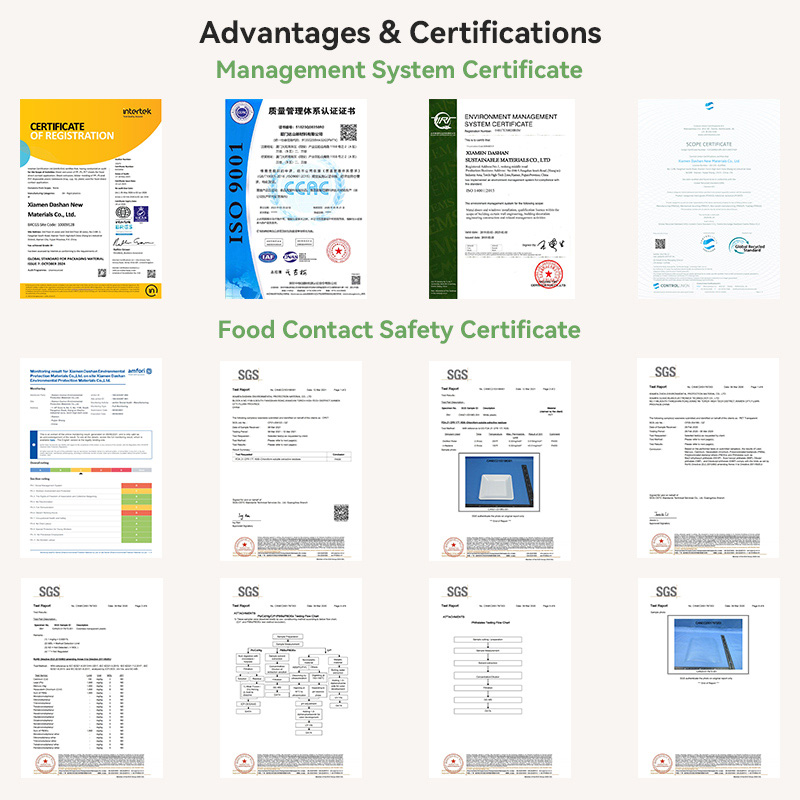
Efficient communication is critical when working with a China packaging supplier export process:
Key documents include:
- Proforma Invoice (PI)
- Commercial Invoice
- Packing List
- Bill of Lading
- Certificate of Origin
Clear documentation ensures smooth customs clearance and avoids delays.
Material Comparison: Choosing the Right Packaging for Your Business
Performance Comparison Table
| Property | PP | PET | RPET | PLA | Bagasse |
|---|---|---|---|---|---|
| Heat Resistance | High | Low | Low | Low | Medium |
| Transparency | Low | High | High | Medium | None |
| Sustainability | Medium | Low | Medium | High | High |
| Cost Level | Low | Low | Medium | High | Medium |
When comparing PP vs PET food packaging, PP is more suitable for hot meals, while PET excels in visual presentation for cold foods.
Similarly, bagasse vs plastic food containers depends on sustainability goals versus cost efficiency.
Common Risks When Working with Chinese Suppliers (And How to Avoid Them)
Hidden Quality Issues
Some suppliers may reduce costs by:
- Mixing recycled materials without disclosure
- Reducing thickness below specification
This can compromise product safety and durability.
Communication Gaps
Technical misunderstandings often occur due to:
- Language barriers
- Lack of engineering documentation
- Ambiguous product specifications
Clear drawings and measurable parameters can significantly reduce risk.
Compliance Risks
Non-compliant packaging can result in:
- Shipment rejection
- Legal penalties
- Brand reputation damage
Always verify certifications and test reports.
Real Case Study: A Supermarket Chain’s Packaging Failure
A European supermarket chain sourced PET trays from a low-cost supplier. During winter distribution:
- Trays cracked under cold chain conditions
- Product leakage occurred
- Over 15% of shipments were rejected
Root cause: incorrect material selection and insufficient thickness.
Solution:
- Switched to PP trays with higher impact resistance
- Improved structural design
Result: defect rate reduced to less than 1.2%.
Industry Trends: What Buyers Should Know in 2026 and Beyond
Sustainability Shift
Demand for eco friendly food packaging manufacturer China solutions is growing rapidly. Market data shows:
- Biodegradable packaging demand growing at 8–12% annually
- Increasing regulations banning single-use plastics
Automation & Smart Manufacturing
Advanced factories are adopting:
- AI-based quality inspection
- Fully automated production lines
- Real-time defect monitoring
These technologies improve consistency and reduce human error.
Customization Demand Increasing
Buyers are increasingly seeking:
- Low MOQ customization
- Private labeling
- Unique structural designs
This trend benefits brands aiming to differentiate in competitive markets.
How DASHAN Supports Global Buyers
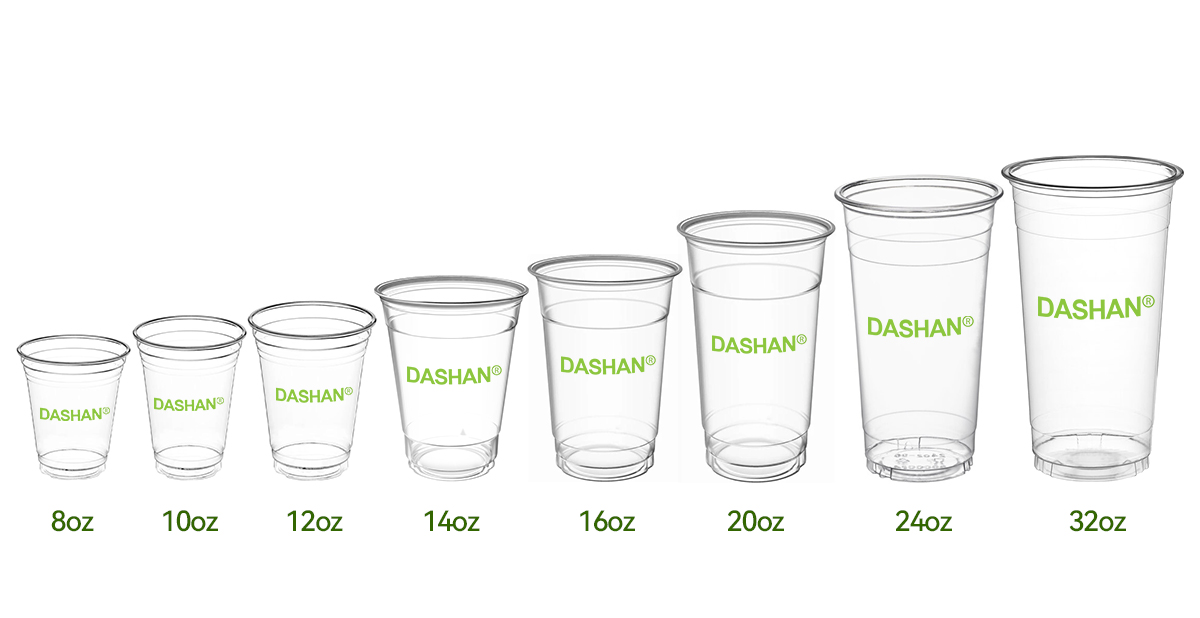
As a professional food packaging supplier China factory direct, DASHAN provides:
- Multi-material solutions (PP, PET, RPET, PLA, Bagasse)
- OEM and ODM capabilities
- Stable large-scale production capacity
- International certifications for global compliance
DASHAN combines manufacturing expertise with supply chain reliability, helping clients reduce risk while improving packaging performance.
For buyers searching for the best food packaging supplier China, working with an experienced partner like DASHAN ensures consistent quality, efficient communication, and scalable production.
Frequently Asked Questions (FAQ)
1. How do I verify a food packaging supplier in China?
Check certifications (FDA, LFGB, ISO), request samples, review test reports, and conduct video or third-party audits. Reliable suppliers provide transparent documentation and stable communication.
2. What certifications are required for food packaging exports?
FDA is required for the U.S., EU No.10/2011 for Europe, and LFGB for Germany. ISO22000 and BRC are also important for food safety management.
3. What is the typical MOQ for food packaging in China?
MOQ usually ranges from 10,000 to 100,000 units, depending on material, customization, and production method.
4. How long does production and shipping take from China?
Production takes about 20–35 days, while shipping ranges from 15–40 days depending on destination and logistics method.
5. Is eco-friendly food packaging reliable for commercial use?
Yes, materials like bagasse, PLA, and RPET are widely used. Performance depends on temperature, moisture, and application conditions.
Conclusion: Building a Long-Term Partnership Instead of Just Buying Products
Sourcing from China is not simply about finding the lowest price—it is about building a reliable supply chain.
A strong partnership with a reliable food packaging supplier China allows you to:
- Ensure consistent product quality
- Reduce operational risks
- Adapt to changing market demands
- Scale your business efficiently
In today’s competitive market, the right supplier is not just a vendor—they are a strategic partner in your growth.
References
- Global Food Packaging Market Report 2025 – Smithers
https://www.smithers.com/services/market-reports/packaging/global-food-packaging-market-report - Food Contact Materials Regulation (EU) No. 10/2011 – European Commission
https://eur-lex.europa.eu/eli/reg/2011/10/oj - FDA Food Contact Substances Guidance – U.S. FDA
https://www.fda.gov/food/food-ingredients-packaging/food-contact-substances - Global Packaging Trends – McKinsey & Company
https://www.mckinsey.com/industries/paper-forest-products-and-packaging - Sustainable Packaging Market Outlook – Grand View Research
https://www.grandviewresearch.com/industry-analysis/sustainable-packaging-market - ISO 22000 Food Safety Standard – ISO
https://www.iso.org/iso-22000-food-safety-management.html - BRC Global Standard for Packaging Materials – BRCGS
https://www.brcgs.com/our-standards/packaging-materials/ - Plastics and Environmental Sustainability – OECD
https://www.oecd.org/environment/plastics/
Copyright Statement
© 2026 Dashan Packing. All rights reserved.
This article is an original work created by the Dashan Packing editorial team.
All text, data, and images are the result of our independent research, industry experience, and product development insights. Reproduction or redistribution of any part of this content without written permission is strictly prohibited.
Dashan Packing is committed to providing accurate, evidence-based information and to upholding transparency, originality, and compliance with global intellectual property standards.