
Quick Summary
This article explains how to choose between bagasse and corn starch packaging based on performance, sustainability, compliance, and cost. Bagasse is ideal for hot, oily, and heavy foods, while corn starch (PLA) works better for cold, display-oriented applications. Instead of asking which material is “best,” the right question is which material fits your products, logistics, regulations, and brand positioning. With the right supplier and proper testing, both options can support a reliable, credible eco-packaging strategy.
Sustainability has evolved from a marketing slogan into a fundamental purchasing criterion in global foodservice and retail. Governments are tightening plastic-reduction policies, consumers are demanding transparency, and brands are under pressure to redesign packaging with lower environmental impact.
Among the most discussed materials in this transition are:
-
bagasse (sugarcane fiber)
-
corn starch–based bioplastics (such as PLA and related blends)
Both are described as “eco-friendly.” Both appear across supermarkets, takeaways, bakeries, cafés, airline catering, and more. Yet they are very different in structure, performance, cost, and end-of-life pathways.
If you are an importer, distributor, brand owner, or private-label buyer, choosing between bagasse and corn starch is not only a technical decision. It involves compliance, supply chain stability, customer expectations, and total cost of ownership.
This guide explains — in practical terms — when each material makes sense, where the misconceptions are, and how to make an informed, risk-controlled decision.
1. What Is Bagasse Packaging?
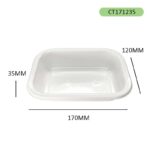
Bagasse is the fibrous residue left after extracting juice from sugarcane. Instead of burning or landfilling this agricultural by-product, manufacturers convert it into molded fiber packaging.
How bagasse packaging is made
In simplified terms:
-
Sugarcane fiber is pulped and cleaned.
-
The pulp is mixed with water, filtered, and refined.
-
It is formed in molds using heat and pressure.
-
Trimming, shaping, and quality checks follow.
The result is a rigid, paper-like structure with a natural, matte finish.
Typical applications
Bagasse is widely used for:
-
takeaway boxes
-
clamshells and hinged containers
-
bowls and plates
-
meal trays
-
foodservice trays
-
cutlery trays and liners
Key advantages
Bagasse’s most appreciated characteristics include:
-
strong stiffness and structural integrity
-
excellent heat tolerance (suitable for hot meals)
-
good oil and grease resistance
-
natural look that communicates sustainability
-
often microwave-safe and sometimes oven-compatible (product dependent)
Because it comes from agricultural waste streams, bagasse showcases an appealing sustainability narrative: “giving a second life to sugarcane fiber.”
2. What Is Corn Starch Packaging?
Corn starch packaging usually refers to materials derived from plant starch that are processed into bioplastics — the most known being PLA (polylactic acid). Different additives and processing techniques create variants for diverse applications.
Production concept
The simplified journey:
-
Starch is extracted from corn (or other crops such as cassava).
-
Sugars are fermented to produce lactic acid.
-
Lactic acid is polymerized to form PLA or related resins.
-
The resin is processed using conventional plastic-forming techniques (thermoforming, injection molding, film extrusion, etc.).
Where corn starch materials are commonly used
-
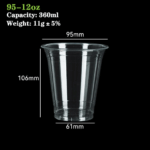
cups and lids
-
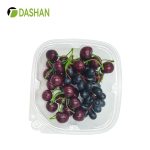
salad containers
-
deli boxes and bakery boxes
-
straws
-
clamshells for cold foods
-
some transparent trays or liners
Key advantages
Corn starch–based materials typically provide:
-
transparency or semi-transparency (product visibility)
-
smooth, “plastic-like” feel
-
lightweight construction
-
compatibility with standard forming machinery
-
opportunity for “plant-based plastic” storytelling
From a consumer’s perspective, PLA often looks and feels like conventional PET or PP, with a sustainable twist.
3. Environmental Reality: How “Eco” Are They?
The term “eco-friendly” is often misused. Understanding the real environmental attributes is essential.
Renewable resource base
-
Bagasse – uses agricultural waste, reducing reliance on virgin tree fiber or fossil plastics.
-
Corn starch/PLA – comes from renewable crops but competes indirectly with agricultural land.
Compostability and biodegradation
Both materials can be compostable in specific conditions — typically industrial facilities with controlled temperature, oxygen, and moisture.
Important clarifications:
-
Not all bagasse products are certified compostable.
-
Not all PLA products biodegrade in natural environments.
-
“Biodegradable” does not mean “disappears anywhere.”
Labels such as EN 13432, OK Compost, or BPI matter because they verify performance under standardized testing.
Infrastructure challenge
Many countries and cities still lack industrial composting systems. In some regions, “compostable” packaging may still end up in landfill or incineration.
Therefore, environmental performance depends not only on material science, but also on local waste management.
4. Performance Comparison: Bagasse vs. Corn Starch
| Criteria | Bagasse | Corn Starch / PLA |
|---|---|---|
| Heat resistance | Strong – suitable for hot meals | Limited – high heat may deform |
| Transparency | Opaque | Transparent or translucent |
| Oil/grease resistance | Generally good | Good but may require coatings |
| Structural strength | Rigid, sturdy | Flexible, lightweight |
| Microwave | Often suitable (check specs) | Generally not recommended |
| Oven | Limited options only | Rarely suitable |
| Look & feel | Natural, fiber-based | Modern, plastic-like |
In practice:
-
choose bagasse when food is hot, oily, heavy, or requires rigid support
-
choose corn starch/PLA when visibility, lightweight handling, or display aesthetics matter
5. When to Choose Bagasse
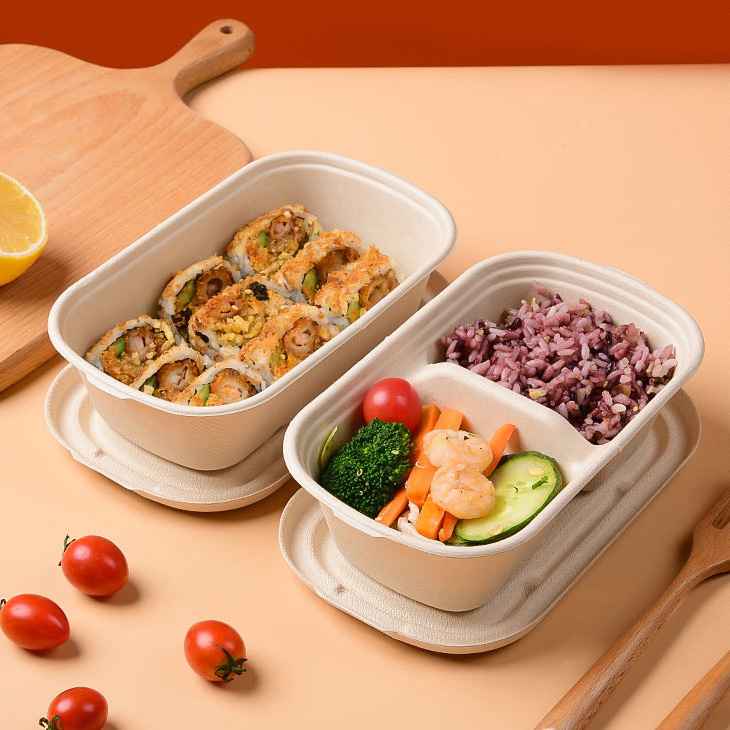
Bagasse is a strong option for:
-
hot meals, rice, noodles, curries, pasta
-
fried or oily foods
-
airline meals and institutional catering
-
quick-service restaurants and takeaways
-
environmentally premium food brands
It also works well where:
-
microwave usage is expected
-
“no-plastic” messaging is important
-
rigid packaging reduces deformation during delivery
Bagasse offers a “crafted, natural” brand perception — ideal for concepts highlighting organic, farm-to-table, or low-impact lifestyles.
6. When to Choose Corn Starch
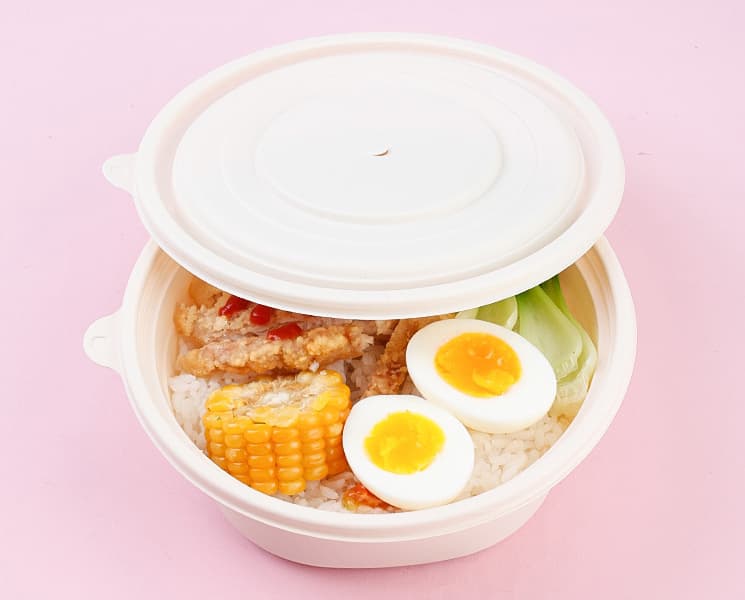
Corn starch–based packaging is more suitable when:
-
the product benefits from transparency (salads, desserts, bakery items)
-
applications mostly involve cold foods
-
presentation and retail shelf visibility matter
-
weight reduction is prioritized
-
customers are familiar with plastic handling
For beverage cups, deli containers, and retail-ready cold packaging, PLA performs efficiently — provided temperature exposure is controlled.
7. Compliance, Certifications, and Safety
Before approving any supplier or product, buyers should verify:
-
compostability certificates (BPI, OK Compost, EN 13432)
-
food contact safety compliance (FDA, EU regulations)
-
migration testing where applicable
-
production traceability and quality control documentation
Claims such as “100% biodegradable” without testing proof should raise red flags.
8. Cost and Supply Chain Considerations
Cost is not simply the unit price.
Factors influencing total cost
-
logistics and container loading efficiency
-
damage, deformation, or returns
-
storage conditions and shelf-life
-
custom molds and branding
-
minimum order quantities
-
fluctuating agricultural raw material prices
Bagasse tends to occupy more volume per carton than thin bioplastic films. PLA, however, may require controlled storage conditions in hot climates.
The right choice depends on your SKU mix, route-to-market, and service expectations.
9. A Practical Decision Framework
A simple, pragmatic checklist can reduce uncertainty:
-
Food temperature
Hot food → bagasse preferred.
Cold display → corn starch preferred. -
Need for transparency
If visibility is critical → corn starch.
If not essential → bagasse. -
Brand positioning
“Natural, fiber, paper-like” → bagasse.
“Modern, clear, plastic-alternative” → PLA. -
Local waste system
Where composting infrastructure exists → both viable.
Where it does not → evaluate recyclability and disposal implications. -
Budget and logistics
Model landed cost, not only ex-factory price.
Using these filters prevents impulse-based material switching and supports long-term sustainable procurement.
10. Common Misconceptions — Clarified
“All biodegradable packaging disappears in nature.”
False. Many require controlled industrial composting.
“PLA is always greener than bagasse.”
Not necessarily. It depends on lifecycle, electricity source, and disposal route.
“Any eco label is enough.”
Only certified testing provides credible environmental claims.
“Eco packaging automatically increases cost.”
Optimized design, right sizing, and container loading often balance costs over time.
11. How Suppliers Should Support Buyers
A reliable manufacturer should provide:
-
technical data sheets
-
product samples for validation
-
performance testing (heat, load, oil resistance)
-
certifications and compliance documentation
-
packaging optimization suggestions
-
stable lead times and transparent communication
This transforms packaging selection from guesswork into a documented decision.
12. Why Many Buyers Choose DASHAN as a Partner
Selecting materials is only half the journey. Selecting the right manufacturing partner determines long-term stability, quality, and credibility.
DASHAN has developed experience across bagasse, RPET, PP, and corn starch–based packaging, focusing on foodservice and retail applications.
What overseas customers typically value
Application-driven consultation
We do not recommend materials simply because they are trendy. We begin with:
-
product temperature profile
-
distribution environment
-
branding intent
-
country-specific regulations
-
budget constraints
From there, we recommend bagasse or corn starch only when it is technically and commercially appropriate.
Quality and compliance discipline
DASHAN emphasizes:
-
food-contact compliant materials
-
traceable production batches
-
consistent molding and dimensional accuracy
-
documentation support for import procedures
Balanced sustainability perspective
Rather than pushing “one solution for everything,” we evaluate environmental impact realistically — aligning product, process, and end-of-life options.
Flexible customization
Depending on order scale and design objectives, we support:
-
custom sizes and tooling
-
logo embossing where feasible
-
private-label packaging
-
optimized carton specifications to reduce logistics cost
For brands seeking to gradually migrate to eco-friendly alternatives, DASHAN helps build a roadmap that minimizes risk and avoids expensive mistakes.
FAQ
1. Is bagasse packaging really biodegradable?
Bagasse can be compostable under industrial composting conditions, depending on the product design and coatings. Certification (such as EN 13432 or BPI) is the best way to verify performance.
2. Does corn starch (PLA) break down in nature?
PLA generally needs controlled industrial composting. It does not readily degrade in normal soil, seawater, or landfill. Disposal depends on local waste infrastructure, not only on the material itself.
3. Which material is safer for hot food?
Bagasse typically performs better with hot, oily, or heavy foods. PLA and other corn starch–based materials are more suitable for cold applications and may deform at high temperatures.
4. Can bagasse and PLA go into the same recycling stream?
Usually not. Most municipal systems do not mix compostables with conventional recycling. Disposal guidance should follow local regulations and facility capabilities.
5. Are eco-friendly materials always more expensive?
Not necessarily. When you consider logistics efficiency, damage reduction, and brand value, the total cost difference may narrow. Optimized design and the right supplier matter.
6. Can these materials be used in the microwave?
Many bagasse products are microwave-friendly (always check specifications). PLA packaging is generally not recommended for microwaves or high heat exposure.
7. What certifications should buyers request?
Look for compostability certifications (BPI, OK Compost, EN 13432), food-contact safety (FDA/EU), and migration or performance testing relevant to your application.
8. When should I choose bagasse instead of corn starch?
Choose bagasse for hot meals, delivery, and applications where stiffness and natural aesthetics are important. Choose corn starch when you need transparency and retail display appeal.
9. Does using PLA compete with food supply?
PLA uses agricultural crops such as corn. While it is renewable, it indirectly competes with agricultural land, so lifecycle assessment is important for sustainability claims.
10. How can a supplier like DASHAN support decision-making?
A competent supplier provides samples, technical advice, certifications, and application-based recommendations, helping you avoid mismatches and unnecessary risk.
Conclusion
Bagasse and corn starch packaging both have important roles in today’s transition toward more responsible food packaging. They are not competitors in an absolute sense — they are complementary tools.
-
Choose bagasse when strength, heat resistance, and natural aesthetics are critical.
-
Choose corn starch when transparency, light weight, and display appeal are priorities.
Evaluate real-world waste management, compliance requirements, and lifecycle realities — instead of relying on marketing buzzwords. When supported by competent suppliers, eco-friendly packaging becomes not only an ethical decision, but also a commercially strategic one.
If you would like support in evaluating which material fits your products, markets, and cost structure, DASHAN can provide samples, comparisons, and technical guidance to help you move forward with confidence.
References
-
European Standard EN 13432: Requirements for Packaging Recoverable Through Composting and Biodegradation
https://environment.ec.europa.eu/publications -
Biodegradable Products Institute (BPI) — Compostable Certification
https://bpiworld.org/Resources/Compostable-Products -
U.S. FDA — Food Contact Materials Guidance
https://www.fda.gov/food/packaging-food-contact-substances-fcs -
Ellen MacArthur Foundation — New Plastics Economy & Compostables
https://www.newplasticseconomy.org/publications -
NatureWorks (PLA technical overview, educational resource)
https://www.natureworksllc.com/What-is-Ingeo/How-Ingeo-is-Made -
FAO — Sugarcane By-Products and Sustainable Utilization
https://www.fao.org/3/i8998en/I8998EN.pdf
Copyright Statement
© 2026 Dashan Packing. All rights reserved.
This article is an original work created by the Dashan Packing editorial team.
All text, data, and images are the result of our independent research, industry experience,
and product development insights. Reproduction or redistribution of any part of this content
without written permission is strictly prohibited.
Dashan Packing is committed to providing accurate, evidence-based information and
to upholding transparency, originality, and compliance with global intellectual property standards.