

Quick Summary
The rapid expansion of ready meals is accelerating packaging innovation across materials, structural engineering, and sustainability strategy. Modern ready meal packaging must withstand thermal stress, logistics pressure, and barrier demands while meeting recyclability and recycled content requirements.
Mono-material systems, PCR integration, lightweight structural optimization, and delivery-ready designs are becoming industry standards. Packaging is shifting from commodity sourcing to engineering-led solutions that balance compliance, performance, and lifecycle cost efficiency.
Introduction: The Convenience Economy as a Packaging Accelerator
The global expansion of ready meals is reshaping not only food retail but also the technical foundations of food packaging. Urban lifestyles, time scarcity, aging populations, and the growth of food delivery platforms have transformed ready-to-heat and ready-to-eat meals into a structural segment of modern consumption. What was once a secondary category has become a core revenue driver for supermarkets, convenience chains, and dark kitchens.
However, ready meals impose an unusually complex set of demands on packaging systems. Unlike dry goods, ready meals must tolerate freezing, heating, moisture migration, oil contact, stacking pressure, and delivery vibration—all while maintaining food safety, aesthetic appeal, and regulatory compliance. As a result, ready meals are not merely increasing packaging volume; they are accelerating material science, structural engineering, and circular design innovation.
In 2026 and beyond, the packaging used for ready meals will increasingly determine cost efficiency, compliance readiness, and brand credibility.
1. The Multi-Dimensional Stress Environment of Ready Meals
Ready meal packaging operates in one of the most technically demanding environments in food applications. Performance must be validated across multiple stages of the product lifecycle.
1.1 Thermal Extremes
Ready meals typically experience:
-
Blast chilling or freezing at –18°C
-
Refrigerated storage between 0–4°C
-
Microwave reheating above 100°C
-
Conventional oven heating up to 200–220°C
Each temperature transition introduces expansion and contraction stress. Polymer creep, warpage, seal distortion, and base deformation are common risks when materials are not calibrated precisely.
Polypropylene (PP) has gained popularity for microwave-ready applications due to its higher heat resistance and dimensional stability. PET-based systems, including APET and RPET, dominate chilled ready meals but require careful engineering when reheating is involved.
Thermal performance is no longer an optional feature—it is a core design parameter.
1.2 Mechanical and Logistics Stress
Distribution conditions are equally demanding. Ready meals are palletized, transported long distances, stacked in retail refrigeration units, and handled during last-mile delivery.
Packaging must resist:
-
Vertical compression loads
-
Lateral vibration
-
Impact drops
-
Seal stress from product weight
Inadequate structural reinforcement can result in:
-
Lid delamination
-
Corner cracking
-
Oil leakage
-
Consumer complaints
-
Increased food waste
Structural performance therefore directly impacts brand reputation and cost control.
1.3 Barrier and Chemical Interaction
Ready meals often contain:
-
High-fat sauces
-
Acidic ingredients
-
Moisture-rich components
-
Protein-heavy contents
These increase oxygen sensitivity and grease migration risk. Traditional multilayer laminates (e.g., PET/PE/EVOH structures) historically provided strong barrier protection but created recyclability challenges.
Today’s innovation challenge is to maintain shelf-life protection while ensuring compatibility with recycling streams.
2. Material Innovation in the Ready Meal Era
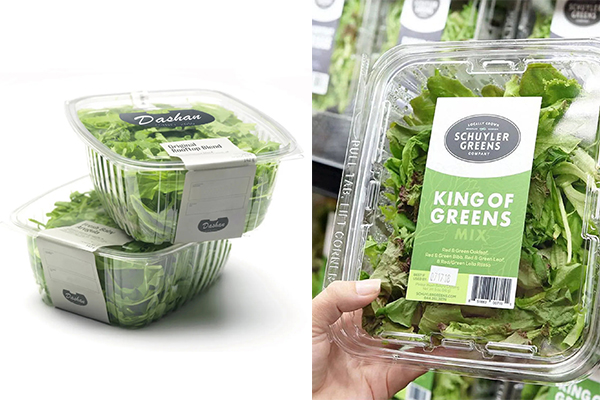
Material selection has become more strategic as regulatory pressure and sustainability commitments intensify.
2.1 The Decline of Complex Multilayer Systems
Multilayer trays offered barrier efficiency but limited recyclability. As global policies shift toward design-for-recycling frameworks, mono-material systems are increasingly favored.
Comparative Overview
| Material System | Heat Resistance | Recyclability | Barrier Capability | Regulatory Alignment |
|---|---|---|---|---|
| PET/PE multilayer | Moderate | Low | High | Declining |
| Mono PP | High | High | Moderate | Strong |
| Mono PET (APET/RPET) | Moderate | High | Moderate | Strong |
| Fiber + coating | Low–Moderate | Conditional | Limited | Market dependent |
The trend favors materials that are easily sorted and reprocessed in existing infrastructure.
2.2 PCR Integration and Circular Design
Recycled content mandates are reshaping procurement strategies. Incorporating post-consumer recycled (PCR) resin reduces environmental impact but introduces technical variability:
-
Reduced mechanical strength consistency
-
Optical clarity challenges
-
Increased contamination control requirements
To compensate, packaging engineers adjust wall thickness distribution, rib geometry, and crystallization control.
DASHAN has invested in PCR-calibrated thermoforming systems that maintain structural reliability while incorporating recycled PET or PP. By controlling material blending ratios and processing parameters, the company ensures food-contact safety and dimensional stability—key factors for ready meal applications.
PCR integration is no longer marketing-driven; it is becoming a structural compliance requirement.
3. Structural Engineering: Geometry as Performance
As material simplification increases, geometry becomes critical.
3.1 Reinforced Base Design
Ribbed structures distribute compression loads more effectively than flat bases. Finite element modeling (FEM) allows engineers to simulate stacking forces and identify stress concentration zones before mold production.
3.2 Optimized Flange Systems
Seal reliability depends heavily on flange flatness and stiffness. Insufficient rigidity leads to micro-gaps and leakage after heating.
Innovative flange profiles enhance seal integrity while reducing material usage.
3.3 Wall Thickness Distribution
Instead of uniform thickness, modern trays employ strategic reinforcement in high-stress zones while thinning low-stress areas. This balances lightweighting with durability.
DASHAN applies structural simulation tools to design trays tailored for microwave reheating, chilled logistics, or oven-ready use cases. This engineering-led approach shifts packaging from generic commodity to customized performance system.
4. Sustainability as an Innovation Catalyst
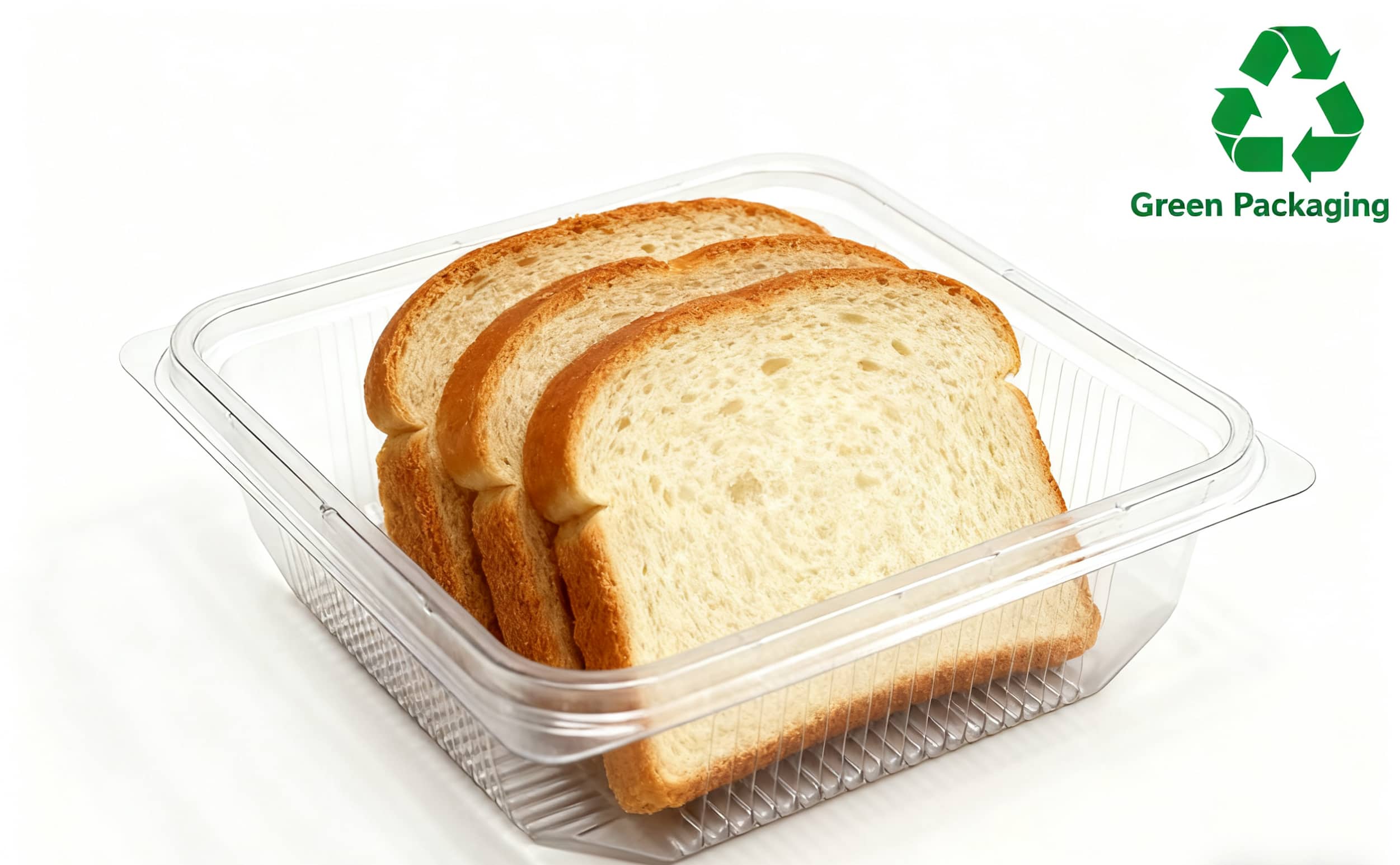
Ready meals are highly visible in sustainability discussions because of their packaging volume.
Key sustainability drivers include:
-
Extended Producer Responsibility (EPR) fee modulation
-
Recycled content targets
-
Retailer packaging scorecards
-
Consumer environmental awareness
Sustainability Impact Analysis
| Innovation Area | Operational Benefit | Environmental Outcome |
|---|---|---|
| Mono-material design | Lower EPR fees | Higher recyclability |
| Lightweight optimization | Reduced raw material cost | Lower carbon emissions |
| PCR resin use | Regulatory compliance | Reduced virgin plastic demand |
| Seal efficiency | Lower damage rate | Reduced food waste |
Packaging innovation must now satisfy both environmental and economic metrics simultaneously.
5. Delivery Growth and Format Evolution
The rise of food delivery platforms and cloud kitchens has introduced new design requirements.
Packaging must now:
-
Prevent leakage during transport
-
Resist shaking and vibration
-
Maintain compartment separation
-
Preserve temperature consistency
Dual-compartment trays and snap-fit lids are increasingly popular for meal kits and delivery applications.
Innovative steam-venting features allow microwave reheating without manual lid removal, enhancing consumer convenience.
Suppliers that understand last-mile stress conditions are positioned to support brands navigating omnichannel distribution.
6. Digitalization and Smart Packaging Integration
Beyond structural innovation, ready meal packaging is beginning to integrate digital features:
-
QR codes for traceability
-
Digital watermarking to improve automated sorting
-
Anti-counterfeit elements
-
Smart freshness indicators
Although adoption remains gradual, regulatory and supply chain transparency requirements may accelerate implementation.
Packaging is evolving into an information carrier, not just a protective shell.
7. The Economic Recalibration of Packaging Strategy
Historically, procurement decisions focused on per-unit price. In the ready meal sector, that logic is increasingly insufficient.
Modern evaluation includes:
-
EPR fee exposure
-
Damage rate costs
-
Regulatory compliance risk
-
PCR sourcing reliability
-
Long-term recyclability classification
A tray that is marginally cheaper but incurs higher EPR fees or greater product loss is economically inefficient.
DASHAN supports lifecycle modeling discussions with brand clients, aligning material selection and structural design with long-term cost optimization rather than short-term price reduction.
8. Competitive Differentiation Through Engineering
As ready meals become a saturated market, packaging quality contributes directly to consumer perception.
Visual clarity, rigidity, clean sealing edges, and premium tactile feel influence brand positioning.
Engineering-driven manufacturers capable of combining:
-
Thermoforming precision
-
Mono-material expertise
-
PCR calibration
-
Seal system compatibility
-
Regulatory documentation
are gaining competitive advantage.
Ready meal packaging is transitioning from support function to brand differentiator.
9. The Next Five Years of Ready Meal Packaging Innovation
The trajectory of innovation suggests five key developments:
-
Higher PCR content integration without compromising strength
-
Fully recyclable mono-material packaging systems
-
Advanced lightweighting supported by structural simulation
-
Delivery-optimized geometries
-
Greater supply chain transparency through digital tools
Regulatory pressure and consumer expectation will reinforce this direction.
FAQ
1. Why are ready meals accelerating packaging innovation?
Ready meals require packaging that can handle freezing, reheating, moisture migration, and delivery stress. This multi-stage performance environment pushes manufacturers to develop more advanced materials and structural designs.
2. What materials are most commonly used in ready meal packaging?
Mono-material polypropylene (PP) and PET systems are widely used due to their balance of heat resistance, recyclability, and structural performance. PCR-integrated materials are increasingly adopted to meet sustainability targets.
3. How does sustainability influence ready meal packaging design?
Sustainability requirements encourage mono-material structures, recycled content integration, lightweight optimization, and compatibility with recycling infrastructure. Packaging must now align with both environmental regulations and retailer scorecards.
4. What role does structural engineering play in packaging performance?
Structural engineering ensures resistance to stacking pressure, vibration, thermal expansion, and seal stress. Rib design, flange reinforcement, and wall thickness distribution are critical elements in modern packaging systems.
5. Is fiber packaging replacing plastic in ready meals?
Fiber solutions are growing in specific applications, especially dry or low-oil foods. However, plastic materials such as PP and PET remain dominant in high-heat and high-moisture ready meal applications due to superior thermal and barrier performance.
6. How are packaging suppliers evolving in this sector?
Suppliers are transitioning from commodity manufacturers to engineering partners, offering recyclability validation, PCR calibration, structural simulation, and regulatory documentation support to help brands manage compliance and cost exposure.
Conclusion: Ready Meals as a Structural Innovation Engine
Ready meals are uniquely positioned at the intersection of convenience, sustainability, and regulatory enforcement. Their rapid growth forces packaging systems to evolve faster than many other food categories.
To succeed, packaging must now solve a multi-variable challenge:
-
Heat resistance
-
Mechanical durability
-
Barrier performance
-
Recyclability
-
Cost efficiency
-
Compliance documentation
Innovation in this space is no longer incremental. It is structural.
Companies like DASHAN, combining engineering-led design, recyclable material integration, and compliance-oriented development, exemplify the next generation of packaging suppliers—partners capable of navigating technical complexity rather than simply producing volume.
Ready meals are not merely shaping packaging trends.
They are redefining the standards by which food packaging performance is measured.
Reference
-
Ellen MacArthur Foundation – Plastics and Circular Economy
https://ellenmacarthurfoundation.org/topics/plastics -
OECD – Extended Producer Responsibility Guidance
https://www.oecd.org/environment/extended-producer-responsibility.htm -
European Commission – Packaging and Packaging Waste Regulation (PPWR)
https://environment.ec.europa.eu/topics/waste-and-recycling/packaging-waste_en -
Plastics Recyclers Europe – Design for Recycling Guidelines
https://www.plasticsrecyclers.eu -
U.S. Environmental Protection Agency – Sustainable Materials Management
https://www.epa.gov/smm
Copyright Statement
© 2026 Dashan Packing. All rights reserved.
This article is an original work created by the Dashan Packing editorial team.
All text, data, and images are the result of our independent research, industry experience,
and product development insights. Reproduction or redistribution of any part of this content
without written permission is strictly prohibited.
Dashan Packing is committed to providing accurate, evidence-based information and
to upholding transparency, originality, and compliance with global intellectual property standards.