

Quick Summary
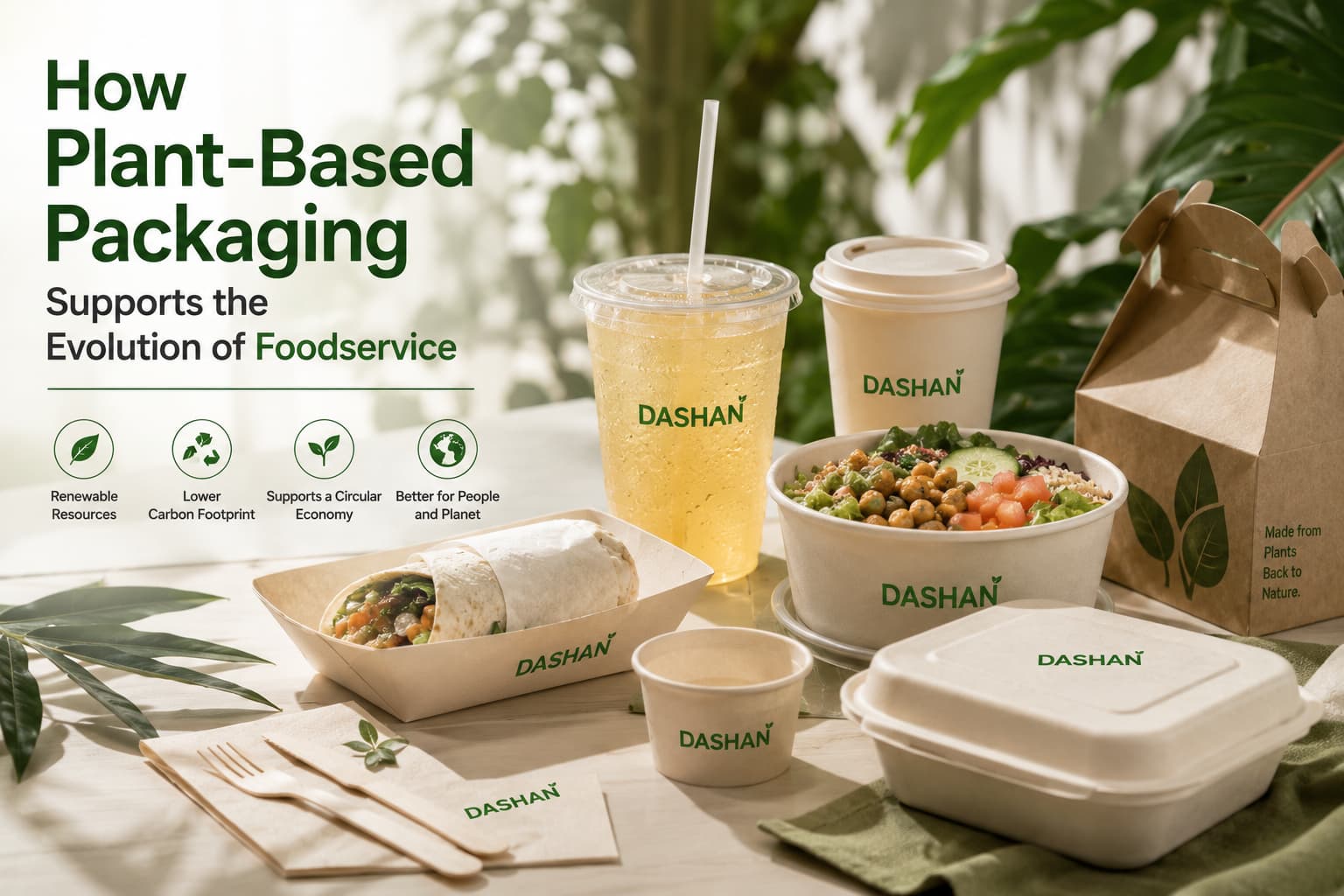
Plant-based packaging is becoming an important part of modern foodservice as restaurants, retailers, and delivery businesses seek more sustainable and functional packaging solutions. Materials such as PLA, bagasse, and cornstarch help support evolving consumer expectations, takeaway culture, and environmental goals while contributing to the broader transition toward diversified, application-based food packaging systems.
Introduction
The global foodservice industry is changing faster than ever. From takeaway meals and food delivery platforms to grab-and-go retail and ready-to-eat dining, convenience has become one of the defining characteristics of modern food consumption. As dining habits evolve, packaging is no longer viewed as a simple disposable necessity. It has become part of operational efficiency, brand perception, food safety, and sustainability strategy.
At the same time, environmental awareness is reshaping how consumers and businesses think about packaging materials. Restaurant chains, cafés, catering companies, and food retailers are increasingly searching for solutions that balance functionality with sustainability goals. This shift has accelerated interest in plant-based packaging materials such as PLA, bagasse, and cornstarch-based products.
Plant-based packaging is now playing an important role in the evolution of foodservice. Rather than replacing all traditional materials overnight, it is helping businesses create more diversified, application-focused packaging systems that better align with modern consumer expectations and changing market demands.
The Foodservice Industry Is Entering a New Packaging Era
Over the last decade, foodservice has expanded far beyond traditional dine-in experiences. Consumers now expect food to be portable, visually appealing, and suitable for increasingly mobile lifestyles.
The growth of food delivery platforms has significantly changed packaging requirements. Containers must now withstand longer transportation times, maintain food integrity, resist leakage, and preserve temperature stability. Packaging performance has become directly connected to customer satisfaction.
At the same time, packaging has become part of the overall dining experience. Before consumers taste the food, they often interact with the packaging first. The texture, appearance, transparency, structure, and sustainability message of packaging can all influence how consumers perceive food quality and brand professionalism.
Social media has also increased the visibility of packaging. Modern consumers frequently share takeaway meals, beverages, and retail food products online, making packaging an important extension of brand identity.
This shift has pushed foodservice businesses to rethink packaging not only as an operational necessity, but also as a strategic business decision.
Understanding Plant-Based Packaging Materials
Plant-based packaging refers to packaging materials derived partially or entirely from renewable biological resources instead of conventional petroleum-based feedstocks. In foodservice applications, some of the most common plant-based materials include PLA, bagasse, and cornstarch-based materials.
PLA Packaging

PLA, or polylactic acid, is commonly produced from fermented plant sugars such as corn starch. It is widely used in cold beverage cups, salad containers, lids, and transparent food packaging applications.
One of PLA’s key advantages is its visual similarity to traditional clear plastics. This makes it attractive for food retailers and beverage brands that want both product visibility and a more sustainable material positioning.
Bagasse Packaging
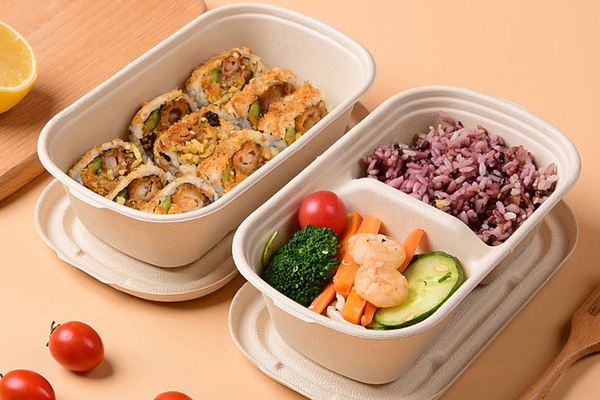
Bagasse is a molded fiber material made from sugarcane residue remaining after juice extraction. In recent years, bagasse packaging has become increasingly popular in takeaway foodservice because of its natural appearance, structural strength, and suitability for hot food applications.
Bagasse containers are often used for meal boxes, plates, bowls, and clamshell packaging in restaurants and catering operations.
Cornstarch-Based Packaging
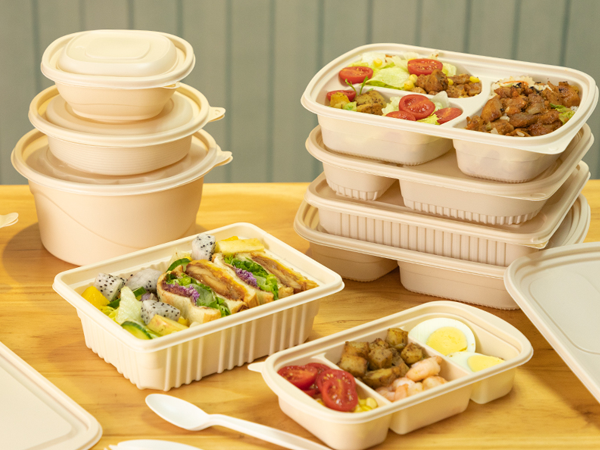
Cornstarch-based materials are gaining attention as lightweight, plant-derived alternatives for disposable foodservice products. They are commonly used for cutlery, trays, and takeaway containers in applications where businesses want to emphasize renewable material usage and environmentally conscious branding.
The growing interest in cornstarch packaging reflects a broader shift toward bio-based material innovation across the food packaging industry.
Why Material Diversity Matters in Modern Foodservice
One of the biggest misconceptions in sustainable packaging discussions is the idea that one material can solve every packaging challenge.
In reality, modern foodservice requires multiple material systems because packaging performance depends heavily on application conditions. Hot meals, frozen foods, cold beverages, oily foods, and long-distance delivery all place different demands on packaging materials.
A salad container designed for refrigerated retail environments may prioritize transparency and visual merchandising, while a hot takeaway meal container may require heat resistance and structural durability. Packaging for airline catering may require entirely different performance characteristics related to temperature transitions and transportation stability.
As a result, the industry is gradually moving away from “single-material thinking” and toward more flexible, application-based packaging strategies.
Plant-based packaging materials are becoming part of this broader material diversification trend.
How Plant-Based Packaging Supports Modern Foodservice Operations
Supporting the Expansion of Food Delivery
The rise of food delivery has dramatically increased the importance of packaging functionality. Containers must maintain food quality while protecting products during transportation.
Plant-based packaging materials such as bagasse and cornstarch products are increasingly used in takeaway systems because they offer practical functionality while supporting sustainability positioning.
Restaurants are also looking for packaging solutions that are lightweight, stackable, and easy to transport efficiently. Packaging design now directly affects operational workflow, storage efficiency, and customer delivery experience.
Strengthening Sustainability Positioning
Consumers are paying closer attention to packaging materials than ever before. Many foodservice brands now use packaging as a visible reflection of their environmental values.
Plant-based packaging helps businesses communicate sustainability initiatives in a highly visible way. Natural textures, fiber-based appearances, and renewable material messaging often contribute to stronger eco-conscious brand perception.
For many restaurants and cafés, packaging has become part of the customer experience itself.
Why Choose DASHAN
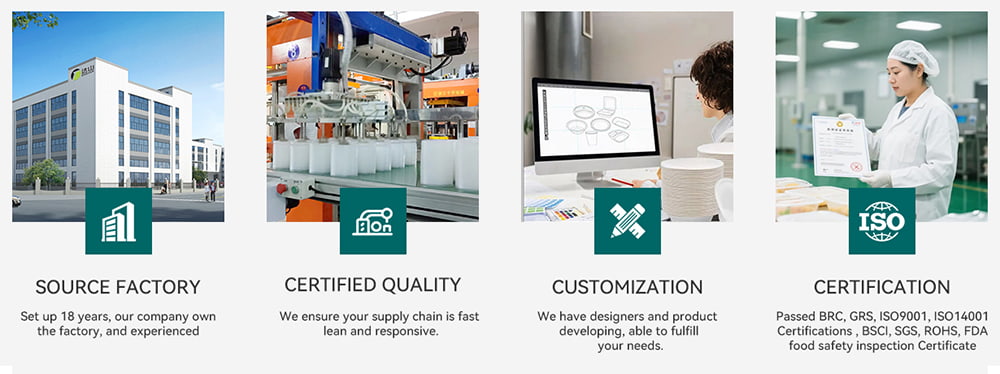
As global foodservice packaging requirements become more complex, businesses increasingly need suppliers that understand both material diversity and application performance.
DASHAN provides a wide range of food packaging solutions across multiple material systems, including PET, PP, PLA, CPET, bagasse, and cornstarch-based products. This multi-material capability allows foodservice brands to select packaging solutions based on operational needs, sustainability goals, temperature requirements, and consumer expectations rather than relying on a single material approach.
With experience in OEM and customized food packaging manufacturing, DASHAN supports restaurants, retailers, distributors, and food brands with scalable packaging solutions designed for modern global foodservice environments.
The Challenges Behind Plant-Based Packaging Adoption
Although plant-based packaging continues to grow, the transition is not without challenges.
Infrastructure Limitations
Compostability standards and waste management systems vary significantly across regions. In some markets, industrial composting infrastructure remains limited, creating gaps between theoretical sustainability benefits and actual disposal outcomes.
This is one reason why the global packaging industry is increasingly focusing on practical sustainability rather than simplified material narratives.
Performance Expectations
Foodservice businesses cannot compromise packaging functionality. Heat resistance, moisture resistance, rigidity, and transportation durability remain essential operational requirements.
Some plant-based materials may perform exceptionally well in specific applications while being less suitable for others. This further reinforces the importance of application-based material selection.
Cost and Scalability
Cost competitiveness also remains an important consideration. Businesses must balance environmental goals with operational efficiency and financial sustainability.
As manufacturing technologies improve and production scales increase, plant-based packaging is expected to become increasingly accessible across global foodservice markets.
The Foodservice Industry Is Moving Toward Multi-Material Packaging Systems
The future of food packaging will likely not be defined by a single “perfect” material. Instead, successful packaging systems will combine multiple materials depending on food category, logistics requirements, sustainability objectives, and customer expectations.
For example:
| Foodservice Application | Common Material Preference |
|---|---|
| Cold beverages | PLA / PET |
| Hot takeaway meals | Bagasse / PP |
| Frozen ready meals | CPET |
| Premium eco-focused packaging | Molded fiber / cornstarch |
This flexible approach allows foodservice businesses to optimize both performance and sustainability while adapting to regional regulations and changing consumer preferences.
The growing importance of packaging flexibility is reshaping how foodservice brands evaluate packaging suppliers and material strategies.
The Future of Plant-Based Packaging
Plant-based packaging is expected to remain an important part of the global packaging transition. However, future development will likely focus less on replacing all traditional materials and more on creating balanced systems that integrate renewable materials where they make the most operational and environmental sense.
Innovation in plant-based materials continues to improve functionality, durability, and manufacturing scalability. At the same time, foodservice businesses are becoming more sophisticated in how they evaluate packaging performance.
The future of food packaging will increasingly depend on balancing:
- Sustainability
- Operational practicality
- Consumer expectations
- Supply chain stability
- Cost efficiency
- Material performance
Rather than representing a temporary trend, plant-based packaging is becoming part of a larger transformation in how the foodservice industry approaches packaging strategy.
FAQ
What is plant-based food packaging?
Plant-based food packaging refers to packaging materials made from renewable biological resources such as corn starch, sugarcane fiber, or other plant-derived materials instead of conventional petroleum-based plastics.
Why is plant-based packaging becoming more popular in foodservice?
The growth of takeaway dining, food delivery, and sustainability awareness has increased demand for packaging solutions that balance environmental considerations with operational performance and consumer expectations.
What are the most common plant-based packaging materials?
Common plant-based food packaging materials include PLA, bagasse, and cornstarch-based materials. Each material has different functional characteristics and application advantages.
Is plant-based packaging suitable for hot foods?
Some plant-based materials, such as bagasse, are suitable for hot food applications due to their structural strength and heat resistance. However, material selection should always depend on the specific foodservice application.
What is the difference between PLA and cornstarch packaging?
PLA is a bioplastic commonly used for transparent cold-food packaging, while cornstarch-based materials are often used for lightweight food containers and disposable cutlery. Their performance characteristics and applications may vary.
Why is the food packaging industry moving toward multi-material systems?
No single packaging material can satisfy all foodservice requirements. Different applications require different combinations of heat resistance, transparency, durability, sustainability, and cost efficiency.
Conclusion
The evolution of foodservice is reshaping packaging expectations worldwide. As takeaway culture, food delivery, and sustainability awareness continue to grow, packaging is becoming more integrated into business operations, customer experience, and brand identity.
Plant-based packaging materials such as PLA, bagasse, and cornstarch are helping foodservice businesses respond to these changing demands by offering renewable, application-focused packaging solutions.
At the same time, the future of food packaging will depend on material diversity rather than single-material replacement. Successful foodservice packaging systems must balance sustainability with functionality, operational efficiency, and scalability.
As the industry continues to evolve, plant-based packaging will play an increasingly important role in supporting the next generation of global foodservice solutions.
References
- European Bioplastics
- Sustainable Packaging Coalition
- Packaging Europe
- World Wildlife Fund Packaging Resources
- U.S. Environmental Protection Agency Packaging Information
- Xiamen DASHAN Packing
Copyright Statement
© 2026 Dashan Packing. All rights reserved.
This article is an original publication by the Dashan Packing team based on industry research, market analysis, and packaging expertise. Unauthorized reproduction, distribution, or copying of this content is prohibited without prior written permission.
Dashan Packing is committed to delivering reliable, original, and professional information for the global food packaging industry.