

Introduction
For decades, the food packaging industry was primarily driven by three factors: cost, food safety, and operational efficiency. Packaging buyers evaluated suppliers based on price competitiveness, production capacity, delivery reliability, and product performance. As long as packaging protected food effectively and met regulatory standards, it was considered fit for purpose.
Today, however, a new force is reshaping packaging decisions worldwide.
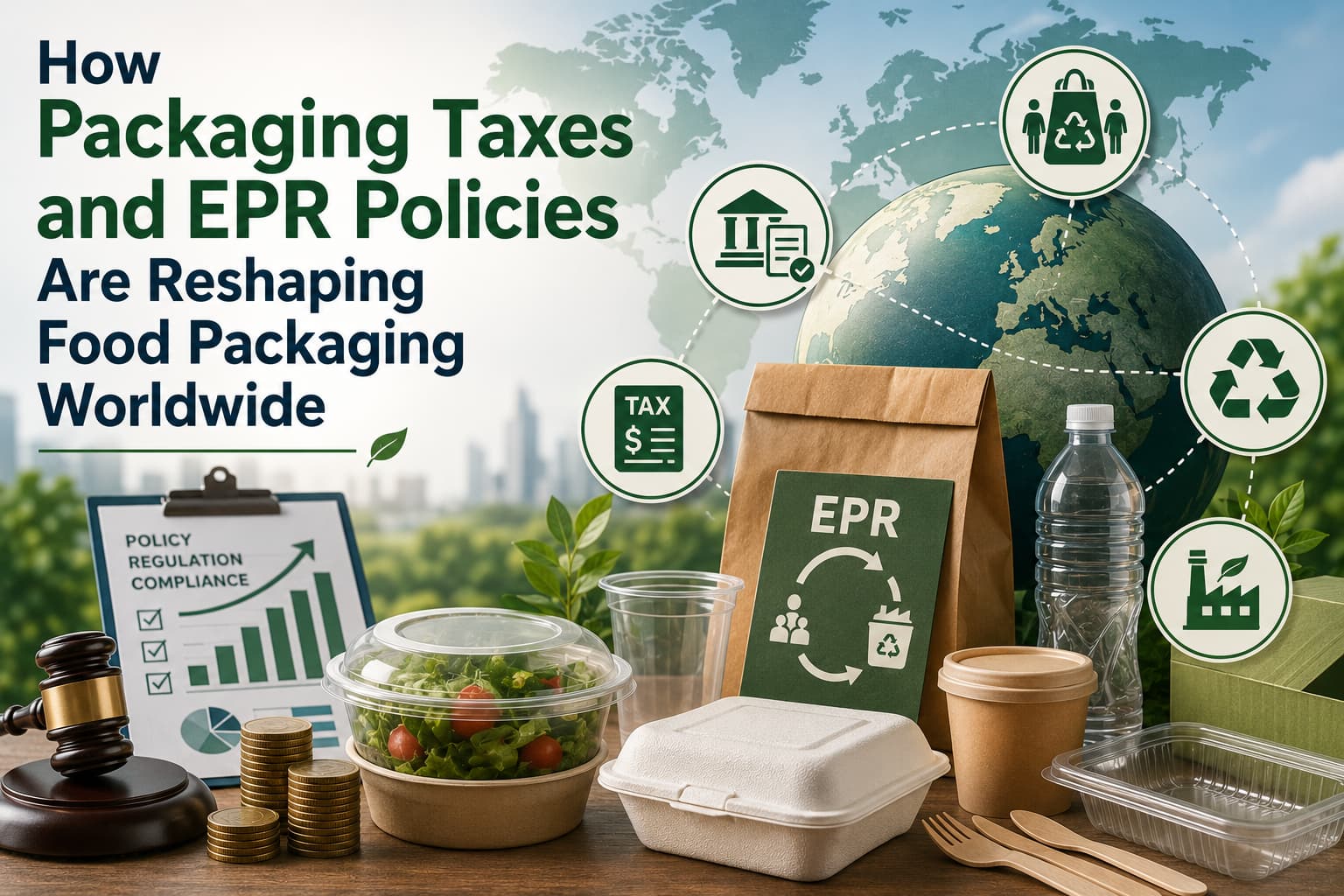
Governments across Europe, North America, and increasingly Asia-Pacific are introducing packaging taxes, Extended Producer Responsibility (EPR) schemes, recycled-content mandates, and packaging waste regulations. These policies are designed to reduce environmental impacts and accelerate the transition toward a circular economy.
While often viewed as compliance requirements, these regulations are having a much broader effect. They are influencing how packaging is designed, how materials are selected, how procurement teams evaluate suppliers, and even how brands position themselves in the marketplace.
As a result, packaging compliance is no longer simply a legal obligation. It is becoming a competitive factor that affects long-term business performance.
For food packaging manufacturers, exporters, and brand owners, understanding this shift is essential for staying relevant in an increasingly regulated global market.
The End of the “Lowest-Cost Packaging” Era
Historically, food packaging procurement was largely driven by cost optimization.
A purchasing manager comparing two similar food containers might ask:
- Which option is cheaper?
- Which supplier offers the shortest lead time?
- Which product meets performance requirements?
Environmental considerations were often secondary.
Today, that decision-making process is changing.
Many retailers, distributors, and food brands now evaluate packaging using additional criteria:
- Is the packaging recyclable?
- Does it support local EPR requirements?
- Will it increase compliance costs?
- Does it contain recycled content?
- Can sustainability documentation be provided?
In other words, packaging is no longer judged solely by purchase price.
The true cost of packaging increasingly includes future regulatory obligations, recycling fees, reporting requirements, and sustainability performance.
This shift is fundamentally changing procurement priorities throughout the food packaging supply chain.
Why Governments Are Transferring Responsibility to Producers
To understand the rise of packaging taxes and EPR systems, it is important to understand the economic logic behind them.
Traditionally, municipalities were responsible for collecting, sorting, and managing packaging waste. These costs were largely funded by taxpayers.
As packaging consumption increased and recycling systems became more expensive, governments began questioning whether public budgets should continue carrying the full burden.
The result was the emergence of the Extended Producer Responsibility model.
The principle is straightforward:
If a company places packaging on the market, it should contribute to the cost of managing that packaging after use.
Rather than relying entirely on public funding, EPR programs transfer part of the financial responsibility to producers, importers, brand owners, and distributors.
This creates a powerful incentive for businesses to design packaging that is easier to recycle, recover, or reuse.
Packaging taxes operate under a similar philosophy.
Instead of banning certain materials outright, governments use financial mechanisms to encourage more sustainable packaging choices.
The objective is not simply to reduce packaging usage but to improve the overall efficiency of packaging systems.
Packaging Is Becoming a Financial Asset—or a Financial Liability
One of the most significant consequences of EPR policies is that packaging design now has direct financial implications.
In the past, two food containers with identical dimensions might be evaluated solely on production cost.
Today, regulators increasingly examine what happens to those containers after disposal.
Consider two hypothetical packaging designs:
Packaging A
- Multi-layer material structure
- Difficult to separate
- Limited recycling infrastructure
- Complex recovery process
Packaging B
- Mono-material construction
- Easily recyclable
- Compatible with existing recycling systems
- Simplified material recovery
Although both packages may perform equally well during use, they can generate very different compliance costs over their lifecycle.
In many markets, packaging that is easier to recycle may benefit from lower EPR fees, reduced environmental charges, or stronger acceptance among retailers and consumers.
As a result, packaging design is increasingly influencing long-term business economics.
What was once considered a technical packaging decision is becoming a strategic financial decision.
Why Europe Is Influencing Packaging Decisions Worldwide
Although packaging regulations exist globally, Europe has emerged as the primary driver of packaging policy innovation.
The European Union’s ambitious environmental objectives have established a framework that is influencing packaging strategies far beyond European borders.
Many multinational food brands operate globally. When those companies redesign packaging to comply with European requirements, the changes often affect their worldwide supply chains.
Consequently, packaging suppliers serving customers in Asia, the Middle East, Latin America, and North America frequently encounter requirements that originated in Europe.
These requirements increasingly include:
- Improved recyclability
- Reduced material complexity
- Recycled-content targets
- Packaging reduction initiatives
- Enhanced reporting and traceability
For exporters, European regulations often provide an early indication of future global trends.
Businesses that understand these developments are generally better prepared for regulatory changes in other markets.
The Rise of Design for Recycling
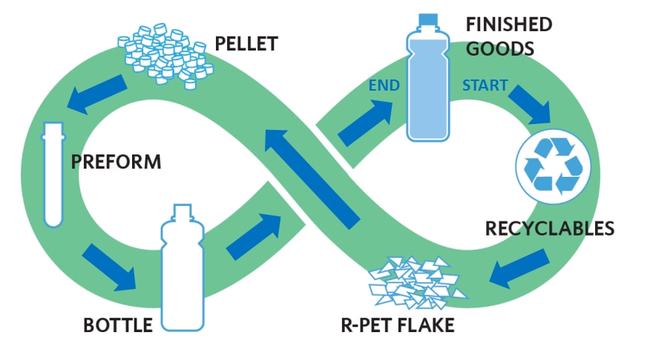
Perhaps the most important packaging trend emerging from EPR policies is the concept of “Design for Recycling.”
Historically, packaging development focused on three priorities:
- Product protection
- Consumer convenience
- Cost efficiency
Today, a fourth priority has become increasingly important:
- Recyclability
Design for Recycling encourages packaging developers to consider end-of-life outcomes during the earliest stages of product design.
This approach often involves:
Simplifying Material Structures
Reducing the number of materials used within a package can improve recyclability.
Improving Material Compatibility
Packaging components should ideally work within existing recycling systems.
Reducing Unnecessary Complexity
Excessive layers, mixed materials, and difficult-to-remove components can hinder recycling performance.
Optimizing Material Usage
Using only the material necessary to perform the required function helps improve resource efficiency.
As recycling requirements become more sophisticated, Design for Recycling is evolving from a sustainability initiative into a commercial necessity.
Why PP and PET Are Becoming Increasingly Important
Contrary to popular perception, the future of packaging is not necessarily “plastic-free.”
Instead, the industry is increasingly focused on selecting materials that can deliver both performance and recyclability.
This is one reason why PP and PET continue to play critical roles in food packaging systems.
PP: Supporting Durability and Reuse
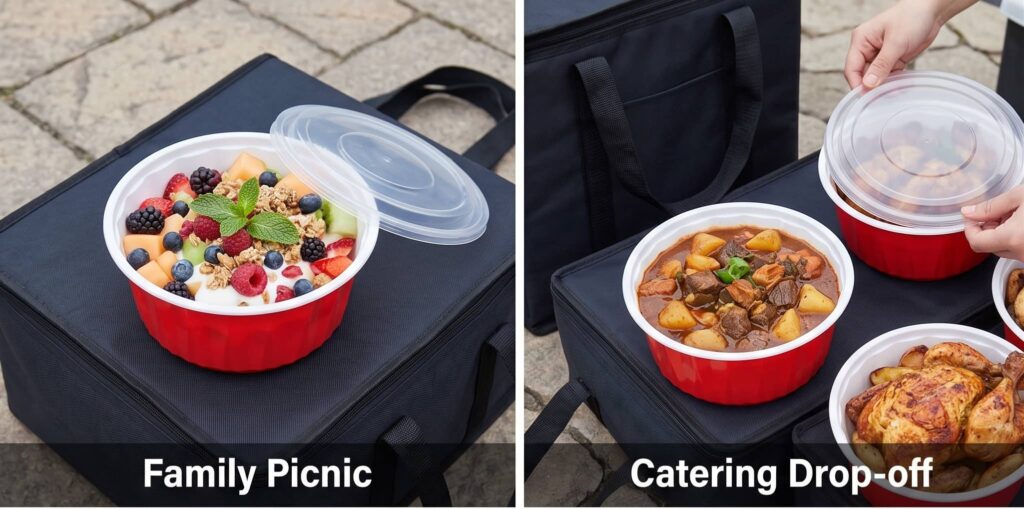
Polypropylene (PP) offers several characteristics that align with modern regulatory objectives:
- High durability
- Heat resistance
- Lightweight construction
- Recyclability
- Potential for repeated use
PP is commonly used in:
- Takeaway food containers
- Ready-meal packaging
- Airline meal trays
- Reusable foodservice products
- Reusable beverage cups
As regulators place greater emphasis on reuse and resource efficiency, PP remains a practical material choice for many applications.
PET: Supporting Transparency and Circularity
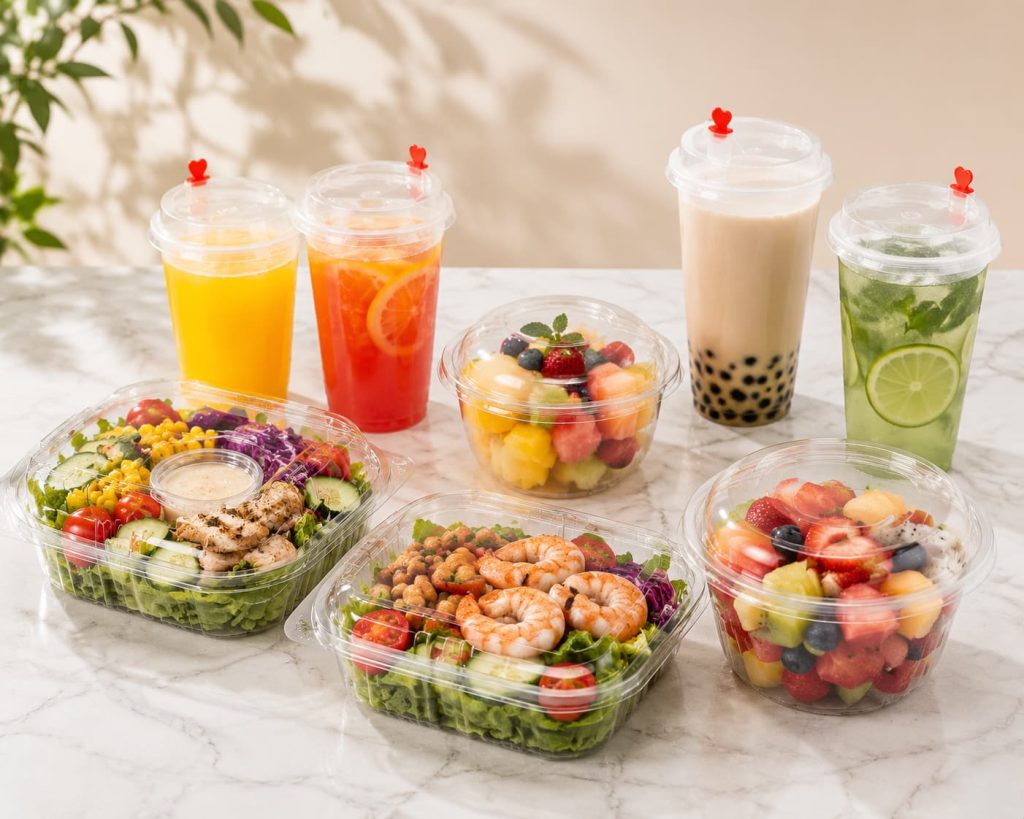
PET has become one of the most widely recycled packaging materials globally.
Its advantages include:
- Excellent clarity
- Strong product visibility
- Established recycling infrastructure
- Lightweight transportation
- High consumer acceptance
PET packaging is particularly common in:
- Fruit packaging
- Salad containers
- Fresh food packaging
- Bakery packaging
- Cold-chain applications
For many food brands, PET continues to provide an effective balance between product presentation and recyclability.
The New Questions Packaging Buyers Are Asking
The rise of EPR policies has transformed procurement discussions.
Ten years ago, conversations often centered around:
- Unit price
- Minimum order quantity
- Production lead time
- Shipping schedules
Today, buyers increasingly ask different questions:
- Is this packaging recyclable in our target market?
- Can you provide material composition data?
- Does this design support EPR compliance?
- Can recycled content be incorporated?
- What sustainability documentation is available?
- How will this packaging perform under future regulations?
These questions reflect a broader shift in the role of packaging.
Packaging is no longer viewed merely as a consumable product. It is increasingly regarded as part of a company’s compliance strategy and sustainability roadmap.
Packaging Suppliers Are Becoming Compliance Partners
As regulations become more complex, food brands are looking for more than manufacturing capability.
They increasingly seek suppliers that understand evolving regulatory requirements and can provide guidance on packaging choices.
This is changing the role of packaging manufacturers.
Rather than simply supplying containers, trays, cups, and lids, suppliers are becoming strategic partners that contribute to:
- Material selection
- Packaging optimization
- Regulatory preparedness
- Sustainability initiatives
- Long-term risk reduction
The most successful packaging suppliers will likely be those capable of combining manufacturing expertise with regulatory awareness and market insight.
What This Means for Food Packaging Manufacturers
For packaging manufacturers, the implications are significant.
Future competitiveness will increasingly depend on the ability to deliver:
Recyclable Packaging Solutions
Packaging designed with end-of-life recovery in mind.
Material Transparency
Clear documentation regarding material composition and recyclability.
Regulatory Adaptability
The ability to respond quickly to changing market requirements.
Sustainable Product Innovation
Packaging that balances functionality, cost, and environmental performance.
Companies that invest in these capabilities today will be better positioned to meet customer expectations tomorrow.
How DASHAN Supports the Industry’s Transition
As packaging regulations continue to evolve, food brands require solutions that balance compliance, practicality, and commercial performance.
DASHAN supports customers through a range of food packaging products designed for modern market requirements, including:
- PP food containers
- PET fruit packaging
- Airline meal trays
- Reusable PP cups
- OEM food packaging development
- ODM packaging solutions
By focusing on recyclable materials, efficient packaging design, and export-oriented manufacturing, DASHAN helps customers adapt to changing regulatory expectations while maintaining product quality and operational efficiency.
As the global packaging landscape becomes increasingly shaped by compliance considerations, selecting packaging solutions that support future regulatory requirements can provide lasting value throughout the supply chain.
FAQ
1. What is Extended Producer Responsibility (EPR) in packaging?
Extended Producer Responsibility (EPR) is a policy approach that makes producers, importers, or brand owners responsible for the collection, recycling, and management of packaging waste after products are used. The goal is to encourage more sustainable packaging design and improve recycling rates.
2. How do packaging taxes affect food packaging businesses?
Packaging taxes can increase the overall cost of packaging that does not meet sustainability criteria, such as recycled-content requirements or recyclability standards. These regulations often influence material selection, packaging design, and sourcing decisions.
3. Why is packaging compliance becoming more important for exporters?
Many countries now require detailed packaging information, recycling data, and compliance documentation. Exporters that fail to meet local packaging regulations may face additional costs, restricted market access, or difficulties working with international customers.
4. Are PP and PET packaging materials still suitable under modern regulations?
Yes. PP and PET remain widely used because they offer strong performance, food safety benefits, and established recycling pathways in many regions. Their recyclability makes them important materials in the transition toward a circular packaging economy.
5. How can packaging suppliers help businesses prepare for EPR and packaging tax regulations?
Experienced packaging suppliers can support customers by providing recyclable packaging solutions, material transparency, compliance documentation, and packaging designs that align with emerging regulatory requirements and sustainability goals.
Conclusion
The most significant change occurring in the packaging industry today is not the introduction of a specific tax or a particular EPR program. It is the transformation of packaging itself.
Packaging is evolving from a cost-driven commodity into a strategic business asset.
The companies that succeed in this new environment will not necessarily be those with the cheapest packaging. Instead, they will be those that understand how packaging influences compliance costs, sustainability objectives, supply chain resilience, and long-term competitiveness.
Packaging taxes and EPR policies are accelerating this transition. They are encouraging businesses to think beyond short-term procurement decisions and consider the full lifecycle of packaging materials.
For food brands, exporters, and packaging manufacturers, the message is increasingly clear: the future of packaging will be defined not only by what packaging does, but also by what happens to it after its job is done.
References
- Organisation for Economic Co-operation and Development (OECD) – Global Plastics Outlook
https://www.oecd.org/environment/plastics - European Commission – Packaging and Packaging Waste Regulation (PPWR)
https://environment.ec.europa.eu - European Commission – Extended Producer Responsibility Guidance
https://environment.ec.europa.eu/topics/waste-and-recycling - Ellen MacArthur Foundation – Circular Economy for Packaging
https://www.ellenmacarthurfoundation.org - Food Packaging Forum
https://www.foodpackagingforum.org - World Packaging Organisation (WPO)
https://www.worldpackaging.org - Plastics Industry Association
https://www.plasticsindustry.org - DASHAN Food Packaging Solutions
https://www.dashanpacking.com
Copyright Statement
© 2026 Dashan Packing. All rights reserved.
This article is an original publication by the Dashan Packing team based on industry research, market analysis, and packaging expertise. Unauthorized reproduction, distribution, or copying of this content is prohibited without prior written permission.
Dashan Packing is committed to delivering reliable, original, and professional information for the global food packaging industry.