

Quick Summary
Modern food retail depends heavily on packaging to maintain freshness, safety, and product quality. Proper packaging materials can reduce oxygen exposure, control moisture, and protect food during transportation and storage. Materials such as PET, PP, CPET, RPET, and bagasse each play different roles in extending shelf life across fresh foods, ready meals, and frozen products. By combining the right materials with thoughtful packaging design, retailers can reduce food waste and improve product performance on shelves.
Introduction: The Growing Importance of Shelf Life in Food Retail
In modern food retail, shelf life has become one of the most critical factors determining product success. Supermarkets, convenience stores, online grocery platforms, and food delivery services all depend on packaging that can maintain food freshness, safety, and visual appeal for as long as possible. When shelf life is too short, retailers face increased product waste, higher logistics costs, and reduced profitability.
According to global food waste reports, a significant percentage of fresh food losses occur during retail and distribution stages. While temperature control and supply chain efficiency are important, packaging plays a fundamental role in protecting food from environmental factors that accelerate spoilage.
Modern food packaging is no longer just a container. It functions as a protective system that controls oxygen exposure, moisture levels, microbial growth, and physical damage. With the right material and structural design, packaging can significantly extend the shelf life of fresh foods, ready meals, and frozen products.
Key Factors That Affect Food Shelf Life
To understand how packaging extends shelf life, it is important to understand the main factors that cause food to deteriorate.
Oxygen Exposure
Oxygen is one of the primary drivers of food spoilage. When food is exposed to oxygen, oxidation reactions occur, which can degrade flavor, color, and nutritional value. For example, fresh meat may turn brown, fruits may discolor, and oils may become rancid.
Packaging materials with good oxygen barrier properties help slow down these reactions and extend product freshness.
Moisture Control
Moisture plays a complex role in food preservation. Too much moisture encourages microbial growth, while too little moisture can cause food to dry out and lose texture. Effective packaging helps maintain the ideal moisture balance inside the container.
For example, fresh produce packaging must allow controlled moisture release while preventing excessive condensation.
Temperature Fluctuations
Temperature changes during transportation and storage can accelerate spoilage. Frozen foods require packaging that maintains structural integrity at low temperatures, while ready meals must withstand reheating processes such as microwaving or oven heating.
Packaging materials must therefore be designed to tolerate temperature extremes without deformation or leakage.
Light Exposure
Exposure to light, especially ultraviolet light, can degrade certain nutrients and affect food color. Dairy products, beverages, and prepared meals can all suffer from light-induced oxidation.
Opaque or UV-resistant packaging can help reduce this type of degradation.
Packaging Technologies That Extend Shelf Life
Advances in packaging technology have introduced several methods that help protect food and extend its usable life.
Barrier Packaging
Barrier packaging materials are designed to prevent the transmission of gases, moisture, and aromas. High-barrier packaging is especially important for products such as meat, seafood, and ready meals.
Different materials provide different barrier properties depending on the application.
Modified Atmosphere Packaging (MAP)
Modified atmosphere packaging involves replacing the air inside a package with a specific gas mixture, often containing carbon dioxide and nitrogen. This environment slows microbial growth and oxidation.
MAP is widely used in fresh meat packaging, salad containers, and bakery products.
Vacuum Packaging
Vacuum packaging removes most of the oxygen inside the package. This significantly reduces oxidation and bacterial growth, extending shelf life for meats and processed foods.
Temperature-Resistant Packaging
Some foods require packaging that can handle both freezing and reheating. These packages must maintain structural strength and food safety throughout temperature changes.
Comparison of Packaging Materials for Shelf Life Performance
Different packaging materials offer different performance characteristics. The following table provides a simplified comparison of common food packaging materials used in modern retail.
| Material | Oxygen Barrier | Heat Resistance | Transparency | Typical Applications |
|---|---|---|---|---|
| PET | Good | Moderate | Excellent | Fresh food containers, salads, fruit |
| RPET | Good | Moderate | Excellent | Sustainable retail packaging |
| PP | Moderate | High | Moderate | Microwave-ready meals |
| CPET | Excellent | Very High | Low | Frozen ready meals, airline catering |
| Bagasse | Low | Moderate | Opaque | Eco-friendly takeaway packaging |
| PLA | Moderate | Low–Moderate | High | Cold food containers |
Each material is selected based on the food type, required shelf life, and distribution conditions.
Packaging Solutions for Different Food Categories
Food retailers sell a wide range of products, each with unique packaging requirements.
Fresh Produce
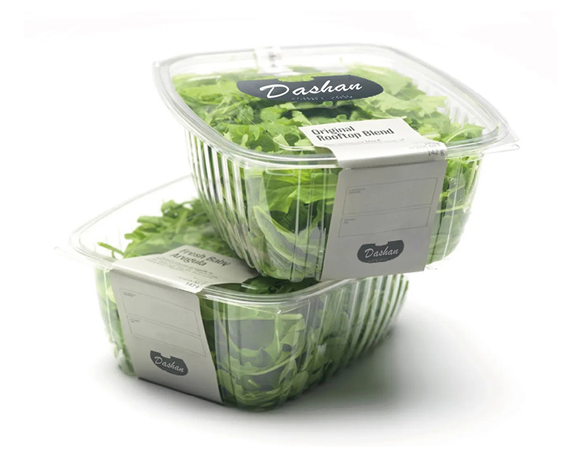
Fresh fruits and vegetables require packaging that maintains freshness while allowing limited airflow. Transparent PET or RPET containers are widely used because they provide excellent product visibility and protection during transportation.
Clear containers also allow customers to visually inspect product quality, which can increase purchase confidence.
Ready-to-Eat Meals
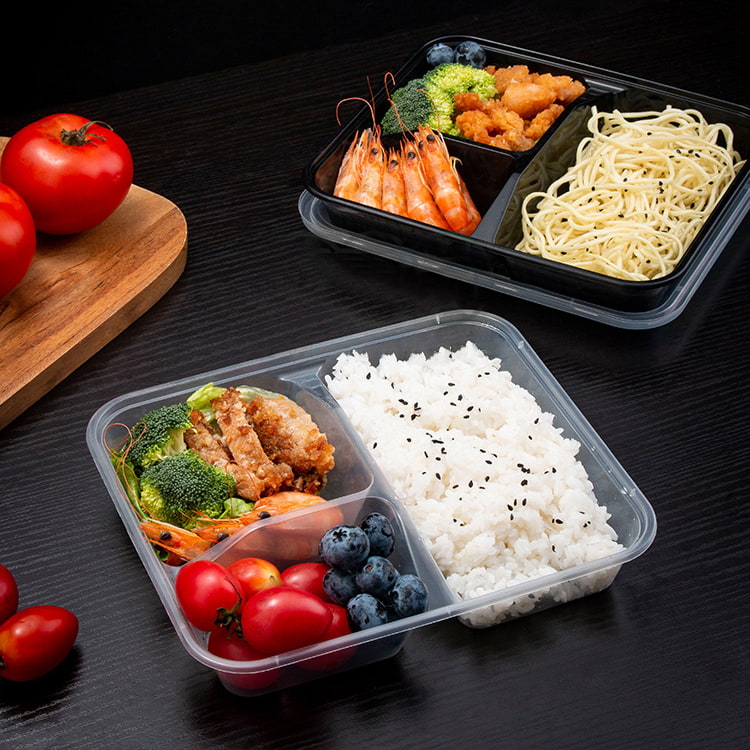
Prepared meals such as supermarket bento boxes and microwaveable dishes require packaging that can tolerate high temperatures and resist oils and sauces.
PP trays are commonly used because they are microwave-safe and durable.
Frozen Foods
Frozen meals require packaging that can withstand extremely low temperatures during storage while maintaining structural strength. When these meals are reheated, the packaging must also resist high temperatures.
CPET trays are often used for these applications because they perform well in both freezing and heating environments.
Takeaway and Delivery Foods
Takeaway meals must remain secure during transportation. Packaging must resist leaks, maintain structure, and keep food warm.
Bagasse containers and PP containers are frequently used in food delivery services due to their durability and sustainability.
Sustainability and Shelf Life: A Balanced Approach
Modern food packaging must balance two important priorities: sustainability and food preservation.
While environmentally friendly materials are increasingly popular, they must still provide sufficient protection to prevent food waste. In many cases, extending food shelf life can actually reduce overall environmental impact by minimizing wasted food.
Recyclable materials such as RPET and PP allow retailers to maintain packaging performance while supporting circular economy goals. Meanwhile, plant-based materials like bagasse provide an alternative for certain takeaway applications.
Packaging Design and Structural Performance
Material selection is only part of the equation. Packaging design also plays a critical role in food preservation.
Important structural design features include:
-
Strong sealing performance to prevent air leakage
-
Structural rigidity to protect food during transport
-
Stackability for efficient logistics
-
Leak resistance for liquids and sauces
For example, clamshell containers help protect delicate foods such as salads and pastries, while compartment trays keep different food items separated to maintain texture and flavor.
Supporting Shelf-Life Performance Through Manufacturing Expertise
Beyond materials and design, manufacturing quality is also crucial. Reliable packaging suppliers must ensure consistent material quality, precise molding, and food safety compliance.
Manufacturers like DASHAN provide a range of packaging solutions designed for different food retail scenarios. By offering multiple material options—including PLA, PET, CPET, RPET, PP, bagasse, and cornstarch products—food brands can choose packaging that matches their specific shelf life and sustainability goals.
For example:
-
Clear PET and RPET containers help maintain freshness and improve product visibility in retail displays
-
PP trays support microwave-ready meal packaging
-
CPET trays provide reliable performance for frozen meals and airline catering
-
Bagasse packaging offers an eco-friendly option for takeaway food applications
With customized mold design and consistent production quality, packaging manufacturers can help retailers improve both product protection and consumer experience.
Emerging Innovations in Shelf-Life Packaging
The future of food packaging will likely include several technological innovations aimed at further extending shelf life.
Smart Packaging
Smart packaging technologies include freshness indicators that change color when food begins to spoil.
Active Packaging
Active packaging incorporates components such as oxygen absorbers or antimicrobial materials that actively preserve food quality.
Improved Sustainable Materials
Research is ongoing to develop biodegradable materials with improved barrier properties that can match the performance of traditional plastics.
These innovations will continue to reshape the food packaging industry in the coming years.
FAQ
1. How does packaging help extend the shelf life of food?
Packaging protects food from oxygen, moisture, light, and contamination. By creating a controlled environment around the product, packaging slows down microbial growth and oxidation, which helps maintain freshness and safety for longer periods.
2. Which packaging materials are best for extending shelf life?
Common materials include PET, PP, CPET, and RPET. PET offers excellent clarity and good barrier properties for fresh foods, PP works well for microwaveable meals, and CPET is ideal for frozen or oven-ready foods.
3. Why is oxygen control important in food packaging?
Oxygen exposure accelerates food spoilage through oxidation and microbial growth. Packaging with strong barrier properties helps reduce oxygen exposure and maintain food quality during storage and transportation.
4. How does packaging help reduce food waste in retail?
By extending the shelf life of products, packaging allows retailers to store and display food for longer periods without compromising quality. This reduces the number of products that must be discarded due to spoilage.
5. What role does sustainable packaging play in modern food retail?
Sustainable packaging materials such as RPET and bagasse help reduce environmental impact while still providing functional protection for food products. Many retailers now seek packaging solutions that balance performance with sustainability.
6. Why do many food brands work with packaging manufacturers like DASHAN?
Experienced manufacturers such as DASHAN provide multiple material solutions—including PET, PP, CPET, RPET, PLA, and bagasse—allowing brands to select packaging that matches their specific food applications while maintaining food safety and durability.
Conclusion
Shelf life has become a critical factor in modern food retail. As supply chains grow more complex and consumer expectations rise, packaging must do more than simply contain food.
Effective packaging protects food from oxygen exposure, moisture imbalance, temperature fluctuations, and physical damage. By selecting the appropriate material and design, retailers can significantly extend product freshness while reducing waste.
Different food categories require different packaging solutions, from clear PET containers for fresh produce to CPET trays for frozen meals. At the same time, sustainability considerations are driving the adoption of recyclable and plant-based materials.
Ultimately, successful food packaging strategies depend on choosing materials and manufacturing partners that can deliver both performance and reliability. With the right packaging solutions, food retailers can improve shelf life, reduce waste, and enhance the overall consumer experience.
References
-
Food and Agriculture Organization (FAO) – Food Loss and Food Waste
https://www.fao.org/food-loss-and-food-waste/en/ -
U.S. Food & Drug Administration – Food Packaging & Food Safety
https://www.fda.gov/food/food-ingredients-packaging/food-packaging -
European Commission – Packaging and Packaging Waste Directive
https://environment.ec.europa.eu/topics/waste-and-recycling/packaging-waste_en -
PlasticsEurope – Plastics in Food Packaging
https://plasticseurope.org/knowledge-hub/plastics-in-food-packaging/ -
Sustainable Packaging Coalition – Packaging Sustainability Resources
https://sustainablepackaging.org/resources/
Copyright Statement
© 2026 Dashan Packing. All rights reserved.
This article is an original work created by the Dashan Packing editorial team.
All text, data, and images are the result of our independent research, industry experience,
and product development insights. Reproduction or redistribution of any part of this content
without written permission is strictly prohibited.
Dashan Packing is committed to providing accurate, evidence-based information and
to upholding transparency, originality, and compliance with global intellectual property standards.