

Quick Summary
The EU PPWR introduces mandatory recyclability standards, recycled content targets, reuse requirements, and harmonized labeling for food packaging. It applies directly across all EU member states and affects both EU and non-EU suppliers. Companies must redesign packaging and strengthen compliance systems to maintain EU market access.
1. Introduction: Why PPWR Is Structurally Different
The European Union’s Packaging and Packaging Waste Regulation (PPWR) represents a structural shift in how packaging is regulated across Europe. Unlike the previous Packaging and Packaging Waste Directive (PPWD), which required Member States to transpose goals into national law, the PPWR is a regulation. That distinction matters.
A directive allows variation in national implementation. A regulation applies directly and uniformly across all Member States. For food packaging suppliers, importers, and exporters, this means reduced interpretive flexibility and increased legal clarity—but also stricter and more harmonized enforcement.
The PPWR is not a symbolic environmental initiative. It is a systemic redesign of how packaging is conceived, manufactured, documented, and placed on the EU market. And importantly, it affects not only EU-based producers, but any company exporting packaging or packaged goods into the EU.
2. What the EU PPWR Covers
The PPWR applies to all packaging placed on the EU market, regardless of origin. This includes:
-
Primary food packaging
-
Secondary and transport packaging
-
E-commerce packaging
-
Service packaging (e.g., takeaway containers, cups)
It affects manufacturers, importers, distributors, and online sellers.
Its core objectives are:
-
Reduce packaging waste generation
-
Ensure all packaging is recyclable by design
-
Increase recycled content usage
-
Harmonize labeling and compliance requirements
-
Strengthen Extended Producer Responsibility (EPR)
For food packaging, this means design decisions are no longer purely commercial or performance-based. They must now align with regulatory recyclability criteria and documentation standards.
3. Mandatory Recyclability: Design for Recycling Becomes Law
One of the most transformative aspects of PPWR is the shift from “encouraged recyclability” to mandatory recyclability performance standards.
Packaging must meet recyclability performance grades, typically structured in tiers (e.g., A, B, C classifications based on actual recyclability in existing systems). Packaging that does not meet minimum thresholds may face restrictions or higher EPR fees.
This impacts design choices immediately.
Key Design Implications
-
Mono-material structures are strongly favored
-
Complex multi-layer laminates are at risk
-
Excessive pigmentation may reduce recyclability grade
-
Labels, adhesives, and inks are under scrutiny
Table 1: Recyclability Risk by Material Type
| Material Type | PPWR Risk Level | Primary Concern |
|---|---|---|
| Mono PET | Low | Additives & color interference |
| Mono PP | Low–Medium | Sorting stream compatibility |
| Multi-layer plastics | High | Mechanical recycling barriers |
| Paper with plastic lining | Medium–High | Fiber contamination |
| Compostable plastics | Conditional | Limited composting infrastructure |
For food packaging suppliers, this shifts the competitive advantage toward materials that already integrate into established recycling streams, particularly PET and, to a growing extent, PP.
4. Recycled Content Requirements
The PPWR introduces binding recycled content targets for certain packaging categories, especially plastic beverage packaging, with sector-specific thresholds that increase over time.
This creates structural demand for:
-
Food-grade RPET
-
Recycled polypropylene (rPP)
-
Certified post-consumer resin (PCR)
The implications are significant:
-
Increased raw material price volatility
-
Supply constraints for high-quality PCR
-
Documentation and traceability obligations
Exporters must not only use recycled material but also demonstrate verified chain-of-custody systems.
Manufacturers with diversified material capability—including virgin and recycled polymers—are better positioned to manage this transition. Companies such as DASHAN, operating across PET, RPET, PP, and fiber systems, reflect the type of multi-material adaptability increasingly necessary under PPWR.
5. Packaging Minimization and Over-Packaging Restrictions
The PPWR introduces requirements to reduce unnecessary packaging volume and empty space, particularly relevant to transport and e-commerce packaging.
Rules may limit:
-
Excessive void space
-
Decorative secondary layers
-
Over-dimensioned takeaway containers
This does not eliminate protective packaging but requires justification based on function.
For foodservice packaging, this creates pressure to optimize geometry and reduce material weight without compromising performance.
Lightweighting—when properly engineered—aligns directly with these requirements. However, under-engineered lightweighting risks structural failure, which would undermine compliance and increase waste.
6. Reuse and Refill Targets
The PPWR sets reuse and refill targets for specific sectors, particularly in transport and beverage packaging.
In foodservice, the regulatory direction encourages reuse systems, but practical barriers remain:
-
Hygiene management
-
Reverse logistics complexity
-
Infrastructure readiness
-
Consumer behavior patterns
Single-use packaging will not disappear, but it must justify itself under stricter sustainability criteria.
This shifts the conversation from elimination to optimization.
7. Compostable Packaging Under PPWR

Contrary to common perception, compostable packaging is not universally favored under PPWR.
The regulation limits compostable mandates to specific use cases where compostability provides systemic environmental benefit. Even then, strict industrial composting standards apply.
Key considerations:
-
Must meet recognized EU compostability standards
-
Must align with existing organic waste collection systems
-
Clear labeling required
-
Greenwashing claims face enforcement scrutiny
Compostable does not automatically equal compliant. In many cases, mono-material recyclable packaging may achieve stronger regulatory positioning.
8. Reinforced Extended Producer Responsibility (EPR)
The PPWR strengthens EPR frameworks across Member States.
Producers are financially responsible for:
-
Collection
-
Sorting
-
Recycling
-
Waste management costs
Fees are modulated based on recyclability performance. Better-designed packaging pays lower fees.
This creates measurable cost differentials between:
-
Easily recyclable mono-material packaging
-
Multi-material or poorly sortable packaging
For exporters, EPR obligations increasingly extend through importers, affecting pricing structures and contractual liability.
9. Documentation and Traceability Obligations
Compliance is no longer limited to material performance. It now includes documentation depth.
Companies must maintain:
-
Technical documentation files
-
Declaration of Conformity
-
Evidence of recyclability classification
-
Recycled content certification
-
Supply chain transparency
Digital product passport discussions further suggest that traceability requirements may expand.
Exporters lacking structured compliance documentation risk shipment delays, penalties, or market exclusion.
10. Material-Specific Impacts
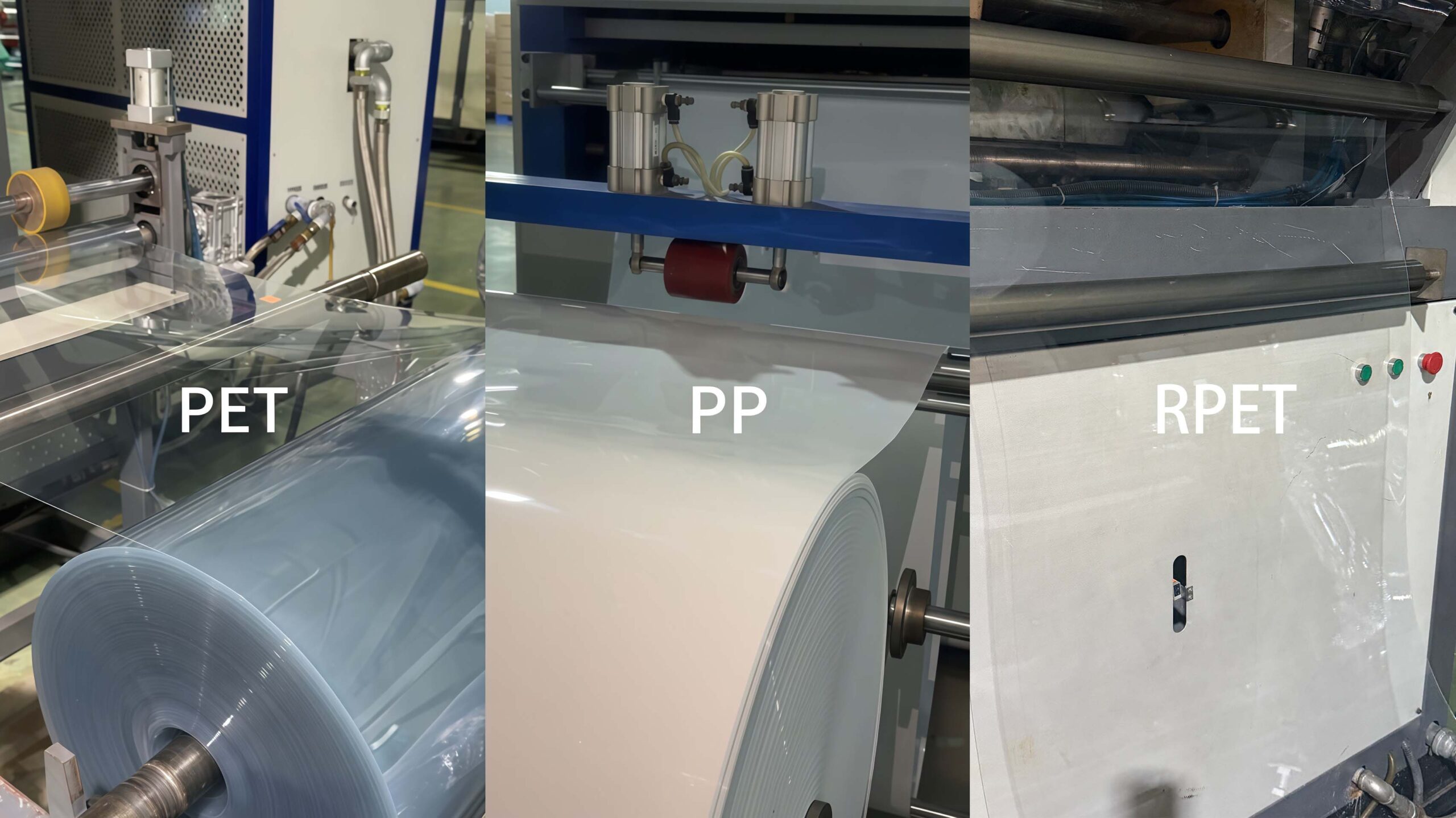
PET & RPET
PET remains structurally advantaged due to established recycling infrastructure. However:
-
Colored PET may face reduced recyclability grading
-
RPET supply competition may increase prices
PP
Technically recyclable but sorting performance varies by region. Improvements in sorting technologies may improve its standing.
Fiber-Based Packaging (Including Bagasse)
Often perceived as environmentally favorable, but plastic coatings may reduce recyclability. Barrier design becomes critical.
Compostable Plastics (PLA, Starch Blends)
Limited to defined use cases. Must avoid contamination of recycling streams.
Table 2: Comparative Regulatory Positioning
| Material | Recyclability Alignment | PCR Availability | PPWR Risk Profile |
|---|---|---|---|
| PET | High | Strong | Low |
| RPET | High | Competitive | Low–Medium |
| PP | Moderate | Developing | Medium |
| Fiber | Conditional | N/A | Medium |
| PLA | Limited | Low | High–Conditional |
11. Impact on Non-EU Suppliers
PPWR reshapes global trade dynamics.
Non-EU suppliers must:
-
Align material design with EU recyclability criteria
-
Maintain traceable recycled content systems
-
Prepare full compliance documentation
-
Coordinate with EU importers on EPR obligations
Shipment rejection risks increase if documentation is incomplete.
Suppliers capable of adjusting material strategies—rather than relying on a single packaging type—are more resilient under regulatory transitions.
12. Economic and Market Implications
The PPWR introduces cost pressures:
-
Compliance investment
-
PCR procurement premiums
-
Redesign expenses
-
Administrative burden
At the same time, it may accelerate market consolidation. Smaller suppliers lacking technical documentation capacity may exit the EU market.
Over time, compliance capability becomes a competitive advantage rather than a cost center.
13. Strategic Actions for Buyers and Exporters
Practical steps include:
-
Conduct recyclability audits on current packaging portfolio
-
Evaluate mono-material redesign opportunities
-
Secure long-term PCR supply agreements
-
Establish documentation systems early
-
Monitor delegated acts and technical updates
Early adaptation reduces disruption risk.
FAQ
1. What is the EU PPWR?
The Packaging and Packaging Waste Regulation (PPWR) is a binding EU regulation replacing the previous Packaging Directive. Unlike directives, it applies directly in all EU member states without national transposition, ensuring uniform enforcement.
2. Does PPWR affect non-EU exporters?
Yes. Any company placing packaging or packaged goods on the EU market—regardless of origin—must comply. This includes Asian food packaging manufacturers supplying EU importers.
3. What are the main requirements for plastic food packaging?
Key requirements include:
-
Mandatory recycled content targets for certain plastic packaging
-
Design for recyclability standards
-
Minimization of excessive packaging
-
Harmonized labeling
-
Contribution to EPR systems
4. Are compostable materials automatically compliant?
No. Compostability does not exempt packaging from recyclability or performance requirements. Only specific applications may require industrial compostability under future implementing acts.
5. How does PPWR impact bagasse or fiber packaging?
Fiber-based packaging must still meet recyclability criteria and waste management compatibility. Barrier coatings, laminations, and food contamination risks will be closely evaluated.
6. When will PPWR take effect?
The regulation enters into force after publication in the Official Journal of the EU, with phased implementation deadlines extending toward 2030 and beyond.
Conclusion: PPWR Is Structural, Not Cosmetic
The EU PPWR is not a superficial update to packaging law. It reshapes material design, supply chain transparency, economic incentives, and cross-border trade.
For food packaging, the regulation elevates recyclability from aspiration to obligation. It embeds recycled content into material strategy. It converts design decisions into regulatory liabilities.
Companies that treat PPWR as a compliance formality may struggle. Those that integrate it into engineering, sourcing, and documentation systems will gain structural advantage.
The future of food packaging in the EU will be defined not only by sustainability rhetoric, but by measurable recyclability performance and traceable material integrity.
References
-
European Commission – Proposal for a Regulation on Packaging and Packaging Waste (PPWR)
https://environment.ec.europa.eu/publications/proposal-packaging-and-packaging-waste_en -
European Parliament – Packaging and Packaging Waste Regulation updates
https://www.europarl.europa.eu -
European Environment Agency (EEA) – Packaging waste statistics
https://www.eea.europa.eu -
EU Circular Economy Action Plan
https://environment.ec.europa.eu/strategy/circular-economy-action-plan_en
Copyright Statement
© 2026 Dashan Packing. All rights reserved.
This article is an original work created by the Dashan Packing editorial team.
All text, data, and images are the result of our independent research, industry experience,
and product development insights. Reproduction or redistribution of any part of this content
without written permission is strictly prohibited.
Dashan Packing is committed to providing accurate, evidence-based information and
to upholding transparency, originality, and compliance with global intellectual property standards.