

Quick Summary
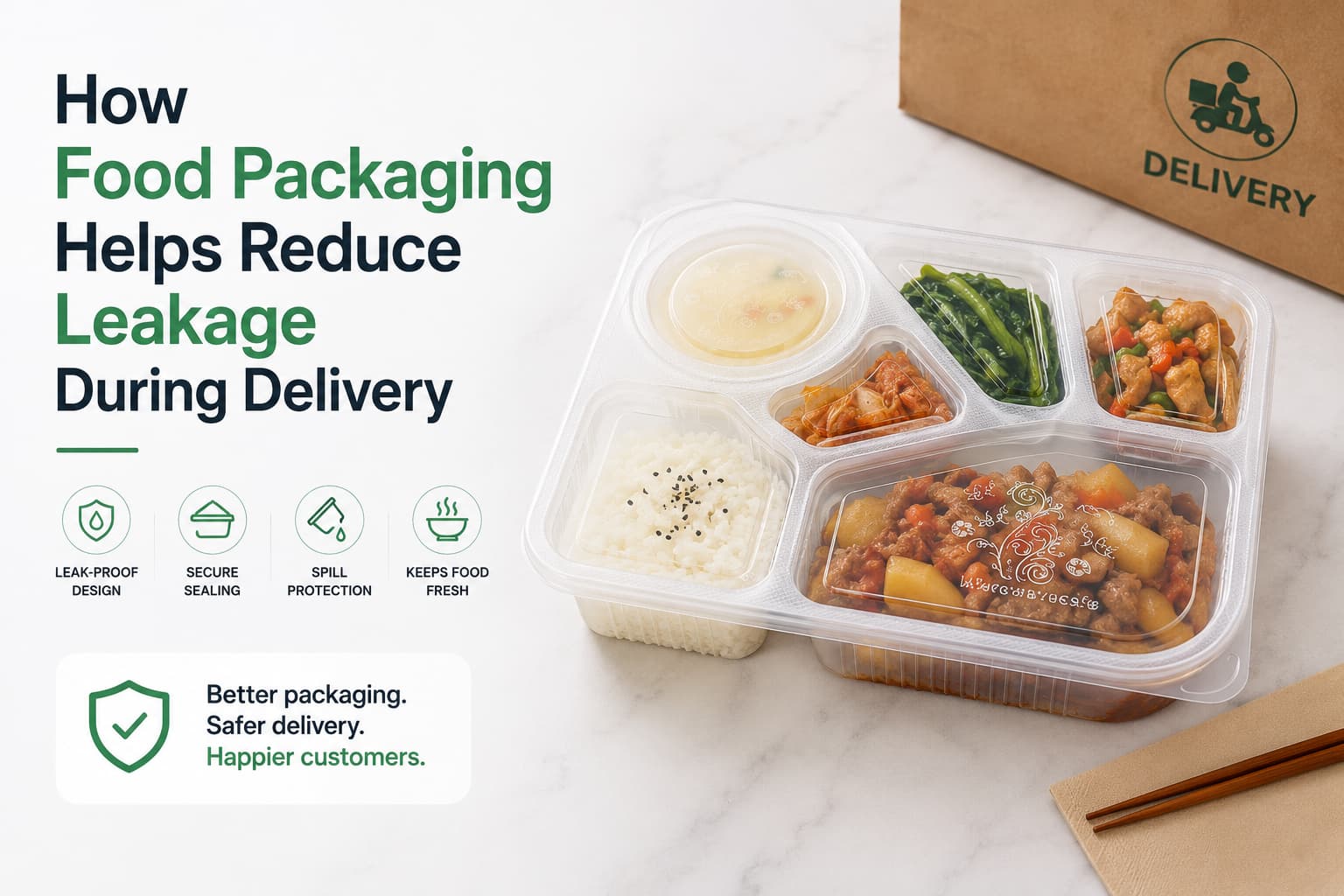
Food delivery has increased the importance of leak-resistant food packaging. During transportation, meals experience vibration, stacking pressure, and temperature changes that can easily cause spills and food mixing. PP six-compartment meal boxes with separate soup bowls help improve food organization, reduce leakage risks, maintain meal presentation, and support microwave reheating. Their strong structure, heat resistance, and practical compartment design make them highly suitable for modern takeaway, catering, and meal delivery applications.
Introduction
Food delivery has transformed the global restaurant industry. From quick-service chains to local takeaway stores, more businesses now depend on delivery platforms to reach customers beyond traditional dine-in environments. Consumers increasingly expect meals to arrive quickly, safely, and in the same condition as they would inside a restaurant.
However, this shift has created a major challenge for foodservice operators: leakage during delivery.
Spilled soup, leaking sauces, mixed side dishes, and damaged packaging are among the most common complaints in takeaway orders. Even when the food itself tastes good, poor packaging can negatively affect customer perception, reduce repeat purchases, and damage a restaurant’s reputation on delivery platforms.
As delivery distances become longer and meal combinations become more complex, restaurants are placing greater importance on packaging performance. This is especially true for combo meals that include rice, vegetables, meat dishes, sauces, and soups in a single order.
To address these challenges, many foodservice businesses are turning to PP six-compartment meal boxes with separate soup bowls. These packaging systems are designed not only to organize food efficiently, but also to reduce leakage risks during transportation while improving convenience for both restaurants and consumers.
Food Delivery Is Creating New Packaging Challenges
Traditional takeaway packaging was originally designed for short transportation distances and simple meal structures. Modern food delivery environments are much more demanding.
Meals now travel through:
- Motorcycles
- Bicycles
- Cars
- Delivery backpacks
- Multi-order stacking systems
During transportation, packaging experiences constant movement, tilting, vibration, and pressure. Hot food also generates steam, which can weaken certain materials or loosen poorly designed lids.
At the same time, customers expect delivered meals to maintain:
- Clean presentation
- Food separation
- Temperature retention
- Leak resistance
- Structural stability
This means food packaging is no longer simply a disposable container. It has become an important part of the overall dining experience.
| Common Delivery Problem | Impact on Customer Experience |
|---|---|
| Soup leakage | Dirty bags and damaged meals |
| Sauce spills | Mixed flavors and poor appearance |
| Weak container structure | Crushed or deformed food |
| Loose lids | Reduced hygiene perception |
| Food mixing | Lower meal quality |
For restaurants operating on food delivery platforms, these problems can quickly lead to refund requests, negative reviews, and lower customer trust.
Why Multi-Compartment Meal Packaging Is Becoming More Popular
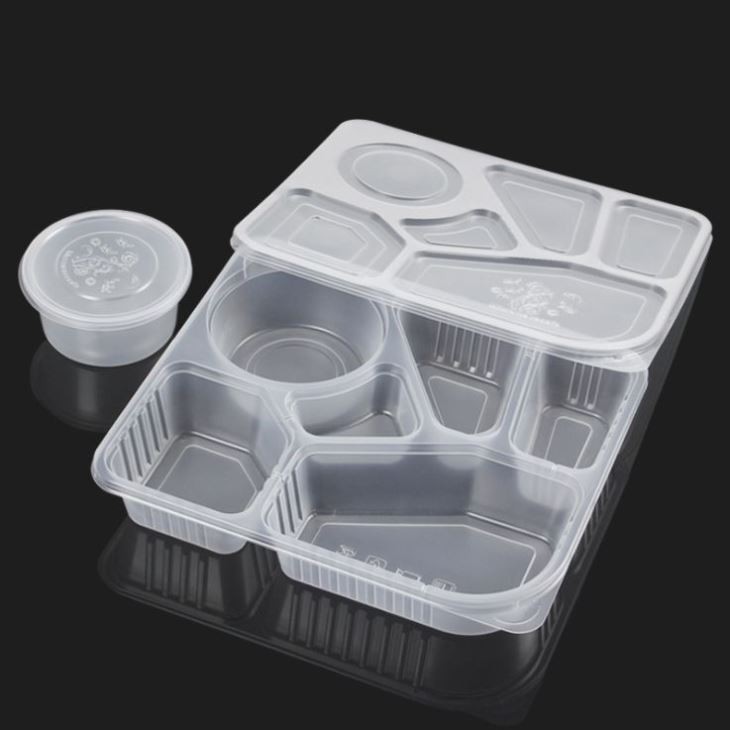
As takeaway consumption grows, meal structures are becoming more diverse. Consumers increasingly order complete meal combinations instead of single food items.
This is especially common for:
- Bento meals
- Rice combo meals
- Healthy meal prep
- Corporate lunches
- Catering services
- Asian takeaway dishes
These meals often contain multiple food categories in a single order, including:
- Rice or noodles
- Protein dishes
- Vegetables
- Pickled side dishes
- Sauces
- Soup
Traditional single-compartment containers struggle to keep these foods organized during transportation. Liquids can easily spread across the container, affecting both presentation and texture.
Multi-compartment meal boxes help solve this problem by physically separating different food categories.
Among these designs, six-compartment meal boxes have become particularly practical because they provide enough space for balanced meal combinations while still maintaining compact overall dimensions.
| Standard Lunch Box | Six-Compartment Meal Box |
|---|---|
| Limited food separation | Organized meal layout |
| Easy sauce spreading | Better liquid control |
| Simple presentation | More professional appearance |
| Suitable for basic meals | Suitable for complete meal sets |
By separating foods more effectively, these containers help maintain freshness, improve visual presentation, and reduce food movement during delivery.
Why Separate Soup Bowls Matter During Delivery
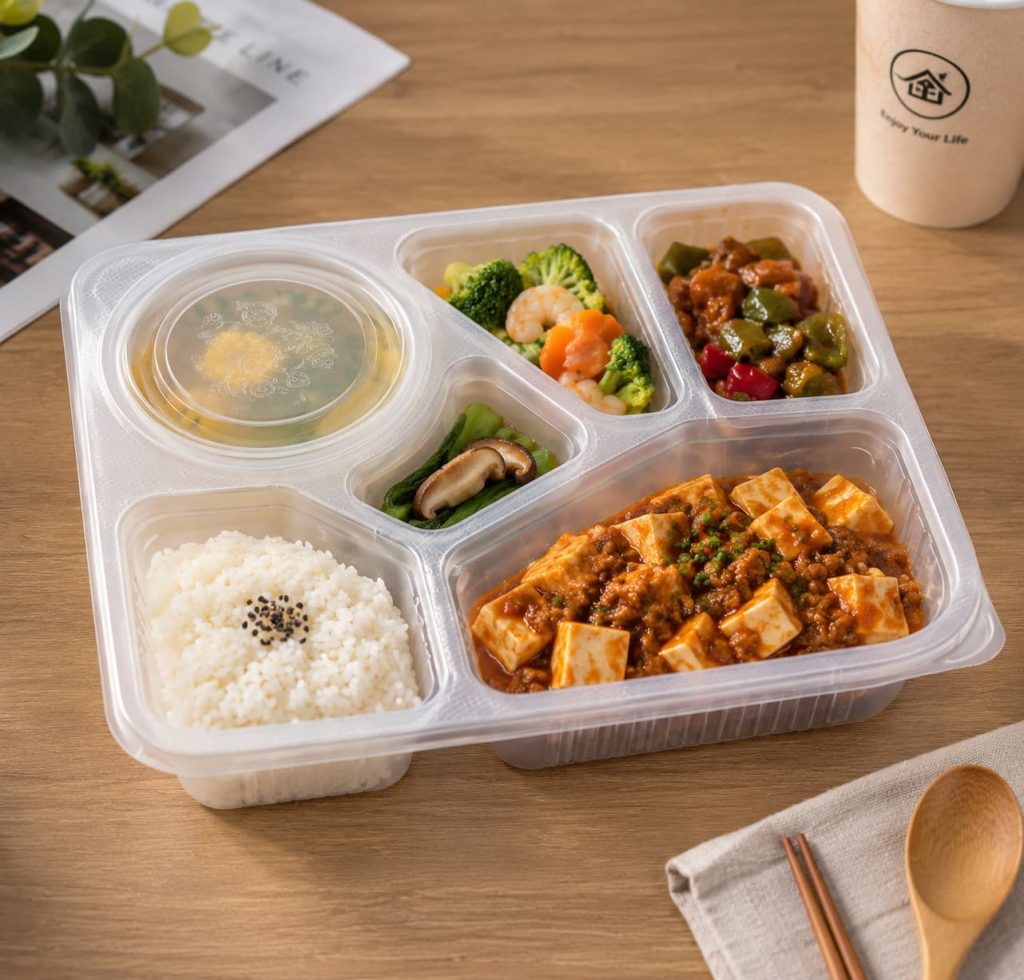
Liquid foods are one of the biggest causes of delivery leakage.
Soups, curries, sauces, and stews move continuously during transportation. Even small gaps between lids and containers can lead to spills under vibration or pressure changes.
This is why many restaurants now prefer separate soup bowl systems instead of placing liquids inside the main meal tray.
Separate soup bowls offer several advantages:
- Reduced liquid contact with solid foods
- Better sealing performance
- Improved meal organization
- Easier transportation inside delivery bags
- Cleaner presentation upon arrival
When combined with secure PP lids, soup bowls can significantly reduce overflow risks during transportation.
This type of packaging is especially useful for:
- Ramen takeaway sets
- Bento meals with soup
- Curry rice meals
- Korean and Japanese takeaway
- Catering lunch combinations
A complete meal packaging system that includes both a compartment tray and a dedicated soup container creates a more stable delivery experience overall.
Why PP Material Performs Well for Delivery Packaging
Material selection plays a major role in delivery packaging performance. Among various food packaging materials, PP (polypropylene) remains one of the most widely used choices for takeaway meal containers.
One reason is its strong heat resistance.
Unlike some lightweight materials that soften easily under high temperatures, PP maintains structural stability during hot food transportation and microwave reheating. This makes it highly suitable for freshly cooked takeaway meals.
PP containers also offer:
- Strong rigidity
- Good impact resistance
- Lightweight transportation advantages
- Reliable sealing compatibility
- Cost efficiency for large-scale operations
Because delivery orders are often stacked together during transportation, packaging must resist compression without collapsing. PP performs particularly well under these conditions compared to many alternative materials.
Packaging Design Plays a Major Role in Leakage Prevention
Leakage prevention depends not only on material quality, but also on packaging structure.
Several design elements directly improve delivery performance.
Tight Lid Sealing
Secure snap-lock lids help reduce accidental opening during transportation. Well-designed lid systems create stronger contact between the container edge and lid structure, minimizing spill risks.
Deep Compartment Structures
Deeper compartments reduce food movement inside the tray. This is especially important for dishes containing sauces or semi-liquid foods.
Reinforced Edges and Corners
Stronger structural reinforcement improves compression resistance during stacking and transportation.
Stackable Design
Packaging designed for stable stacking reduces shifting inside delivery bags, helping meals remain balanced during movement.
| Packaging Feature | Delivery Benefit |
|---|---|
| Tight-fitting lid | Reduced leakage risk |
| Deep compartments | Less food movement |
| Reinforced structure | Better compression resistance |
| Separate soup bowl | Improved liquid safety |
| Stackable design | More stable transportation |
When these features are combined together, restaurants can significantly improve delivery reliability.
Convenience and User Experience Are Becoming More Important
Modern consumers expect more than simple functionality from takeaway packaging.
Convenience now plays a major role in customer satisfaction.
Consumers increasingly prefer packaging that is:
- Easy to carry
- Easy to open
- Microwave safe
- Compact for storage
- Organized and visually clean
Six-compartment PP meal boxes perform well in these areas because they help create a structured dining experience even outside restaurants.
For office workers, students, and commuters, organized packaging improves convenience during eating. Separate compartments also support portion control and prevent foods from becoming mixed before consumption.
Microwave compatibility is another important advantage. Many consumers reheat delivered meals after arrival, making heat-resistant PP packaging especially practical.
In competitive delivery markets, even packaging presentation can influence repeat purchases. Meals that arrive clean, organized, and visually appealing are more likely to create positive customer impressions.
Why Restaurants Are Upgrading Their Delivery Packaging
As competition in food delivery increases, restaurants are realizing that packaging directly affects operational performance and customer retention.
Reliable packaging helps reduce:
- Refund requests
- Delivery complaints
- Food damage
- Packaging failures
- Negative platform reviews
At the same time, standardized meal boxes improve kitchen efficiency during busy delivery periods.
Restaurants can assemble meals faster when packaging dimensions and compartment layouts remain consistent. This becomes especially important for:
- Chain restaurants
- Meal prep businesses
- Catering operations
- High-volume takeaway stores
For many foodservice businesses, packaging is no longer viewed as a simple operating cost. It has become part of the overall brand experience.
This is why many restaurants now work with experienced food packaging manufacturers capable of providing stable-quality PP meal boxes, leak-resistant soup bowls, and customizable compartment configurations for different takeaway applications.
Manufacturers such as DASHAN increasingly focus on practical delivery-oriented food packaging solutions designed for hot meals, organized food presentation, and large-scale foodservice operations.
Future Trends in Delivery Packaging
Food delivery packaging continues evolving rapidly as consumer expectations and industry requirements change.
Several trends are becoming increasingly important.
Improved Leak-Proof Engineering
Restaurants are demanding tighter lid systems and better sealing performance for liquid foods.
Lightweight Yet Durable Structures
Packaging manufacturers are developing thinner yet stronger PP structures to reduce material consumption while maintaining transportation reliability.
More Sustainable Packaging Solutions
Recyclable mono-material packaging systems are gaining attention as governments and consumers place greater focus on environmental responsibility.
Packaging Designed for Automation
As large-scale foodservice operations continue expanding, packaging compatible with automated filling and sealing systems will become more important.
FAQ
1. Why is leakage such a common problem in food delivery?
During delivery, food containers are exposed to movement, tilting, stacking, and vibration. Poor lid sealing or weak container structures can easily cause soup, sauces, or oil to leak during transportation, affecting both food quality and customer experience.
2. Why are multi-compartment meal boxes better for takeaway meals?
Multi-compartment containers help separate rice, vegetables, meat, sauces, and side dishes. This prevents food mixing during transportation and keeps meals visually organized when customers receive them.
3. What are the advantages of PP food containers for delivery?
PP food containers offer excellent heat resistance, strong structural durability, lightweight transportation advantages, and microwave-safe performance. They are widely used for hot takeaway meals because they maintain stability during delivery and reheating.
4. Why do many restaurants use separate soup bowls?
Soup and liquid foods create higher leakage risks during transportation. Separate soup bowls with secure lids help reduce spills, improve meal organization, and protect solid foods from becoming soggy or mixed with liquids.
5. Are PP six-compartment meal boxes microwave safe?
Yes. Most PP meal containers are suitable for microwave reheating, making them convenient for office workers, students, and takeaway customers who reheat meals after delivery.
6. What types of meals commonly use six-compartment packaging?
Six-compartment meal boxes are commonly used for:
- Bento meals
- Asian takeaway sets
- Meal prep services
- Corporate lunches
- Catering meals
- Rice combo meals
- School and institutional foodservice
7. How does packaging structure help reduce leakage?
Features such as tight-fitting lids, deep compartments, reinforced edges, and stable stackable designs help reduce food movement and improve sealing performance during transportation.
8. Why are restaurants upgrading their delivery packaging?
Restaurants increasingly view packaging as part of the customer experience. Better packaging helps reduce complaints, improve food presentation, strengthen brand image, and support more efficient delivery operations.
Conclusion
Food delivery has fundamentally changed the role of food packaging.
Today’s packaging must do far more than simply hold food. It must protect meal presentation, reduce leakage risks, support transportation stability, improve convenience, and maintain customer satisfaction throughout the delivery process.
PP six-compartment meal boxes with separate soup bowls have become increasingly popular because they effectively address many of these modern delivery challenges. Their organized structure, strong heat resistance, lightweight durability, and improved liquid control make them highly suitable for takeaway and delivery applications.
As food delivery continues growing worldwide, restaurants will increasingly depend on reliable packaging solutions that combine functionality, presentation, and operational efficiency. In this environment, high-quality delivery packaging is becoming an essential part of successful foodservice operations rather than just an accessory to the meal itself.
References
- Nature Food – Food Delivery Packaging and Tableware Waste
Research on the rapid growth of takeaway and food delivery packaging systems, including operational pressure on disposable food containers and delivery-related packaging demand. - ScienceDirect – Post-consumer Plastic Packaging Waste from Online Food Delivery Services in South Korea
Academic study analyzing plastic food delivery packaging usage, takeaway meal containers, and delivery packaging waste generated by online food delivery services. - MDPI Sustainability – Environmental Impact of Food Delivery Services: A Review
Review paper discussing food delivery growth, takeaway packaging systems, transportation conditions, and packaging-related sustainability challenges. - Frontiers – The Environmental Impacts of Packaging in Food Delivery Services
Explains the functional role of food packaging in delivery systems, including protection, transportation stability, leakage prevention, and material selection. - U.S. FDA – Food Packaging & Food Contact Substances
Official FDA resource covering food-contact packaging materials, packaging safety requirements, and regulatory considerations for takeaway food containers.
Copyright Statement
© 2026 Dashan Packing. All rights reserved.
This article is an original publication by the Dashan Packing team based on industry research, market analysis, and packaging expertise. Unauthorized reproduction, distribution, or copying of this content is prohibited without prior written permission.
Dashan Packing is committed to delivering reliable, original, and professional information for the global food packaging industry.