

Quick Summary
Corn starch tableware evolved from mid-20th century lab research to mature global products today. Through PLA technology and material innovations, cornstarch cups, plates, and cutlery now offer a biodegradable, renewable alternative to plastics. Brands like DASHAN exemplify how agricultural resources can fuel sustainable packaging solutions for foodservice, aligning with plastic bans and environmental demands.
Introduction
As the global community confronts the environmental crisis caused by excessive plastic consumption, biodegradable alternatives are no longer a niche idea but a necessity. Among the many innovations, corn starch tableware stands out as one of the most widely adopted solutions to replace petroleum-based plastics. What makes it unique is not only its biodegradable nature but also its rich scientific and industrial history that spans decades of research, innovation, and policy support.
This article provides a comprehensive exploration of corn starch tableware: tracing its roots from early laboratory experiments in the mid-20th century to its modern-day global applications. By understanding this journey, businesses and consumers alike can appreciate not only its ecological benefits but also the depth of human ingenuity and collaboration that brought it into reality.
1. Early Scientific Exploration (1950s–1960s)
The story of corn starch tableware begins in the 1950s, when researchers started experimenting with starch-based plastics. The primary goal was to reduce dependence on petroleum by partially substituting it with renewable resources like corn, potatoes, and wheat starch.
These early experiments showed promise but faced serious limitations. The starch-based plastics were weak, brittle, and highly sensitive to moisture. While they could degrade in the environment, their lack of durability made them unsuitable for everyday products like cutlery or cups. At this stage, the concept of starch-based materials remained confined to laboratories.
2. The Birth of Bioplastics as a Concept (1970s)
The 1970s oil crisis accelerated global interest in renewable resources. Researchers in the United States, Japan, and Europe began to seriously consider bioplastics as potential replacements for conventional plastics.
Corn starch, being abundant and relatively inexpensive, was a natural candidate. During this decade, scientific papers described methods of blending starch with synthetic polymers to enhance strength. While the technology was still primitive, it laid the groundwork for future innovations in biodegradable polymers.
This period also saw the emergence of the idea that bioplastics should not only be renewable but also biodegradable, which would later become a driving force for their adoption.
3. Breakthrough with Polylactic Acid (PLA) Technology (1980s)

The true technological leap occurred in the 1980s, with the discovery of PLA (Polylactic Acid) as a viable material derived from corn starch. Scientists learned how to convert corn starch into dextrose, ferment it into lactic acid, and then polymerize it into PLA.
PLA offered a breakthrough because it possessed strength, transparency, and heat resistance—qualities that earlier starch-based plastics lacked. For the first time, researchers could envision producing tableware, packaging, and even textiles from corn starch.
Japan and the United States led the way in developing PLA, and prototypes of corn starch-based cups and utensils appeared during this decade. While not yet commercially widespread, the stage was set for industrial adoption.
4. Commercialization and Industrial Scaling (1990s)
The 1990s marked a turning point as corporations began to see the commercial potential of PLA and starch-based plastics.
-
In 1990, the agricultural giant Cargill started research into PLA commercialization.
-
By 1997, Cargill partnered with Dow Chemical to form Cargill Dow Polymers LLC (later renamed NatureWorks), becoming the first company to scale up corn starch–based PLA production.
This collaboration demonstrated that bioplastics could compete with conventional plastics, at least in specific applications. By the end of the 1990s, the first commercial corn starch tableware products—cups, plates, and cutlery—entered niche markets such as eco-friendly cafes and green-conscious events.
5. Global Expansion and Market Adoption (2000s)
The 2000s saw corn starch tableware move from novelty to practical solution.
-
2002: NatureWorks launched its Ingeo™ PLA line, a milestone that made PLA products widely available.
-
Cafes, supermarkets, and even airlines in the US, Europe, and Japan began replacing polystyrene and polypropylene products with corn starch alternatives.
-
Governments and NGOs started promoting biodegradable packaging as part of waste-reduction policies.
During this period, sugarcane bagasse and cornstarch-based products began to appear side by side as complementary biodegradable solutions. Bagasse was valued for sturdier food containers, while corn starch was ideal for cups, cutlery, and films.
6. Policy and Innovation Driving Growth (2010s)
The 2010s marked a decade of exponential growth for corn starch tableware, fueled by global plastic bans and advances in material science.
-
Countries across Europe, parts of Asia, and even Africa implemented restrictions on single-use plastics, creating immediate demand for biodegradable alternatives.
-
Manufacturing technology improved, solving earlier challenges such as poor heat resistance and water sensitivity. Modern cornstarch cups could now handle both hot and cold drinks without deformation.
-
The rise of e-commerce and food delivery also created huge demand for sustainable packaging solutions.
During this decade, China, India, and Southeast Asia became major manufacturing hubs, driving down costs and making cornstarch tableware accessible to global markets.
7. Corn Starch Tableware Today (2020s)
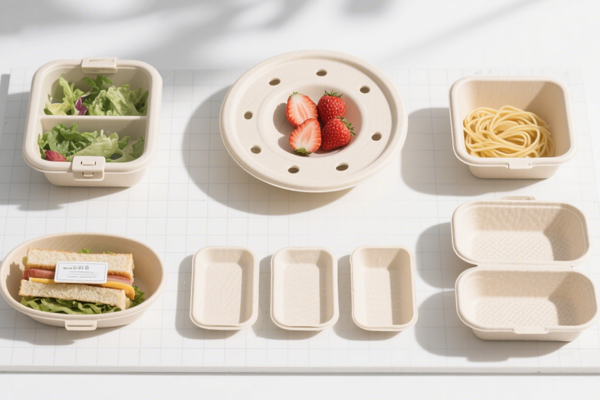
Today, corn starch tableware has become one of the most prominent alternatives to plastic. The industry has matured into a global ecosystem involving raw material suppliers, manufacturers, distributors, and end users.
Key Applications:
-
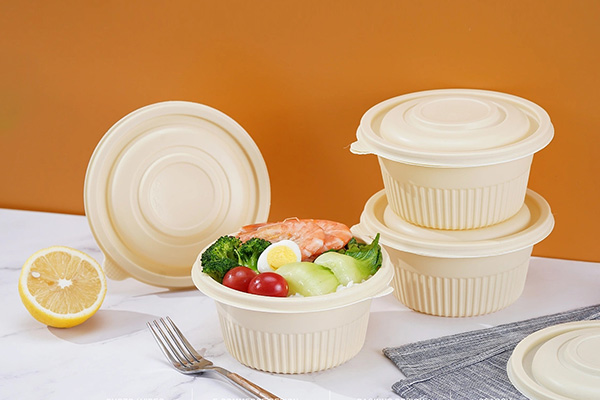
Foodservice Industry: Cups, plates, bowls, and cutlery for cafes, restaurants, and catering.
-
Retail & Supermarkets: Packaging solutions for fresh produce, baked goods, and ready-to-eat meals.
-
Corporate & Institutional Use: Offices, schools, and hospitals where disposable yet safe solutions are necessary.
-
Events & Travel: Concerts, festivals, and airlines where sustainability is increasingly demanded by customers.

Key Players:
Brands like DASHAN have emerged as leaders in producing cornstarch-based cups, cutlery, and packaging. Their 230ml and 130ml cups, for example, are widely adopted in cafes, offices, and take-out services, demonstrating how cornstarch products meet both practical performance and environmental goals.
8. Environmental Impact and Future Outlook
The importance of corn starch tableware lies not only in its convenience but also in its environmental benefits:
-
Biodegradability: Under composting conditions, PLA and starch-based products break down into carbon dioxide and water within months, leaving no toxic residues.
-
Renewable Resource: Unlike petroleum-based plastics, corn starch comes from annually renewable crops.
-
Circular Economy Potential: Corn starch products can be industrially composted, contributing to a closed-loop system of resource use.
Challenges Ahead
-
Composting infrastructure is still limited in many regions, which affects the end-of-life benefits of PLA and starch-based products.
-
Competition from other bioplastics (such as PHA) and natural fibers (such as bagasse) continues to evolve.
The Future
The next generation of corn starch tableware is expected to focus on:
-
Higher heat resistance for hot food applications.
-
Lower production costs through advanced fermentation and processing technologies.
-
Integration with other biodegradable materials like bagasse for hybrid products.
Conclusion
The journey of corn starch tableware from laboratory experiments in the 1950s to mainstream global adoption today is a testament to scientific innovation, industrial perseverance, and societal demand for sustainability.
What began as an experimental attempt to reduce petroleum dependence has evolved into a thriving industry offering billions of eco-friendly cups, plates, and utensils worldwide. Companies like DASHAN are now at the forefront of providing practical, customizable, and environmentally responsible tableware solutions.
As plastic bans continue to spread and consumer demand for green products intensifies, corn starch tableware will remain a cornerstone of the sustainable packaging movement—demonstrating that with the right blend of science, industry, and policy, even everyday objects can contribute to a greener planet.
FAQ
1. What is corn starch tableware made of?
Corn starch tableware is typically made by fermenting corn starch to lactic acid, then polymerizing it into PLA or blending with other biodegradable materials to form cups, plates, etc.
2. How long does corn starch tableware take to decompose?
Under industrial composting conditions, PLA and cornstarch-based tableware can break down within 60–180 days, depending on conditions.
3. Can cornstarch cups handle hot liquids?
Yes. Modern cornstarch/PLA cups are engineered to resist heat and maintain structural integrity with hot beverages for typical use durations.
4. Where is corn starch tableware commonly used?
They’re widely used in cafes, catering, food delivery, offices, schools, and events—places that demand convenient, disposable, yet eco-friendly solutions.
5. What challenges remain for cornstarch tableware adoption?
Key challenges include limited composting infrastructure, higher cost compared to petroleum plastics, performance under extreme heat, and consumer awareness of proper disposal.
References
-
The History of Bioplastics
An overview of the evolution of bioplastics, including the development of corn starch-based materials.
https://bioplasticsnews.com/2018/07/05/history-of-bioplastics -
Production Uses and Environmental Benefits of Corn Starch
Discusses the environmental advantages of corn starch products, particularly in packaging, and their role in reducing plastic pollution.
https://www.dashanpacking.com/corn-to-starch-based-products-eco-friendly -
Corn Starch-Based Tableware Manufacturing Cost Model
Provides insights into the manufacturing process and cost modeling for corn starch-based tableware production
https://www.imarcgroup.com/insight/corn-starch-based-tableware-manufacturing-cost-model -
Everything You Need to Know About Corn-Based Plastic PLA
Offers a comprehensive guide on the production and benefits of PLA, a bioplastic derived from corn starch.
https://usa.inquirer.net/124032/corn-based-plastic-the-benefits-of-pla-for-sustainable-manufacturing-and-eco-friendly-products -
The Zero-Waste Materials Series — Cornstarch
Discusses the process of obtaining cornstarch for bioplastics and its applications in sustainable materials.
https://www.zerowaste.com/blog/the-zero-waste-materials-series-cornstarch/
Copyright Statement
© 2025 Dashan Packing. All rights reserved.
This article is an original work created by the Dashan Packing editorial team.
All text, data, and images are the result of our independent research, industry experience,
and product development insights. Reproduction or redistribution of any part of this content
without written permission is strictly prohibited.
Dashan Packing is committed to providing accurate, evidence-based information and
to upholding transparency, originality, and compliance with global intellectual property standards.