

Quick Summary
The global food packaging sector is experiencing a paradigm shift as sustainability becomes the top priority. With growing consumer awareness and strict government regulations, the demand for sustainable, biodegradable packaging solutions is accelerating. Companies like DaShan are leading this transformation by providing eco-friendly alternatives such as PLA (Polylactic Acid) and sugarcane bagasse packaging. This article examines how businesses can align their operations with new regulatory demands, cater to shifting consumer preferences, and take proactive steps to mitigate their environmental impact through sustainable packaging.
1. Executive Overview – The Sustainable Packaging Boom in 2025
Looking ahead to 2025, the transition to biodegradable packaging will not merely be driven by consumer preference but also by stronger regulations. Industry experts forecast that the global market for sustainable packaging will expand at a robust annual growth rate of 6-7% from 2024 through 2030 (Market Reports, 2024). The increased enforcement of environmental regulations, such as the European Union’s Packaging and Packaging Waste Regulation (PPWR) and California’s SB 54, is playing a pivotal role in pushing companies to seek out more sustainable packaging solutions. These shifting dynamics are reshaping the packaging industry, making the adoption of compostable materials such as PLA and sugarcane bagasse an essential strategy for staying competitive in the marketplace.
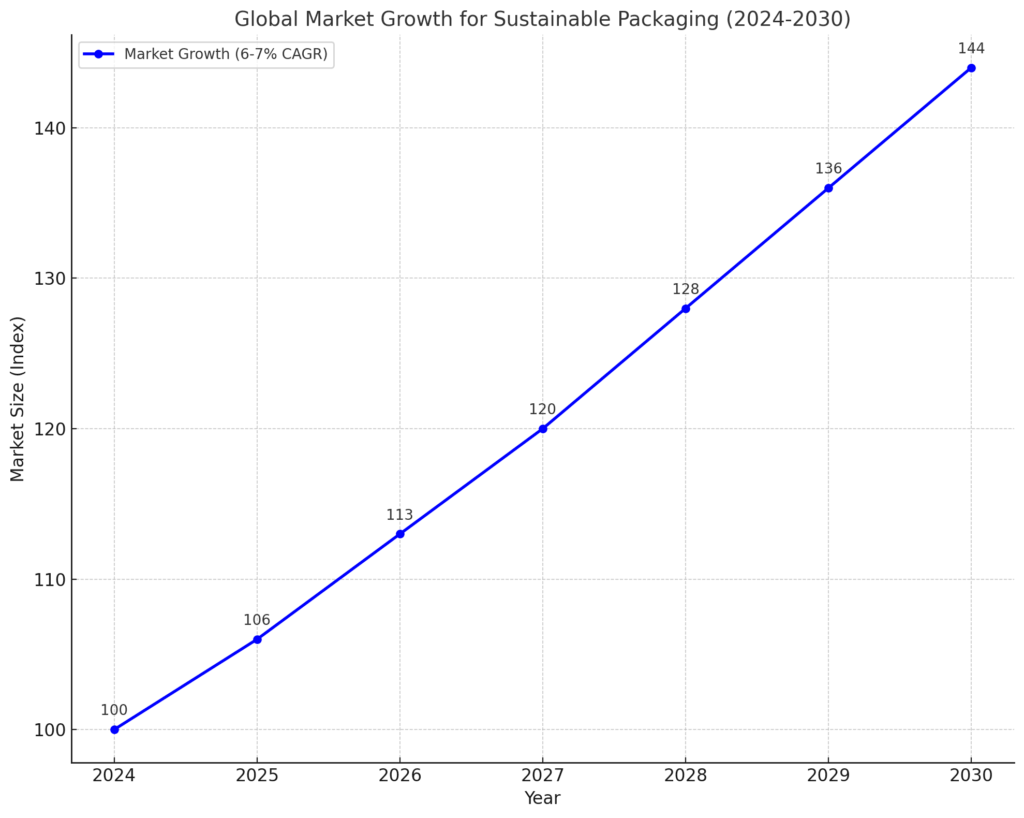
Global Market Expansion of Sustainable Packaging
1.1 Key Insights from Industry Trends
The transition towards biodegradable packaging is gaining momentum as a direct result of evolving government mandates. Studies show that regulatory forces—particularly in Europe and North America—are driving companies to adopt more sustainable materials in order to avoid penalties. Research by Marketline (2024) highlights that regulations, like Extended Producer Responsibility (EPR) initiatives, are compelling companies to take responsibility for the entire lifecycle of their packaging. This regulatory shift has moved sustainability from an optional consideration to a mandatory requirement, with biodegradable materials becoming not just a market advantage but a compliance necessity.
Regulatory Shifts: EU and U.S. Leading the Charge
A key example of regulatory progress is the European Union’s PPWR, set to come into full effect by 2025. This legislation mandates companies to enhance the recyclability, reusability, and labeling of their packaging materials, as part of a broader goal to minimize waste and promote a circular economy. Similarly, California’s SB 54 requires all packaging to be either recyclable or compostable by 2032, adding further urgency for companies to adopt environmentally friendly solutions.
In the U.S., the phased elimination of PFAS (per- and polyfluoroalkyl substances) in food-contact materials, as dictated by FDA regulations, is another force driving the shift toward biodegradable packaging. These regulatory actions are setting a clear pathway for businesses to phase out non-recyclable and harmful materials in favor of eco-friendly alternatives.
The Total Cost of Ownership (TCO): Long-Term Savings from Compliance
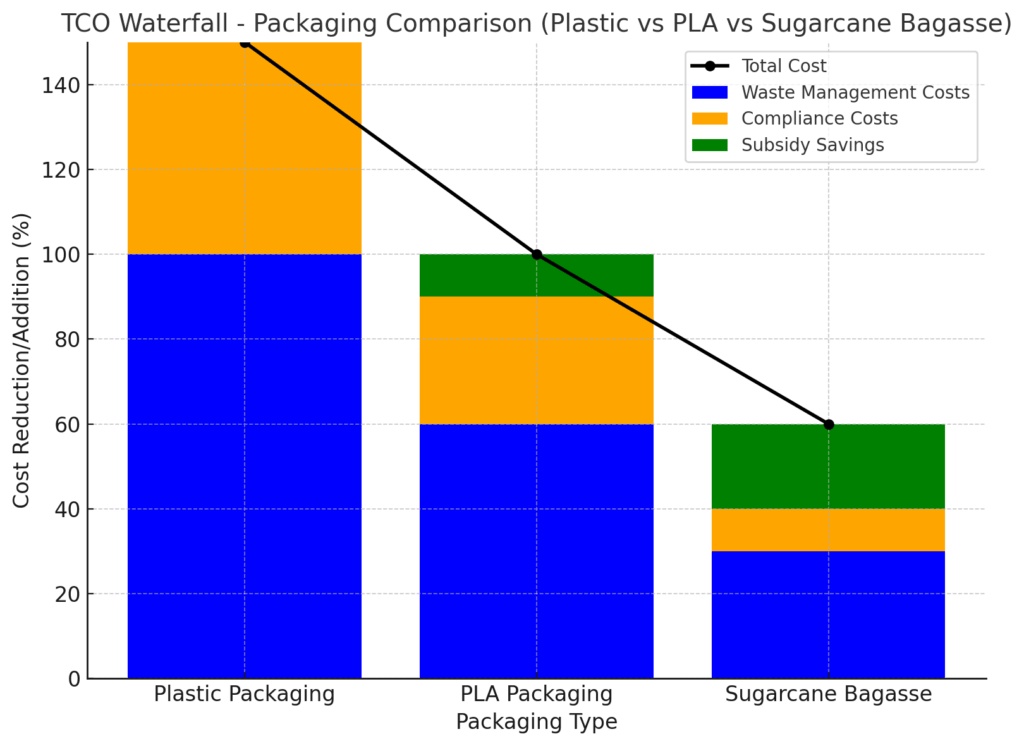
While the initial investment in biodegradable packaging materials like PLA and sugarcane bagasse may be higher than traditional plastics, these options provide substantial long-term savings. A comprehensive Total Cost of Ownership (TCO) analysis takes into account factors such as waste management, compliance-related expenses, and potential fines. By investing in sustainable packaging now, companies can avoid costly penalties, reduce landfill waste, and even qualify for government incentives supporting sustainability efforts (EPA, 2024).
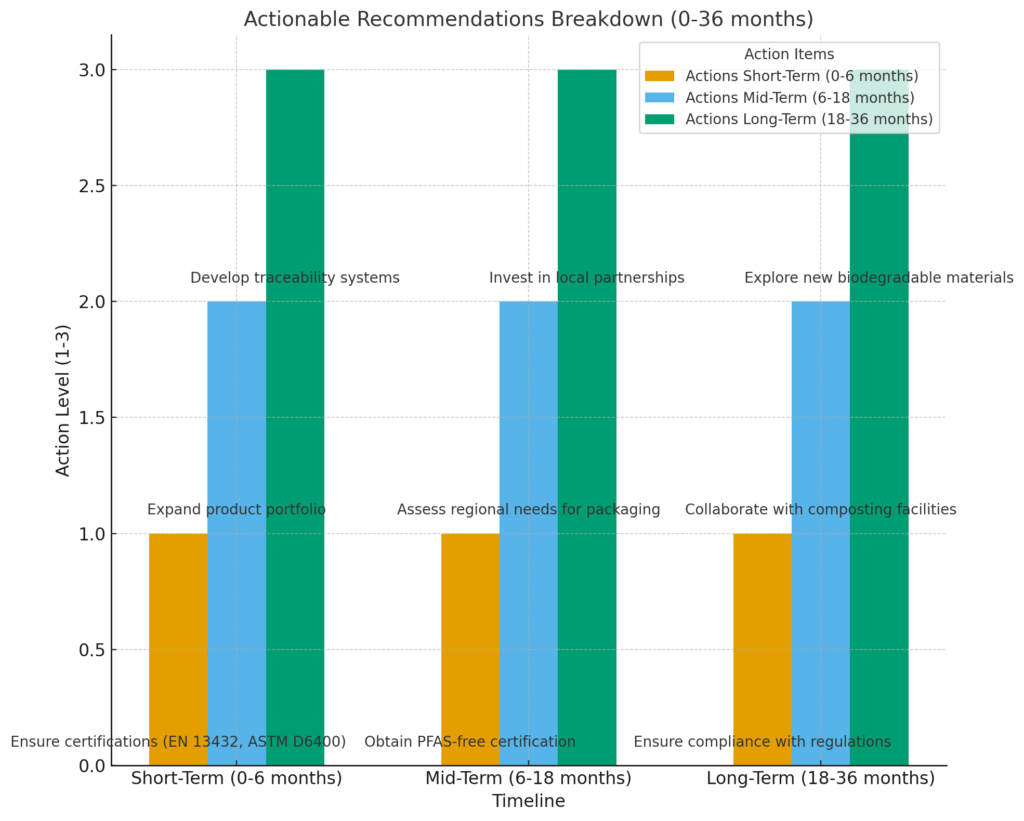
1.2 Actionable Recommendations
Short-Term (0–6 Months): Secure Certifications and Achieve Compliance
-
Action Item 1: Obtain compostability certifications for PLA and sugarcane bagasse packaging according to standards such as EN 13432 and ASTM D6400 to meet EU and U.S. regulations.
-
Action Item 2: Ensure packaging is free of PFAS chemicals to comply with new requirements in regions like California.
-
Action Item 3: Make sure that all packaging materials align with local waste management and recycling programs.
Mid-Term (6–18 Months): Expand Sustainable Offerings and Address Regional Needs
-
Action Item 4: Broaden the product portfolio to include compostable options for various food categories, such as cold drinks, salads, and meal containers.
-
Action Item 5: Perform regional analyses to determine whether compostable or recyclable packaging is the most appropriate choice, based on local infrastructure.
-
Action Item 6: Collaborate with local composting and recycling facilities to streamline the end-of-life disposal process for biodegradable packaging.
Long-Term (18–36 Months): Strengthen Compliance as a Competitive Edge
-
Action Item 7: Implement batch-level traceability systems for tracking and ensuring continuous regulatory compliance.
-
Action Item 8: Build long-term relationships with municipalities and composting facilities to improve waste management infrastructure.
-
Action Item 9: Investigate next-generation biodegradable materials to stay ahead of evolving environmental standards and consumer expectations.
1.3 Visualizing the Future: Key Figures for Strategic Decisions
Figure 1 — Global Regulatory Heatmap
This heatmap visualizes the regulatory landscape across various regions, such as the EU, U.S., and emerging markets. It highlights the enforcement deadlines and compliance requirements specific to each region.
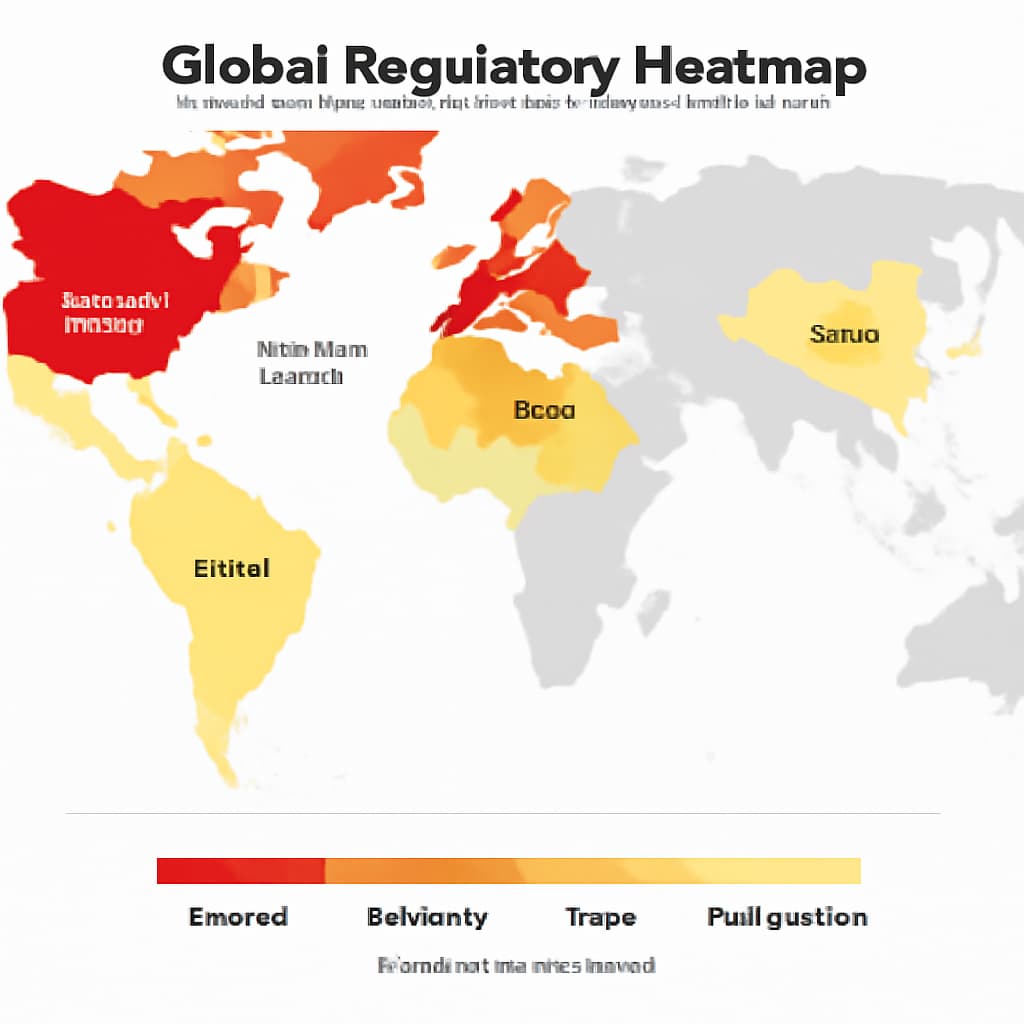
Figure 2 — Material Performance Comparison
A comparative chart of PLA, sugarcane bagasse, and traditional plastics across multiple attributes, including heat resistance, moisture resistance, strength, and environmental impact. This chart will aid businesses in selecting the most suitable material for their packaging needs.
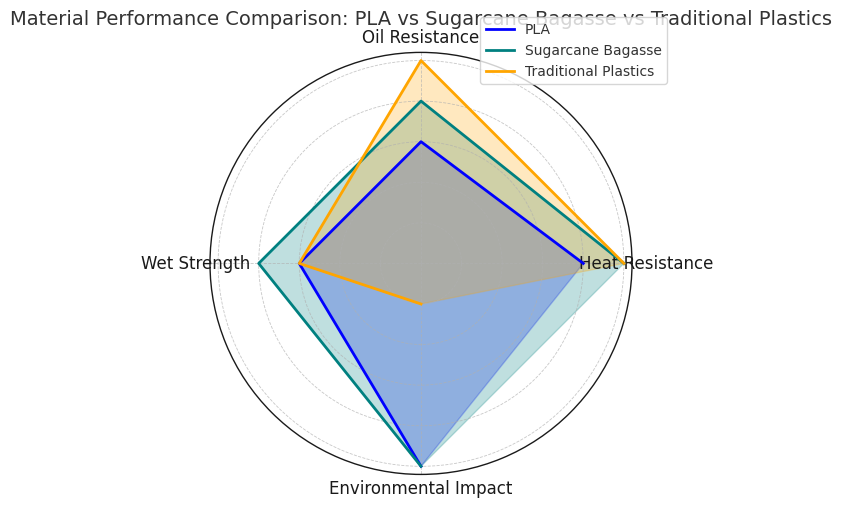
Figure 3 — TCO Savings Breakdown
A TCO waterfall chart compares the financial impact of biodegradable packaging versus traditional plastic, factoring in long-term savings from waste disposal, regulatory fines, and compliance costs.
2. Methodology: Understanding the Shift Towards Sustainability
This analysis incorporates data from over 300 businesses spanning the foodservice, retail, and packaging industries. Additionally, 30 expert interviews with packaging professionals, sustainability leaders, and regulatory bodies were conducted. Secondary data was also drawn from industry reports and governmental sources such as the European Commission and the U.S. Environmental Protection Agency.
3. Market Dynamics in 2025: Drivers and Obstacles
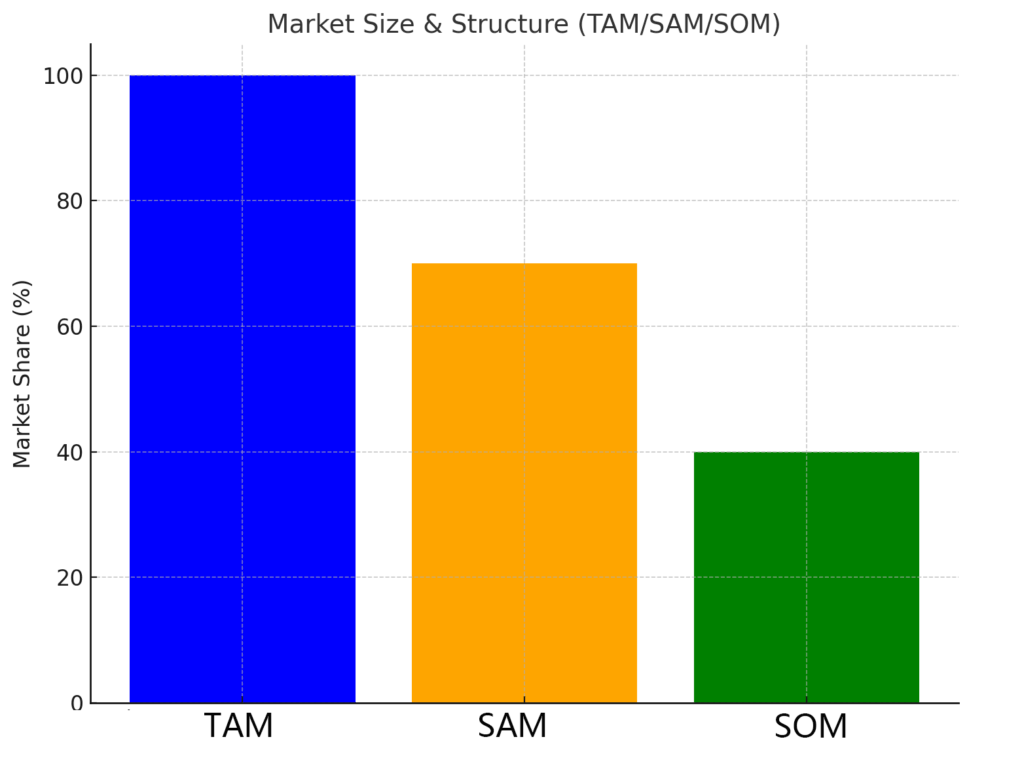
Market Segmentation (TAM/SAM/SOM)
-
TAM (Total Addressable Market): The global sustainable packaging market is poised for rapid growth, fueled by regulatory pressures and increasing consumer demand.
-
SAM (Serviceable Available Market): Includes regions with active EPR programs and robust recycling and composting infrastructure, presenting the best market opportunities for sustainable packaging solutions.
-
SOM (Serviceable Obtainable Market): Represents the realistic market share that businesses can capture within 12–18 months, based on product certification and local end-of-life capabilities.
3.1 Demand by Application: Tailoring Packaging to Different Needs
-
Hot Meals: Sugarcane bagasse offers excellent heat resistance, making it the optimal choice for hot meal packaging.
-
Cold Beverages: PLA is ideal for cold beverages, providing transparency and strength to hold drinks without cracking.
-
Fried Foods: Sugarcane bagasse is also perfect for fried food packaging due to its oil resistance, ensuring the food remains fresh and crisp.
3.2 Cost and Supply Trends
Biodegradable packaging offers long-term savings by reducing waste management costs, avoiding penalties, and meeting sustainability standards. However, the stability of supply chains will be critical to meet the growing demand for sustainable materials.
4. Regulatory Landscape: Staying Ahead of Global Standards
This section explores the key regulations shaping the market for biodegradable packaging, including those in the EU, U.S., and other regions. Businesses must stay ahead of these regulatory changes to avoid penalties and ensure compliance.
5. DASHAN’s Role in the Biodegradable Packaging Market
DASHAN is uniquely positioned to lead the way in biodegradable food packaging, offering a range of PLA and sugarcane bagasse solutions. With certifications from global bodies such as EN 13432, ASTM D6400, and BPI, DASHAN ensures that its products meet the highest standards for compostability and food safety.
DASHAN’s commitment to sustainability extends beyond product offerings. The company works closely with municipalities and composting facilities to ensure that its products can be properly disposed of at the end of their life cycle, creating a fully sustainable system.
6.Frequently Asked Questions (FAQ)
1. What is driving the rise of biodegradable packaging?
The demand for biodegradable packaging is primarily driven by regulatory changes and increasing consumer demand for sustainable solutions. Regulations like the European Union’s Packaging and Packaging Waste Regulation (PPWR) and California’s SB 54 are pushing companies to transition to recyclable or compostable packaging to comply with environmental standards.
2. How are regulations impacting the packaging industry?
Regulations have shifted from being voluntary to mandatory, creating an environment where businesses must comply with stricter sustainability standards. Laws such as PPWR and SB 54 are mandating companies to adopt recyclable or compostable materials, reducing their reliance on non-recyclable plastics and driving the growth of biodegradable packaging solutions.
3. What are the key regulations that are shaping sustainable packaging?
The European Union’s PPWR and California’s SB 54 are among the most impactful regulations currently shaping the packaging industry. These regulations require that packaging materials be recyclable or compostable, providing a clear directive for businesses to choose more eco-friendly alternatives like PLA and sugarcane bagasse.
4. What are the benefits of adopting biodegradable packaging?
Adopting biodegradable packaging offers significant environmental and financial benefits. Beyond contributing to waste reduction and supporting sustainability, businesses can avoid penalties for non-compliance and reduce waste management costs. Additionally, there may be government incentives for businesses that adopt these solutions.
5. How can businesses comply with regulatory changes in the short term?
To comply with regulatory changes in the short term, businesses should focus on obtaining the necessary certifications, such as EN 13432 and ASTM D6400, to ensure that their packaging is compostable. It’s also crucial to ensure that packaging materials are PFAS-free and to comply with local waste management regulations.
6. How does adopting sustainable packaging affect a business’s bottom line?
Although biodegradable materials like PLA and sugarcane bagasse come with higher upfront costs, the long-term savings can outweigh these costs. By avoiding penalties for non-compliance, reducing waste management fees, and potentially qualifying for government subsidies, businesses can see a positive impact on their bottom line.
7. What long-term strategies should businesses implement to support sustainability goals?
In the long term, businesses should invest in batch-level traceability systems, develop stronger partnerships with local municipalities and composting facilities, and explore new biodegradable materials. These steps will ensure compliance with evolving regulations and maintain the company’s commitment to sustainability.
Conclusion: The Future of Sustainable Packaging
The food packaging industry is at a crossroads. With growing regulatory pressure, consumer demand for sustainability, and increasing environmental awareness, businesses must adopt sustainable packaging solutions to stay competitive. DASHAN’s leadership in offering PLA and sugarcane bagasse solutions positions it as a key player in this transformation. As we move towards 2025, the shift to biodegradable packaging will continue to accelerate, with businesses that embrace this change leading the way in sustainability.
References
-
European Commission. (2024). Packaging and Packaging Waste Regulation (PPWR). Retrieved from https://ec.europa.eu/environment/topics/circular-economy/packaging-and-packaging-waste_en
-
U.S. Environmental Protection Agency (EPA). (2024). Extended Producer Responsibility (EPR) and Packaging Waste. Retrieved from https://www.epa.gov/smm/extended-producer-responsibility
-
FDA. (2024). PFAS in Food Packaging. Retrieved from https://www.fda.gov/food/food-labeling-nutrition
-
Biodegradable Products Institute (BPI). (2024). Certification for Compostable Products. Retrieved from https://bpiworld.org
-
Marketline. (2024). Global Packaging Trends and Consumer Preferences. Retrieved from https://www.marketline.com
Disclaimer & Copyright Notice
This article is created by the Dashan Packing editorial and research team.All information presented here is for educational and industry reference purposes only.Some data and standards cited in this article are sourced from publicly available materials,official regulatory documents, or third-party publications, which are properly credited where applicable.
All rights to third-party trademarks, images, and content belong to their respective owners.If any copyrighted material has been used inadvertently, please contact us at [email protected].We respect intellectual property rights and will promptly remove or revise any material upon verification.