

Introduction
South Korea has become one of Asia’s most attractive markets for imported food products and food packaging. A highly developed retail sector, growing demand for convenience foods, and increasing consumer awareness of food safety have driven stricter regulatory requirements for food contact materials. For manufacturers exporting food packaging to Korea, understanding these regulations is essential for ensuring smooth customs clearance, maintaining customer confidence, and avoiding costly compliance issues.
Unlike some markets where basic food-grade declarations may be sufficient, South Korean importers often expect suppliers to provide clear technical documentation demonstrating that packaging materials are suitable for their intended food contact applications. Buyers increasingly request migration testing reports, material specifications, and supporting compliance documents before approving new suppliers.
Although many Korean regulations share similar food safety principles with those of the European Union and the United States, they are administered under their own legal framework and include specific positive lists, testing requirements, and labeling expectations. Exporters who rely solely on FDA or EU compliance may find that additional documentation or evaluation is required when entering the Korean market.
This guide explains how South Korea regulates food packaging materials, which products are covered, what documentation exporters should prepare, and how manufacturers can successfully meet Korean customer expectations.
Understanding South Korea’s Regulatory Framework
Food contact materials in South Korea are regulated primarily to ensure that packaging does not transfer harmful substances into food during normal use. Rather than focusing only on the finished packaging, Korean regulations also evaluate the materials, additives, manufacturing process, and intended conditions of use.
The country’s food packaging requirements are administered by the Ministry of Food and Drug Safety (MFDS), which establishes standards for food contact materials, migration limits, testing methods, and permitted substances.
The regulatory system applies to a broad range of products, including:
- Plastic food containers
- Beverage cups and lids
- Disposable tableware
- Food storage containers
- Packaging films
- Trays and meal containers
- Food processing equipment that comes into contact with food
For exporters, this means that virtually all packaging intended for direct food contact falls within the scope of Korean food contact regulations.
Core Principles of Korean Food Contact Regulations
Although the technical details vary by material type, Korean regulations are built around several fundamental principles that exporters should understand.
Food Contact Safety
Packaging materials must not release substances that could endanger human health under their intended conditions of use. Whether a container is designed for hot meals, refrigerated foods, frozen products, or beverages, it should remain chemically stable throughout its expected service life.
Positive List System
South Korea follows a Positive List System (PLS) for many food contact materials. Under this approach, only approved raw materials and additives may be used in manufacturing unless otherwise authorized by the MFDS.
For exporters, this means that selecting internationally recognized food-grade raw materials from reputable suppliers is an important first step toward compliance.
Migration Limits
Like many international regulatory systems, South Korea requires that packaging materials meet migration requirements to ensure that substances do not transfer into food above established safety limits.
Migration testing evaluates packaging under conditions that simulate actual food use, including different food types, temperatures, and contact times. The required testing conditions depend on how the packaging will be used—for example, cold storage, hot filling, microwave heating, or long-term room-temperature storage.
Migration testing is particularly important for plastic food containers, beverage cups, and packaging designed for hot foods.
Good Manufacturing Practice (GMP)
Compliance depends not only on raw materials but also on manufacturing quality.
Manufacturers should operate effective quality management systems that ensure consistent production, material traceability, contamination control, and documented manufacturing procedures.
Korean buyers often view strong manufacturing controls as an indicator of long-term supplier reliability.
Food Contact Materials Commonly Exported to South Korea
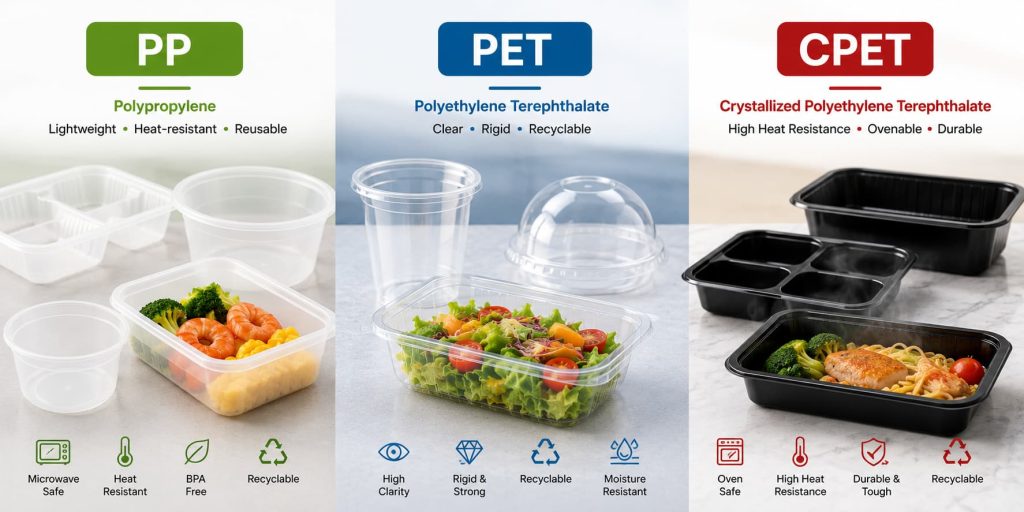
South Korea imports a wide variety of food packaging products for supermarkets, cafés, restaurants, convenience stores, food processors, and airline catering companies. Each application places different performance requirements on packaging materials.
Polypropylene (PP)
PP is one of the most widely used food packaging materials in Korea because of its excellent heat resistance and versatility. It is commonly used for:
- Microwave meal containers
- Rice and noodle bowls
- Soup containers
- Takeaway meal boxes
- Airline catering trays
Its ability to withstand elevated temperatures makes it particularly suitable for convenience foods and ready-to-eat meals, both of which are highly popular in the Korean market.
Polyethylene Terephthalate (PET)
PET is valued for its exceptional transparency and rigidity. It is widely used for:
- Fresh fruit packaging
- Salad containers
- Bakery packaging
- Dessert cups
- Cold beverage cups
Clear PET packaging aligns well with Korean consumers’ preference for visually appealing fresh food displays in supermarkets and convenience stores.
CPET
CPET is commonly selected for applications requiring oven reheating or frozen meal distribution, making it suitable for airline catering and premium ready-meal programs.
Although more specialized than PP or PET, CPET provides excellent thermal performance across a wide temperature range.
Required Documentation for Korean Buyers
Selecting a compliant packaging material is only part of the supplier qualification process in South Korea. Importers and food manufacturers generally expect exporters to provide technical documentation demonstrating that the packaging is suitable for its intended food contact application.
While documentation requirements may vary depending on the customer and product, professional suppliers are typically expected to prepare a comprehensive technical package before mass production or shipment.
Commonly requested documents include:
- Declaration of Compliance (DoC)
- Migration Test Reports
- Material Specifications
- Technical Data Sheets (TDS)
- Product Drawings and Dimensions
- Manufacturing Process Information (when requested)
- Quality Management Certifications (such as ISO 9001 or BRCGS Packaging, where applicable)
- Product Traceability Information
Providing complete documentation not only helps customers evaluate compliance but also shortens supplier approval cycles and demonstrates a commitment to quality management.
Understanding Migration Testing Requirements
Migration testing is one of the most important aspects of food contact compliance in South Korea. It verifies that substances from the packaging do not migrate into food at levels that could affect consumer safety.
Testing should reflect the packaging’s actual conditions of use rather than applying a one-size-fits-all approach. Factors typically considered include:
- Food type (aqueous, acidic, alcoholic, or fatty)
- Contact temperature
- Storage duration
- Intended use (refrigerated, frozen, microwave heating, or hot filling)
For example, a PET clamshell designed for fresh fruit requires different testing conditions from a PP container intended for microwaveable meals.
Exporters should ensure that migration testing is carried out by qualified laboratories using internationally recognized methods and that reports remain current for the materials being supplied.
Packaging Design Must Match Korean Market Needs
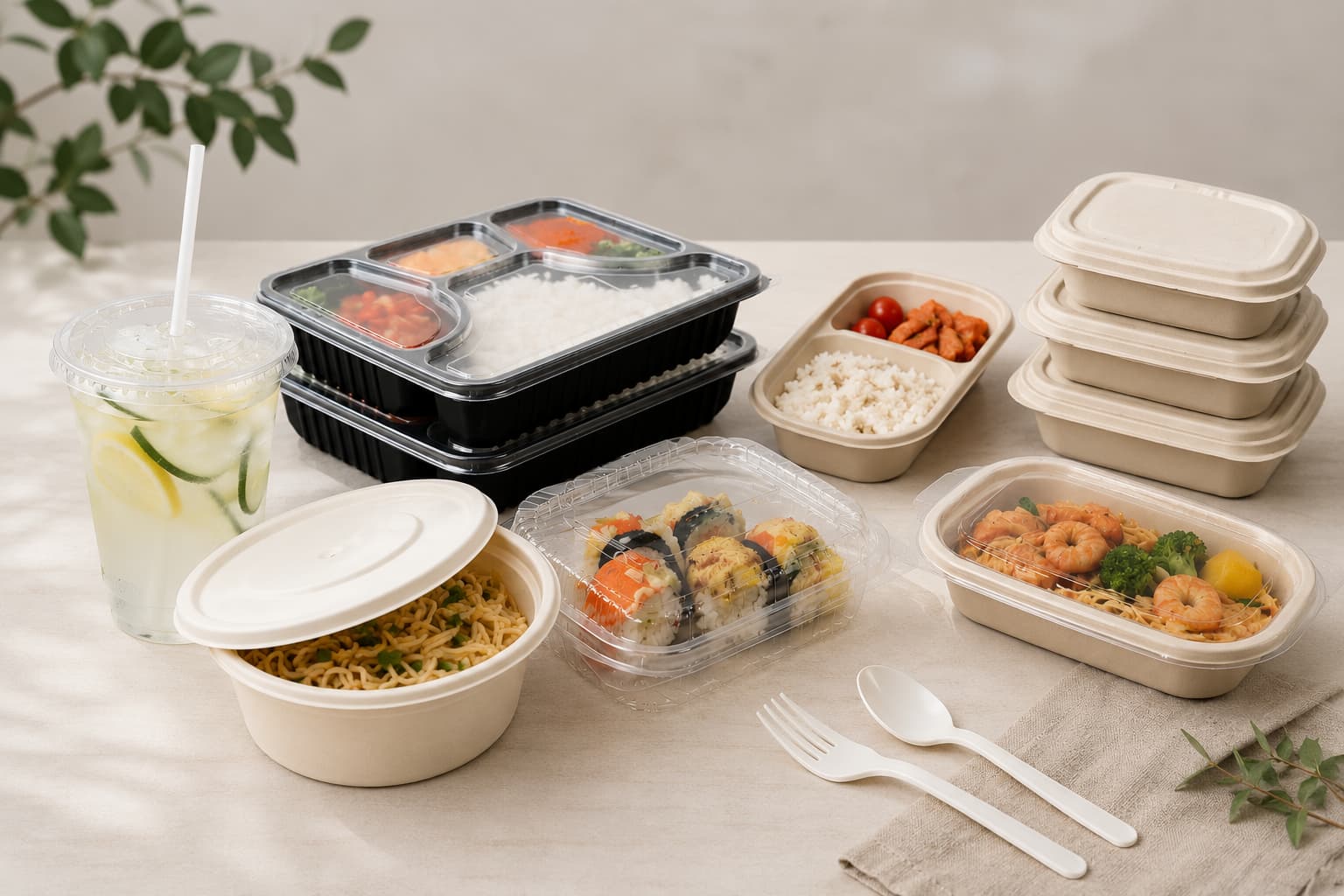
Compliance alone is not enough to succeed in the Korean market. Packaging should also reflect local foodservice trends and consumer expectations.
South Korea has one of Asia’s most dynamic convenience food markets. Convenience stores, supermarkets, cafés, and online food delivery services continue to expand, creating demand for packaging that combines functionality with attractive presentation.
Several packaging characteristics are particularly valued by Korean buyers:
Packaging for Convenience Foods
Ready-to-eat meals are widely available through convenience stores and supermarkets. Containers should be suitable for microwave reheating, easy to handle, and capable of maintaining food quality throughout distribution.
PP containers are commonly selected because they offer excellent heat resistance and durability for this application.
Packaging for Fresh Produce
Fresh fruit, salads, and bakery products rely heavily on visual appeal.
Transparent PET containers allow consumers to inspect product quality before purchase while protecting delicate foods during transportation and retail display.
Well-designed packaging also helps maintain freshness and improves shelf presentation.
Packaging for Delivery and Takeaway
The rapid growth of food delivery platforms has increased demand for packaging that resists leakage, maintains structural integrity, and protects food during transportation.
Secure lids, strong container walls, and reliable sealing performance are now considered essential features rather than optional improvements.
Common Compliance Mistakes Made by Exporters
Many exporters assume that packaging accepted in one market will automatically satisfy Korean regulatory requirements. In practice, this assumption can create unnecessary delays during customer qualification.
Some of the most common mistakes include:
Assuming FDA or EU Compliance Is Sufficient
Although FDA and EU regulations are widely recognized, Korean buyers may still request additional documentation or information relevant to MFDS requirements.
Providing Incomplete Technical Documentation
Missing migration reports, outdated specifications, or incomplete Declarations of Compliance can delay product approval and reduce customer confidence.
Selecting Materials Without Considering End Use
Packaging should always be selected according to its intended application. Materials suitable for refrigerated foods may not be appropriate for microwave heating or hot filling.
Ignoring Product Traceability
Korean customers increasingly value supply chain transparency. Maintaining clear records for raw materials, production batches, and quality inspections helps demonstrate manufacturing consistency and supports long-term business relationships.
Why Choosing the Right Manufacturing Partner Matters
Food packaging compliance depends not only on materials but also on the manufacturer’s technical expertise.
An experienced supplier understands how packaging performs under different food applications and can recommend solutions that balance compliance, functionality, and commercial requirements.
When evaluating suppliers, Korean buyers often look for manufacturers that can provide:
- Stable production quality
- Complete compliance documentation
- Technical support during product development
- OEM and ODM customization
- Reliable lead times
- Export experience with international food packaging standards
A knowledgeable manufacturing partner helps customers reduce sourcing risks while improving the efficiency of product development and regulatory review.
How DASHAN Supports Food Packaging Exports to South Korea
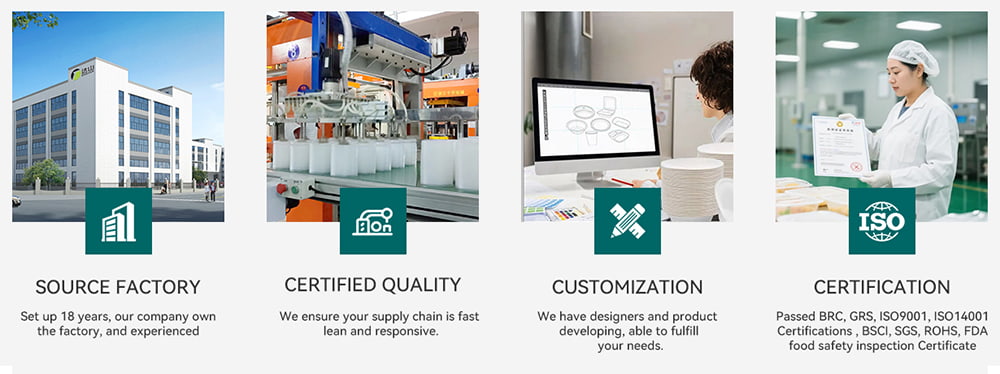
As a manufacturer specializing in food packaging solutions, DASHAN supplies a broad range of products suitable for the Korean market, including PP meal containers, PET fruit and salad containers, beverage cups, and CPET trays for specialized foodservice applications.
Our product development process begins with understanding the customer’s intended application. By considering factors such as serving temperature, food type, transportation conditions, and destination market requirements, we help customers select packaging that performs reliably throughout the supply chain.
In addition to manufacturing, DASHAN provides technical documentation—including product specifications, material information, and compliance-related support—to assist customers during supplier qualification and international trade.
With OEM and ODM capabilities, stable production processes, and experience serving overseas markets, DASHAN helps food manufacturers, distributors, and brand owners develop packaging solutions that align with both operational needs and regulatory expectations.
FAQ
1. Which authority regulates food packaging in South Korea?
Food contact materials are regulated by the Ministry of Food and Drug Safety (MFDS).
2. Is FDA or EU compliance enough for exporting packaging to Korea?
Not always. Korean buyers may request additional documentation or evidence demonstrating compliance with MFDS requirements.
3. Is migration testing required?
Migration testing is commonly requested to verify that packaging materials are safe under their intended conditions of use.
4. What documents do Korean buyers usually ask for?
Typical documents include a Declaration of Compliance (DoC), migration test reports, material specifications, Technical Data Sheets (TDS), and quality certifications.
5. Which packaging materials are commonly used in the Korean market?
PP is widely used for microwaveable meals and takeaway food, PET is popular for fresh produce and desserts, and CPET is commonly used for oven-ready and airline catering applications.
Conclusion
South Korea’s food packaging regulations are designed to protect consumer health while supporting a high standard of food safety across the supply chain. For exporters, achieving compliance requires more than simply selecting food-grade materials. It involves understanding the MFDS regulatory framework, choosing appropriate materials for each application, conducting relevant migration testing, and preparing complete technical documentation.
Success in the Korean market also depends on recognizing local purchasing trends. Demand for convenience foods, fresh produce, and food delivery services continues to shape packaging requirements, making performance, presentation, and functionality just as important as regulatory compliance.
By combining suitable materials, robust quality management, and a comprehensive compliance strategy, exporters can strengthen customer confidence, streamline product approvals, and build lasting partnerships in one of Asia’s most sophisticated food packaging markets.
References
- Ministry of Food and Drug Safety (MFDS), Republic of Korea – Food Contact Materials
https://www.mfds.go.kr - Korean Food Code and Standards for Food Utensils, Containers and Packaging (MFDS)
- European Commission – Food Contact Materials
https://food.ec.europa.eu/plants-and-pesticides/food-contact-materials_en - U.S. Food & Drug Administration (FDA) – Food Contact Substances
https://www.fda.gov/food/packaging-food-contact-substances-fcs - Food Packaging Forum
https://www.foodpackagingforum.org - World Packaging Organisation (WPO)
https://www.worldpackaging.org - Korea Customs Service (KCS)
https://www.customs.go.kr - DASHAN Food Packing
https://www.dashanpacking.com
Copyright Statement
© 2026 Dashan Packing. All rights reserved.
This article is an original publication by the Dashan Packing team based on industry research, market analysis, and packaging expertise. Unauthorized reproduction, distribution, or copying of this content is prohibited without prior written permission.
Dashan Packing is committed to delivering reliable, original, and professional information for the global food packaging industry.