

Quick Summary
Food contact compliance is a buyer responsibility, not just a supplier task. FDA and EU regulations follow different approval systems, testing logic, and documentation requirements. Understanding these differences helps buyers avoid shipment delays, recalls, and compliance risks while selecting safe, market-ready food packaging.
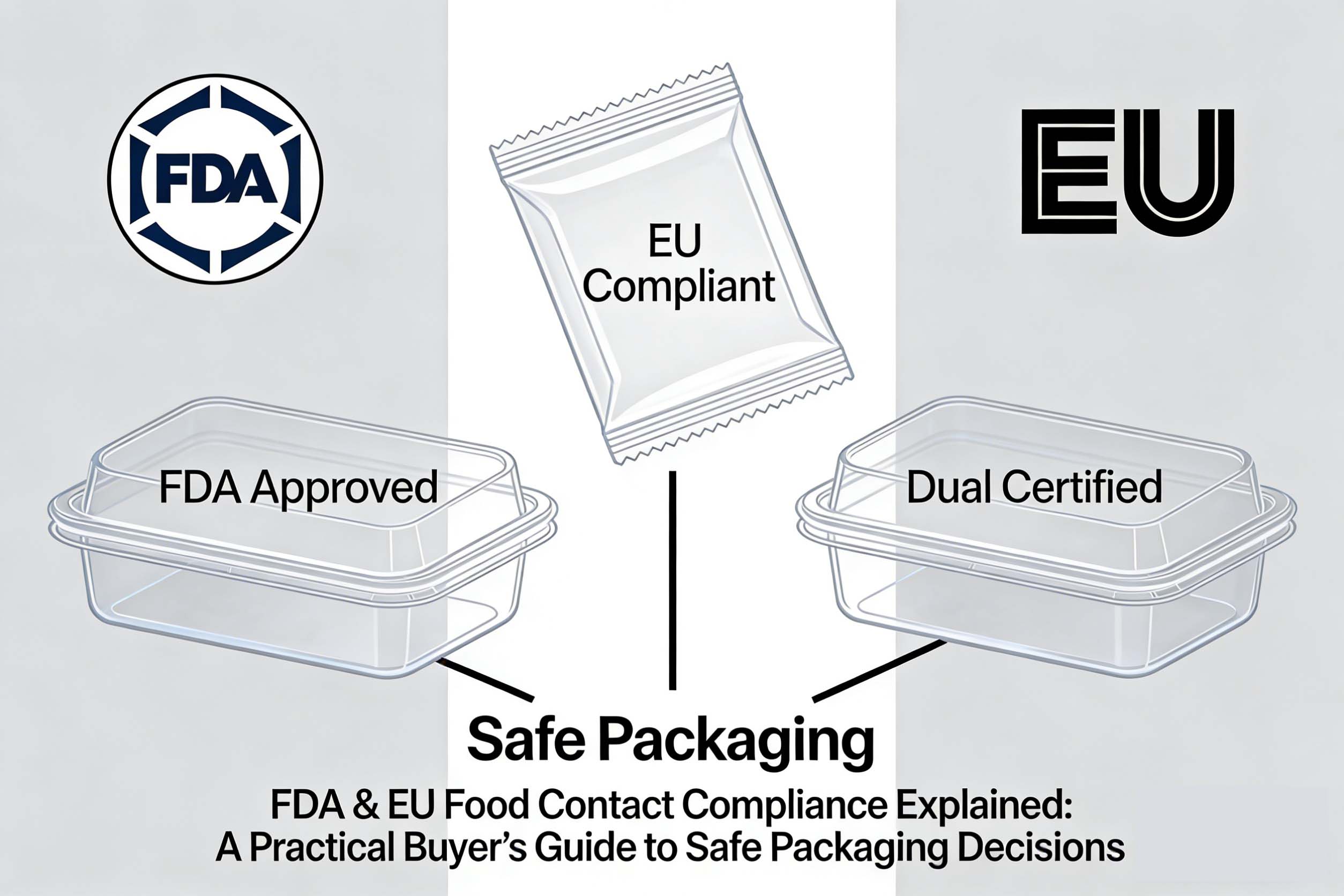
Introduction: Why Food Contact Compliance Is a Buyer Responsibility
For overseas buyers, food contact compliance is often misunderstood as a “supplier problem” or a “paperwork issue.” In reality, regulators, import authorities, and brand owners ultimately hold buyers responsible for the safety of food packaging placed on the market.
When compliance is overlooked, consequences can include:
-
Shipment detention at customs
-
Forced product withdrawal or recall
-
Financial penalties and contract disputes
-
Long-term brand trust damage
As global food safety standards tighten, understanding FDA and EU food contact compliance is no longer optional. This guide is written specifically for buyers, importers, and brand owners, focusing on what you need to verify in practice—not legal theory.
1. What “Food Contact Compliance” Really Means in Daily Business
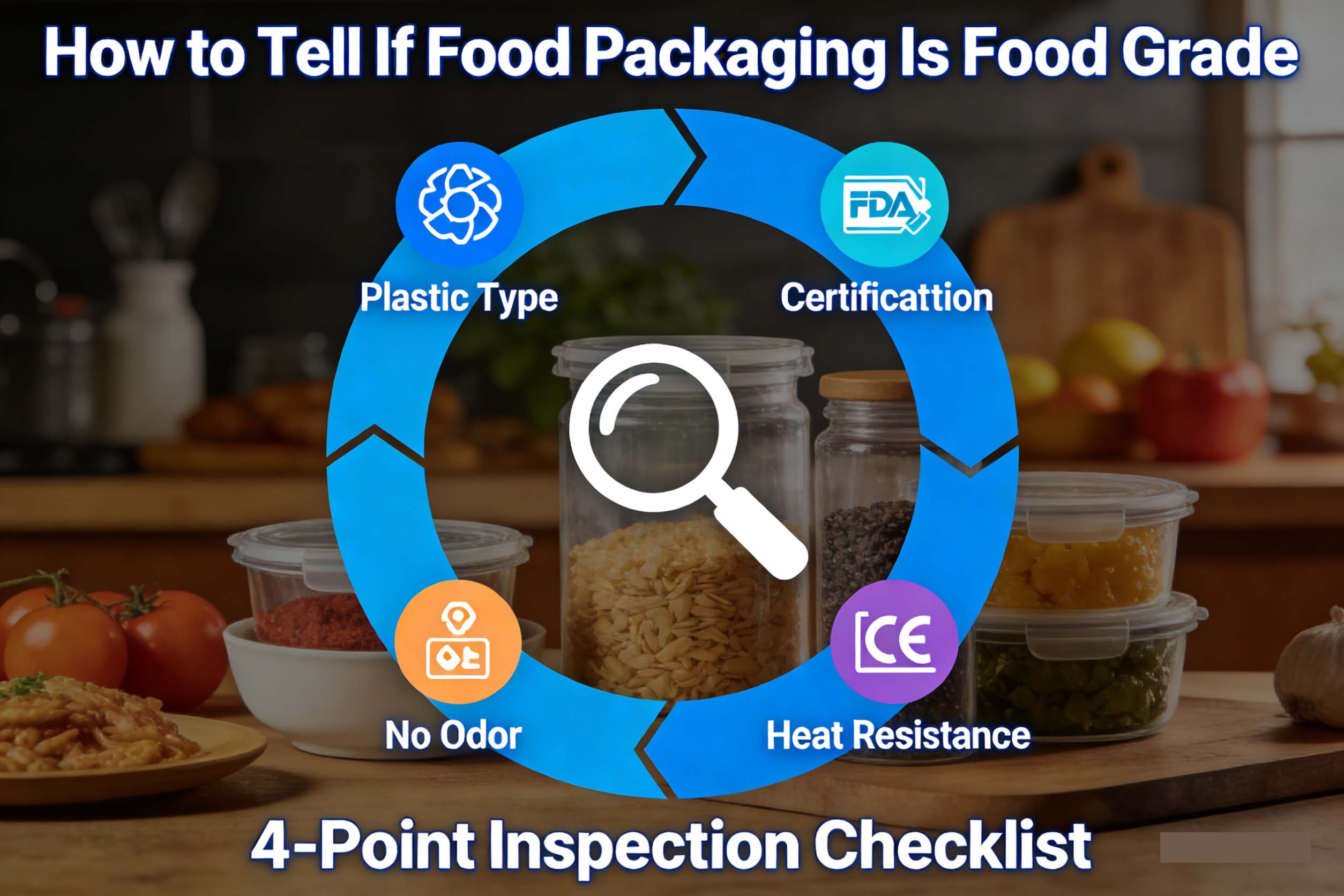
Food contact compliance refers to the legal assurance that materials in contact with food will not transfer harmful substances into food under normal or foreseeable use conditions.
This applies to:
-
Coatings, inks, adhesives, and barrier layers
-
Single-use and reusable food packaging
Common Misconception: “Food Grade” Equals Compliant
Terms such as food grade, BPA-free, or eco-friendly have no legal meaning unless supported by documented compliance. Regulators care about migration data, traceability, and documented material control, not marketing claims.
2. How Chemical Migration Impacts Buyer Risk
Chemical migration is the central concept behind both FDA and EU regulations.
Migration depends on:
-
Temperature (frozen, ambient, hot fill, microwave, oven)
-
Contact time
-
Food type (fatty, acidic, aqueous)
-
Material formulation and additives
A package that is compliant for cold food may become non-compliant for hot or oily food. Buyers who do not define intended use clearly often face compliance failures after products are already on the market.
3. FDA vs EU Compliance: A Buyer-Oriented Comparison
Although both systems aim to protect consumers, they operate under different philosophies.
FDA (United States): Substance-Centered Control
-
Regulates food contact substances (FCS), not finished packaging
-
Materials must be authorized via:
-
Food Contact Notifications (FCN)
-
GRAS (in limited cases)
-
-
Compliance depends heavily on:
-
Defined food types
-
Temperature and contact duration
-
Buyer implication:
You must confirm that the specific use case of your packaging is covered—not just the material name.
EU (European Union): Finished-Material Accountability
-
Uses a positive list of authorized substances
-
Applies strict:
-
Overall Migration Limits (OML)
-
Specific Migration Limits (SML)
-
-
Requires a formal Declaration of Compliance (DoC)
Buyer implication:
Responsibility extends beyond raw material approval to finished product performance.
4. FDA Compliance: What Buyers Should Actually Ask For
4.1 What FDA Compliance Does—and Does Not—Cover
FDA compliance confirms that substances are permitted under defined conditions. It does not guarantee universal approval for all applications.
Buyers should confirm:
-
Approved substances used
-
Intended food types
-
Maximum temperature and contact time
4.2 Practical Documents Buyers Should Request
-
FDA compliance statement referencing applicable CFR sections
-
Material composition overview
-
Intended use declaration (cold, frozen, hot fill, microwave, oven)
If a supplier cannot clearly define usage limits, compliance risk increases significantly.
5. EU Compliance: What Buyers Must Verify Carefully
5.1 Core EU Regulations (Simplified for Buyers)
-
EC 1935/2004 – General food safety framework
-
EU 10/2011 – Plastics regulation and migration limits
-
EC 2023/2006 – Good Manufacturing Practice (GMP)
Buyers do not need legal expertise—but suppliers must demonstrate understanding.
5.2 Declaration of Compliance (DoC): Buyer Red Flags
A valid DoC should include:
-
Clear product identification
-
Applied regulations
-
Migration test references
-
Traceability information
Warning signs include:
-
Generic wording reused across products
-
Missing test conditions
-
Outdated regulatory references
6. Material-Specific Compliance Risks Buyers Often Miss
PET and RPET
-
RPET must meet food-grade recycling standards
-
Contamination control is critical
-
Traceability of recycled input is required
PP and CPET
-
Heat resistance increases migration risk
-
Microwave and oven use require worst-case testing
-
Thickness and additives influence results
PLA and Bio-Based Materials
-
Compostability ≠ food contact safety
-
Additives and plasticizers often trigger SML failures
-
Heat limitations must be clearly defined
Bagasse and Fiber-Based Packaging
-
Mold release agents and coatings matter
-
Chemical treatments must be disclosed
-
PFAS-related scrutiny is increasing globally
Manufacturers with multi-material experience—such as DASHAN—typically apply different compliance strategies per material category, reducing buyer risk in export markets.
7. Understanding Testing Reports: What Buyers Should Look For
7.1 Overall vs Specific Migration
-
OML checks total substance transfer
-
SML focuses on restricted chemicals
7.2 Food Simulants and Test Conditions
-
Fatty, acidic, alcoholic, or aqueous simulants
-
Time and temperature must reflect real usage
7.3 Why Old Reports Can Be Risky
-
Material formulation changes
-
Supplier changes
-
Regulatory updates
Testing is not permanent approval—it must evolve with product changes.
8. Common Compliance Mistakes That Cost Buyers Money
-
Assuming FDA approval covers the EU market
-
Using the same DoC for different SKUs
-
Ignoring thickness or additive changes
-
Trusting verbal assurances instead of documents
-
Treating compliance as a one-time task
These issues often surface only after shipment or customer audits.
9. Step-by-Step Buyer Compliance Checklist
Before approving packaging:
-
Identify target markets
-
Define food type and temperature exposure
-
Confirm material composition
-
Verify test scope and conditions
-
Request updated documents
-
Maintain internal compliance records
This process dramatically reduces downstream risk.
10. Choosing Suppliers That Reduce Compliance Risk
Compliance-capable suppliers typically:
-
Explain regulations in plain language
-
Provide consistent documentation
-
Support multiple markets
-
Update compliance proactively
Suppliers like DASHAN, working across PET, RPET, PP, PLA, and fiber materials, often help buyers navigate complex regulatory environments without creating compliance gaps.
FAQ:
1. Is FDA food contact compliance accepted in the EU?
No. FDA compliance alone is not sufficient for the EU market. The EU requires additional migration testing and a valid Declaration of Compliance (DoC).
2. What does “food contact compliant” actually mean?
It means packaging materials will not transfer harmful substances into food under defined and tested conditions of use, such as temperature, contact time, and food type.
3. Can one compliance test cover multiple products?
Only if the material formulation, thickness, additives, and intended use conditions are exactly the same. Any change may require re-testing.
4. Does recycled material increase compliance risk?
Yes. RPET and other recycled materials require strict contamination control, traceability, and regulatory approval to remain food contact compliant.
5. How often should compliance documents be updated?
Whenever materials, suppliers, formulations, or regulations change—and periodically as a best practice, even without changes.
6. Who is legally responsible if packaging is not compliant?
In most cases, the brand owner or importer placing the product on the market carries legal responsibility, not just the packaging supplier.
Conclusion: Compliance Is a Strategic Buyer Tool
Food contact compliance is not a bureaucratic burden—it is a strategic safeguard. Buyers who understand FDA and EU requirements can prevent costly disruptions, protect their brands, and build more resilient supply chains.
Treat compliance as part of your purchasing strategy, not an afterthought.
References
-
U.S. Food & Drug Administration — Food Contact Substances
https://www.fda.gov/food/food-ingredients-packaging/food-contact-substances-fcs -
FDA — Code of Federal Regulations (21 CFR)
https://www.ecfr.gov/current/title-21 -
European Commission — Food Contact Materials
https://food.ec.europa.eu/safety/chemical-safety/food-contact-materials_en -
EFSA — Food Contact Materials Scientific Guidance
https://www.efsa.europa.eu/en/topics/topic/food-contact-materials
Copyright Statement
© 2026 Dashan Packing. All rights reserved.
This article is an original work created by the Dashan Packing editorial team.
All text, data, and images are the result of our independent research, industry experience,
and product development insights. Reproduction or redistribution of any part of this content
without written permission is strictly prohibited.
Dashan Packing is committed to providing accurate, evidence-based information and
to upholding transparency, originality, and compliance with global intellectual property standards.