

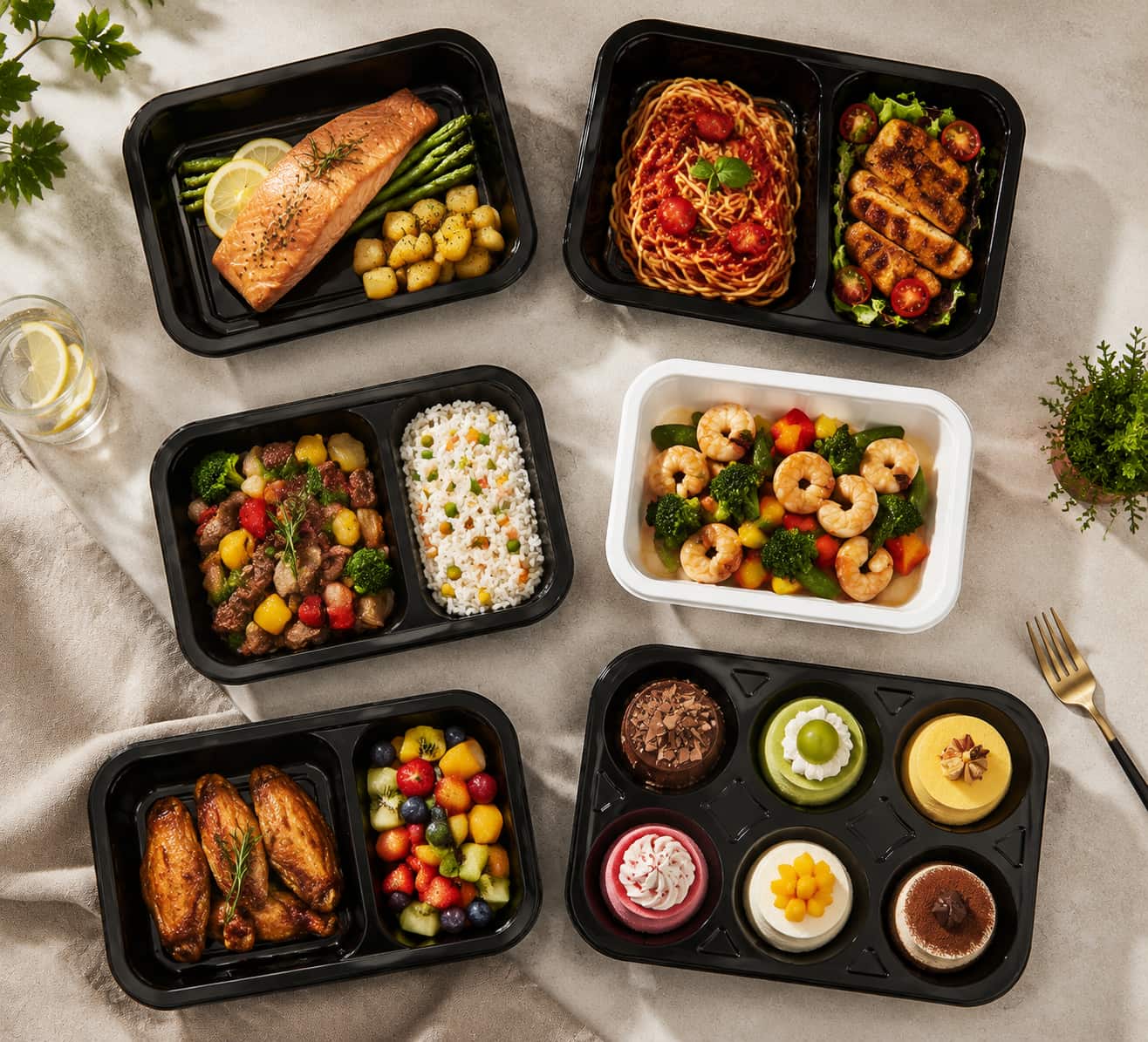
Quick Summary
In modern airline catering, meals must endure extreme temperature ranges, from deep-freeze storage at -40°C to rapid heating in ovens exceeding 200°C. Crystallized PET (CPET) trays provide the thermal stability, durability, and safety required for these conditions. This article explores the material science behind CPET, nucleation in thermoforming, structural integrity under thermal shock, and design parameters for airline oven compatibility, offering insights into why CPET trays are essential for reliable in-flight meal service. DaShan manufactures premium CPET airline trays that meet these exacting standards, providing customization and full compliance documentation for aviation catering businesses.
Material Science Behind Crystallized PET (CPET)
CPET is produced by crystallizing PET (polyethylene terephthalate) to improve thermal resistance. Crystallization increases the glass transition temperature, allowing trays to survive rapid transitions from freezing to high-temperature ovens without deformation or cracking. This makes CPET an ideal material for airline meals that must be stored at sub-zero temperatures and then quickly reheated to safe serving temperatures.
In addition to thermal stability, CPET offers excellent chemical resistance, preventing flavor or color transfer from food to the tray. Its mechanical strength ensures trays maintain their shape under stacking during transport and withstand vibrations during flight. By controlling crystallinity levels and molecular orientation, manufacturers can optimize tray rigidity, clarity, and thermal endurance for airline catering applications.
Our product highlight: [DaShan CPET Airline Trays]
High-quality CPET trays designed to endure extreme temperature ranges from -40°C to 220°C, perfect for airline catering operations.
The Nucleation Process in Thermoforming
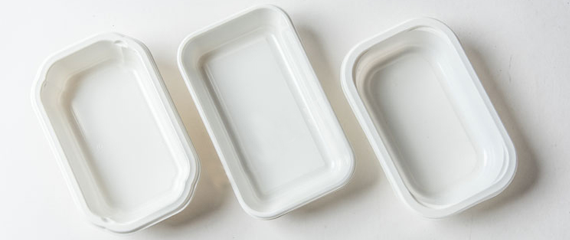
During thermoforming, CPET sheets are heated and shaped over molds, with nucleating agents introduced to control crystal formation. Nucleation ensures:
- Uniform crystallinity, providing consistent thermal resistance across the tray
- Reduced risk of warping or cracking during rapid temperature changes
- Enhanced mechanical strength, especially in tray corners and compartment walls
By carefully balancing heat profiles, sheet thickness, and cooling rates, CPET trays achieve a highly stable structure that supports both hot and cold meal applications. This precise control allows airline catering providers to reliably stack, store, and reheat meals without compromising safety or presentation.
Structural Integrity Under Rapid Thermal Shock
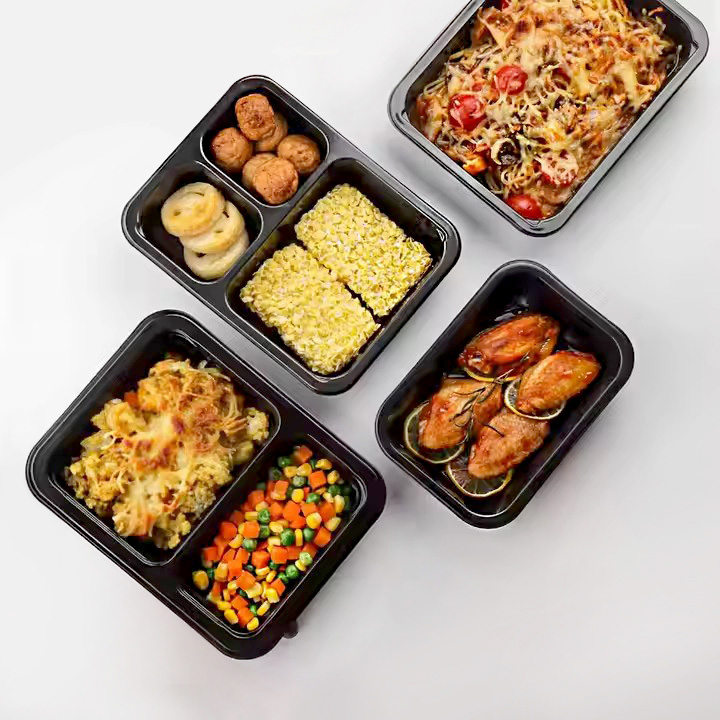
Airline trays are exposed to thermal shock, where temperatures swing from deep freeze to 220°C in minutes. CPET trays engineered by DaShan undergo rigorous testing:
| Test Parameter | Value / Range | Notes |
|---|---|---|
| Freezing | -40°C | Deep freeze storage simulation |
| Oven Heat | 220°C | Rapid reheat in convection or combi ovens |
| Thermal Cycle | 20+ cycles | Ensures repeated use reliability |
| Mechanical Load | 15kg stack | Simulates cargo hold stacking |
These tests ensure that trays maintain structural integrity, dimensional stability, and food safety even under extreme conditions. This reliability is critical in aviation, where meal quality and hygiene cannot be compromised.
Our product highlight: [DaShan CPET Airline Trays ]
Design Parameters for Airline Oven Compatibility
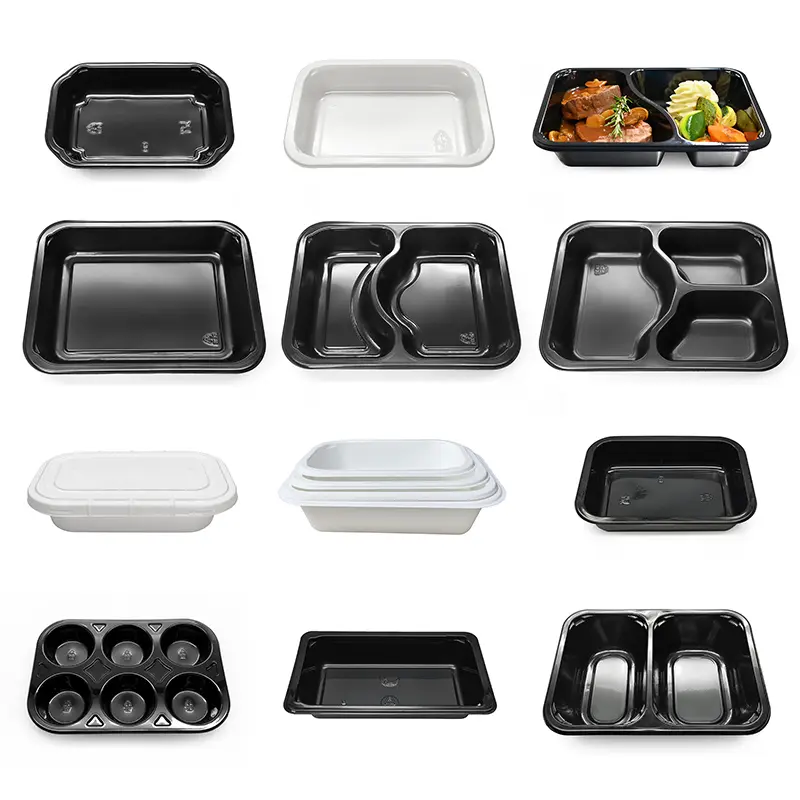
To ensure consistent performance, CPET airline trays are designed with several key parameters:
- Compartment Geometry: Rounded corners reduce stress points, preventing cracks during thermal expansion
- Wall Thickness: Optimized for uniform heating while minimizing weight
- Rim Design: Reinforced edges allow stacking and prevent deformation in oven trays
- Ventilation & Lid Fit: Supports secure covering and steam release, avoiding condensation
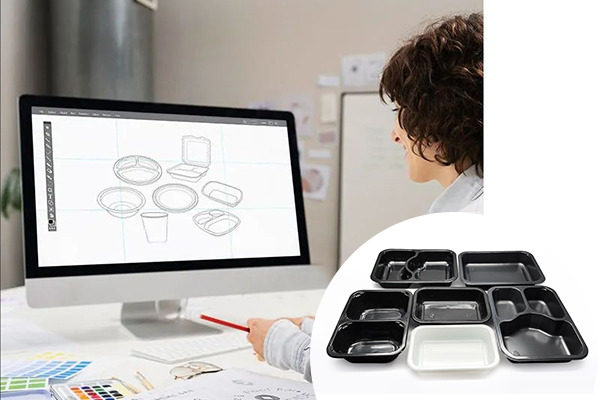
By fine-tuning these parameters, CPET trays remain safe, stable, and presentable for airline meal service. Customization options from DaShan allow catering companies to match tray size, compartment layout, and lid compatibility to their specific menu offerings.
Learn more about our company: [DaShan]
Contact us for customization and bulk orders: [Contact DaShan]
Reliability in Aviation Catering
CPET trays represent the intersection of material science, engineering precision, and operational practicality. By combining crystallized PET properties, nucleation-controlled thermoforming, and robust design parameters, these trays reliably endure extreme temperatures while maintaining food safety, mechanical integrity, and aesthetic presentation.
For airline catering providers, investing in high-quality CPET trays from DaShan ensures:
- Safe storage of frozen meals at -40°C
- Rapid, even heating in 200+°C ovens
- Consistent portion control and presentation
- Long-term operational reliability under repeated thermal cycles
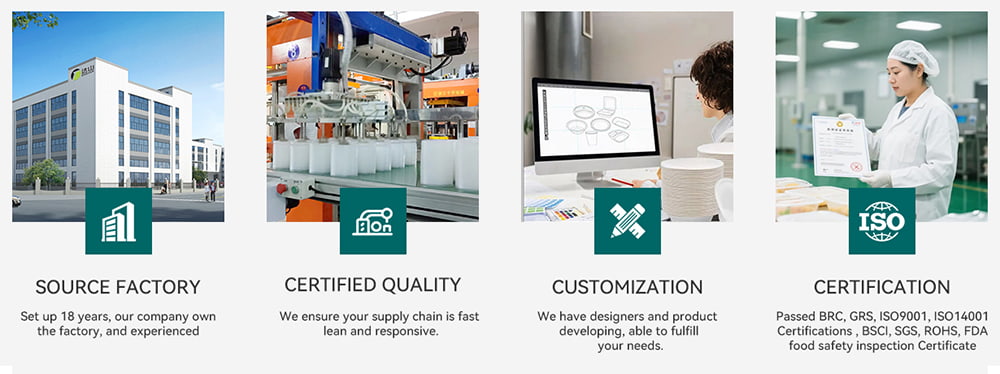
With DaShan, airline catering operators receive not only premium CPET trays but also full documentation, compliance certification, and customizable design options, supporting smooth operations and high passenger satisfaction.
Our product highlight: [DaShan CPET Airline Trays ]
Contact us: [Contact DaShan]
Summary
CPET airline trays are engineered to withstand extreme temperature ranges, from -40°C in frozen storage to 220°C in airline ovens, ensuring food safety, structural integrity, and operational reliability. The material science behind crystallized PET (CPET), combined with precise nucleation during thermoforming, allows trays to maintain mechanical strength, transparency, and dimensional stability even under rapid thermal shock.
Carefully optimized design parameters—including wall thickness, compartment geometry, rim reinforcement, and lid compatibility—ensure these trays are oven-safe, stackable, and user-friendly for airline catering operations. Rigorous testing and quality control guarantee that trays perform consistently under repeated freezing and heating cycles, making them indispensable for in-flight meal service.
By choosing DaShan CPET airline trays, catering companies gain access to premium, customizable solutions with full compliance documentation, ensuring operational efficiency and passenger satisfaction. These trays combine material science, engineering precision, and practical functionality, providing a reliable foundation for modern aviation catering operations.
Our product highlight: [DaShan CPET Airline Trays]
Learn more about our company: [DaShan]
Contact us for customization and orders: [Contact DaShan]
FAQ about CPET Airline Trays
Why are CPET trays ideal for airline catering?
CPET trays are specifically engineered to withstand extreme temperature ranges, from -40°C during frozen storage to 220°C in airline ovens. This allows meals to remain safe, maintain portion integrity, and retain quality during storage, transportation, and rapid heating. By choosing CPET trays, airlines and catering services ensure reliable performance under demanding conditions, reducing the risk of tray deformation or food contamination.
What makes crystallized PET (CPET) different from standard PET?
Crystallized PET undergoes a controlled crystallization process during manufacturing, which enhances its thermal resistance, mechanical strength, and dimensional stability. Unlike standard PET, CPET can handle rapid temperature changes without cracking or warping, making it the preferred choice for in-flight meals that move directly from deep freeze to oven reheating.
How does the nucleation process affect tray performance?
During thermoforming, CPET sheets are treated with nucleating agents to control crystal formation. This ensures uniform thermal properties, higher rigidity, and reduced stress points, especially in tray compartments and corners. Proper nucleation prevents tray failure under thermal shock and maintains consistent performance across batches, which is essential for airline catering operations.
Can CPET trays be customized for specific airline menus?
Yes. DaShan CPET trays can be tailored in terms of size, compartment layout, wall thickness, and lid compatibility. This flexibility allows airlines and caterers to match trays to specific menu items, portion sizes, and operational workflows, ensuring optimal presentation, stacking efficiency, and safe reheating.
Are CPET trays safe and compliant with food contact standards?
Absolutely. CPET trays from DaShan comply with all relevant food safety regulations and are tested to withstand extreme temperatures while remaining non-reactive with food. This ensures that meals served in CPET trays are safe, hygienic, and free from contamination, meeting the rigorous standards of airline catering.
Where can I purchase or inquire about DaShan CPET airline trays?
You can contact DaShan directly for bulk orders, customization options, and compliance documentation. Our team provides guidance to ensure you select the right trays for your airline catering operations.
References
- U.S. Food & Drug Administration (FDA), Title 21 CFR Part 177 – Indirect Food Additives: Polymers, 2023. https://www.ecfr.gov/current/title-21/chapter-I/subchapter-B/part-177
- Food Packaging Forum, Crystallized PET (CPET) for Food Packaging: Thermal Resistance and Safety, 2022. https://www.foodpackagingforum.org/material/polyethylene-terephthalate-cpet
- Smithers Pira, Global Airline Catering Packaging Market: Trends in CPET Trays, 2023. https://www.smithers.com/services/market-reports/packaging/airline-catering
- Journal of Polymers and the Environment, Thermal Stability and Mechanical Performance of CPET Food Trays, 2022. https://link.springer.com/article/10.1007/s10924-022-02514-3
- Packaging Strategies, Designing Food Trays for Extreme Temperature Applications, 2021. https://www.packagingstrategies.com/articles/97544-extreme-temperature-food-trays
- United Nations Environment Programme (UNEP), Single-Use Plastics: Sustainable Alternatives in Packaging, 2021. https://www.unep.org/resources/report/single-use-plastics-roadmap-sustainability
Copyright Notice
© 2026 DaShan Packaging. All rights reserved.
All content in this article, including text, images, tables, and other materials, is the intellectual property of DaShan Packaging. No part of this publication may be reproduced, distributed, transmitted, or used in any form without prior written permission from DaShan Packaging.