

Introduction: A World Rethinking Its Choices
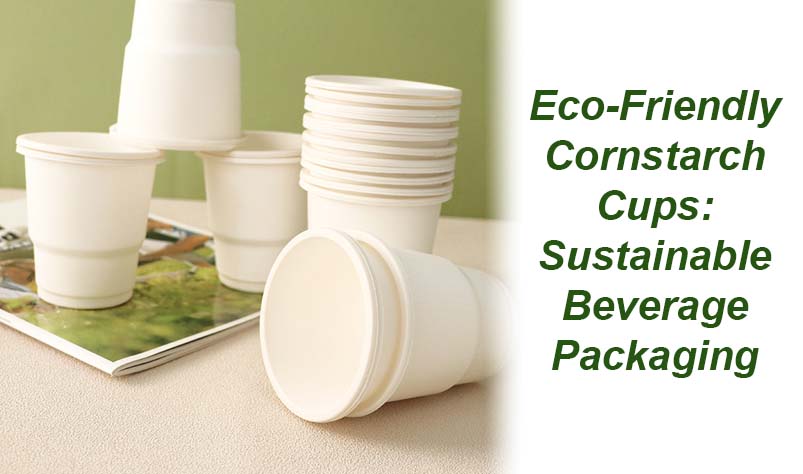
The last few years have forced governments, businesses, and consumers to confront a simple truth: our reliance on plastic is unsustainable. Beverage cups, once symbols of convenience, have become icons of waste. While bans and recycling campaigns are expanding, innovation is proving to be the more effective path. Among these innovations, cornstarch cups are taking center stage—not just as replacements, but as smarter, safer, and more future-ready solutions.
Global Shifts: From Regulation to Responsibility
Policies as Catalysts
Rather than waiting for public opinion alone to drive change, governments are tightening restrictions:
-
Europe’s Single-Use Plastics Directive eliminated polystyrene cups from the market starting 2021.
-
California’s SB54 law requires that all packaging be recyclable or compostable by 2032.
-
China’s phased plastic ban targets disposable cups in urban centers, pushing businesses toward biomaterials.
-
Japan’s Plastic Resource Circulation Act rewards companies for switching to renewable materials.
These policies show that eco-friendly cups are no longer a niche experiment—they are becoming compliance requirements.
Market Response Across Industries
Companies are not just reacting; they are anticipating. Fast-food chains, coffee franchises, and global retailers are testing cornstarch cups to strengthen sustainability pledges. Some report measurable benefits—improved customer loyalty, reduced waste disposal fees, and even media visibility for adopting green practices.
Understanding Cornstarch Cups: Beyond the Basics
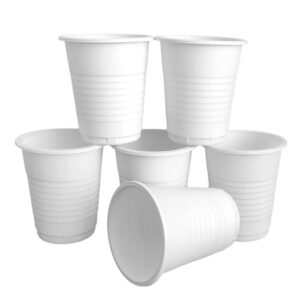
Cornstarch cups are not simply “cups made from plants.” Their material foundation lies in polylactic acid (PLA), derived from fermented corn starch. This makes them:
-
Biodegradable in industrial composting facilities, often within 90–120 days.
-
Chemically safe, meeting FDA, LFGB, and EN13432 standards.
-
Functional for real-world use, offering leak resistance and durability.
Unlike paper cups lined with plastic, cornstarch cups don’t rely on petroleum-based barriers. This makes them genuinely renewable and part of the circular economy vision.
Expert Perspectives: Why This Matters
-
Dr. Sarah Blackburn (Cambridge Institute for Sustainability Leadership) argues that switching to biobased materials can cut packaging-related carbon emissions by up to 70%.
-
A study by Nature Sustainability (2021) confirmed that biodegradable polymers like PLA significantly reduce the risk of long-term microplastic accumulation.
-
The Ellen MacArthur Foundation has consistently positioned compostable packaging as a key enabler of the circular economy, stressing its importance for closed-loop waste systems.
These insights show that cornstarch cups are not just “green marketing.” They are supported by independent research and credible institutions.
Real-World Experience: Stories from the Field
-
Cafés and Smoothie Bars: Small chains in Berlin and New York reported that customers increasingly ask about packaging. Switching to cornstarch cups gave them a competitive edge and became part of their brand story.
-
Events and Festivals: Organizers of eco-friendly festivals in the UK tested cornstarch cups, resulting in lower cleanup costs and positive media coverage.
-
Universities: Some campuses are adopting biodegradable drinkware as part of zero-waste initiatives, creating both educational and environmental impact.
These examples highlight how cornstarch cups go beyond theory—they work in daily business.
Benefits Across Stakeholders
Environmental Gains
-
Reduced reliance on fossil fuels.
-
Compostable lifecycle minimizes landfill waste.
-
Lower carbon footprint compared to traditional plastics.
Business Value
-
Demonstrates compliance with international and local regulations.
-
Enhances corporate sustainability reporting (CSR, ESG metrics).
-
Aligns brand image with modern consumer values.
Consumer Experience
-
Safe, odor-free material enhances drinking experience.
-
Clear link between personal choice and environmental contribution.
Addressing Challenges with Transparency
Cornstarch cups are not perfect. Critics often point out:
-
Composting Limitations: Industrial composting facilities are needed for full degradation.
-
Price: Slightly higher cost compared to conventional plastics.
-
Heat Resistance: Best suited for cold or warm drinks, not boiling liquids.
But these are not barriers—they are areas of innovation. Businesses like DASHAN are continuously improving product performance and working with policymakers to expand composting infrastructure.
DASHAN’s Role in Sustainable Packaging
With years of expertise in biodegradable food packaging, DASHAN provides more than just cornstarch cups—it delivers a full sustainable solution.
-
Range of Options: Multiple cup sizes, suitable for juices, coffee, and smoothies.
-
Certifications: Products comply with FDA, LFGB, BPI, and EN13432 standards.
-
Customization: Branding options to support businesses in showcasing their sustainability commitments.
-
Global Partnerships: Trusted by restaurants, supermarkets, and catering services worldwide.
By choosing DASHAN, businesses align with global sustainability trends and meet the expectations of regulators and consumers alike.
Looking Forward: The Future of Beverage Packaging
The beverage packaging industry is standing at a crossroads, shaped by environmental urgency, consumer expectations, and rapid innovation. Over the next decade, the transformation of drinkware will not only be about replacing plastic—it will be about redesigning entire systems of production, consumption, and disposal.
1. Policy-Driven Innovation
Government action will continue to accelerate changes in packaging. By 2030, more than 70 countries are expected to enforce strict bans or taxes on single-use plastics. The European Green Deal, for example, is pushing for a circular economy, in which all packaging must be reusable, recyclable, or compostable by 2030. Similar measures are being proposed in the United States, Canada, and parts of Asia. These policies will create a landscape where sustainable materials like cornstarch are not optional but essential for market entry.
2. Consumer-Centered Demands
Consumers are increasingly voting with their wallets. According to a 2023 Deloitte report, 64% of global consumers prefer to buy from brands with strong environmental commitments. Younger demographics, especially Gen Z, expect transparency on packaging origins, compostability, and environmental impact. Beverage brands that can prove they are eliminating plastic waste will not only comply with laws but also secure long-term loyalty.
3. Technological Advancements
Innovation in biomaterials will push cornstarch cups and other plant-based packaging toward new levels of performance:
-
Heat resistance improvements could make cornstarch-based cups suitable for both hot and cold drinks.
-
Blended biopolymers (combining cornstarch with bamboo fiber, bagasse, or seaweed-based materials) may reduce costs and expand usability.
-
Smart packaging technologies, such as QR codes or digital watermarks, could allow consumers to trace the sustainability story of their cups, from raw material sourcing to end-of-life composting.
4. Systemic Shifts Toward Circular Economy
The real future lies not only in new materials but in new systems. Municipalities and private companies are expanding industrial composting facilities, allowing cornstarch-based products to fully return to the soil. Some countries are experimenting with deposit-return schemes for compostable packaging, encouraging consumers to actively return used cups for processing. This aligns with the UN’s Sustainable Development Goal 12: Responsible Consumption and Production, making circularity the default model.
5. Collaboration Across Sectors
The packaging challenge cannot be solved by manufacturers alone. Retailers, beverage producers, waste management companies, and governments must collaborate. Global coalitions like the Ellen MacArthur Foundation’s New Plastics Economy are already uniting stakeholders to accelerate the shift toward compostable and reusable systems. In this ecosystem, companies like DASHAN are playing a key role by supplying scalable, certified, and globally compliant solutions.
6. The Role of Cornstarch Cups in the Next Decade
Cornstarch cups, once considered an alternative, are positioned to become a mainstream solution. They will coexist with other innovations such as edible packaging, reusable cup programs, and paper-based composites, offering a versatile option for businesses seeking balance between performance and sustainability. Importantly, their production relies on agricultural byproducts, meaning they can scale without depleting forests or fossil resources.
7. Vision for the Future
In the near future, we can expect a marketplace where beverage packaging is not just disposable but purposeful:
-
Every cup will either be reused, recycled, or composted.
-
Packaging will be designed with its end-of-life in mind, creating a closed loop.
-
Businesses adopting sustainable packaging will gain regulatory advantages and consumer trust, while those resisting the shift risk fines, bans, or reputational damage.
The transition is not merely a trend—it is a necessity. With policy enforcement, technological progress, and consumer awareness converging, the future of beverage packaging will be defined by sustainability. Cornstarch cups, championed by companies like DASHAN, represent a critical stepping stone in this journey.
Conclusion
Cornstarch cups are more than an eco-friendly option; they are a tangible step toward a sustainable future. Supported by global policy, validated by scientific research, and embraced by forward-thinking businesses, they represent the shift the world urgently needs.
For brands looking to demonstrate responsibility, comply with new laws, and connect with eco-conscious consumers, DASHAN cornstarch cups are a proven, trustworthy solution. By adopting them, businesses contribute to a greener planet while building stronger, future-proof reputations.
FAQ
Q1. What are cornstarch cups and how are they different from plastic cups?
Cornstarch cups are made from polylactic acid (PLA), derived from fermented corn starch. Unlike plastic cups, they are biodegradable in industrial composting facilities and free from petroleum-based liners.
Q2. How long do cornstarch cups take to decompose?
Typically, cornstarch cups decompose within 90–120 days under industrial composting conditions, turning into water, carbon dioxide, and organic matter.
Q3. Are cornstarch cups safe for hot drinks?
Cornstarch cups are suitable for cold and warm beverages, but not boiling liquids. Ongoing innovations are improving heat resistance for broader use.
Q4. What certifications ensure the safety and compostability of cornstarch cups?
Look for certifications such as FDA, LFGB, EN13432, and BPI. DASHAN cornstarch cups meet these global standards, ensuring food safety and compostability.
Q5. How do global regulations support the adoption of cornstarch cups?
Policies such as Europe’s Single-Use Plastics Directive, California’s SB54, China’s plastic ban, and Japan’s Plastic Resource Circulation Act encourage or mandate compostable alternatives like cornstarch cups.
Q6. What challenges exist with cornstarch cups?
The main challenges include the need for industrial composting facilities, higher production costs, and limited heat resistance. However, innovation and policy support are addressing these issues.
Q7. Why should businesses choose DASHAN cornstarch cups?
DASHAN offers certified, high-quality, and customizable cornstarch cups. With global compliance, innovative designs, and sustainable sourcing, DASHAN helps businesses meet regulatory demands and consumer expectations.
-
UNEP – Plastic Pollution
https://www.unep.org/plastic-pollution UNEP – UN Environment Programme -
UNEP – Chemicals in Plastics: A Technical Report
https://www.unep.org/resources/report/chemicals-plastics-technical-report UNEP – UN Environment Programme -
EU Restrictions on Certain Single-Use Plastics
https://environment.ec.europa.eu/topics/plastics/single-use-plastics/eu-restrictions-certain-single-use-plastics_en Environment -
Global Plastic Ban Policies Overview (by DASHAN)
https://www.dashanpacking.com/global-plastic-ban-policies-overview/ dashanpacking.com -
Global Plastic Pollution Treaty (Wikipedia overview)
https://en.wikipedia.org/wiki/Global_plastic_pollution_treaty
Disclaimer & Copyright Notice
This article is created by the Dashan Packing editorial and research team.
All information presented here is for educational and industry reference purposes only.
Some data and standards cited in this article are sourced from publicly available materials,
official regulatory documents, or third-party publications, which are properly credited where applicable.
All rights to third-party trademarks, images, and content belong to their respective owners.
If any copyrighted material has been used inadvertently, please contact us at [email protected].
We respect intellectual property rights and will promptly remove or revise any material upon verification.