

Introduction
As international food packaging regulations continue to evolve, overseas buyers are placing greater emphasis on technical documentation when selecting packaging suppliers. While product quality, competitive pricing, and manufacturing capacity remain important, they are no longer the only factors influencing purchasing decisions. Increasingly, buyers also want assurance that packaging materials comply with food contact regulations and can be supported by reliable technical evidence.
One of the most frequently requested documents during supplier qualification is the Declaration of Compliance (DoC). Whether exporting PP food containers, PET fruit packaging, airline meal trays, or custom foodservice packaging, manufacturers are often asked to provide a DoC before customers approve a product or place large-volume orders.
Despite its importance, many suppliers misunderstand the purpose of this document. Some assume it is simply another test report, while others prepare generic declarations that lack the information customers actually need. In reality, a Declaration of Compliance is much more than a formality—it serves as a statement that the packaging has been manufactured using compliant materials, evaluated for its intended food contact application, and supported by appropriate technical documentation.
For international buyers, the DoC reduces regulatory risk and provides confidence that the supplier understands food contact compliance. For manufacturers, it demonstrates professionalism, strengthens customer trust, and simplifies communication throughout the export process.
This article explains what a Declaration of Compliance is, why global buyers request it, what information it typically contains, and how food packaging manufacturers can prepare documentation that meets customer expectations.
What Is a Declaration of Compliance?
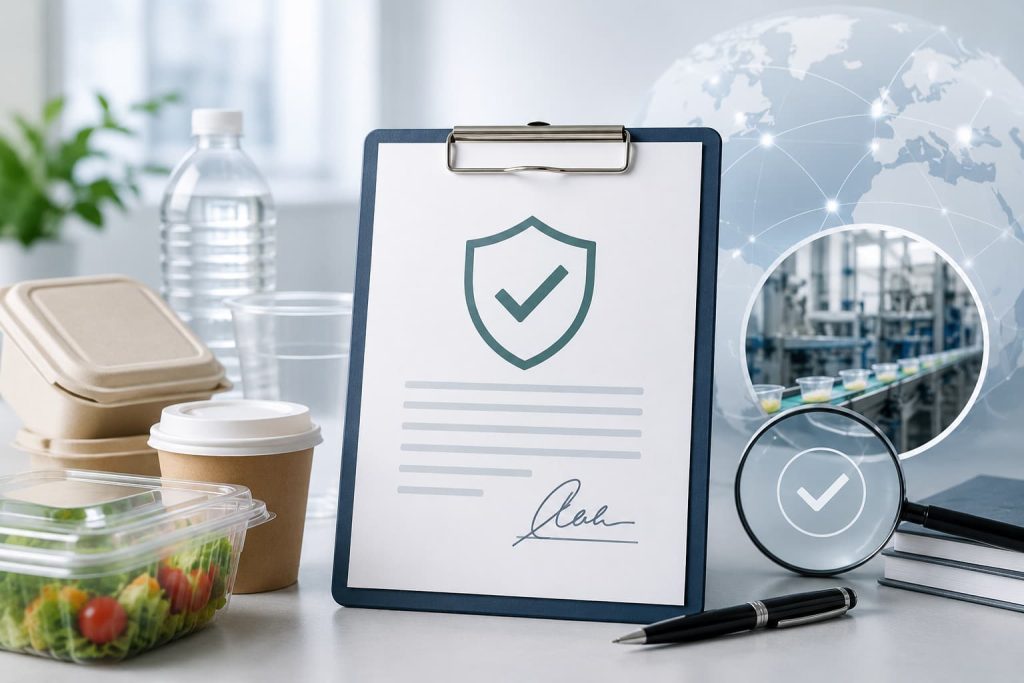
A Declaration of Compliance (DoC) is a document issued by a manufacturer or supplier confirming that a food contact product complies with the applicable regulations and is suitable for its intended use.
Unlike a laboratory test report, which presents the results of specific tests, a DoC summarizes the overall compliance status of a product. It confirms that the packaging has been manufactured using appropriate food contact materials and that supporting technical evidence is available to demonstrate compliance.
In many markets, the DoC acts as a bridge between manufacturers and downstream users. It allows importers, food manufacturers, retailers, and brand owners to understand how a product has been assessed without reviewing every technical document individually.
A typical DoC is supported by information such as:
- Raw material specifications
- Migration test reports
- Applicable food contact regulations
- Manufacturing controls
- Product identification
- Intended conditions of use
Rather than replacing these documents, the DoC brings them together into a concise declaration that customers can use during supplier evaluation and regulatory audits.
Why Buyers Request a Declaration of Compliance
For food packaging buyers, purchasing decisions involve much more than comparing prices or product designs. They must also ensure that every packaging component used in their products complies with food contact requirements and supports their own quality management systems.
Requesting a Declaration of Compliance helps buyers verify this information quickly and efficiently.
A DoC demonstrates that the supplier has evaluated the product against relevant regulations and understands the technical requirements of food contact applications. It also reduces the amount of time buyers need to spend collecting documentation from multiple sources during supplier approval.
In addition, many food manufacturers operate under strict internal quality procedures. Before introducing a new packaging supplier, procurement teams often work closely with quality assurance and regulatory departments to review technical documents. A well-prepared DoC makes this review process significantly easier.
For importers, the document also provides additional confidence that compliance has been considered throughout material selection, manufacturing, and quality control rather than being addressed only after production.
As food safety regulations become increasingly stringent worldwide, buyers are placing greater value on suppliers that can provide complete and well-organized compliance documentation.
What Information Does a DoC Typically Include?
Although the format may vary depending on the product and destination market, most Declarations of Compliance contain several common elements.
First, the document identifies the product being supplied. This usually includes the product name, model number, material type, and any relevant specifications needed for product traceability.
Second, the DoC identifies the manufacturer or supplier responsible for issuing the declaration. Contact information and company details help establish accountability and allow customers to request additional information if required.
The document also specifies the regulations or standards on which the declaration is based. Depending on the destination market, this may refer to European food contact legislation, FDA requirements, Australian standards, or other applicable regulatory frameworks.
Another important section describes the intended conditions of use. This explains how the packaging is designed to be used, including the types of food it may contact, expected temperature ranges, storage conditions, and whether it is intended for single-use or repeated use.
Finally, the DoC usually references the technical evidence supporting the declaration. This may include migration test reports, raw material documentation, or other internal quality records demonstrating that the product has been evaluated appropriately.
The exact format may differ between manufacturers, but buyers generally expect the information to be accurate, consistent, and easy to verify.
What Buyers Look for Beyond the Document
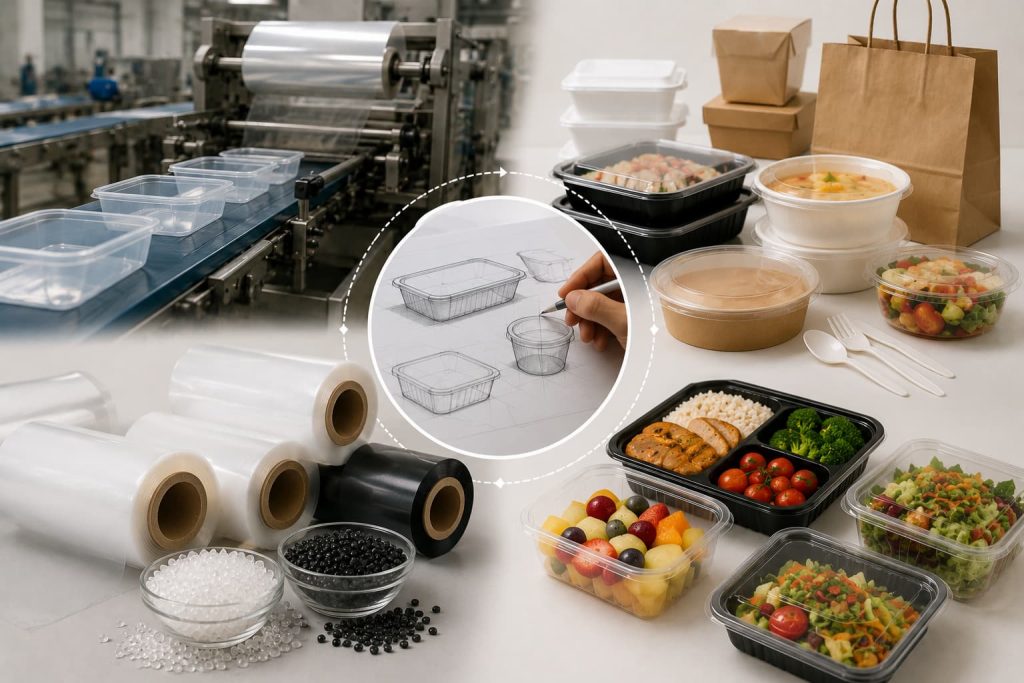
Experienced buyers rarely evaluate a Declaration of Compliance in isolation.
Instead, they use it as part of a broader assessment of the supplier’s technical capabilities and quality management system.
For example, procurement teams often compare the information contained in the DoC with product specifications, migration test reports, and quality certifications to ensure that the documents are consistent. Any discrepancies between these records may raise additional questions during the supplier approval process.
Buyers also pay attention to how clearly the document defines the product’s intended use. A Declaration of Compliance that simply states “food grade” without explaining the applicable food types or usage conditions is generally less valuable than one that provides specific technical details.
Ultimately, a well-prepared DoC demonstrates more than regulatory compliance—it reflects the supplier’s attention to detail, documentation practices, and commitment to supporting long-term customer relationships.
Common Mistakes When Preparing a DoC
Although many manufacturers provide a Declaration of Compliance, not every document fully meets customer expectations. Incomplete or outdated information can slow supplier approval and create unnecessary questions during technical reviews.
One common mistake is treating the DoC as a generic certificate that can be used for every product. In reality, a Declaration of Compliance should correspond to a specific product or product family and accurately reflect its intended food contact application.
Another issue is failing to update the document after changes in raw materials, production processes, or applicable regulations. A DoC should always reflect the current status of the product and be supported by the latest technical information.
Some manufacturers also overlook supporting documentation. While the DoC summarizes compliance, customers may still request migration test reports, material specifications, or other technical records during supplier qualification. Maintaining a complete documentation system helps respond to these requests quickly and professionally.
Declaration of Compliance vs. Migration Test Report
A Declaration of Compliance and a migration test report are closely related, but they serve different purposes.
A migration test report provides laboratory evidence showing how a food packaging product performs under defined testing conditions. It contains technical data, testing methods, food simulants, temperatures, contact times, and measured migration results.
A Declaration of Compliance, on the other hand, is a manufacturer’s formal statement confirming that the product complies with applicable food contact regulations based on available technical evidence.
Simply put, the migration report provides the scientific evidence, while the DoC provides the official compliance declaration.
For this reason, many international buyers request both documents. The migration report demonstrates product safety, while the DoC summarizes the product’s overall compliance status in a format that supports procurement, quality audits, and regulatory reviews.
| Declaration of Compliance (DoC) | Migration Test Report |
|---|---|
| Issued by the manufacturer or supplier | Issued by a qualified testing laboratory |
| Confirms overall regulatory compliance | Provides laboratory testing results |
| Summarizes supporting technical documentation | Contains detailed migration data and testing conditions |
| Used during supplier qualification and customer audits | Used to verify food contact safety under specific conditions |
Building a Reliable Compliance Documentation System
Preparing a high-quality DoC should not be viewed as an isolated administrative task. Instead, it should be part of a structured compliance management system.
Successful manufacturers begin by selecting food-contact-approved raw materials and maintaining complete records for every material used in production. Product specifications, migration testing, production traceability, and quality control procedures should all support the information included in the Declaration of Compliance.
Regular document reviews are equally important. Whenever regulations change, new materials are introduced, or products are modified, the corresponding compliance documents should be updated to ensure accuracy and consistency.
By organizing compliance documentation systematically, manufacturers can respond to customer requests more efficiently and reduce delays during supplier approval.
Supporting Customers with Reliable Compliance Documentation
Today’s international buyers expect more than quality products—they also expect suppliers to provide clear, accurate, and reliable technical documentation.
At DASHAN, food packaging compliance is integrated into the product development and manufacturing process. In addition to supplying PP food containers, PET packaging, reusable foodservice products, and customized OEM and ODM solutions, DASHAN supports customers with application-specific technical documentation to facilitate international trade.
By maintaining consistent manufacturing processes, product traceability, and comprehensive compliance records, DASHAN helps customers simplify supplier qualification while meeting the food contact requirements of different export markets.
This commitment to quality and documentation enables customers to move through procurement and regulatory reviews with greater confidence.
FAQ
1. What is a Declaration of Compliance (DoC)?
A Declaration of Compliance (DoC) is a document issued by a manufacturer confirming that a food contact product complies with applicable food safety regulations for its intended use.
2. Is a DoC the same as a migration test report?
No. A DoC is a compliance declaration issued by the manufacturer, while a migration test report provides laboratory test results that support the declaration.
3. What information is typically included in a DoC?
A DoC usually includes product identification, material information, applicable regulations, intended conditions of use, manufacturer details, and references to supporting technical documents.
4. Why do international buyers request a DoC?
Buyers use a DoC to verify product compliance, simplify supplier qualification, support regulatory audits, and reduce purchasing risks.
5. How can DASHAN support customers with compliance documentation?
DASHAN provides PP and PET food packaging together with technical documentation, including compliance support, product specifications, and export-oriented documentation to help customers meet international food contact requirements.
Conclusion
A Declaration of Compliance is much more than a routine document. It is an important communication tool that demonstrates a manufacturer’s understanding of food contact regulations and its commitment to product safety and quality.
For international buyers, a well-prepared DoC simplifies supplier evaluation, supports regulatory compliance, and reduces purchasing risk. For manufacturers, it reflects strong quality management and helps build long-term customer trust.
As global food packaging regulations continue to develop, companies that combine reliable products with complete technical documentation will be better positioned to compete in international markets. By treating compliance as an integral part of manufacturing rather than a final administrative step, food packaging suppliers can strengthen customer relationships and create lasting competitive advantages.
References
- European Commission – Food Contact Materials
https://food.ec.europa.eu/plants-and-pesticides/food-contact-materials_en - U.S. Food & Drug Administration (FDA) – Food Contact Substances
https://www.fda.gov/food/packaging-food-contact-substances-fcs - European Food Safety Authority (EFSA) – Food Contact Materials
https://www.efsa.europa.eu - Food Standards Australia New Zealand (FSANZ) – Food Contact Materials
https://www.foodstandards.gov.au - Food Packaging Forum
https://www.foodpackagingforum.org - World Packaging Organisation (WPO)
https://www.worldpackaging.org - ISO 22000 – Food Safety Management Systems
https://www.iso.org/iso-22000-food-safety-management.html - DASHAN Food Packaging
https://www.dashanpacking.com
Copyright Statement
© 2026 Dashan Packing. All rights reserved.
This article is an original publication by the Dashan Packing team based on industry research, market analysis, and packaging expertise. Unauthorized reproduction, distribution, or copying of this content is prohibited without prior written permission.
Dashan Packing is committed to delivering reliable, original, and professional information for the global food packaging industry.