

Quick Summary
CPET and aluminum trays are widely used in airline catering, but they differ significantly in cost and performance. While aluminum offers excellent heat conductivity, CPET provides better overall efficiency with lighter weight, improved sealing, and more consistent reheating. As airlines prioritize cost control, food quality, and operational efficiency, CPET trays are increasingly becoming the preferred solution, especially when combined with flexible, low MOQ supply options.
Introduction: Packaging Is a Core Part of Airline Catering Systems
In airline catering, packaging is not just a passive container—it is a critical component of an integrated operational system that must perform reliably across multiple stages.
A typical airline meal goes through a complex journey:
- Preparation in a central kitchen
- Blast freezing or chilled storage
- Transportation to airports
- Reheating in aircraft ovens
- Handling and service by cabin crew
Each step places specific demands on the packaging. A tray must withstand extreme temperature variations, maintain food quality, ensure safety, and support efficient operations—all while keeping costs under control.
As airlines face increasing pressure to optimize operations and reduce environmental impact, the choice between CPET vs aluminum trays has become a strategic decision rather than a simple material preference.
Understanding the Materials: CPET and Aluminum in Context
What Is CPET?

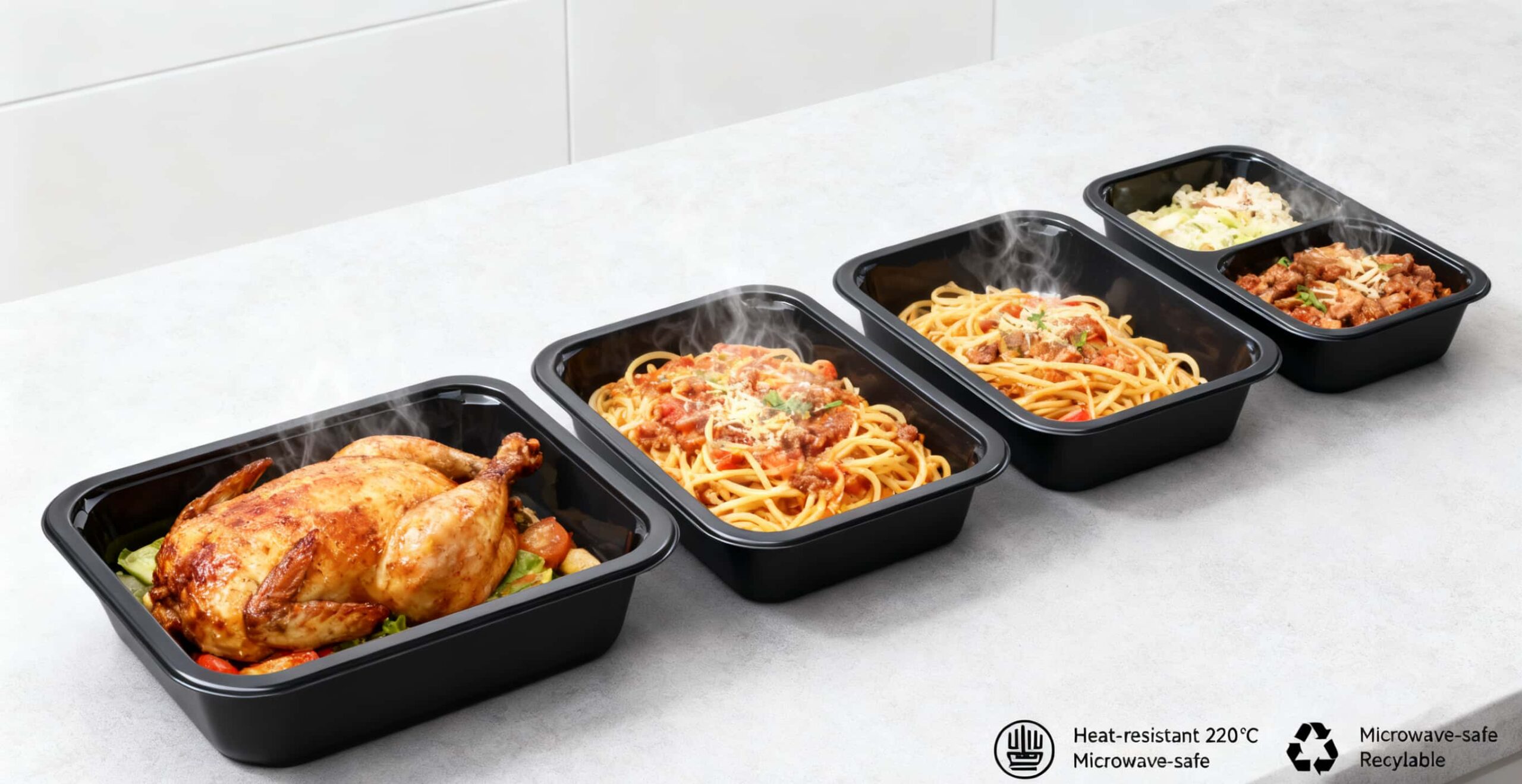
CPET (Crystallized Polyethylene Terephthalate) is an advanced form of PET that has been crystallized to improve thermal resistance and structural stability.
Key technical characteristics:
- Temperature range: -40°C to 220°C
- Dual-ovenable (conventional oven compatible)
- High dimensional stability
- Compatible with film sealing systems
CPET trays are specifically designed for cook-chill and cook-freeze systems, making them ideal for airline catering and ready meal industries.
What Are Aluminum Trays?

Aluminum trays are made from lightweight metal foil and have been used in food service for decades.
Key characteristics:
- Excellent thermal conductivity
- High heat tolerance
- Rigid structure
They are widely used in traditional airline catering systems due to their simplicity and familiarity.
The Airline Catering Workflow: Why Material Choice Matters
To fully understand the difference between CPET and aluminum trays, it is important to analyze how packaging interacts with real airline operations.

1. Central Kitchen Production
Meals are prepared in large batches, often thousands per day.
Key requirements:
- Consistent portioning
- Stackability
- Compatibility with automated filling lines
👉 CPET Advantage:
Uniform shape and rigidity make CPET ideal for automation.
2. Cold Chain & Storage
Meals are either chilled or blast frozen.
Key requirements:
- Resistance to cracking at low temperatures
- Structural stability during stacking
👉 CPET performs exceptionally well due to its low-temperature resistance.
3. Transportation & Logistics
Meals are transported in bulk to airports and aircraft.
Key requirements:
- Lightweight packaging
- Space efficiency
- Durability
👉 CPET significantly reduces weight compared to aluminum, directly impacting fuel consumption.
4. Reheating Onboard
Meals are reheated in convection or steam ovens.
Key requirements:
- Even heat distribution
- Food quality preservation
👉 Aluminum heats quickly but unevenly.
👉 CPET offers controlled, consistent reheating.
5. In-Flight Service
Cabin crew must handle trays safely and efficiently.
Key requirements:
- Safe handling temperature
- No sharp edges
- Easy disposal
👉 CPET improves crew safety and handling efficiency.
CPET vs Aluminum Trays: Detailed Performance Comparison
| Factor | CPET Trays | Aluminum Trays |
|---|---|---|
| Temperature Range | -40°C to 220°C | Up to very high heat |
| Weight | Lightweight | Heavier |
| Heat Distribution | Even | Fast but uneven |
| Sealing Capability | Excellent | Limited |
| Food Safety | Non-reactive | Reactive with acidic foods |
| Handling Safety | Safer | Can be sharp/hot |
| Automation Compatibility | High | Medium |
Key Insight
Aluminum trays excel in heat transfer, but CPET trays excel in system performance across the entire supply chain.
Cost Analysis: Beyond Unit Price
Many buyers focus only on unit price, but in airline catering, total system cost is far more important.
1. Raw Material Cost
Aluminum:
- Subject to global commodity price fluctuations
- Unstable long-term pricing
CPET:
- Polymer-based
- More predictable cost structure
2. Logistics Cost
Weight directly affects airline operating costs.
- CPET trays are lighter
- Aluminum trays increase cargo weight
At scale, this difference can lead to significant fuel cost savings.
3. Packaging Efficiency
CPET supports:
- Vacuum or MAP sealing
- Reduced leakage
- Extended shelf life
Aluminum often requires:
- Additional lids or wrapping
- Increased material usage
4. Labor & Operational Efficiency
CPET trays:
- Compatible with automated lines
- Faster packaging processes
Aluminum trays:
- Often require manual handling
Cost Conclusion
When factoring in logistics, labor, and waste reduction, CPET trays often deliver lower total operational costs, even if unit pricing is similar.
Food Quality: A Critical Differentiator
In airline catering, food quality directly impacts passenger satisfaction.
Moisture Retention
- CPET retains moisture → better texture
- Aluminum can dry out food
Flavor Integrity
- CPET is non-reactive
- Aluminum may interact with acidic foods
Visual Presentation
- CPET maintains structure
- Aluminum may deform under pressure
Safety & Handling Considerations
Crew Safety
- CPET does not conduct heat as aggressively
- Aluminum trays can become extremely hot
Passenger Safety
- CPET has smooth edges
- Aluminum trays may have sharp edges
Sustainability Considerations
Recyclability
- Aluminum: widely recyclable
- CPET: recyclable depending on infrastructure
Carbon Footprint
- Aluminum production is energy-intensive
- CPET generally has lower production emissions
Why Airlines Are Transitioning to CPET
Several industry trends are driving adoption:
- Need for lightweight solutions
- Automation in catering
- Improved food quality expectations
- Cost optimization pressure
Where DASHAN Adds Value in CPET Solutions
While many manufacturers offer CPET trays, not all provide the flexibility required by modern buyers.
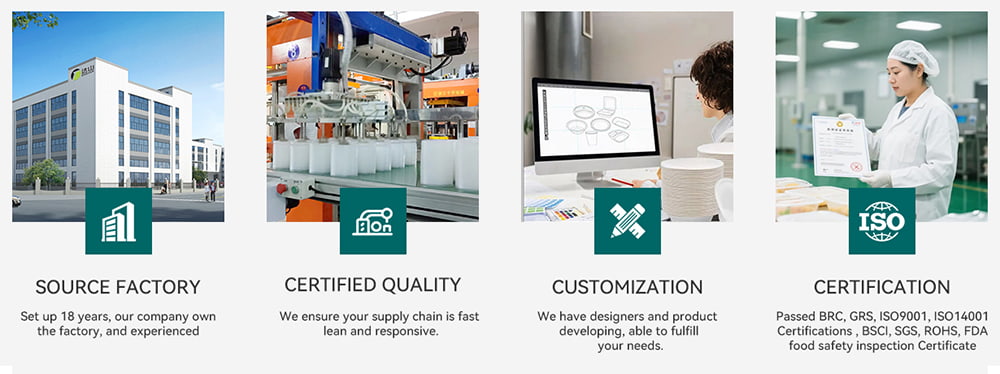
DASHAN focuses on practical procurement challenges, offering:
1. Low MOQ Advantage
Most suppliers require large production volumes.
DASHAN enables:
- Small-batch testing
- Faster product development
- Lower inventory risk
2. Customization Capability
Airlines and catering companies often require:
- Specific tray dimensions
- Multi-compartment designs
- Branding or color customization
DASHAN supports flexible OEM/ODM solutions.
3. Stable Supply & Quality Control
Consistency is critical in airline operations.
DASHAN ensures:
- Reliable production standards
- Consistent tray performance
- Export-ready quality
4. Multi-Material Integration
In addition to CPET, DASHAN can support:
- PP trays
- PET packaging
- Other food-grade solutions
This allows buyers to consolidate sourcing.
When Should You Choose CPET?
CPET is ideal when:
- Meals require freezing and reheating
- Leak-proof sealing is needed
- Weight reduction is important
- Automation is part of the workflow
When Aluminum Trays Still Work
Aluminum trays remain suitable for:
- High-temperature roasting
- Traditional catering systems
- Premium presentation needs
Final Comparison: Strategic Decision, Not Just Material Choice
The choice between CPET vs aluminum trays depends on operational priorities.
- Aluminum = heat performance
- CPET = system efficiency
FAQ
1. What is the main difference between CPET and aluminum trays?
CPET trays are lightweight, sealable, and suitable for both freezing and reheating, while aluminum trays offer superior heat conductivity but less flexibility.
2. Are CPET trays safe for airline ovens?
Yes, CPET trays can withstand temperatures up to around 220°C and are widely used in airline catering ovens.
3. Can aluminum trays be used in microwaves?
No, aluminum trays should not be used in microwaves due to the risk of sparking.
4. Which is more cost-effective: CPET or aluminum trays?
CPET is often more cost-effective when considering total costs, including logistics, handling, and waste reduction.
5. Are CPET trays recyclable?
Yes, CPET trays are recyclable, although availability depends on local recycling infrastructure.
6. Why are airlines switching to CPET trays?
Airlines are switching to CPET trays to reduce weight, improve efficiency, and enhance food quality during reheating.
Conclusion: Why CPET Is Becoming the Preferred Choice
Airline catering is evolving toward efficiency, consistency, and scalability.
In this context, CPET trays provide a more balanced solution:
- Lower total cost
- Better food quality
- Safer handling
- Greater operational efficiency
More importantly, suppliers like DASHAN enable airlines and foodservice providers to adopt CPET solutions without the traditional constraints of high MOQ and rigid production models.
For businesses looking to optimize both cost and performance, CPET is no longer an alternative—it is increasingly becoming the standard.
References
- European Commission. Circular Economy and Plastics Strategy
👉 https://environment.ec.europa.eu/topics/plastics_en - International Air Transport Association. Airline Catering and Cabin Operations Guidelines
👉 https://www.iata.org/en/programs/ops-infra/cabin/ - Aluminium Association. Aluminum in Food Packaging
👉 https://www.aluminum.org/resources/industry-standards/food-packaging
- Plastics Europe. PET and CPET Material Information
👉 https://plasticseurope.org
- U.S. Food and Drug Administration. Food Contact Materials Safety
👉 https://www.fda.gov/food/food-ingredients-packaging
- WRAP UK. Recyclability and Packaging Sustainability
👉 https://wrap.org.uk
Copyright Statement
© 2026 Dashan Packing. All rights reserved.
This article is an original work created by the Dashan Packing editorial team.
All text, data, and images are the result of our independent research, industry experience, and product development insights. Reproduction or redistribution of any part of this content without written permission is strictly prohibited.
Dashan Packing is committed to providing accurate, evidence-based information and to upholding transparency, originality, and compliance with global intellectual property standards.