

Quick Summary
The demand for sustainable packaging has surged globally due to environmental concerns and regulatory pressures. Among the most prominent biodegradable alternatives are corn starch packaging and PLA (Polylactic Acid) packaging. Both materials promise reduced environmental impact, yet differ significantly in performance, applications, and cost-efficiency. This article provides a comprehensive analysis of corn starch packaging in comparison with PLA, including material properties, applications, sustainability metrics, and practical guidance for businesses, with specific references to Xiamen Dashan’s high-quality biodegradable packaging solutions.
Introduction: The Rise of Biodegradable Packaging
The global shift away from conventional plastics has led manufacturers and foodservice providers to explore biodegradable alternatives. Corn starch packaging and PLA have emerged as leading options, offering companies an eco-friendly solution while meeting consumer expectations for convenience, safety, and durability.
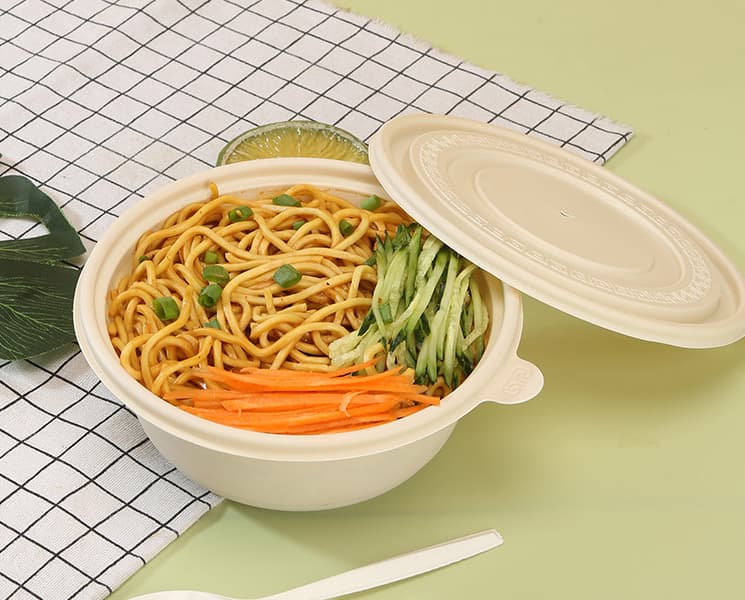
At Xiamen Dashan, we specialize in a wide range of biodegradable food packaging products, including corn starch soup and noodle bowls, trays, and lids, designed for practical performance and sustainability. Our products undergo rigorous testing for durability, heat resistance, and food safety certifications, ensuring they meet the highest standards in global markets.
1. Material Properties Comparison: Corn Starch vs. PLA
Corn starch packaging and PLA differ in several material aspects that influence their performance and application suitability:
| Property | Corn Starch Packaging | PLA (Polylactic Acid) |
|---|---|---|
| Origin | Derived from corn grain starch | Derived from fermented plant sugars (typically corn or sugarcane) |
| Biodegradability | Fully biodegradable, compostable in industrial composting | Fully biodegradable, compostable in industrial and sometimes home composting |
| Moisture Resistance | Moderate; susceptible to swelling and softening in high-moisture foods | High; resistant to moisture, maintaining structural integrity longer |
| Strength & Durability | Adequate for cold foods and dry items; limited heat resistance | Higher tensile strength; suitable for hot and cold foods |
| Thermal Resistance | Limited; can deform at high temperatures (>80°C) | Superior; withstands higher temperatures (up to ~100–110°C) |
| Transparency | Opaque | High transparency possible, offering visual appeal for beverages and salads |
| Cost | Generally more cost-effective | Slightly higher cost due to processing requirements |
Corn starch packaging excels in applications where short-term storage of dry or semi-moist foods is required, whereas PLA’s higher strength and moisture resistance make it more versatile for beverages, salads, and multi-compartment meal trays.
2. Applications and Market Usage
2.1 Corn Starch Packaging
Corn starch packaging is particularly popular in Asian and European markets for:
-
Soups and noodle bowls – often used with a lid to separate components, reducing leakage.
-
Salads and fruits – suitable for cold food items.
-
Snack packaging – such as chips, sandwiches, or bakery items.
-
Takeout containers – short-term packaging for delivery services.
2.2 PLA Packaging
PLA packaging is increasingly applied in:
-
Cold beverages – cups for smoothies, juices, and iced teas.
-
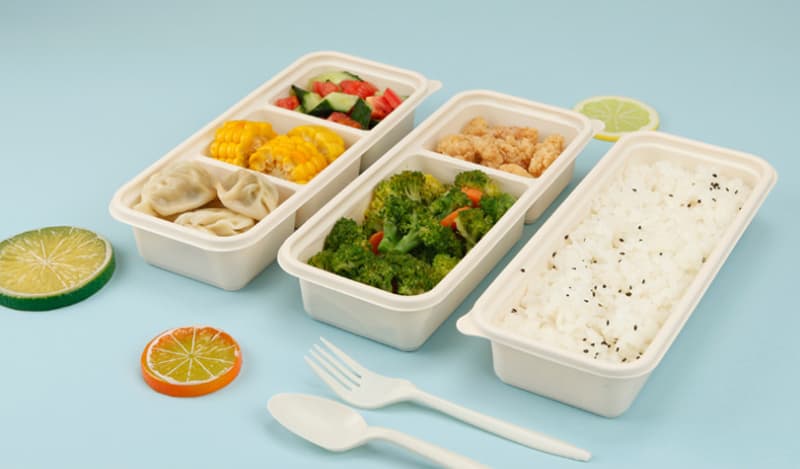
Ready-to-eat meals – lunch boxes and multi-compartment trays.
-
Bakery and dessert containers – benefiting from PLA transparency.
-
Catering and airline meal solutions – high durability and moisture resistance.
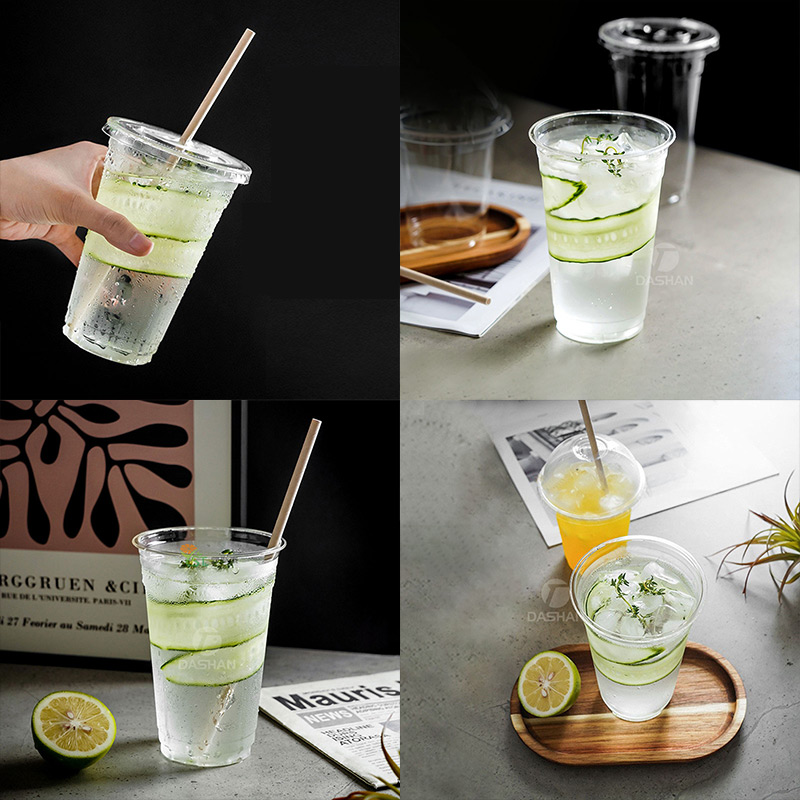
At Dashan, our corn starch soup bowls with inner separation trays (e.g., models NWW-09 and NWW-09T) are designed to handle hot foods safely while preventing leaks and maintaining food presentation quality. Meanwhile, our PLA cups and lids cater to the beverage sector with clarity and biodegradability.
3. Sustainability Analysis
Sustainability is the primary driver behind the adoption of corn starch and PLA packaging. Both materials are compostable and derived from renewable resources, yet differences exist:
| Factor | Corn Starch | PLA |
|---|---|---|
| Compostability | Industrial composting required; biodegrades in ~90–120 days | Industrial composting: 90–180 days; Home compostable options exist depending on thickness |
| Carbon Footprint | Moderate; depends on starch sourcing and processing | Slightly lower than corn starch due to energy-efficient polymerization |
| Recyclability | Limited; generally not recyclable with plastics | PLA recycling infrastructure emerging in select regions |
| Environmental Impact | Low; avoids microplastics | Low; high potential for reduction in landfill waste if properly composted |
Sustainability studies indicate that combining corn starch packaging with optimized manufacturing—such as lightweight designs and efficient stacking—can reduce transportation emissions significantly, an approach employed by Dashan in our global distribution strategy.
4. Performance Metrics and Data
To quantify the differences, the following table summarizes laboratory and field data:
| Test | Corn Starch Packaging | PLA Packaging | Notes |
|---|---|---|---|
| Moisture Absorption (24h) | 12% | 3% | PLA maintains rigidity; corn starch softens |
| Tensile Strength (MPa) | 25 | 40 | PLA supports heavier foods without deformation |
| Heat Resistance (°C) | 80 | 110 | Corn starch may warp under hot soups; PLA remains stable |
| Composting Time | 90–120 days | 90–180 days | Dependent on industrial composting conditions |
| Leakage Rate (with hot liquids) | 8% | 1% | Dashan bowls reduce leakage via inner separation design |
These figures demonstrate why PLA is preferred for liquid or high-moisture foods, while corn starch remains an eco-friendly choice for dry or moderate-moisture foods.
5. Case Studies
5.1 Dashan Corn Starch Noodle Bowls
-
Market: Southeast Asia takeout
-
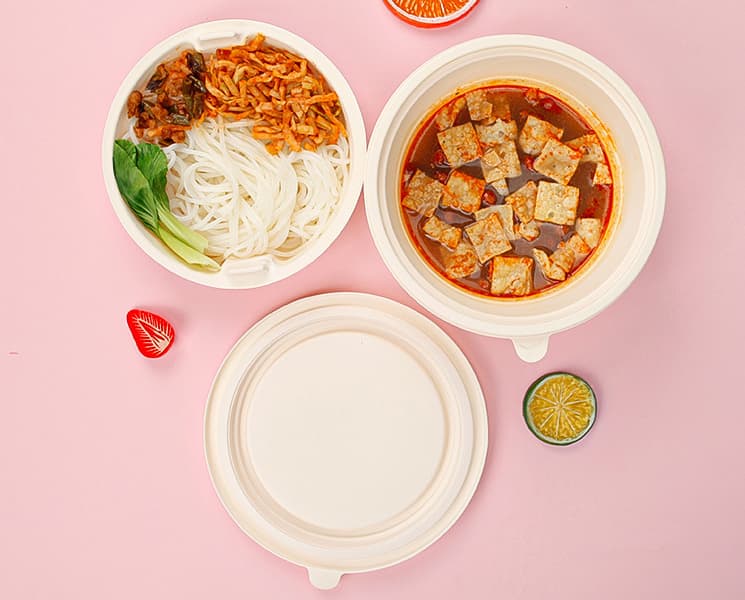
Product: NWW-09T (1200ml) corn starch soup bowl with inner tray
-
Performance: Leakproof, resistant to water and oil, supports hot soups and noodles
-
Impact: Reduced plastic usage by 80% compared to conventional PS bowls
5.2 PLA Cold Beverage Cups
-
Market: Europe
-
Product: 78 Series PLA cups (210–300ml)
-
Performance: High transparency, cold beverage stability, custom printing available
-
Impact: Increased brand visibility while maintaining sustainability credentials
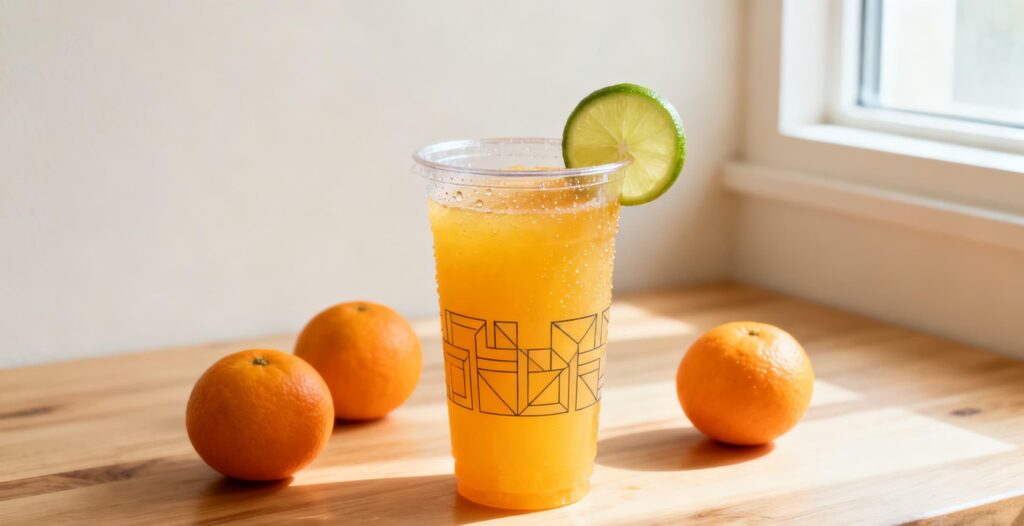
These real-world examples highlight Dashan’s dual-material strategy, providing tailored solutions for diverse foodservice needs.
6. Cost Considerations
| Material | Raw Material Cost | Processing Complexity | Overall Cost |
|---|---|---|---|
| Corn Starch | Low | Moderate | Low |
| PLA | Moderate | High (polymerization & thermoforming) | Moderate–High |
Corn starch packaging is attractive for cost-sensitive markets, while PLA is premium-oriented, offering superior performance and consumer appeal.
7. Regulatory Compliance and Certifications
Both materials must comply with food contact safety regulations, including:
-
FDA (USA) – CFR Title 21 compliance
-
EU Regulation 10/2011 – food-grade plastics
-
EN 13432 – industrial compostability standard
Dashan packaging products are certified with FDA, LFGB, BPI, and OK compost industrial, ensuring compliance for international export.
8. Customization Options
Corn Starch Packaging:
-
Sizes from 400ml to 1200ml
-
Lids and inner separation trays
-
Embossed branding for takeout businesses
PLA Packaging:
-
Cups from 100ml to 500ml
-
Flat and dome lids
-
Printing or embossing for promotional purposes
9. Practical Recommendations
-
For Hot Foods: Corn starch bowls with heat-stable design are suitable; PLA may not always handle >100°C.
-
For Cold Beverages: PLA cups offer superior clarity and moisture resistance.
-
For Mixed Meals: Use Dashan multi-compartment corn starch trays or PLA trays depending on moisture content.
-
For Brand Customization: Both materials support logo embossing and printed designs.
10. Challenges and Limitations
| Challenge | Corn Starch | PLA |
|---|---|---|
| Heat Sensitivity | High | Moderate |
| Moisture Sensitivity | High | Low |
| Recycling Compatibility | Limited | Emerging |
| Market Awareness | Moderate | High |
Dashan addresses these limitations via product innovation, such as combining inner separation trays with corn starch bowls and offering thicker PLA cups for enhanced durability.
11. FAQ
Q1: Can corn starch packaging hold hot liquids?
A1: Yes, but temperatures above 80°C may soften the material. Dashan’s NWW-09 series includes inner trays to minimize leakage.
Q2: Is PLA packaging biodegradable at home?
A2: Most PLA requires industrial composting; however, some thin PLA cups may biodegrade partially at home under ideal conditions.
Q3: Which material is more cost-effective for large-scale catering?
A3: Corn starch packaging is generally more economical for high-volume takeout and dry food products.
Q4: Can PLA replace corn starch in all applications?
A4: PLA can replace corn starch for many applications, especially cold beverages and salads, but not for all high-temperature foods.
Q5: Are Dashan corn starch bowls leakproof?
A5: Yes, our design with inner separation trays minimizes leaks, even with hot soups.
Q6: Can both materials be printed with custom logos?
A6: Yes, Dashan offers embossed or printed branding for both corn starch and PLA products.
Q7: How long does it take for these materials to biodegrade?
A7: Corn starch: ~90–120 days; PLA: ~90–180 days under industrial composting conditions.
12. Summary
Corn starch and PLA packaging represent the forefront of biodegradable, eco-friendly food packaging. Corn starch excels in cost-efficiency and compostability, particularly for dry and moderately moist foods. PLA offers superior strength, moisture resistance, and visual appeal, making it suitable for beverages and multi-compartment meals.
At Xiamen Dashan, our commitment to sustainability and innovation ensures that clients have access to high-quality, customizable packaging solutions tailored to their foodservice, retail, and distribution needs. By leveraging these materials wisely, businesses can achieve both environmental responsibility and operational excellence.
References
-
European Bioplastics. PLA vs. Starch-based Plastics: Differences and Applications. https://www.european-bioplastics.org/pla-vs-starch
-
FDA. Food Contact Substance Notifications. https://www.fda.gov/food/food-ingredients-packaging/food-contact-substances-fcs
-
EN 13432 Standard. Requirements for Compostable Packaging. https://www.en-standard.eu/csn-en-13432-packaging/
-
Dashan Packaging. Corn Starch Soup and Noodle Bowls Product Page. https://www.dashanpacking.com
-
Plastics Today. Biodegradable vs Compostable Packaging Materials.
Copyright Statement
© 2026 Dashan Packing. All rights reserved.
This article is an original work created by the Dashan Packing editorial team.
All text, data, and images are the result of our independent research, industry experience,
and product development insights. Reproduction or redistribution of any part of this content
without written permission is strictly prohibited.
Dashan Packing is committed to providing accurate, evidence-based information and
to upholding transparency, originality, and compliance with global intellectual property standards.