

Quick Summary
Compostable packaging is often perceived as inherently sustainable, but real environmental outcomes depend on infrastructure, use conditions, and system-level performance. Without proper composting pathways and functional reliability, compostable materials may increase waste rather than reduce it. Sustainability must be evaluated through outcomes, not labels.
In recent years, compostable food packaging has become one of the most recognizable symbols of sustainability. From coffee cups and takeaway containers to cutlery and trays, “compostable” is often treated as a shorthand for environmental responsibility. For many buyers and brand owners, choosing compostable materials feels like an obvious step toward reducing environmental impact.
However, sustainability in food packaging is rarely determined by a single material attribute. Compostable packaging, while valuable in the right context, does not automatically result in better environmental outcomes. In many real-world scenarios, compostable solutions introduce new trade-offs, shift environmental burdens, or even undermine broader sustainability goals.
This article examines why compostable does not automatically mean sustainable, and why experienced buyers increasingly evaluate sustainability through systems, use conditions, and outcomes rather than labels.
Why “Compostable” Became a Shortcut for Sustainability
The popularity of compostable packaging is not accidental. Growing public concern over plastic pollution, marine debris, and landfill accumulation has created strong pressure on food brands and foodservice operators to demonstrate environmental responsibility. Compostable materials offer a clear and intuitive narrative: packaging that “returns to nature” instead of persisting as waste.
From a communication standpoint, compostable is easy to understand and easy to market. It signals alignment with environmental values without requiring consumers—or sometimes buyers—to engage with technical complexity. As a result, compostable has gradually become a perceived endpoint rather than one option within a broader sustainability strategy.
The problem with shortcuts is not intention, but oversimplification. Sustainability is not a label; it is an outcome shaped by many interconnected decisions. When compostable materials are treated as a universal solution, critical questions about use conditions, disposal pathways, and system compatibility are often overlooked.
What “Compostable” Actually Means in Technical and Regulatory Terms
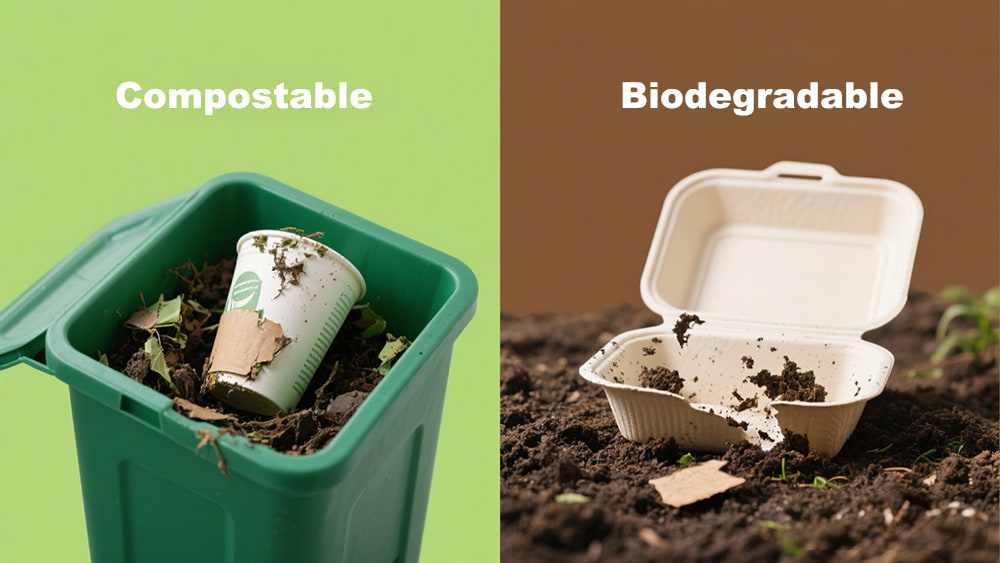
In technical and regulatory contexts, compostable has a precise definition that is often misunderstood outside specialist circles.
Most compostable food packaging is certified under standards such as EN 13432 (EU), ASTM D6400 (US), or equivalent ISO standards. These certifications verify that a material can break down under specific, controlled composting conditions, typically involving:
-
Elevated and stable temperatures
-
Controlled humidity
-
Active microbial environments
-
Defined timeframes
-
Industrial-scale processing
Crucially, these standards do not guarantee decomposition in natural environments, landfills, or home compost systems. They also do not assess whether composting infrastructure is available or whether products will actually reach those facilities after use.
In other words, compostability is a conditional property, not a universal outcome. Certification confirms what can happen under ideal conditions—not what will happen in real disposal systems.
The Gap Between Compostable Design and Real-World Infrastructure
One of the most significant challenges facing compostable packaging is infrastructure mismatch.
In many regions, industrial composting facilities are limited, geographically concentrated, or incompatible with foodservice packaging formats. Collection systems often struggle with contamination, sorting accuracy, and cost efficiency. Compostable items mixed with conventional waste streams frequently end up in landfill or incineration despite their certified properties.
Regional differences further complicate the picture. In parts of Europe, composting infrastructure is relatively mature, yet still inconsistent. In North America and much of Asia, access varies dramatically by city and municipality. In Japan, for example, incineration remains a dominant waste management pathway, which alters the environmental calculus entirely.
Without reliable end-of-life pathways, compostable packaging cannot deliver its intended environmental benefits. Design intent alone does not determine sustainability; system compatibility does.
When Compostable Packaging Increases Environmental Burden
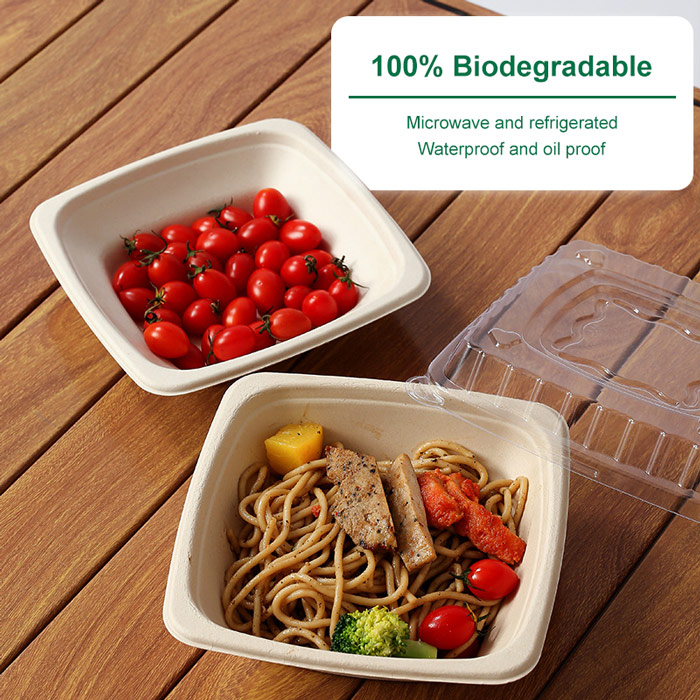
Compostable materials are not inherently low-impact. Many require higher energy inputs, specialized feedstocks, or more complex processing than conventional plastics. These factors contribute to upstream environmental costs that are often ignored in surface-level comparisons.
Performance limitations also matter. Compostable packaging can exhibit reduced heat resistance, structural rigidity, or moisture tolerance depending on formulation and processing. In demanding foodservice environments, this can lead to leakage, deformation, or product failure.
When packaging fails, the environmental consequences multiply. Food waste, secondary packaging, replacements, and operational inefficiencies often outweigh the benefits of compostability. In some scenarios, a compostable package that fails prematurely generates more total environmental impact than a durable alternative that prevents food loss.
Sustainability must account for failure scenarios, not just best-case assumptions.
Food Waste as the Largest Sustainability Blind Spot
Across most lifecycle assessments, food waste consistently ranks as a far greater environmental burden than packaging waste. The resources embedded in food—land, water, energy, and labor—far exceed those used to produce packaging.
When compostable packaging compromises food protection, shelf life, or handling reliability, it can unintentionally increase food waste. From a systems perspective, this represents a net loss, even if the packaging itself is compostable.
Experienced buyers increasingly recognize that sustainability cannot be separated from performance. Preventing food loss often delivers greater environmental benefit than switching materials without regard to functional outcomes.
Sustainability as a System Outcome, Not a Material Label
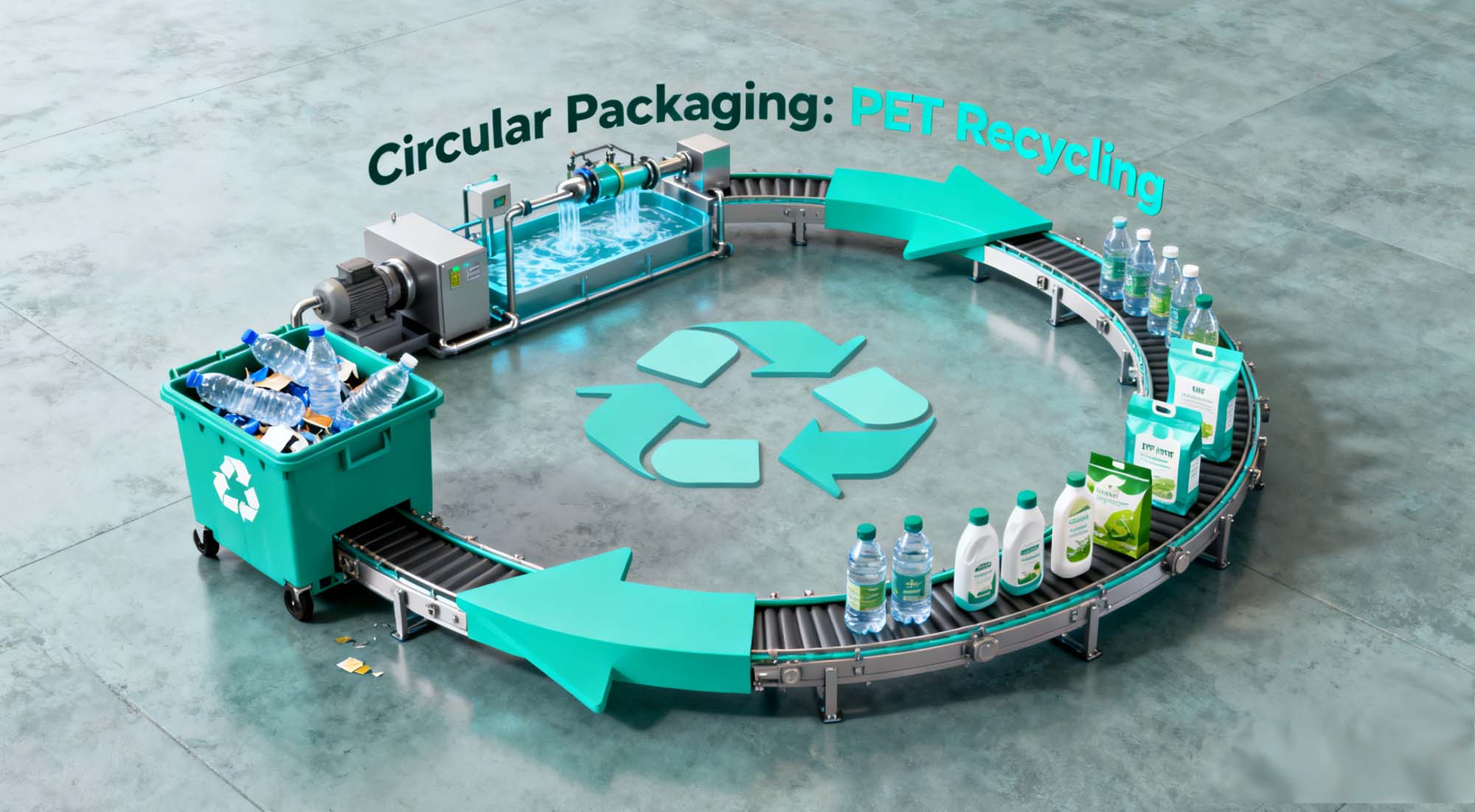
True sustainability emerges from interactions between material choice, design, manufacturing process, logistics, use conditions, and disposal pathways. Focusing on any single attribute—whether compostable, recyclable, or renewable—risks ignoring the system as a whole.
Material-first sustainability strategies tend to oversimplify complexity. In contrast, system-based approaches evaluate trade-offs and optimize for overall impact. In some applications, compostable packaging performs well. In others, recyclable or durable solutions achieve better environmental results.
The key is alignment, not ideology.
How Experienced Buyers Evaluate Compostable Options Differently
Professional buyers rarely ask whether a product is compostable in isolation. Instead, they evaluate scenarios:
-
Where and how will the packaging be used?
-
What thermal, mechanical, and time-based stresses will it face?
-
What disposal infrastructure actually exists in the target market?
-
What happens if the packaging underperforms?
Compostable materials make sense in controlled environments with reliable composting systems and compatible use cases. In other contexts, they introduce unnecessary risk.
This scenario-based evaluation reflects procurement maturity. Sustainability decisions become part of risk management rather than symbolic gestures.
Sustainability Decisions in Practice: Lessons From Manufacturing and Use
Manufacturing plays a critical role in determining whether compostable packaging delivers sustainable outcomes. Variations in forming temperature, thickness distribution, tooling design, and process stability can significantly influence performance.
Two products made from the same compostable resin may behave very differently in real use depending on how they are produced. This is where supplier experience and process transparency matter.
Manufacturers with deep understanding of material behavior, forming limitations, and real-world applications are better positioned to advise buyers on when compostable solutions are appropriate—and when they are not. Companies like DASHAN, for example, work closely with customers to align material choices with application realities rather than treating sustainability as a one-size-fits-all claim.
This type of collaboration reduces trial-and-error, minimizes failure-driven waste, and supports more credible sustainability outcomes.
Redefining Sustainable Packaging Decisions
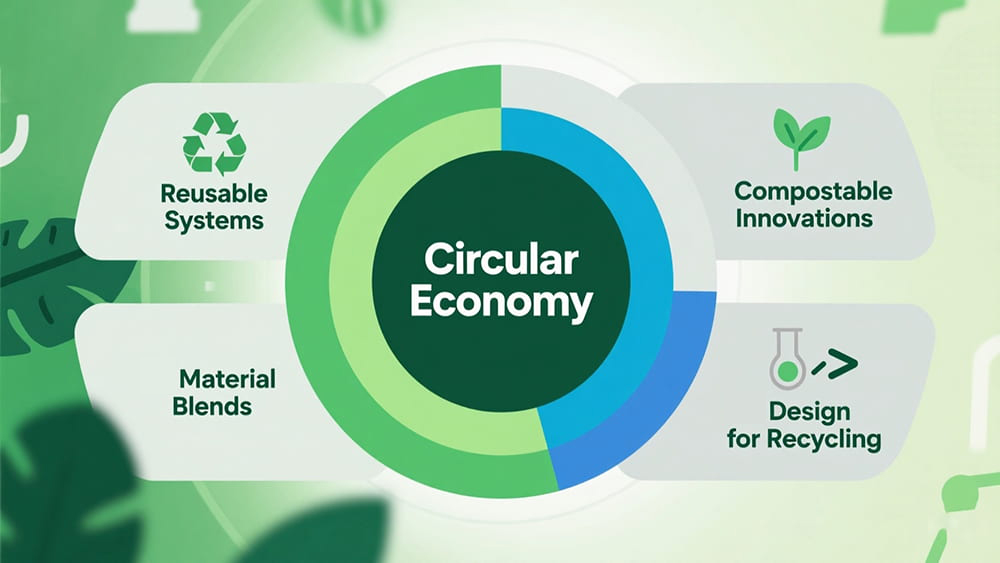
Sustainable packaging decisions are not about choosing the “greenest” label. They are about reducing environmental impact across the entire food system.
This requires moving beyond marketing claims toward measurable outcomes. It requires asking harder questions about use conditions, infrastructure compatibility, and failure risks. It also requires recognizing that sustainability is a continuous optimization process, not a single purchasing decision.
Responsible sourcing balances environmental intent with operational reality.
FAQ
1. Does compostable packaging always reduce environmental impact?
No. Compostable packaging only delivers environmental benefits when proper composting infrastructure exists and the packaging performs reliably in real use. Without these conditions, the impact can be neutral or even negative.
2. What is the difference between compostable and biodegradable?
Compostable materials must meet specific standards and break down under controlled conditions within a defined timeframe. Biodegradable is a broader term and does not guarantee complete or timely decomposition.
3. Why do many compostable products still end up in landfill?
Limited composting facilities, improper waste sorting, contamination, and regional disposal practices often prevent compostable packaging from reaching industrial composting systems.
4. Can compostable packaging increase food waste?
Yes. If compostable packaging lacks sufficient heat resistance, strength, or barrier performance, it may fail in foodservice use, leading to leakage, spoilage, or replacement—contributing to food waste.
5. How do experienced buyers evaluate compostable options?
They assess real usage scenarios, infrastructure compatibility, failure risks, and total system impact rather than relying solely on material labels or certifications.
6. When does compostable packaging make sense?
Compostable packaging works best in controlled environments with reliable composting infrastructure, appropriate food applications, and well-matched performance requirements.
Conclusion
Compostable packaging is a valuable tool, but it is not a universal solution. Without the right systems, infrastructure, and use conditions, compostable materials may fail to deliver meaningful environmental benefits.
Sustainability is defined by outcomes, not labels. When decisions are grounded in system-level thinking rather than assumptions, both environmental performance and operational reliability improve.
References
-
European Commission – EN 13432: Packaging and the Environment
https://environment.ec.europa.eu/topics/waste-and-recycling/packaging-waste_en -
ASTM International – ASTM D6400 Standard Specification
https://www.astm.org/d6400-21.html -
ISO – ISO 17088: Specifications for Compostable Plastics
https://www.iso.org/standard/57932.html -
Ellen MacArthur Foundation – Global Commitment on Plastics
https://ellenmacarthurfoundation.org/global-commitment -
WRAP UK – Food Waste and Packaging Sustainability
https://wrap.org.uk/resources/guide/food-packaging-and-sustainability -
European Bioplastics – Compostable Plastics in Waste Management
https://www.european-bioplastics.org/bioplastics/materials/
Copyright Statement
© 2026 Dashan Packing. All rights reserved.
This article is an original work created by the Dashan Packing editorial team.
All text, data, and images are the result of our independent research, industry experience,
and product development insights. Reproduction or redistribution of any part of this content
without written permission is strictly prohibited.
Dashan Packing is committed to providing accurate, evidence-based information and
to upholding transparency, originality, and compliance with global intellectual property standards.