

Quick Answer: The Profitability of Sustainability
Yes, you absolutely can charge more. Transitioning to high-quality [Dashan PLA cups] or [Dashan Sugarcane bagasse containers] is no longer just a “green” gesture—it is a calculated business move with a high Return on Investment (ROI). Modern consumers, particularly Gen Z and Millennials, perceive food served in premium, eco-friendly food packagingas higher value. By switching from generic plastics to certified compostable solutions, you can justify a price premium, increase customer loyalty, and eliminate the risk of non-compliance fines.
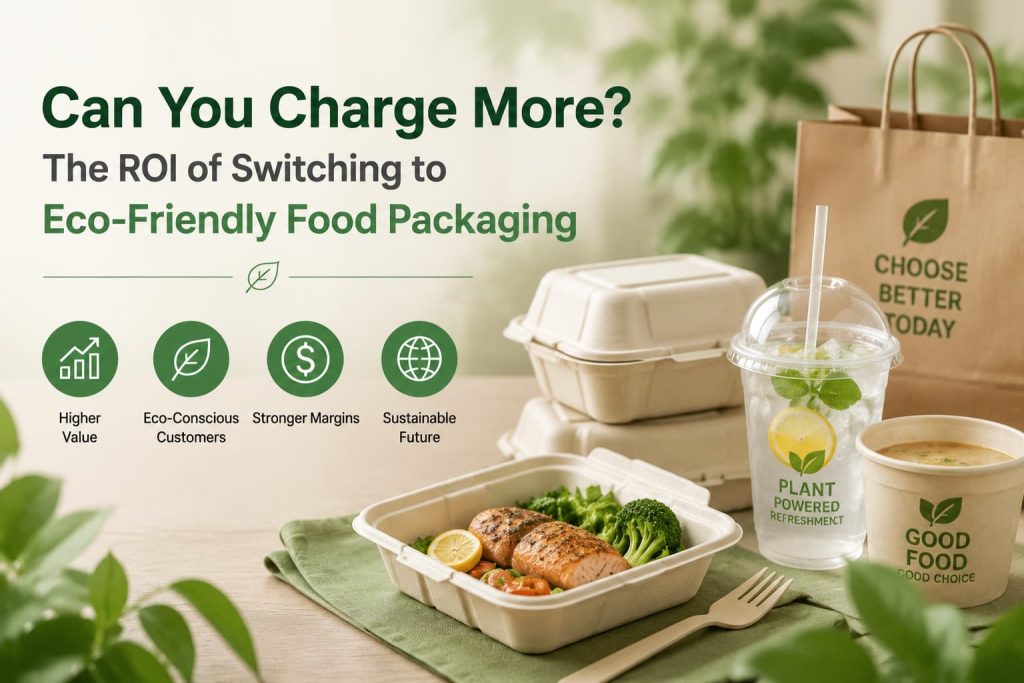
1. The “Eco” Trap: Why Cheap Plastic is Costing You Brand Equity
Many food service businesses and wholesalers fall into the “Eco Trap”—the belief that saving a few cents on traditional petroleum-based plastic containers protects their bottom line. In reality, this strategy is backfiring.
As global plastic bans tighten in 2026, using non-recyclable or non-compostable packaging sends a negative message to your customers. It signals that your brand is outdated and indifferent to environmental impact. This “cheap” packaging often leads to:
-
Brand Devaluation: High-quality food served in flimsy, “plastic-smelling” containers feels cheapened.
-
Missed Market Segments: You lose access to the growing demographic of eco-conscious diners who actively boycott brands using single-use plastics.
-
Operational Risk: Relying on traditional plastics leaves you vulnerable to sudden legislative changes and the “Plastic Taxes” now common across Europe and North America.
By staying stuck in the old plastic paradigm, you aren’t just missing out on a trend; you are missing out on the opportunity to position your brand as a premium leader.
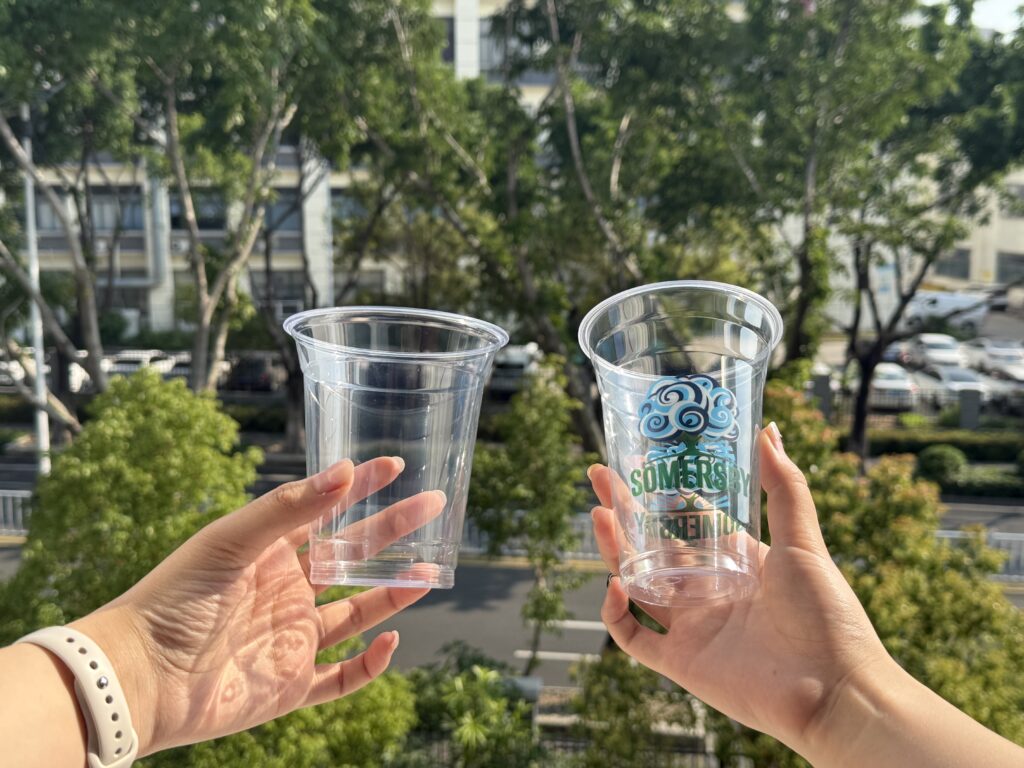
2. Material Truth: The Science of High-Performance Bioplastics
To understand the ROI, you must understand the materials. At Dashan, we don’t just sell “green boxes”; we engineer high-performance biological barriers.
PLA (Polylactic Acid): The Clear Choice for Cold
PLA is a bioplastic derived from fermented plant starch (usually corn).
-
100% Biodegradable: Unlike traditional PET, PLA breaks down into organic matter in industrial composting facilities.
-
Safety: It is naturally BPA-free and contains no phthalates, ensuring that the flavor of your cold-pressed juices or craft salads remains untainted by chemical leaching.
Sugarcane Bagasse: The Rugged Solution for Heat
Bagasse is made from the fibrous remains of sugarcane stalks after juice extraction.
-
Circular Economy: It utilizes a byproduct that would otherwise be burned, giving it one of the lowest carbon footprints in the packaging industry.
-
Natural Strength: The interlocking plant fibers provide incredible structural integrity without the need for synthetic glues.
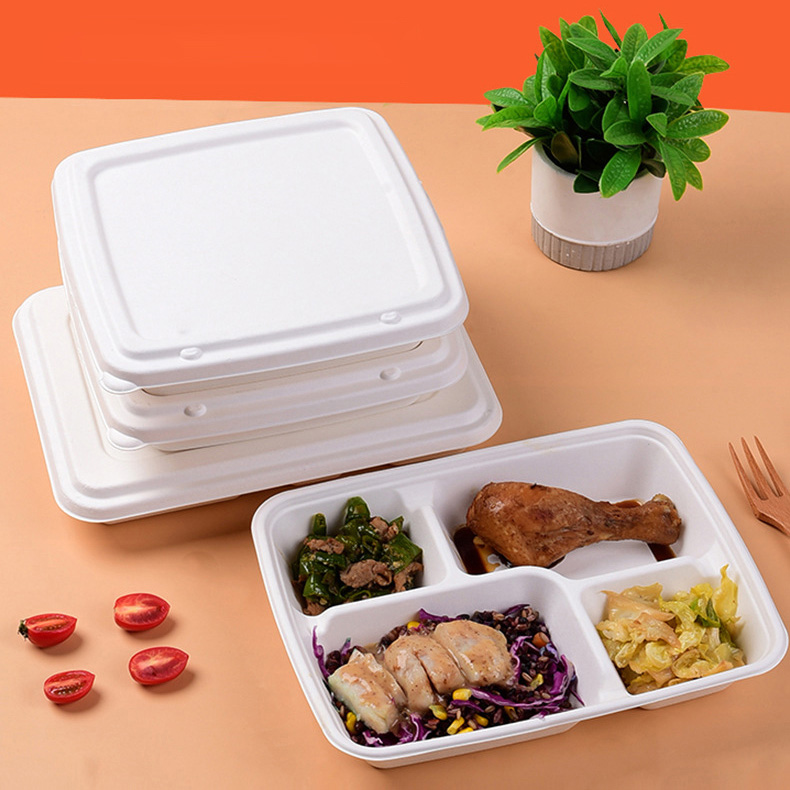
3. Performance Test: Preserving Food Integrity in the Real World
ROI isn’t just about the “green” label; it’s about whether the food arrives in perfect condition. If the packaging fails, the ROI is zero.
| Performance Metric | Traditional Plastic (PS/PET) | [Dashan Sugarcane bagasse containers] |
| Breathability | Zero. Traps steam, making fried food soggy. | High. Micro-pores allow steam to escape while retaining heat. |
| Heat Resistance | Low (Melts or warps above 60°C). | Excellent. Microwave safe up to 120°C. |
| Visual Appeal | Generic, “mass-produced” look. | Premium. Organic texture feels artisanal and high-end. |
| Customer Perception | “Single-use waste.” | “Premium, sustainable brand.” |
The Application ROI: If you serve hot, crispy foods like fried chicken or burgers, then switching to bagasse actually improves the taste of your food upon delivery by preventing sogginess. Better tasting food leads to repeat orders, which is the ultimate ROI.
4. Compliance Check: What Buyers Must Verify Before Ordering
The “Greenwashing” market is flooded with fake eco-friendly products. If you buy uncertified containers, you risk customs seizures and legal liability. Before transferring a deposit, every professional buyer must verify three “Gold Standards”:
-
PFAS-Free Statement: Many low-quality molded fiber products use “forever chemicals” (PFAS) for grease resistance. These are being banned globally in 2026. Ensure your supplier provides a certified PFAS-Free report.
-
FDA / EU Food Contact Compliance: Regardless of being “eco-friendly,” the material must be tested for chemical migration to ensure it is safe for human consumption.
-
BPI / OK Compost / DIN CERTCO: These certifications prove that the item will actually compost in an industrial environment. Without these logos, your “compostable” claim is legally groundless.
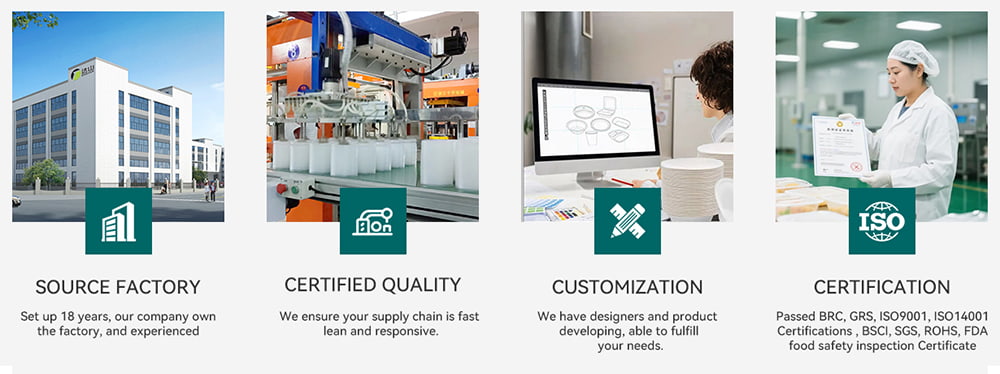
At Dashan, we maintain an open-book policy regarding our certifications. You can learn more about our commitment to rigorous testing on our [About us] page.
5. Conclusion: Protect Your Margins with Dashan
The data is clear: consumers are willing to pay a 5-10% “sustainability premium” for food served in eco-friendly packaging. By switching to [Dashan Sugarcane bagasse containers] or [Dashan PLA cups], you aren’t just increasing your costs; you are increasing your brand’s price ceiling.
You stop competing on “lowest price” and start competing on “highest value.“
Stop letting your packaging hold your brand back. Switch to a supply chain that adds value to every meal you serve.
👉 [Contact us] today to receive our 2026 Catalog of 100% Biodegradable Packaging and our full folder of international compliance certificates.
FAQ: The Business of Eco-Friendly Packaging
1. Is eco-friendly packaging significantly more expensive? While the unit price is slightly higher than traditional plastic, the “Landed Cost” is often offset by the removal of Plastic Packaging Taxes and the ability to increase your menu prices due to the perceived premium value.
2. Can I microwave bagasse containers? Yes. Unlike PLA or traditional plastics, sugarcane bagasse is highly heat-resistant and safe for microwave use up to 120°C, making it perfect for meal-prep businesses.
3. Does Dashan provide PFAS-Free products? Yes. We have transitioned our production to focus on PFAS-Free coatings to ensure our clients are compliant with the latest 2026 environmental regulations in the US and Europe.
4. How do I prove to my customers that my packaging is truly compostable? We suggest printing the BPI or OK Compost certification logos directly onto your custom-branded packaging. This provides instant, third-party verification to your customers that your brand is genuinely sustainable.
References & Authoritative Industry Research
To help B2B buyers calculate their ROI accurately, Dashan Packing aligns its sustainability advice with the following industry leaders:
-
NielsenIQ: The Sustainability Sentiment Report (Statistical data showing that 78% of consumers say a sustainable lifestyle is important to them, and they are actively choosing brands with eco-friendly packaging).
-
Biodegradable Products Institute (BPI): Certification Standards for Compostable Materials (The scientific authority on what constitutes a truly compostable product in an industrial environment).
-
Harvard Business Review: The Business Case for Sustainability (Analysis of how companies that integrate ESG goals into their supply chain outperform competitors in long-term profitability).
Copyright & Legal Disclaimer
© 2026 Dashan Packing. All rights reserved.
This ROI and Material Performance Guide is an original work created by the Dashan Packing strategic marketing and technical teams. All financial calculations, material comparisons, and compliance interpretations are based on our independent industry research and B2B manufacturing expertise. Reproduction, redistribution, or unauthorized use of any part of this content without explicit written permission from Dashan Packing is strictly prohibited. Dashan Packing provides this information for educational and strategic procurement purposes only.