

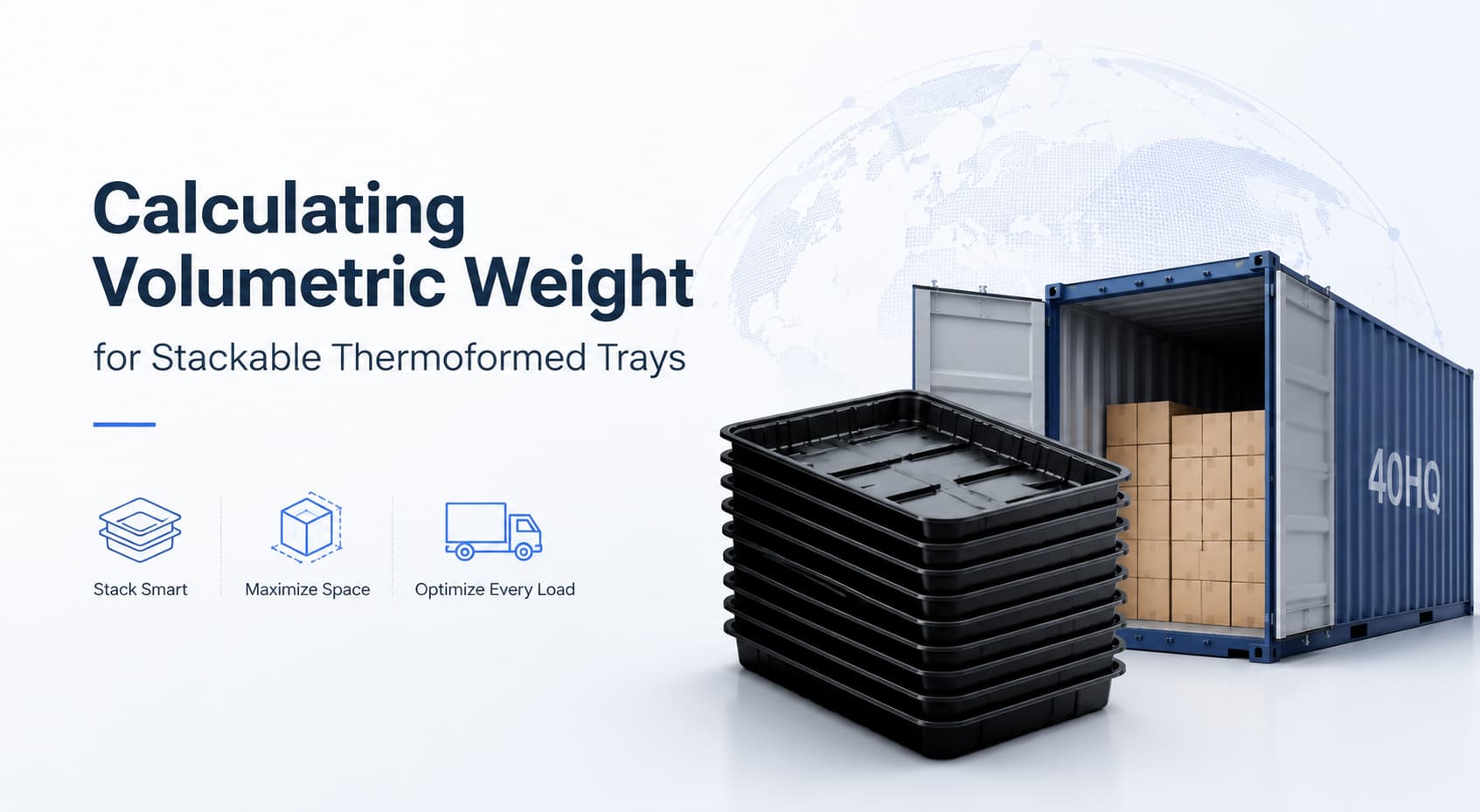
Quick Summary:
Stackable thermoformed trays are widely used in foodservice, catering, and ready meal industries. Proper nesting design and accurate volumetric weight calculations are critical for maximizing container utilization, reducing shipping costs, and improving ROI. This article dives into the hidden costs of poor nesting design, introduces denesting lug impacts, provides a 40HQ container yield formula, and explains how small changes in stacking pitch can lead to measurable ROI improvements.
The Hidden Costs of Poor Nesting Design
Efficient stacking starts at the tray design stage. Even minor misalignments or poorly designed denesting lugs can drastically affect stacking pitch, reducing the number of trays per pallet or container.
Key Points:
- Space inefficiency: Poor nesting increases the stacking pitch, leaving unused volume in containers.
- Higher shipping costs: Fewer trays per container mean more shipments, raising transportation costs.
- Operational delays: Handling trays that do not nest well takes more time during packing and unpacking.
- Material waste: Overly thick trays designed to compensate for poor nesting add unnecessary weight, increasing volumetric weight for shipping.
By focusing on thermoformed tray design optimization, companies can reduce both freight costs and environmental footprint.
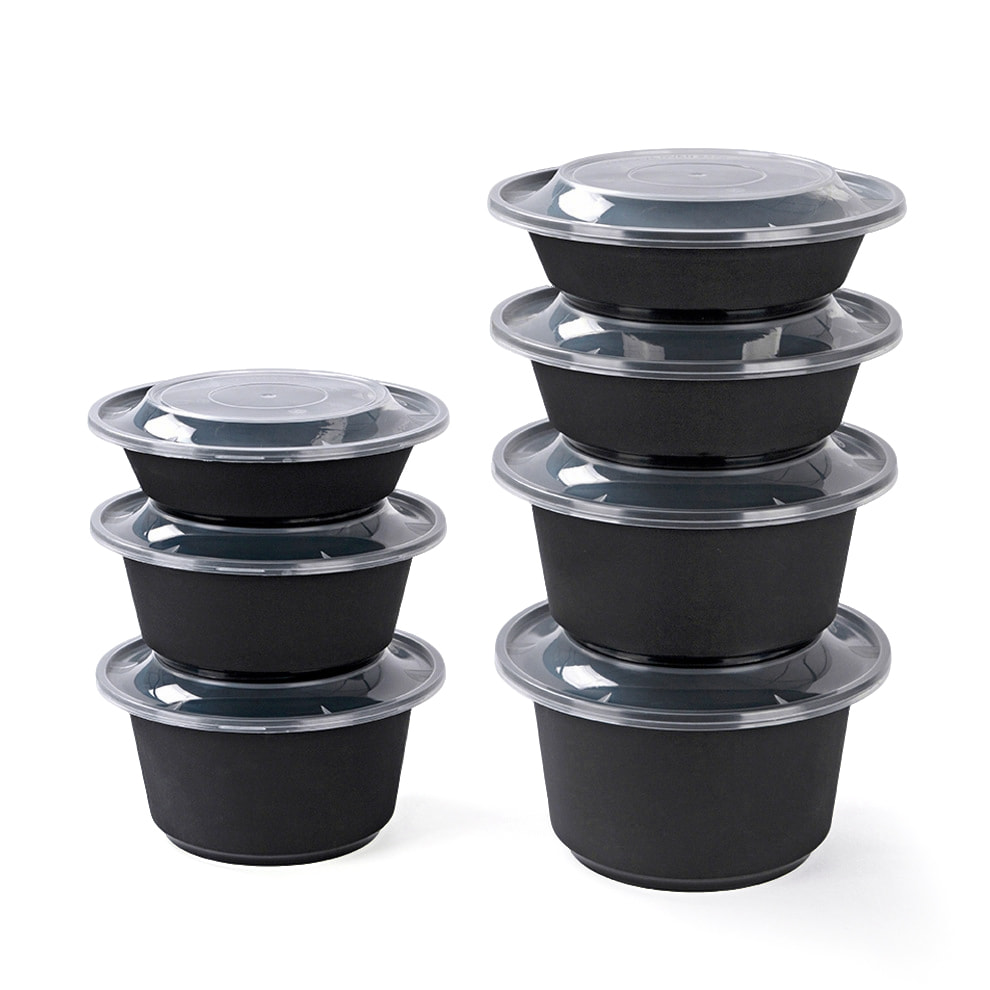
Denesting Lugs and Their Impact on Stacking Pitch
Denesting lugs are small protrusions designed to prevent trays from sticking together. While necessary, their design must balance functionality with space efficiency.
Impacts of Denesting Lugs:
- Increased stacking pitch: Each lug adds to the vertical distance between trays, reducing container yield.
- Transport inefficiency: A 1–2mm increase per tray might seem small but multiplies across hundreds or thousands of trays.
- ROI implications: Poor lug design increases the number of containers required, directly impacting logistics costs.
Learn more about optimizing tray design in [our Thermoforming Process Optimization guide].
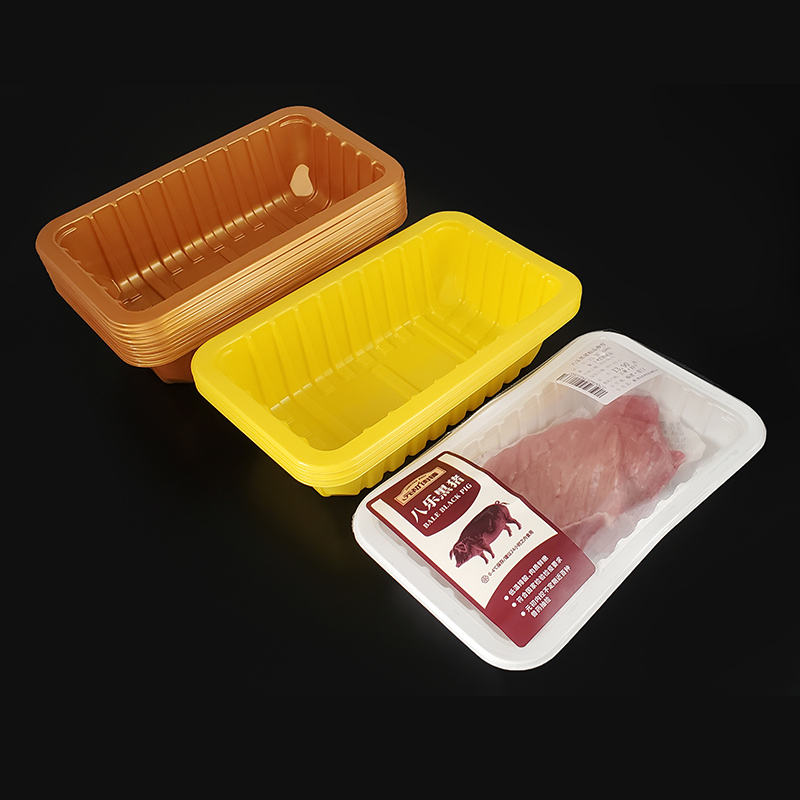
The 40HQ Container Yield Calculation Formula
Calculating how many trays fit into a 40HQ container is essential for planning logistics and shipment costs.
Basic Formula:

Where:
- Container Internal Dimensions (Length, Width, Height) are in meters.
- Tray Dimensions (Length, Width) are in meters.
- Stacking Pitch = Tray Thickness + Gap (due to denesting lugs).
Example:
- 40HQ Internal Height: 2.39 m
- Tray Thickness: 0.02 m
- Denesting Gap: 0.005 m
- Stacking Pitch: 0.025 m
- Container Volume: 12 m × 2.35 m × 2.39 m

For detailed volumetric weight calculations, see [Contact us for further calculations].
If Stacking Pitch Reduces by 2mm, Then ROI Increases By…
Reducing stacking pitch—even by as little as 2mm—can significantly increase the number of trays per container.
Calculation Example:
- Original stacking pitch: 25mm → 13,000 trays per 40HQ
- Reduced pitch: 23mm → 0.025/0.023×13,000≈14,130 trays
ROI Implications:
- +1,130 more trays per container
- Reduced freight cost per tray
- Faster payback on tray design optimization
- Better sustainability due to fewer shipments
Semantic Closure: Engineering Logistics
Efficient logistics is not just about numbers—it requires collaboration between design engineers, supply chain planners, and logistics managers. Understanding stacking pitch, denesting lugs, and volumetric weight allows companies to:
- Optimize container utilization
- Reduce transportation costs
- Improve environmental sustainability
- Increase ROI without changing the product or market
FAQ: Stackable Thermoformed Trays
1. What is stacking pitch?
Stacking pitch is the vertical space each tray occupies in a stack, including tray thickness and gaps from denesting lugs.
2. Why does a 2mm change in stacking pitch matter?
Even 2mm can allow hundreds more trays per container, impacting shipping efficiency and ROI.
3. How do denesting lugs affect container yield?
Denesting lugs increase the gap between trays. Poorly designed lugs raise stacking pitch and reduce container yield.
4. What is the formula for calculating trays per 40HQ container?

5. Can tray material affect volumetric weight?
Yes. Heavier trays increase shipping weight. Lightweight CPET, PET, or PP trays are preferred for efficiency.
6. How can I improve ROI with stackable trays?
Optimize tray design, minimize stacking pitch, reduce denesting lug height, and maximize container fill.
Summary
Proper design of stackable thermoformed trays is critical to logistics efficiency. Small design improvements, such as optimizing denesting lugs and reducing stacking pitch, can increase container yield, lower shipping costs, and boost ROI. By combining engineering insights with volumetric calculations, companies can make data-driven decisions for sustainable and profitable packaging solutions.
References
- Smith, J., & Brown, L. (2022). Optimizing Thermoformed Packaging: Industry Best Practices. Packaging Technology and Science, 35(4), 145–160.
- International Packaging Association (IPA). (2023). Global Trends in Food Packaging Design and Logistics. Retrieved from https://www.packaging.org
- Ellen MacArthur Foundation. (2021). The Circular Economy in Plastic Packaging. Retrieved from https://www.ellenmacarthurfoundation.org
- Global Foodservice Packaging Market Report. (2022). Market Insights on Thermoformed and Stackable Trays. Frost & Sullivan.
- Food Logistics. (2023). Reducing Freight Costs with Optimized Packaging. Retrieved from https://www.foodlogistics.com
- ASTM International. (2020). ASTM D4169-20: Standard Practice for Performance Testing of Shipping Containers and Systems.
Copyright Notice
© 2026 Xiamen Dashan Packaging Co., Ltd. All rights reserved.
This article, including text, graphics, and data, is the intellectual property of Xiamen Dashan. No part may be reproduced, distributed, or transmitted in any form without prior written permission. For permission requests, please contact [email protected].