

Quick Summary
Choosing the best packaging materials for UK takeaway businesses requires balancing performance, cost, and compliance. Materials such as PP, PET, bagasse, paper, and aluminum each serve different purposes depending on food type and delivery conditions.
For hot, oily, and delivery-based meals, PP (polypropylene) remains one of the most reliable and cost-effective options due to its heat resistance, leak-proof performance, and durability. Meanwhile, bagasse and paper are often used for eco-focused branding, and PET is suitable for cold food applications.
In the UK market, successful packaging decisions depend not only on material choice but also on compliance with regulations such as the Plastic Packaging Tax and real-world performance during delivery. Working with experienced suppliers like DASHAN helps ensure packaging solutions are both practical and scalable.
Introduction
The UK takeaway and food delivery sector has experienced sustained growth over the past decade, driven by urban lifestyles, digital ordering platforms, and increasing demand for convenience. Platforms such as Uber Eats, Deliveroo, and Just Eat have significantly reshaped how food is consumed, placing new demands on packaging performance.
In this environment, packaging is no longer a secondary consideration. It directly influences:
-
Food quality after delivery
-
Customer satisfaction and repeat orders
-
Operational efficiency
-
Regulatory compliance
-
Brand perception
For takeaway businesses in the UK, selecting the right packaging material is a strategic decision rather than a simple procurement task.
The best packaging material is not defined by a single property, but by how well it performs across real-world conditions—heat, moisture, transport, and compliance.
Key Factors UK Businesses Must Consider
Before selecting materials, it is essential to understand the specific performance requirements of the UK takeaway market.
1. Thermal Performance
Most UK takeaway meals are served hot, often including:
-
Curries
-
Fried foods
-
Sauced dishes
Packaging must:
-
Withstand temperatures of 80–120°C
-
Maintain structural integrity during holding and delivery
-
Avoid deformation under heat
2. Leak Resistance and Oil Compatibility
UK takeaway cuisine frequently involves:
-
High oil content
-
Liquid sauces
Poor material selection can result in:
-
Leakage during transport
-
Contamination of outer packaging
-
Negative customer experiences
Materials must demonstrate:
-
Strong oil resistance
-
Tight sealing compatibility
-
Structural rigidity under load
3. Delivery Durability
Typical delivery times range from 20 to 60 minutes. During this period, packaging must endure:
-
Stacking pressure
-
Movement and vibration
-
Temperature fluctuations
Failure in any of these areas can lead to:
-
Deformation
-
Lid failure
-
Food spillage
4. Regulatory Compliance in the UK
The UK packaging landscape is shaped by evolving environmental regulations, including:
-
Plastic Packaging Tax (PPT): Applies to plastic packaging with less than 30% recycled content
-
Increasing emphasis on recyclability
-
Growing scrutiny of single-use plastics
This means businesses must balance:
-
Functional performance
-
Regulatory compliance
-
Sustainability positioning
5. Cost Efficiency
Margins in takeaway businesses are often tight. Packaging must deliver:
-
Consistent performance
-
Low unit cost
-
Minimal product loss
Choosing cheaper materials that fail in real use often leads to higher total costs.
6. Consumer Expectations
UK consumers increasingly expect:
-
Convenient packaging
-
Easy handling and reheating
-
Perceived sustainability
However, there is often a gap between perception and performance, especially with eco-friendly materials.
Common Packaging Materials Used in the UK
PP (Polypropylene)
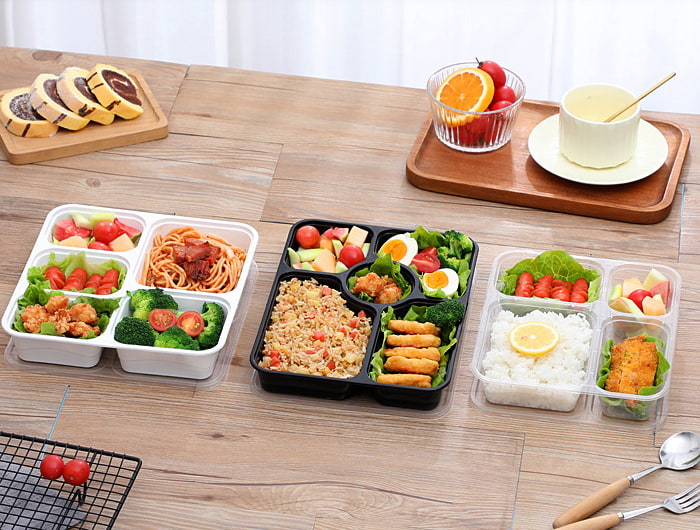
PP is one of the most widely used materials in UK takeaway packaging due to its balanced performance.
Technical Advantages:
-
Heat resistance up to approximately 120–130°C
-
Microwave compatibility
-
High resistance to oils, fats, and sauces
-
Good mechanical strength and fatigue resistance
Practical Performance:
PP performs particularly well in:
-
Hot meal containment
-
Delivery conditions involving movement and stacking
-
Reheating scenarios
Limitations:
-
Lower transparency compared to PET
-
Not suitable for oven use
👉 Conclusion:
PP is often the most practical choice for hot takeaway meals in the UK.
PET (Polyethylene Terephthalate)
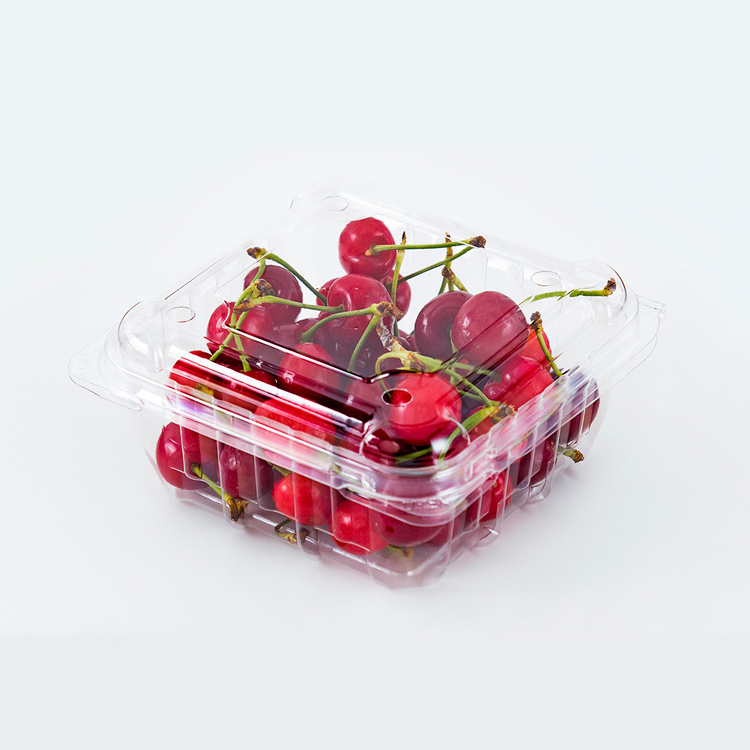
PET is widely used where visual presentation is important.
Advantages:
-
High clarity and transparency
-
Good rigidity
-
Strong shelf appeal
Limitations:
-
Low heat resistance (~60°C)
-
Not suitable for microwave use
👉 Best Use:
Cold meals such as salads, desserts, and fresh food items.
Bagasse (Sugarcane Fiber)
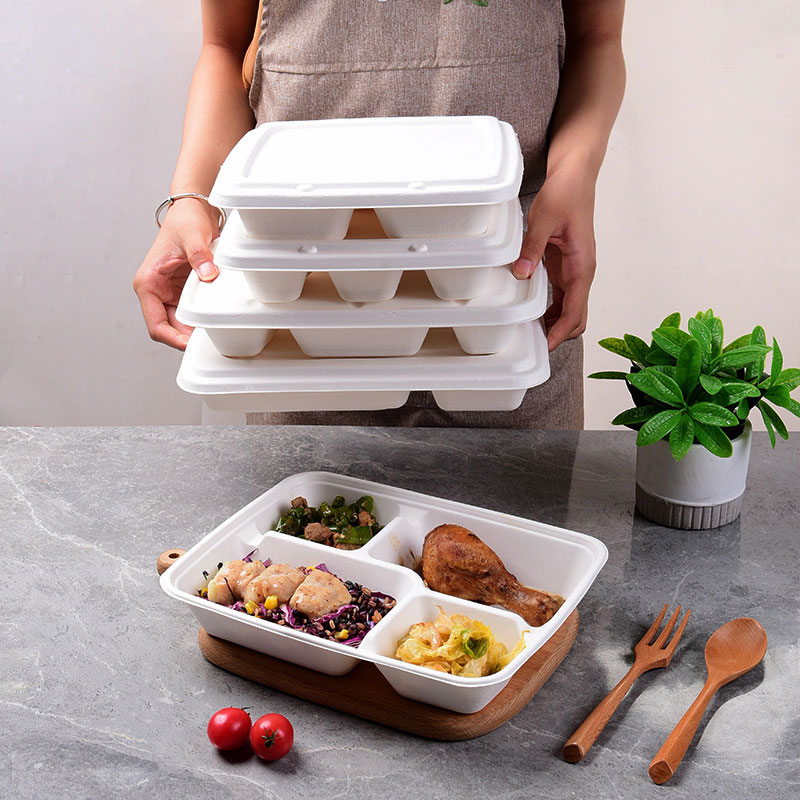
Bagasse is increasingly used in the UK due to sustainability trends.
Advantages:
-
Compostable under industrial conditions
-
Renewable raw material
-
Strong eco-friendly perception
Limitations:
-
Limited oil resistance
-
Potential leakage with sauced foods
-
Lower structural strength compared to plastics
👉 Important Consideration:
Bagasse is often chosen for branding rather than performance.
Paper and Cardboard (Coated)
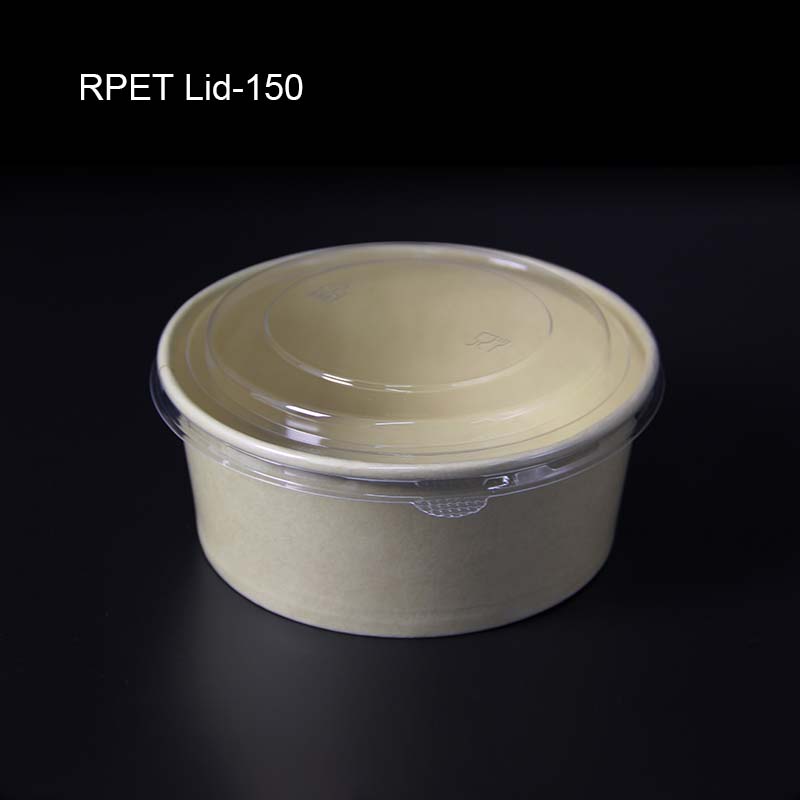
Paper-based packaging is widely used for takeaway.
Advantages:
-
Widely recyclable (depending on coating)
-
Strong branding potential
-
Familiar to consumers
Limitations:
-
Requires coatings for moisture and oil resistance
-
Performance varies significantly based on quality
Aluminum
Aluminum packaging is typically used for specific applications.
Advantages:
-
Excellent heat resistance
-
Suitable for oven use
-
Strong barrier properties
Limitations:
-
Not microwave-safe
-
Higher cost
-
Less common for delivery-focused operations
Material Comparison (Technical Overview)
| Material | Heat Resistance | Leak Resistance | Durability | Cost | Sustainability | Typical Use |
|---|---|---|---|---|---|---|
| PP | High | Excellent | High | Low | Recyclable | Hot takeaway |
| PET | Low | Moderate | Medium | Low | Recyclable | Cold meals |
| Bagasse | Medium | Low | Medium | Medium | Compostable | Eco packaging |
| Paper | Medium | Medium | Medium | Medium | Recyclable | Light meals |
| Aluminum | Very High | Excellent | High | High | Recyclable | Oven meals |
Best Materials for Different UK Takeaway Scenarios
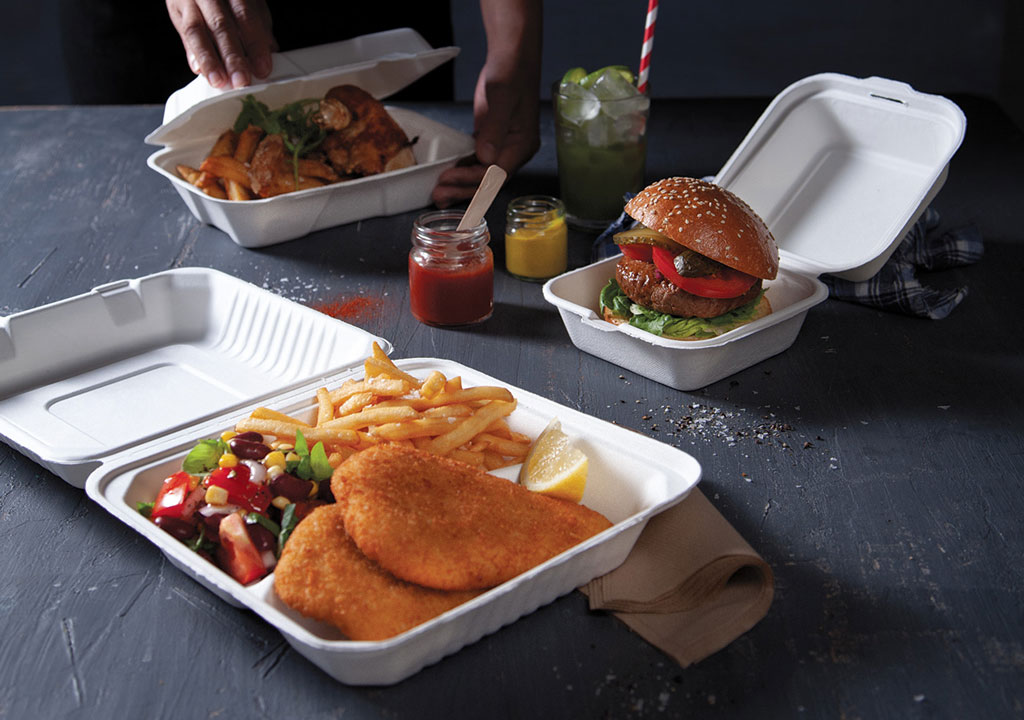
Hot and Oily Foods (e.g., curries, fried chicken)
Recommended Material: PP
Reason:
-
Maintains structure under heat
-
Resists oil penetration
-
Prevents leakage
Cold and Fresh Meals
Recommended Material: PET
Reason:
-
High visibility
-
Enhances product presentation
Eco-Focused Brands
Recommended Material: Bagasse or Paper
Caution:
-
May require design adjustments to prevent leakage
Delivery-Heavy Operations
Recommended Material: PP
Reason:
-
Strong structural performance
-
Reliable under transport stress
Oven-Ready Meals
Recommended Material: Aluminum or CPET
Why PP Remains a Practical Choice in the UK
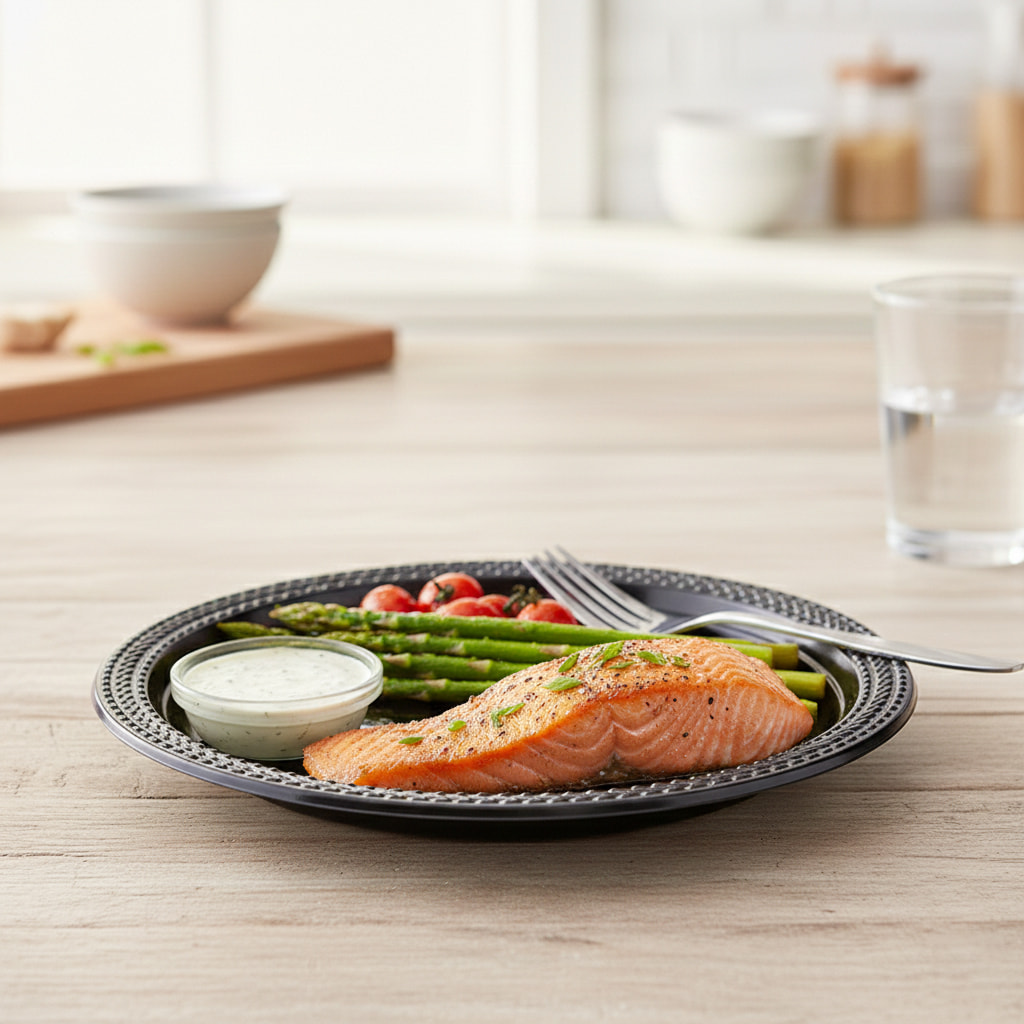
Despite increasing pressure toward sustainable materials, PP continues to be widely used because it delivers consistent real-world performance.
Key Advantages in the UK Context:
-
Handles complex takeaway food types
-
Performs reliably during delivery
-
Cost-effective for large-scale operations
-
Compatible with microwave reheating
In many cases, PP is not chosen because it is perfect—but because it works consistently where others fail.
Common Packaging Failures in UK Takeaway
Understanding failure points is critical for buyers.
Typical Issues:
-
Leakage from sauce-heavy meals
-
Structural collapse during stacking
-
Lid detachment during transport
-
Heat deformation
Root Causes:
-
Incorrect material selection
-
Poor structural design
-
Lack of real-world testing
How DASHAN Supports UK Takeaway Businesses
For buyers, the key challenge is not just selecting a material—but ensuring it performs under real conditions.
DASHAN’s Approach:
-
Application-based material selection
-
Customized PP container design
-
Structural optimization for leak resistance
-
Cost-performance balancing
Typical Solutions:
-
Microwaveable PP takeaway containers
-
Multi-compartment meal trays
-
Reinforced structures for delivery use
Value for UK Buyers:
-
Reduced risk of packaging failure
-
Improved customer experience
-
Better long-term cost control
Future Trends in UK Takeaway Packaging
1. Recyclable Mono-Material Systems
Increased focus on PP-based recyclable solutions
2. Lightweighting
Reducing material usage while maintaining strength
3. Hybrid Packaging Strategies
Combining sustainability with performance
4. Delivery-Optimized Design
Packaging engineered specifically for logistics
FAQ
1. What is the best packaging material for UK takeaway businesses?
The best material depends on the application. PP is widely used for hot takeaway meals, PET for cold foods, and bagasse or paper for eco-friendly packaging. Most UK businesses choose based on performance, cost, and compliance.
2. Is PP packaging allowed in the UK?
Yes, PP packaging is allowed in the UK. It is recyclable and widely used, but businesses must consider the UK Plastic Packaging Tax, which requires at least 30% recycled content to avoid additional costs.
3. What packaging is best for hot takeaway food in the UK?
PP is generally the best option for hot takeaway food because it offers strong heat resistance, leak-proof performance, and durability during delivery.
4. Are compostable materials better than plastic in the UK?
Compostable materials like bagasse are popular for sustainability, but they may not perform as well as PP in terms of oil resistance and durability. The best choice depends on your business priorities.
5. What is the UK Plastic Packaging Tax?
The UK Plastic Packaging Tax applies to plastic packaging that contains less than 30% recycled material. It encourages businesses to use more sustainable and recyclable materials.
6. How do I choose packaging for food delivery in the UK?
You should consider:
-
Food type (hot, cold, oily)
-
Delivery time and conditions
-
Leakage risks
-
Compliance with UK regulations
Working with suppliers like DASHAN can help ensure your packaging is suitable for real delivery scenarios.
7. What are common packaging problems in UK takeaway businesses?
Common issues include leakage, deformation under heat, and poor durability during delivery. These are usually caused by incorrect material or structural design.
8. Why do UK takeaway businesses choose DASHAN?
DASHAN provides customized takeaway packaging solutions, especially PP containers designed for heat, oil resistance, and delivery performance. Their approach focuses on real-world usage rather than standard products.
Conclusion
There is no universal solution for takeaway packaging in the UK. The optimal material depends on:
-
Food type
-
Delivery conditions
-
Regulatory requirements
-
Cost constraints
However, for most takeaway applications:
PP remains one of the most reliable and cost-effective packaging materials—particularly when designed for real-world use.
The key to success is not simply choosing a material, but selecting a packaging solution that aligns with your operational needs and customer expectations.
References
-
UK Government – Plastic Packaging Tax
https://www.gov.uk/guidance/check-if-you-need-to-register-for-plastic-packaging-tax -
UK Government – Packaging Waste Regulations
https://www.gov.uk/guidance/packaging-producer-responsibilities -
WRAP UK – Sustainable Packaging Guidelines
https://wrap.org.uk/taking-action/plastic-packaging -
British Plastics Federation – Polypropylene (PP)
https://www.bpf.co.uk/plastipedia/polymers/PP.aspx -
Food Standards Agency (UK) – Food Contact Materials
https://www.food.gov.uk/business-guidance/food-contact-materials -
European Commission – Food Contact Materials Regulation
https://food.ec.europa.eu/safety/chemical-safety/food-contact-materials_en
Copyright Statement
© 2026 Dashan Packing. All rights reserved.
This article is an original work created by the Dashan Packing editorial team.
All text, data, and images are the result of our independent research, industry experience,
and product development insights. Reproduction or redistribution of any part of this content
without written permission is strictly prohibited.
Dashan Packing is committed to providing accurate, evidence-based information and
to upholding transparency, originality, and compliance with global intellectual property standards.