

Quick Summary
Leak-proof compartment containers are essential for meal prep businesses aiming to reduce food leakage, improve customer satisfaction, and protect brand reputation.
High-quality containers combine strong sealing systems, durable materials like PP, and well-designed compartments to prevent cross-contamination and maintain food integrity during delivery.
While cost is an important factor, choosing the right supplier and container design can significantly reduce refund rates and operational losses.
As demand for food delivery and meal prep continues to grow, investing in reliable leak-proof compartment containers is a key strategy for improving efficiency, compliance, and long-term profitability.
Introduction: Why Leak-Proof Packaging Defines Meal Prep Success
The rapid growth of meal prep services, cloud kitchens, and subscription-based food delivery has transformed packaging from a basic necessity into a strategic business tool.
In today’s market, packaging is no longer just about holding food—it directly impacts customer experience, brand perception, and operational efficiency.
This is where leak-proof compartment containers become essential. They are designed not only to separate food but to maintain product integrity throughout storage and delivery.
For meal prep businesses, packaging failure can quickly escalate into refunds, complaints, and lost customers. Even a single leakage incident can damage trust, especially in highly competitive delivery markets.
As a result, buyers are increasingly searching for reliable solutions such as meal prep containers with compartments, scalable commercial meal prep containers wholesale options, and trusted meal prep container manufacturer China partners.
This guide provides a comprehensive, data-driven approach to help you choose the right solution while balancing cost, performance, and long-term business value.
Understanding Leak-Proof Compartment Containers
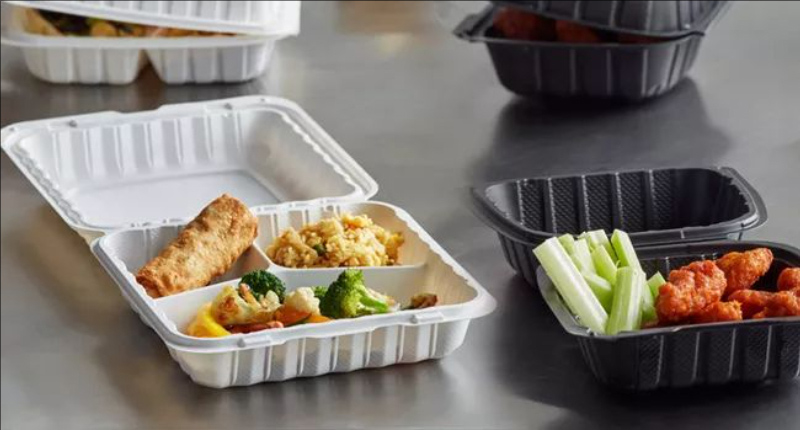
Leak-proof compartment containers are engineered to separate different food items while preventing liquids from leaking outside or moving between compartments.
Unlike standard takeaway boxes, these containers incorporate reinforced structures and advanced sealing mechanisms to handle real delivery conditions such as vibration, stacking, and temperature changes.
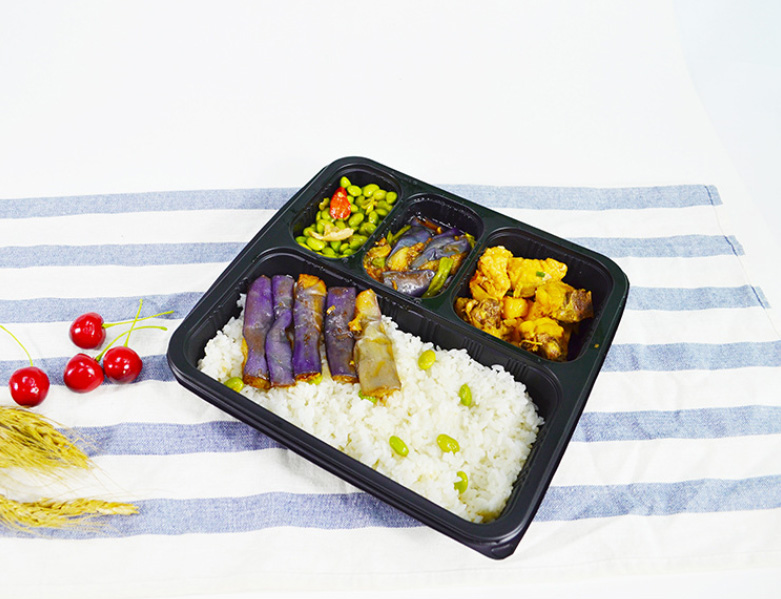
Most designs feature two to five compartments, making them ideal for portion-controlled meals, fitness plans, and ready-to-eat food services.
From a structural perspective, three formats dominate the market. Fixed compartment containers are molded as a single unit and are widely used for disposable applications due to their cost efficiency.
Modular containers, on the other hand, offer removable dividers and greater flexibility. Clamshell containers with hinged lids are commonly used in fast-paced takeaway environments.
However, the real challenge appears during transportation. Liquids such as sauces, oils, and soups can easily shift under movement. Without proper sealing, they may leak or spread between compartments.
This is why businesses increasingly rely on airtight food containers with dividers sourced from experienced leak-proof bento box manufacturer partners who understand real-world performance requirements.
Why Leak-Proof Performance Is Critical for Food Businesses
Leak-proof performance directly affects customer satisfaction, food safety, and overall profitability.
From the customer’s perspective, even minor leakage can create a negative impression. Food that arrives messy or mixed together often leads to dissatisfaction, even if the taste remains unchanged.
In fact, packaging-related complaints account for a significant portion of negative reviews in food delivery platforms. Leakage is consistently one of the top issues reported by customers.
From a safety standpoint, leakage increases the risk of cross-contamination. When liquids move between compartments, allergens and bacteria can spread, creating potential health concerns.
This is particularly important for meals containing sauces, oils, or acidic ingredients, which can accelerate microbial activity.
The financial impact is also substantial. Packaging failure leads to direct and indirect losses, as shown below:
| Cost Factor | Estimated Loss per Incident |
|---|---|
| Refund or replacement | $5 – $12 |
| Delivery and logistics | $2 – $5 |
| Customer acquisition loss | $15 – $50 |
| Brand reputation impact | Long-term |
Even a small failure rate can significantly reduce profit margins, especially for businesses purchasing commercial meal prep containers wholesale.
Key Features That Define High-Quality Leak-Proof Containers
Not all containers labeled as “leak-proof” deliver reliable performance. True leak resistance depends on multiple engineering factors working together.
The sealing system is the most critical element. Basic snap-lock lids are cost-effective and widely used, but they offer only moderate protection.
In contrast, containers with silicone gasket seals create an airtight barrier that significantly improves leak resistance during transport.
Material selection is equally important. Polypropylene (PP) is the most widely used material due to its flexibility, durability, and heat resistance. It can withstand temperatures up to 120°C, making it suitable for reheating.
PET offers excellent clarity but is less heat-resistant, while glass provides superior sealing and durability at a higher cost and weight.
Compartment design also plays a major role. High-quality containers feature deep, well-defined sections with reinforced walls that prevent liquid migration.
Temperature resistance further determines usability. Containers must perform reliably under freezing, reheating, and delivery conditions without deformation.
For businesses sourcing from a food container manufacturer with compartments, evaluating these technical factors is essential for long-term performance.
Material Comparison: Performance, Cost, and Application
Choosing the right material is a key decision that affects cost, durability, and functionality.
The table below provides a clear comparison of commonly used materials in meal prep containers:
PP remains the most practical choice for large-scale operations due to its balance of performance and affordability.
Best Leak-Proof Compartment Containers by Use Case
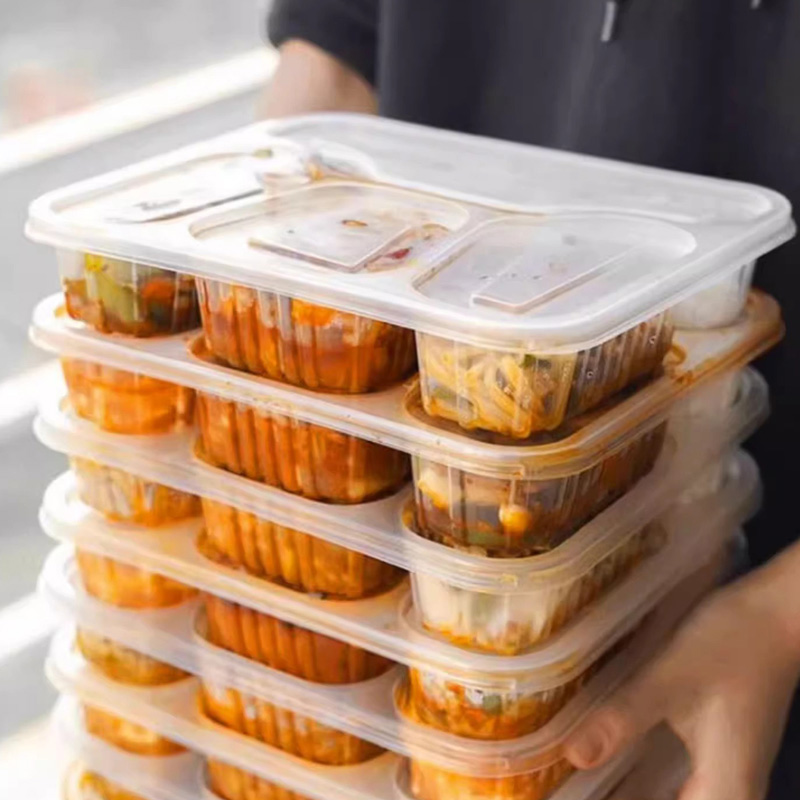
Different business models require different container solutions.
Multi-compartment PP containers are the most widely used option for large-scale meal prep operations. They are lightweight, stackable, and cost-efficient, making them ideal for high-volume production.
These containers are typically sourced from bulk compartment containers supplier networks to ensure stable supply and consistent quality.
Bento-style containers are more suitable for premium services. They offer better sealing performance and improved presentation, often used in reusable systems.
Many businesses source these through bento meal prep containers wholesale channels to meet higher-end market demands.
Glass containers are typically reserved for premium segments. They provide excellent sealing and durability but are less practical for delivery due to their weight and fragility.
How to Choose the Right Containers for Your Meal Prep Business
Selecting the right container depends on several operational factors.
First, consider the type of meals you are offering. High-liquid dishes require stronger sealing systems, while dry meals can use simpler designs.
Second, evaluate your delivery conditions. Longer delivery distances increase the risk of leakage, requiring higher-performance containers.
Third, align your packaging with your target market. Budget-focused businesses prioritize cost efficiency, while premium brands invest in higher-quality solutions.
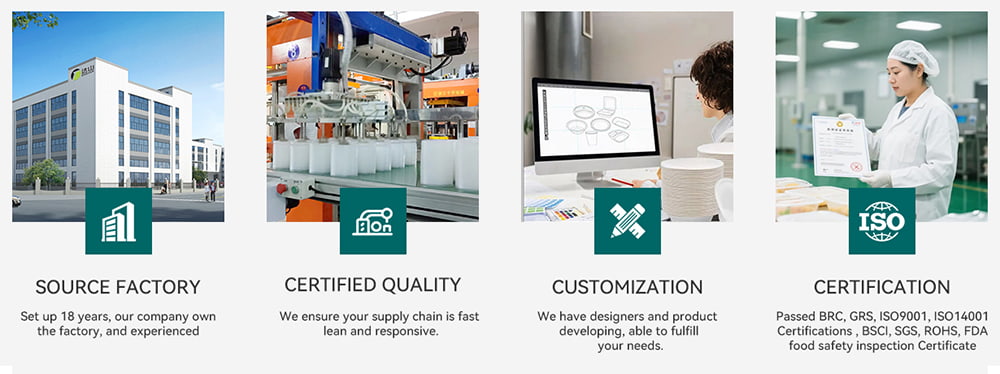
Supplier selection is equally important. When working with a leak-proof food container factory or a meal prep container manufacturer China, you should assess quality consistency, certifications, and production capacity.
DASHAN provides tailored solutions for meal prep businesses, combining reliable sealing design with scalable manufacturing capabilities. This allows businesses to maintain consistent quality while optimizing cost efficiency.
Industry Trends: Where Meal Prep Packaging Is Heading
The meal prep packaging industry is evolving rapidly, driven by both consumer expectations and regulatory pressures.
Sustainability is becoming a major focus. More businesses are adopting recyclable materials and reusable systems to reduce environmental impact.
At the same time, packaging design is becoming more advanced. Improved sealing structures, modular compartments, and better stackability are enhancing both performance and logistics efficiency.
The continued growth of the health and fitness food sector is also increasing demand for portion-controlled, visually appealing packaging solutions.
Regulations and Compliance You Must Know
Food packaging must comply with strict regulatory standards across different markets.
In the United States, materials must meet FDA food contact requirements. In Europe, packaging must comply with EU safety regulations, including migration limits.
Clear labeling is also required in many regions, including material identification and recycling instructions.
Working with certified manufacturers helps ensure compliance and reduces the risk of legal or operational issues.
Common Buying Mistakes and How to Avoid Them
Many businesses focus too heavily on price when selecting packaging, which can lead to long-term issues.
One common mistake is assuming that all leak-proof containers perform equally. In reality, performance varies significantly depending on design and manufacturing quality.
Another mistake is failing to conduct real-world testing. Containers should be tested under actual delivery conditions rather than relying solely on specifications.
Ignoring supplier reliability is also risky. Inconsistent quality or supply disruptions can negatively impact operations and customer satisfaction.
Future Outlook: The Evolution of Leak-Proof Food Packaging
The future of leak-proof packaging will be shaped by innovation in materials and design.
New materials are being developed to improve durability while reducing environmental impact. At the same time, sealing technologies are becoming more advanced, offering better protection under extreme conditions.
Automation in manufacturing will also improve consistency and scalability, making high-quality containers more accessible to businesses worldwide.
FAQ: Leak-Proof Compartment Containers
1. Are leak-proof compartment containers completely leak-proof?
High-quality containers can prevent leakage under normal conditions, but performance depends on sealing design and usage.
2. What is the best material for meal prep containers?
PP is the most widely used due to its durability, cost efficiency, and heat resistance.
3. Can liquids leak between compartments?
Yes, if the container lacks proper sealing or structural design.
4. What is the best container for food delivery?
Containers with strong sealing systems, such as snap locks or silicone gaskets, are recommended.
5. Are reusable containers better than disposable ones?
Reusable containers offer sustainability benefits but require additional logistics for cleaning and reuse.
6. How do I choose a reliable supplier?
Look for manufacturers with strong quality control systems, certifications, and experience in producing leak-proof designs.
Conclusion: Packaging Is Not a Cost—It’s a Competitive Advantage
Leak-proof compartment containers play a critical role in modern meal prep businesses.
They protect food quality, reduce operational risks, and enhance customer satisfaction.
Rather than viewing packaging as a cost, businesses should see it as an investment in brand reputation and long-term growth.
By choosing the right leak-proof compartment containers, companies can improve efficiency, reduce losses, and gain a competitive edge in an increasingly demanding market.
References
- Grand View Research – Rigid Food Packaging Market Report
https://www.grandviewresearch.com/industry-analysis/rigid-food-packaging-market-report
— Provides global market data and highlights the role of rigid packaging in preventing leakage and ensuring food safety. - FoodPack Malaysia – No-Leak Food Packaging Tips
https://www.foodpack.com.my/no-leak-food-packaging-tips/
— Explains common causes of food leakage during delivery and practical packaging design solutions. - Greyb X-Ray – Leak-Proof Packaging Design Insights
https://xray.greyb.com/packaging/leak-proof
— Analyzes engineering principles behind leak-proof packaging and reports leakage risks without proper sealing. - HDBioPak – Modern Food Packaging Technology Guide
https://hdbiopak.com/blogs/news/popularization-of-professional-technical-knowledge-what-restaurants-need-to-know-about-modern-food-packaging-in-2026
— Covers sealing technologies, structural design, and performance improvements in food containers. - Towards Packaging – Leak-Proof Packaging Market Trends
https://www.towardspackaging.com/insights/leak-proof-flexible-packaging-market-sizing
— Provides insights into market growth, demand trends, and future development of leak-proof packaging. - Big News Network – Leak-Proof Packaging and Customer Satisfaction
https://www.bignewsnetwork.com/news/274948627/exploring-the-impact-of-leak-proof-packaging-on-food-delivery-satisfaction
— Examines how leak-proof performance impacts customer experience and brand perception. - Zipdo – Food Packaging Industry Statistics 2026
https://zipdo.co/marketing-in-the-food-packaging-industry-statistics/
— Includes data on consumer preferences, packaging functionality, and importance of sealing performance.
Copyright Statement
© 2026 Dashan Packing. All rights reserved.
This article is an original work created by the Dashan Packing editorial team.
All text, data, and images are the result of our independent research, industry experience,
and product development insights. Reproduction or redistribution of any part of this content
without written permission is strictly prohibited.
Dashan Packing is committed to providing accurate, evidence-based information and
to upholding transparency, originality, and compliance with global intellectual property standards.