

Quick Summary
2026 marks a regulatory turning point for food trays. Enforceable recyclability standards, recycled content mandates, EPR fee modulation, and packaging minimization rules are reshaping tray design and procurement strategy.
Mono-material structures, PCR integration, and structural durability under delivery stress are becoming baseline requirements. Unit price alone is no longer a valid evaluation metric—lifecycle cost and compliance exposure now define competitiveness.
Brands that redesign trays around regulatory readiness
Introduction: 2026 Is a Compliance Deadline, Not a Distant Milestone
For years, food trays were treated as secondary packaging components—functional, cost-driven, and rarely strategic. That assumption is no longer sustainable. By 2026, a convergence of regulatory enforcement, recycled content mandates, and Extended Producer Responsibility (EPR) fee modulation will fundamentally reshape how trays are designed, sourced, and evaluated.
Across major markets—particularly under the EU’s Packaging and Packaging Waste Regulation (PPWR)—recyclability will become enforceable, not aspirational. Recycled content thresholds will tighten. Fee structures will penalize non-optimized formats. And food trays, as high-volume thermoformed items, will sit directly under regulatory scrutiny.
The relevant question is no longer whether your trays are technically functional. The question is whether they are structurally, materially, and economically compliant.
1. What Changes in 2026?
1.1 Enforceable Recyclability Standards

Historically, many trays were marketed as “recyclable in theory.” In practice, multilayer laminations, incompatible barrier coatings, and dark pigments rendered them non-recoverable in mechanical sorting streams.
Under emerging frameworks, recyclability is being defined through:
-
Sortability in real-world material recovery facilities
-
Compatibility with existing recycling streams
-
Demonstrated reprocessing viability
-
Clear mono-material preference
Multilayer PET/PE, PET/EVOH/PE, and laminated structures are increasingly challenged unless specifically engineered for stream compatibility.
Mono PP and mono PET formats are therefore becoming the structural baseline.
1.2 Mandatory Recycled Content Targets
Recycled content mandates—especially for PET—require brands to incorporate defined percentages of post-consumer recycled (PCR) resin.
This creates three immediate engineering constraints:
-
Material variability: PCR introduces batch-to-batch fluctuation in mechanical performance.
-
Optical impact: Haze and color deviation affect shelf appearance.
-
Food-contact compliance: Regulatory approval for food-grade recycled resin remains tightly controlled.
Tray design must therefore compensate for slight reductions in tensile strength or impact resistance when PCR is incorporated.
This is not merely a sourcing challenge—it is a structural calibration exercise.
1.3 Extended Producer Responsibility (EPR) Fee Modulation
EPR systems are increasingly modulated based on recyclability classification. Packaging that is difficult to recycle will carry higher fees. Packaging designed for streamlined recovery will benefit from lower cost exposure.
For food trays, this means:
-
Complex multilayer trays may trigger higher fees
-
Pigmented or carbon-black trays risk optical sorting failure
-
Composite materials increase downstream processing costs
The total financial burden is no longer limited to per-unit price. Compliance classification directly affects operational expenditure.
1.4 Packaging Minimization Requirements
Lightweighting is encouraged—but over-aggressive material reduction can cause structural failure during transport, particularly in ready-meal and delivery applications.
Brands must now balance:
-
Wall thickness reduction
-
Rib geometry reinforcement
-
Flange rigidity for seal integrity
-
Stack compression resistance
Minimization without engineering validation introduces risk.
2. Technical Implications for Tray Design
2.1 The Shift to Mono-Material Systems
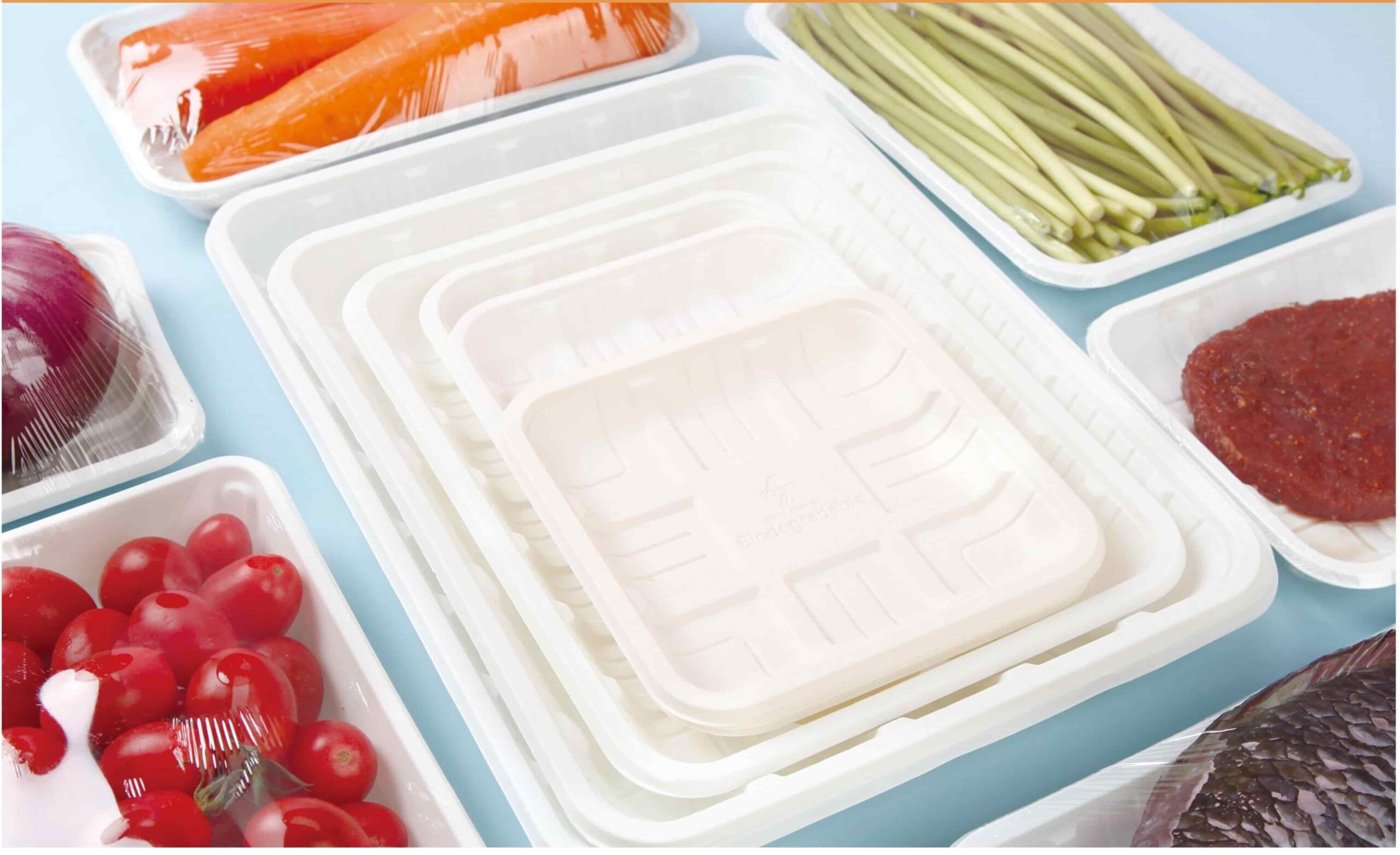
Mono PP and mono PET trays are becoming dominant for one primary reason: stream compatibility.
However, mono-material adoption introduces performance challenges:
-
Barrier performance without multilayer laminates
-
Oxygen and moisture resistance in high-protein meals
-
Oil resistance for prepared dishes
Instead of relying on laminated barriers, manufacturers increasingly use:
-
Structural geometry optimization
-
Controlled crystallinity in PP
-
Functional but recyclable coatings
-
Material distribution engineering
Performance must now be achieved through design intelligence rather than layering complexity.
2.2 Structural Engineering Under Real-World Stress
Food trays face multi-stage stress environments:
-
Thermoforming distortion
-
Sealing pressure
-
Stacking compression
-
Microwave reheating
-
Delivery vibration
Engineering priorities include:
-
Flange flatness tolerance for sealing reliability
-
Reinforced corner radii to prevent cracking
-
Ribbed base patterns for load distribution
-
Thermal stability under 100–220°C conditions
Failure is not merely cosmetic. Leakage or collapse creates food waste, reputational damage, and potential regulatory scrutiny.
2.3 Seal Compatibility and Lidding Integration
Regulatory alignment extends beyond tray bodies to lidding systems.
Key design parameters include:
-
Mono-material compatibility for recyclability
-
Seal strength calibration
-
Easy-peel vs hermetic seal balance
-
Reduced adhesive contamination
A recyclable tray paired with incompatible lidding negates compliance.
System integration is essential.
3. Delivery Logistics: The Hidden Stress Multiplier
The growth of ready meals and last-mile food delivery adds mechanical stress variables rarely modeled a decade ago.
Trays now experience:
-
Drop events during courier handling
-
Lateral vibration in transport
-
Temperature cycling from chilled to reheated states
-
Oil migration in high-fat applications
Inadequate structural design increases:
-
Leakage rates
-
Lid delamination
-
Base deformation
-
Consumer complaints
The regulatory conversation intersects with performance risk. A recyclable tray that fails in logistics still generates waste.
4. The Financial Equation Has Changed
4.1 Unit Price Is No Longer Sufficient
In 2026, evaluating tray cost requires multidimensional modeling:
-
Material price per kilogram
-
EPR fee modulation
-
Damage rate cost
-
Food waste implications
-
Compliance risk exposure
A tray that is 3% cheaper per unit but 15% higher in EPR cost is structurally inefficient from a procurement perspective.
4.2 Lifecycle Cost Modeling
Brands increasingly conduct lifecycle cost assessments incorporating:
-
Structural failure rate reduction
-
PCR integration stability
-
Recycling stream compatibility
-
Long-term regulatory alignment
Procurement decisions are shifting from transactional sourcing to technical partnerships.
5. Are Fiber Trays the Universal Alternative?
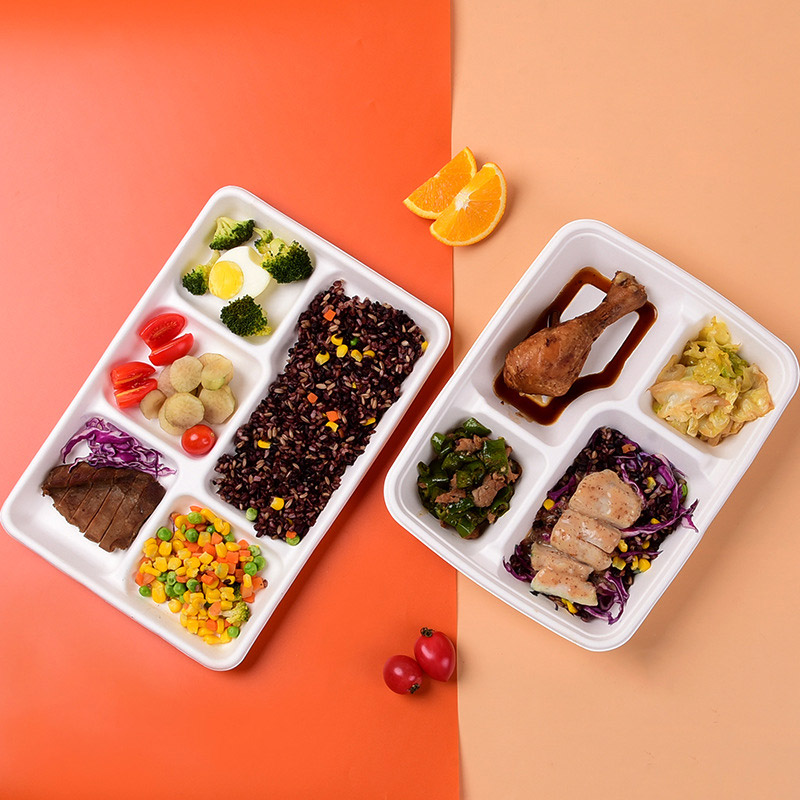
Fiber-based trays are expanding, particularly in dry or low-moisture segments. However, they face their own regulatory challenges:
-
Barrier coatings and PFAS scrutiny
-
Oil resistance limitations
-
Industrial composting infrastructure gaps
-
Contamination in recycling streams
Fiber solutions can be effective—but only in application-specific scenarios. They are not a universal substitute for engineered plastic trays in high-heat or high-oil environments.
6. Compliance Readiness Checklist
To assess whether your trays are 2026-ready, evaluate:
-
Is the tray mono-material or demonstrably recyclable?
-
Can recycled content targets be met without structural compromise?
-
Is the tray validated under real logistics stress conditions?
-
Are EPR fees modeled into cost forecasts?
-
Is documentation audit-ready?
-
Are lidding systems aligned with recyclability criteria?
Compliance is measurable. It should not rely on marketing claims.
7. The Role of Engineering-Led Suppliers
Commodity production models struggle in a compliance-driven environment. Brands increasingly require suppliers capable of:
-
Structural simulation and finite element modeling
-
PCR material calibration
-
Regulatory documentation management
-
Recyclability testing validation
-
Seal system optimization
Engineering-led manufacturers—such as DASHAN—are repositioning food trays as compliance-optimized structural systems rather than commodity thermoforms.
This shift from volume-based production to technical collaboration reduces regulatory risk while improving long-term cost stability.
FAQ
1. Why is 2026 critical for food tray compliance?
Because regulatory enforcement is shifting from voluntary recyclability claims to measurable standards. Recycled content mandates, EPR fee modulation, and design-for-recycling requirements will directly impact tray classification and cost structure.
2. What materials are most aligned with upcoming regulations?
Mono-material PP and PET trays are generally better positioned due to established recycling streams. However, they must still meet structural, thermal, and food-contact compliance requirements.
3. How do recycled content mandates affect tray performance?
Incorporating PCR resin may influence mechanical strength, clarity, and consistency. Engineering adjustments in wall thickness, rib structure, and material blending are often necessary to maintain durability.
4. Will non-recyclable trays be banned?
In many markets, trays that fail recyclability thresholds may face higher EPR fees, market restrictions, or phased removal. The exact outcome depends on regional legislation, but economic pressure will increase.
5. Are fiber trays automatically compliant?
No. Fiber trays must still meet performance and waste stream compatibility criteria. Barrier coatings and contamination risks can affect recyclability or compostability classification.
6. How should brands evaluate tray suppliers in 2026?
Beyond price, brands should assess engineering capability, recyclability validation, regulatory documentation readiness, PCR integration experience, and long-term compliance strategy.
Conclusion: 2026 Is a Design Deadline
The regulatory landscape is transforming food trays from low-visibility packaging items into compliance-critical assets.
Recyclability standards, recycled content mandates, EPR fee exposure, and delivery performance stress are converging. In this environment:
-
Design becomes a regulatory parameter.
-
Material choice becomes a financial strategy.
-
Supplier selection becomes a risk management decision.
Brands that treat 2026 as a distant milestone may find themselves reacting under cost pressure. Brands that act now—by redesigning trays around recyclability, structural resilience, and lifecycle economics—gain competitive advantage.
The future of food trays is not about eliminating material. It is about engineering smarter systems within the circular economy.
The only remaining question is not whether regulations will change.
It is whether your trays are ready.
Reference
-
European Commission – Packaging and Packaging Waste Regulation (PPWR)
https://environment.ec.europa.eu/topics/waste-and-recycling/packaging-waste_en -
OECD – Extended Producer Responsibility (EPR)
https://www.oecd.org/environment/extended-producer-responsibility.htm -
Ellen MacArthur Foundation – Plastics and Circular Economy
https://ellenmacarthurfoundation.org/topics/plastics -
Plastics Recyclers Europe – Design for Recycling Guidelines
https://www.plasticsrecyclers.eu -
European PET Bottle Platform (EPBP) – PET Recycling Guidance
https://www.epbp.org -
U.S. Environmental Protection Agency – Sustainable Materials Management
https://www.epa.gov/smm
Copyright Statement
© 2026 Dashan Packing. All rights reserved.
This article is an original work created by the Dashan Packing editorial team.
All text, data, and images are the result of our independent research, industry experience,
and product development insights. Reproduction or redistribution of any part of this content
without written permission is strictly prohibited.
Dashan Packing is committed to providing accurate, evidence-based information and
to upholding transparency, originality, and compliance with global intellectual property standards.