

Quick Answer: The Scientific Consensus
YES. Plastic food containers are absolutely safe for takeaway, provided they are manufactured from 100% pure (virgin) or certified food-grade recycled (PCR) polymers. High-quality materials like PP (Polypropylene) and PET (Polyethylene Terephthalate) that are explicitly certified as BPA-Free and pass international chemical migration tests remain the safest, most reliable, and most hygienic options for food delivery. The danger does not lie in plastic itself, but in cheap, unregulated, non-compliant packaging produced by uncertified factories.
1. The Consumer Panic: Why Are People Asking This?
In recent years, a wave of alarming headlines regarding “microplastics,” “forever chemicals (PFAS),” and “endocrine disruptors (like BPA)” has caused widespread consumer anxiety. For restaurant owners and packaging importers, this anxiety translates into a barrage of questions from end-users asking if their hot soup or iced coffee is leaching toxic chemicals.
It is crucial to separate media sensationalism from material science.
The negative health impacts highlighted in consumer reports almost exclusively stem from:
-
Legacy Plastics: Older materials like Polycarbonate (PC) that historically contained Bisphenol A (BPA).
-
Unregulated “Black Market” Manufacturing: Cheap containers made from non-food-grade recycled industrial scrap, which often contain heavy metals or toxic dyes.
-
Improper Consumer Use: Customers putting non-microwavable plastics (like PET or PS) into the microwave, causing the material to melt and chemically break down into the food.
When produced in a clean-room environment to exact global standards, modern food-grade plastic is an inert, highly stable barrier that protects food from external bacterial contamination better than almost any other material.
2. The Science of Safety: PP vs. PET
To guarantee safety, procurement managers must use the right plastic for the right temperature application. Understanding the thermal limits of these polymers is the difference between a safe meal and a chemical hazard.
PP (Polypropylene) – The Champion of Hot Food
Polypropylene (Resin ID #5) is a highly durable, heat-resistant thermoplastic.
-
The Science: PP has a very high melting point (typically around 160°C to 170°C). More importantly, its molecular structure is highly stable under microwave radiation.
-
Safety Profile: Premium PP contains no BPA, no phthalates, and no heavy metals. It does not warp or release volatile organic compounds (VOCs) when holding boiling liquids.
-
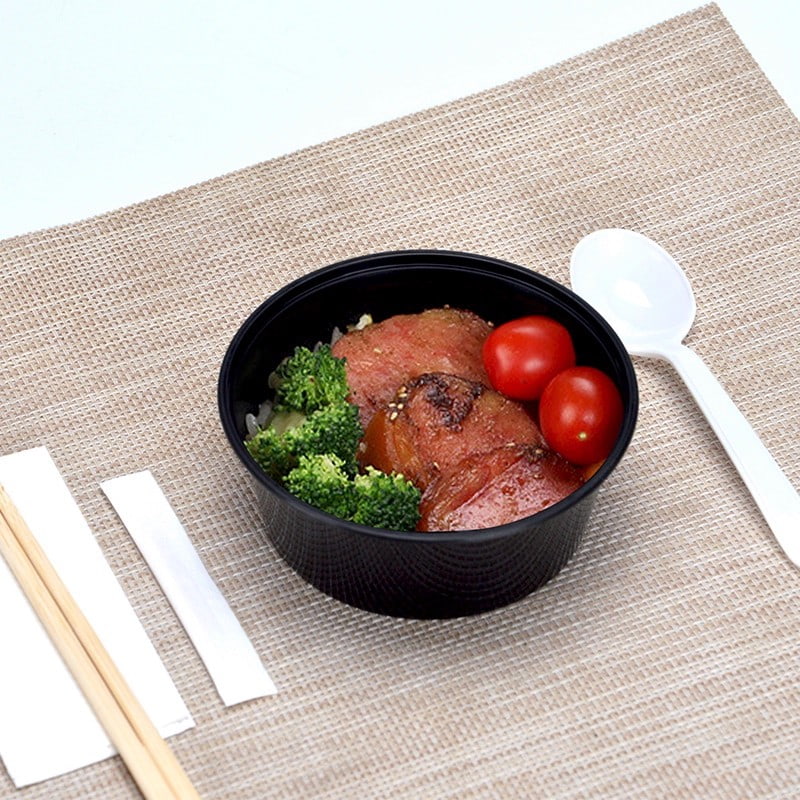
Best Application: If your menu consists of hot soups, curries, or meals that require customer reheating, then injection-molded or thermoformed PP bowls, PP lids, and PP trays are the only legally and scientifically safe plastic choice.
PET (Polyethylene Terephthalate) – The Master of Cold Display
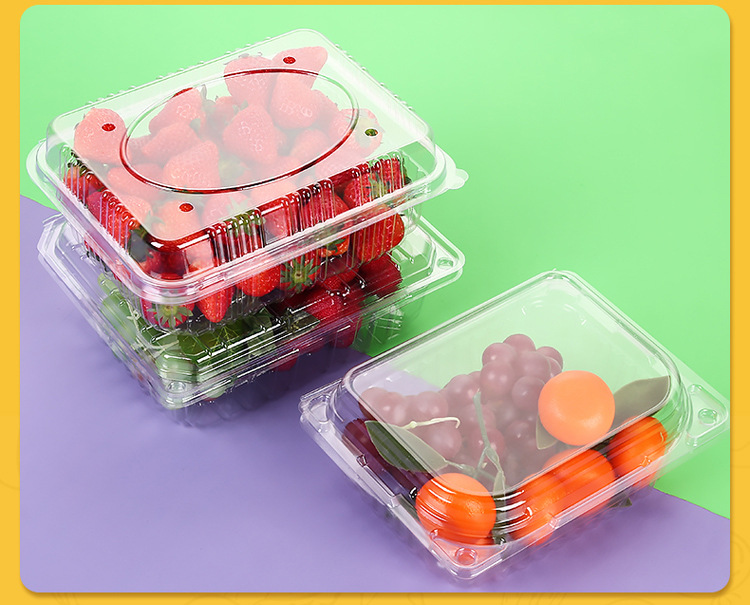
PET (Resin ID #1) is globally recognized for its glass-like clarity and shatter resistance.
-
The Science: Unlike PP, PET is highly sensitive to heat. Its glass transition temperature (the point where it begins to soften and lose structural integrity) is around 70°C (158°F).
-
Safety Profile: PET is FDA-approved for food contact and is the global standard for bottled water. It is entirely safe, completely inert, and will not leach chemicals into cold or ambient-temperature foods.
-
Best Application: If you are serving iced lattes, fresh salads, cut fruit, or sushi, then PET is the ultimate choice for safe, leak-proof visual merchandising. Never microwave PET.
3. The Compliance Shield: What Buyers MUST Verify
You cannot determine if a plastic container is safe just by looking at it. Safety is proven in the laboratory. Before importing a single carton of plastic packaging, buyers must demand verifiable test reports matching the following stringent global standards:
The United States: FDA Title 21 CFR
The U.S. Food and Drug Administration heavily regulates Food Contact Substances (FCS).
-
The Standard: Plastic containers must comply with FDA Title 21 CFR Part 177 (Indirect Food Additives: Polymers).
-
What it Tests: The lab exposes the plastic to various food simulants (like acidic liquids, fatty oils, and alcohol) at elevated temperatures to ensure no unsafe chemicals transfer (leach) from the plastic into the food.
The European Union: EC No 1935/2004 & EU 10/2011
The EU maintains the strictest food contact regulations in the world. To pass EU customs, plastic packaging must pass rigorous migration testing:
-
OML (Overall Migration Limit): Ensures that the total amount of all non-volatile substances migrating from the packaging into the food does not exceed 10 milligrams per square decimeter (mg/dm²). This guarantees the plastic does not alter the food’s composition or taste.
-
SML (Specific Migration Limit): Targets specific, potentially hazardous molecules (like heavy metals or specific monomers) to ensure they are far below toxicological thresholds.
Expert Procurement Tip: When requesting an FDA or EU test report from a Chinese supplier, verify the testing temperature on the report. If you are buying a PP soup bowl, the test report must show migration tests conducted at 100°C for 2 hours, not just room temperature tests.
4. The Sustainability Factor: Is PCR Plastic Safe?
With global mandates pushing for a circular economy, many buyers are transitioning to PCR (Post-Consumer Recycled) plastics. But is it safe to use recycled plastic for food?
Yes, but only under highly controlled conditions.
-
To be certified for food contact, PCR plastic (like RPET) undergoes a rigorous “super-cleaning” process. The recycled flakes are subjected to extreme heat, vacuum environments, and chemical washing to strip away any potential contaminants, flavors, or odors from its previous life cycle.
-
Only factories with advanced, certified decontamination technology are legally permitted to produce food-grade PCR packaging.
5. Conclusion: Safety is a Sourcing Decision
The narrative that “all plastic is toxic” is scientifically false. High-quality, strictly regulated PP and PET containers remain the cornerstone of safe, hygienic, and leak-proof food delivery worldwide.
The true risk to consumer health is not the material itself, but importers who blindly chase the lowest unit price, ending up with non-compliant, heavy-metal-tainted plastics from unverified trading companies.
At Dashan Packing, we engineer our products around absolute safety. Our extensive lines of premium PP food containers, PP lids, and clear PET cups are manufactured from 100% pure, BPA-Free polymers. We maintain an uncompromising commitment to quality control, and every batch we export is backed by internationally verifiable FDA and EU food contact test reports.
👉 [Contact Dashan’s Export Team] today to request our laboratory safety certificates and secure premium, compliance-ready packaging for your brand.
FAQ: Plastic Food Packaging Safety
1. Is it safe to microwave food in plastic takeaway containers? Yes, but only if the container is explicitly marked “Microwave Safe” and made from Polypropylene (PP, Resin #5). PP can safely withstand microwave temperatures up to 120°C (248°F) without melting or leaching. Never microwave PET, PS, or unlabelled plastics.
2. Do PET cold cups contain BPA? No. High-quality PET (Polyethylene Terephthalate) has never been manufactured using Bisphenol A (BPA). BPA was historically used in rigid Polycarbonate (PC) plastics. Authentic PET cups from certified manufacturers are 100% BPA-Free.
3. What does “migration limit” mean in packaging safety? The migration limit refers to the maximum legally permitted amount of substances that can transfer from the packaging material into the food it contains. Strict testing ensures this amount is so microscopically small that it poses absolutely zero risk to human health.
4. Are black plastic food containers toxic? Not inherently, but they present a recycling challenge. Historically, some cheap black plastics were made from unregulated recycled electronics scrap, which carried risks. Today, certified food-grade black PP containers are perfectly safe. However, many municipal sorting facilities use optical scanners that cannot “see” carbon-black pigment, meaning they often end up in landfills instead of being recycled.
5. How can I verify if a factory’s plastic is truly food-grade? Do not accept a simple “Yes.” You must request a formal laboratory test report (from SGS, TÜV, or Intertek) demonstrating compliance with FDA 21 CFR 177 or EU Regulation 10/2011. The report must be recent, and the company name on the report must match the factory you are paying.
References & Authoritative Scientific Standards
To ensure our clients operate with absolute confidence, Dashan Packing bases its material safety protocols on the latest toxicological data and regulations from the following global authorities:
-
U.S. Food and Drug Administration (FDA): Food Contact Substances (FCS) Guidelines (The definitive scientific framework governing the safety, pre-market notification, and specific testing conditions for polymers in contact with food).
-
European Food Safety Authority (EFSA): Food Contact Materials Regulations (The authoritative scientific body enforcing the EC No 1935/2004 and EU No 10/2011 regulations, setting the strict Overall and Specific Migration Limits to protect human health).
-
World Health Organization (WHO): Information on Microplastics in Drinking-water (Global health assessments providing scientific context on the risks of material degradation and the safety profiles of stable, food-grade polymers).
Copyright & Legal Disclaimer
© 2026 Dashan Packing. All rights reserved.
This Food Packaging Safety Guide is an original work created by the Dashan Packing compliance and material science teams. All toxicological data, microwave safety guidelines, and regulatory frameworks discussed are the result of our independent manufacturing expertise and global compliance research. Reproduction, redistribution, or unauthorized use of any part of this content without explicit written permission from Dashan Packing is strictly prohibited. Dashan Packing provides this information for educational and strategic procurement purposes only.