

Quick Summary: The Engineering Behind the Tray
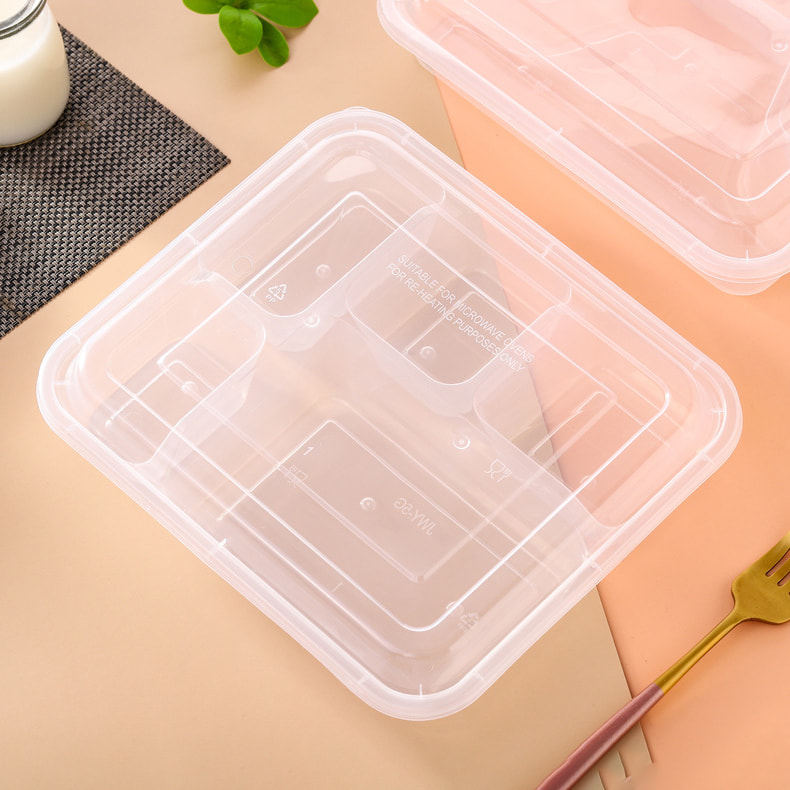
Advanced food packaging tooling design is the science of balancing complex geometries with high-speed manufacturability. For multi-compartment takeout trays, precision tooling must account for variable cooling rates, specific material shrinkage (such as PP vs. PET), and precise draft angles to prevent “webbing” between sections. In 2026, the industry standard focuses on maximizing “Top-Load Strength” while reducing plastic weight, a feat achieved only through high-precision aluminum molds and CNC-machined plug assists.
The Physics of Multi-Compartment Thermoforming
Designing a single-cavity tray is straightforward; designing a multi-compartment tray is an exercise in thermodynamics. When a plastic sheet is pulled into multiple “wells” simultaneously, the material is stretched in multiple directions. This creates tension points at the dividers between compartments.
-
Stress Concentration: The “bridge” between two compartments is the most common point of failure. If the tool is not designed to distribute heat evenly, these bridges become brittle.
-
Pressure Differential: Multi-compartment tools require strategic vacuum hole placement. If air is trapped in one compartment longer than another, the wall thickness will vary significantly, leading to uneven product protection.
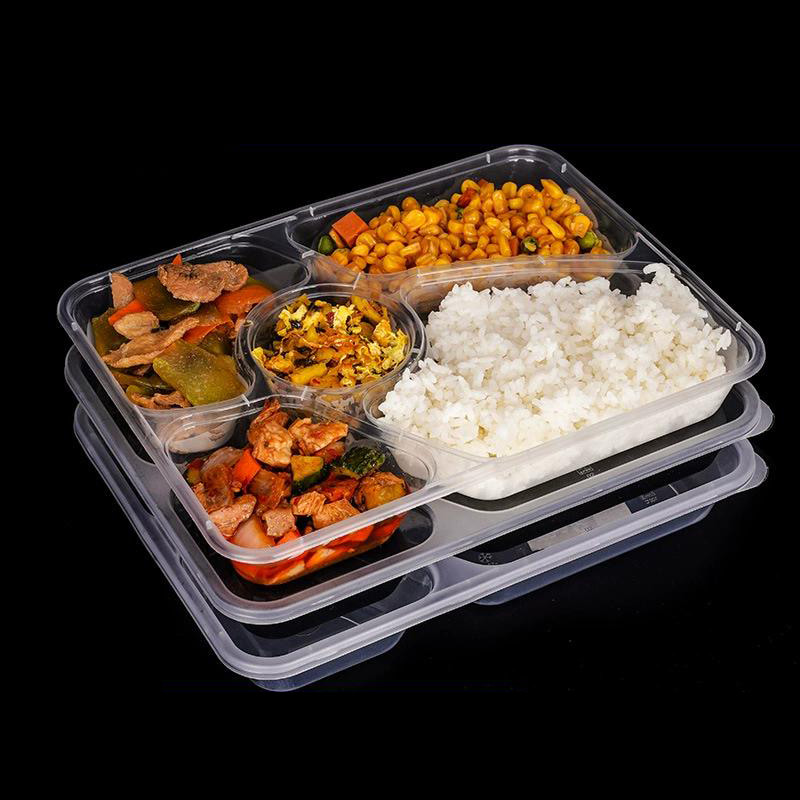
[View our specialized Multi-Compartment PP Meal Prep Trays designed for microwaveable takeout.]
Managing Thermal Expansion Rates
Tooling materials—usually high-grade 6061-T6 aluminum—expand when heated. However, the plastic sheet (PET or PP) has a much higher thermal expansion and contraction rate.
| Metric | Material: PP (Polypropylene) | Material: PET (Polyester) |
| Shrinkage Rate (%) | 1.5% – 2.0% | 0.4% – 0.7% |
| Recommended Draft Angle | 2.5° – 3.5° | 1.5° – 2.0° |
| Max Draw Ratio | 4:1 | 3:1 |
| Thermal Expansion Coeff. | High | Medium |
Failure to calculate for these shrinkage rates during the CNC phase of tooling design will result in trays that are either too loose or too tight for their lids.
Overcoming Material Webbing in Deep Draw Processes
“Webbing” is the term for unwanted folds of plastic that occur between compartments or in corners when there is “excess” material. In deep-draw takeout trays, webbing is a major quality defect.
To eliminate webbing, Dashan utilizes two primary tooling strategies:
-
Independent Plug Assists: We design individual mechanical plugs for each compartment. This ensures the plastic is pushed into each well at the same time, preventing the sheet from sagging into the “valley” between compartments.
-
Contact Cooling: Advanced tooling includes internal water-cooling channels that reach the top of the divider ribs, instantly setting the plastic and preventing it from “bleeding” or folding.
[Learn more about our Custom OEM/ODM Tooling Services for bespoke container shapes.]
How Draft Angles Impact Stacking and Shipping Efficiency
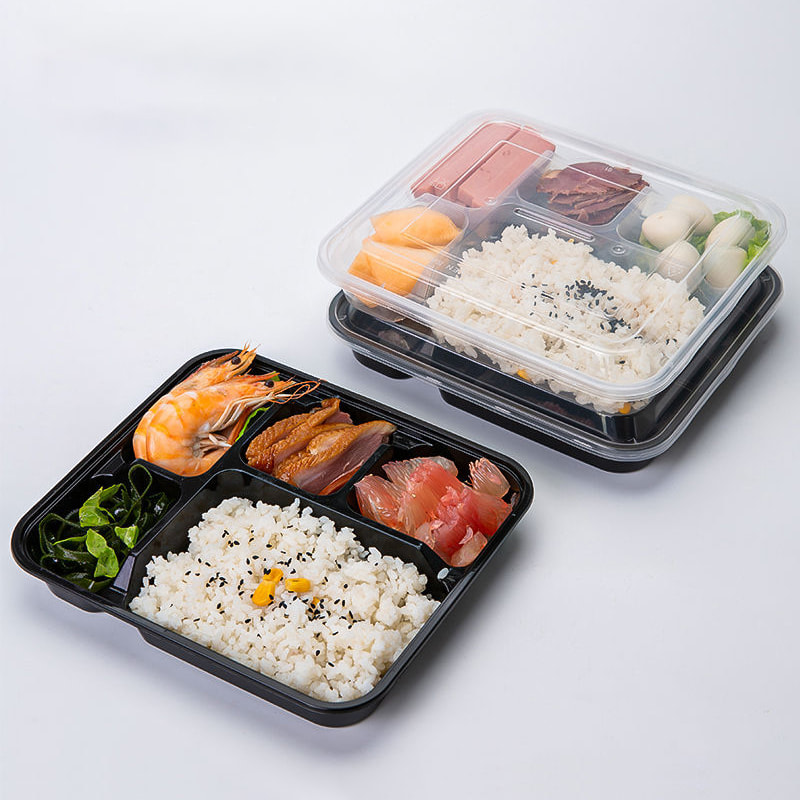
The draft angle is the degree of taper on the vertical side walls of the tray. While it seems like a minor detail, it dictates the entire logistics chain.
-
Denesting Precision: If the draft angle is too vertical ($<1.5^\circ$ for PP), the trays will create a vacuum seal when stacked. This causes “sticking,” which breaks automated packing lines in commercial kitchens.
-
Shipping Volume: A well-engineered draft angle allows for a higher “stack density.”
-
Structural Integrity: A slight taper acts like an arch in architecture; it transfers the weight of the stack through the side walls rather than the base of the bottom tray.
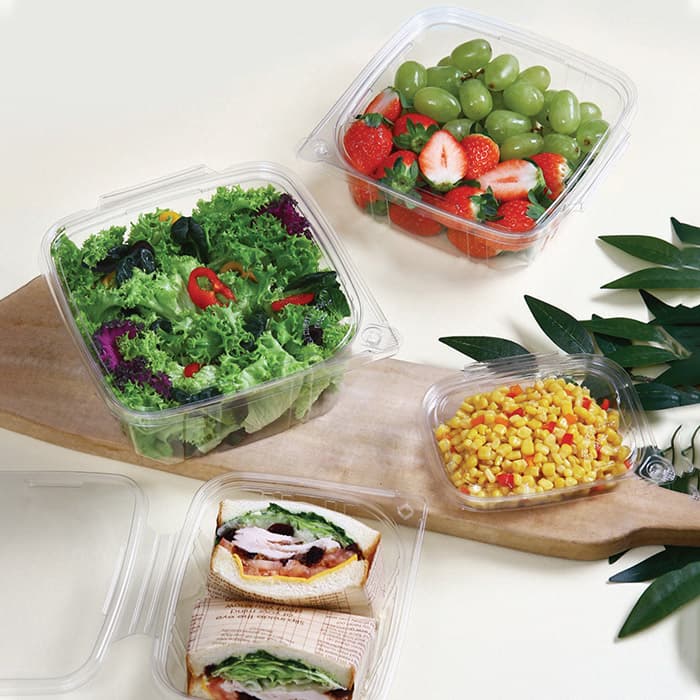
[Explore our High-Clarity PET Salad Containers with optimized stacking ratios.]
FAQ: Lead Times and Technical Standards for Custom Tooling
-
What is the typical lead time for a custom multi-compartment mold?
Prototyping usually takes 7–10 days, while a full-scale high-speed production tool takes 3–5 weeks depending on complexity.
-
Why does PP require a larger draft angle than PET?
PP is a semi-crystalline polymer with higher shrinkage. It “hugs” the mold tighter as it cools, requiring a steeper angle for clean ejection.
-
How do you prevent the dividers between compartments from being too thin?
We use “Plug Assist” geometry that is specifically shaped to push material away from the center and into the divider walls.
-
Can one tool be used for both PET and PP materials?
Generally, no. Because the shrinkage rates differ significantly (PP shrinks more), a tray made from a PET mold using PP material will be dimensionally smaller and won’t fit its lid.
-
What is the benefit of CNC-machined aluminum over cast molds?
CNC-machined aluminum offers superior thermal conductivity and surface finish, resulting in better clarity and consistent wall thickness.
-
Does Dashan offer 3D-printed samples before cutting the final metal tool?
Yes, we provide 3D-printed prototypes or CNC-machined sample blocks to verify the fit and volume before starting the final food packaging tooling design.
Conclusion & About Dashan
Advanced tooling is the silent engine of the food packaging industry. By mastering the physics of thermal expansion, webbing prevention, and draft angle optimization, manufacturers can create takeout trays that are not only functional but also economically and environmentally efficient.
About Dashan (Xiamen Dashan New Materials Co., Ltd)
Dashan is a premier manufacturer of high-performance food packaging based in Xiamen, China. With a decade of expertise, we specialize in PET, PP, and PLA solutions, ranging from PET cups to complex multi-compartment takeout containers.
Our facility features high-precision CNC tooling centers and advanced thermoforming lines, ensuring that every product—from our cornstarch containers to our rPET sustainable lines—meets FDA, BRC, and ISO standards. We serve restaurants and airlines in over 60 countries, providing the perfect balance of innovative design and reliable mass production.
References & Industry Standards
-
ISO 9001:2015 – Quality Management Systems: The benchmark for maintaining dimensional accuracy in high-volume thermoforming.
-
SPE Thermoforming Division – Tooling Standards: Industry research on heat transfer and plug assist materials for multi-well molds.
-
ASTM D999 – Vibration Testing for Shipping Containers: Standards used to verify if draft angles and stacking designs withstand transit.
Copyright Notice
© 2026 Xiamen Dashan New Materials Co., Ltd. All Rights Reserved.
The technical data and “If/Then” design frameworks in this article are the intellectual property of Dashan. Unauthorized reproduction or distribution is strictly prohibited. For technical consultation or media inquiries, contact our engineering department.