

Introduction
Bagasse tableware—made from the fibrous byproduct of sugarcane processing—has become a poster child for sustainable food packaging. It’s compostable, renewable, and reduces reliance on petroleum-based plastics. But many consumers and businesses wonder: What happens when bagasse products are coated with a lining for grease resistance or waterproofing? Can they still be considered eco-friendly, and if so, how can this be verified through expert certifications?
This guide dives into the science, environmental impact, and certification standards for coated bagasse tableware, helping you make informed, responsible packaging choices.
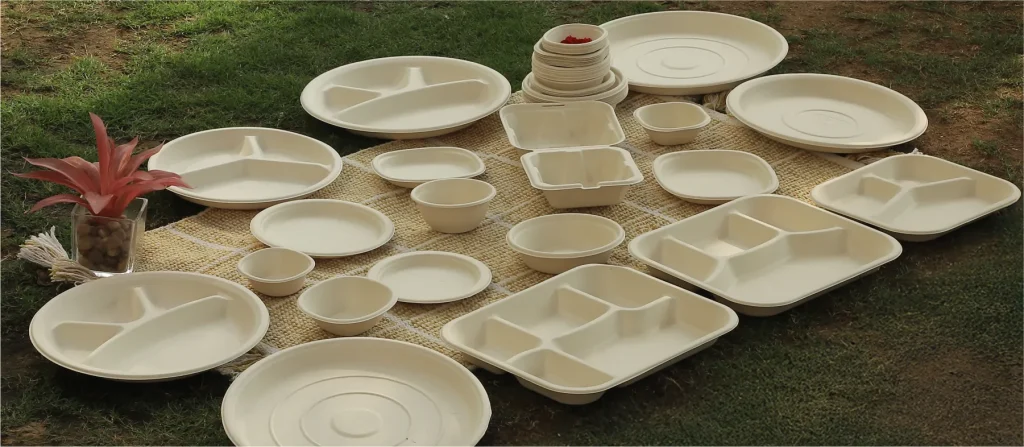
1. Why Bagasse Is Naturally Eco-Friendly
Bagasse is a waste product from sugarcane production, making it an agricultural residue rather than a virgin material. Its advantages include:
-
Renewability: Produced annually during sugarcane harvest.
-
Low carbon footprint: Utilizes waste that would otherwise be burned or discarded.
-
Compostability: Breaks down naturally in industrial composting facilities (usually within 90 days).
-
Food safety: Naturally free from toxic heavy metals or harmful chemicals.
2. Why Coatings Are Added to Bagasse Tableware
Although bagasse is durable, it’s still porous. For certain applications—like serving oily, saucy, or liquid-based foods—a thin coating is added to:
-
Improve water and oil resistance
-
Prevent leakage during hot food service
-
Extend structural integrity when holding liquid for extended periods
Common coatings include:
-
PLA (Polylactic Acid): Plant-based, compostable in industrial facilities
-
Water-based dispersions: Often biodegradable and PFAS-free
-
PE (Polyethylene): Durable but petroleum-derived and not compostable


3. Are Coated Bagasse Products Still Eco-Friendly?
The answer depends on two main factors:
(a) Coating Material Composition
-
PLA & water-based biodegradable coatings → Compostable & renewable
-
PE or other petroleum-based coatings → Not compostable, but may be recyclable in specific systems
(b) Composting & Disposal Conditions
-
Industrial composting facilities can process PLA-coated bagasse effectively.
-
Home compost systems may struggle with thicker coatings or require longer degradation times.
-
If disposed of in landfill, coatings—regardless of material—degrade much slower.
Bottom line: Coated bagasse can remain eco-friendly if the coating is compostable and certified, and the disposal system matches the product’s intended end-of-life pathway.
4. Key Eco-Friendly Certifications to Look For
| Certification | Region | Focus | Why It Matters |
|---|---|---|---|
| BPI Compostable | USA | Industrial compostability | Confirms breakdown in commercial facilities |
| OK Compost INDUSTRIAL | EU | Industrial compostability | Recognized by EN 13432 standard |
| OK Compost HOME | EU | Home compostability | Ensures degradation at lower temperatures |
| USDA BioPreferred | USA | Biobased content | Indicates renewable, plant-based material |
| TÜV Austria OK Biobased | Global | Biobased content rating (1–4 stars) | Confirms % of plant-based inputs |
| PFAS-Free Labeling | Global | Chemical safety | Ensures no forever chemicals for grease resistance |
| FDA / EU Food Contact Approval | Global | Food safety compliance | Confirms safe for food contact |
5. How to Verify Coated Bagasse Eco-Friendliness
Step 1 – Check the coating material
Ask the supplier: Is it PLA, water-based, or PE?
Step 2 – Confirm certification scope
Does the certificate apply to both the bagasse base and the coating?
Step 3 – Match disposal system
If your region lacks industrial composting, prioritize home-compostable coatings.
Step 4 – Look for PFAS-free guarantee
Grease resistance should not come at the cost of chemical pollution.
6. Expert Recommendations for Businesses
-
Ask for certification documents (not just logos in marketing materials)
-
Avoid PE-coated bagasse unless targeting recyclable waste streams
-
Educate end-users about correct disposal to prevent landfill accumulation
-
Choose multi-certification products to meet both sustainability and safety standards
7. Case Study – Restaurant Chain Switching to Coated Bagasse
A U.S.-based salad chain switched from PE-coated paper bowls to PLA-coated bagasse containers certified by BPI and PFAS-Free programs. The result:
-
Waste diversion: 65% of packaging composted in municipal facilities
-
Customer satisfaction: 82% preferred the sturdier, natural look
-
Brand image boost: Highlighted in sustainability reports and local press
8. FAQ
Q1: Is PLA-coated bagasse home compostable?
Not always—most PLA requires industrial composting temperatures. Check for OK Compost HOME certification.
Q2: Can coated bagasse be microwaved?
Yes, in most cases, but prolonged heating may weaken the coating.
Q3: Does coating affect recyclability?
Yes—coatings can interfere with fiber recovery, so composting is usually preferred.
Q4: Are PFAS-free coatings effective for grease resistance?
Yes—plant-based and water-based alternatives now match PFAS performance without health risks.
Conclusion
Bagasse tableware is one of the most sustainable single-use packaging solutions available today. With the right compostable coating and verified certifications, it remains eco-friendly while meeting functional needs like oil and water resistance. Businesses should prioritize certified, PFAS-free coatings and educate consumers on proper disposal to ensure that environmental benefits are fully realized.
References:
-
Biodegradable Products Institute (BPI) – https://bpiworld.org
-
TÜV Austria OK Compost – https://www.tuv-at.be
-
USDA BioPreferred Program – https://www.biopreferred.gov
-
European Committee for Standardization EN 13432 – https://www.cen.eu
-
PFAS-Free Packaging Guidelines – https://www.saferchemicals.org
Disclaimer & Copyright Notice
This article is created by the Dashan Packing editorial and research team.All information presented here is for educational and industry reference purposes only.Some data and standards cited in this article are sourced from publicly available materials,official regulatory documents, or third-party publications, which are properly credited where applicable.
All rights to third-party trademarks, images, and content belong to their respective owners.If any copyrighted material has been used inadvertently, please contact us at [email protected].We respect intellectual property rights and will promptly remove or revise any material upon verification.