

In today’s world, environmental sustainability is no longer a trend—it’s a necessity. As global concerns about pollution and climate change rise, eco-friendly materials are becoming essential across industries, from packaging to fashion to construction. But what exactly qualifies as an “eco-friendly material”? And why should businesses and consumers make the switch?
This article explores what eco-friendly materials are, their types, benefits, and how they play a crucial role in reducing our ecological footprint.
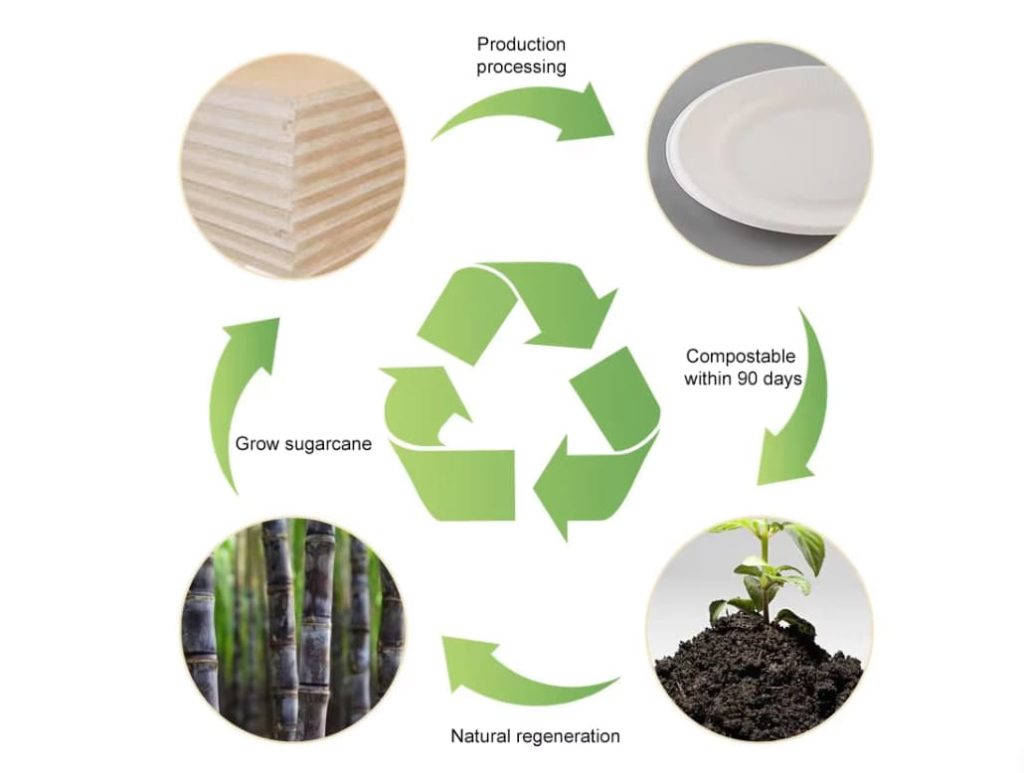
✅ What Is an Eco-Friendly Material?
Eco-friendly materials—also known as environmentally friendly or sustainable materials—are those that:
- 🌱 Have minimal negative impact on the environment
- ♻️ Are recyclable, biodegradable, or compostable
- 🔁 Come from renewable or recycled sources
- 🛠️ Are produced using sustainable practices (low energy, low emissions)
These materials aim to reduce harm to ecosystems, conserve natural resources, and promote a circular economy.
📦 Common Types of Eco-Friendly Materials
1. PLA (Polylactic Acid)
- Derived from corn starch or sugarcane
- Compostable and biodegradable
- Commonly used in food packaging, disposable cutlery, and cups
2. RPET (Recycled PET)
- Made from post-consumer recycled plastic bottles
- Strong, clear, and food-safe
- Helps reduce virgin plastic production
3. Bagasse
- A byproduct of sugarcane processing
- 100% compostable and microwave-safe
- Ideal for trays, plates, and containers
4. Bamboo Fiber
- Rapidly renewable resource
- Naturally antibacterial and biodegradable
- Used in utensils, bowls, and even fabrics
5. Mushroom Packaging
- Grown using agricultural waste and mycelium
- Fully compostable
- A cutting-edge innovation in protective packaging
🌍 Why Use Eco-Friendly Materials?
Switching to eco-friendly alternatives offers significant advantages:
| Benefit | Description |
|---|---|
| ✅ Reduces Waste | Less landfill accumulation through composting and recycling |
| ✅ Cuts Carbon Emissions | Lower energy usage in production and disposal |
| ✅ Improves Brand Image | Shows commitment to sustainability and attracts eco-conscious consumers |
| ✅ Meets Global Regulations | Complies with green certifications like EN13432, ASTM D6400, OK Compost, etc. |
📊 Real-World Impact: A Quick Look at the Data
- Only 9% of plastic ever produced has been recycled (UNEP, 2023)
- Global plastic production emits over 850 million tons of greenhouse gases annually
- Switching to bioplastics like PLA can reduce emissions by up to 75%
🏭 Eco-Friendly Packaging in Practice: The Xiamen Dashan Example
At Xiamen Dashan, we understand that sustainability starts with material choices. That’s why we offer a wide range of eco-friendly materials, including:
- ✅ PLA containers and cups
- ✅ RPET salad bowls and clamshells
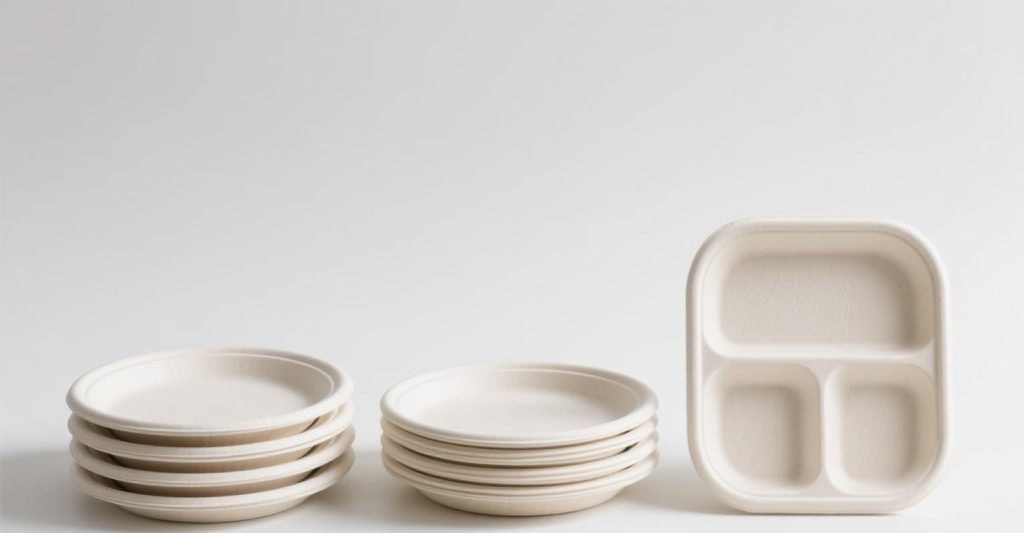
- ✅ Bagasse trays and lunch boxes
- ✅ Certifications including OK Compost Home, EN13432, and ASTM D6400
Our packaging is designed to be not only safe and functional—but also aligned with global eco goals.
❓ FAQ: Eco-Friendly Material
Q: Is eco-friendly material more expensive?
A: Initially, yes—but it offers long-term savings through waste reduction, regulatory compliance, and improved customer loyalty.
Q: Can all eco-friendly materials be composted?
A: Not all. For example, RPET is recyclable but not compostable. Materials like PLA and Bagasse are compostable under the right conditions.
Q: What certifications should I look for?
A: Look for EN13432, ASTM D6400, OK Compost, FSC (for paper), and USDA BioPreferred labels.
🔚 Conclusion: Choosing Green Is the Way Forward
Eco-friendly materials are more than a buzzword—they’re a powerful solution to the world’s packaging and waste crisis. Whether you’re a brand, distributor, or end-user, making the shift can significantly reduce your environmental impact while building a future-friendly business.
At Xiamen Dashan, we believe that sustainable packaging starts with sustainable materials. Let’s work together to make packaging greener, safer, and smarter.
📚 References
- United Nations Environment Programme (UNEP). (2023). Turning off the Tap: How the world can end plastic pollution and create a circular economy.
https://www.unep.org/resources/report/turning-tap-ending-plastic-pollution - European Bioplastics. (2024). Bioplastics Market Data 2023.
https://www.european-bioplastics.org/market/ - U.S. Environmental Protection Agency (EPA). (2023). Facts and Figures about Materials, Waste and Recycling.
https://www.epa.gov/facts-and-figures-about-materials-waste-and-recycling - Ellen MacArthur Foundation. (2022). The New Plastics Economy: Rethinking the future of plastics.
https://ellenmacarthurfoundation.org/new-plastics-economy - ASTM International. (2022). ASTM D6400 – Standard Specification for Labeling of Plastics Designed to be Aerobically Composted in Municipal or Industrial Facilities.
https://www.astm.org/d6400-21.html - European Committee for Standardization (CEN). (2021). EN 13432: Requirements for Packaging Recoverable through Composting and Biodegradation.
https://standards.cen.eu - ScienceDirect. (2023). Biodegradable Plastics: Standards, Policies, and Environmental Impacts.
https://www.sciencedirect.com/science/article/abs/pii/S0959652621009386 - Nature Communications. (2021). Plastic waste inputs from land into the ocean.
https://www.nature.com/articles/ncomms15611 - OK Compost Certification by TÜV Austria. (2024).
https://www.tuv-at.be/green-marks/certifications/ok-compost/ - USDA BioPreferred Program. (2023). Certified Biobased Products.
https://www.biopreferred.gov
Disclaimer & Copyright Notice
This article is created by the Dashan Packing editorial and research team.All information presented here is for educational and industry reference purposes only.Some data and standards cited in this article are sourced from publicly available materials,official regulatory documents, or third-party publications, which are properly credited where applicable.
All rights to third-party trademarks, images, and content belong to their respective owners.If any copyrighted material has been used inadvertently, please contact us at [email protected].We respect intellectual property rights and will promptly remove or revise any material upon verification.