

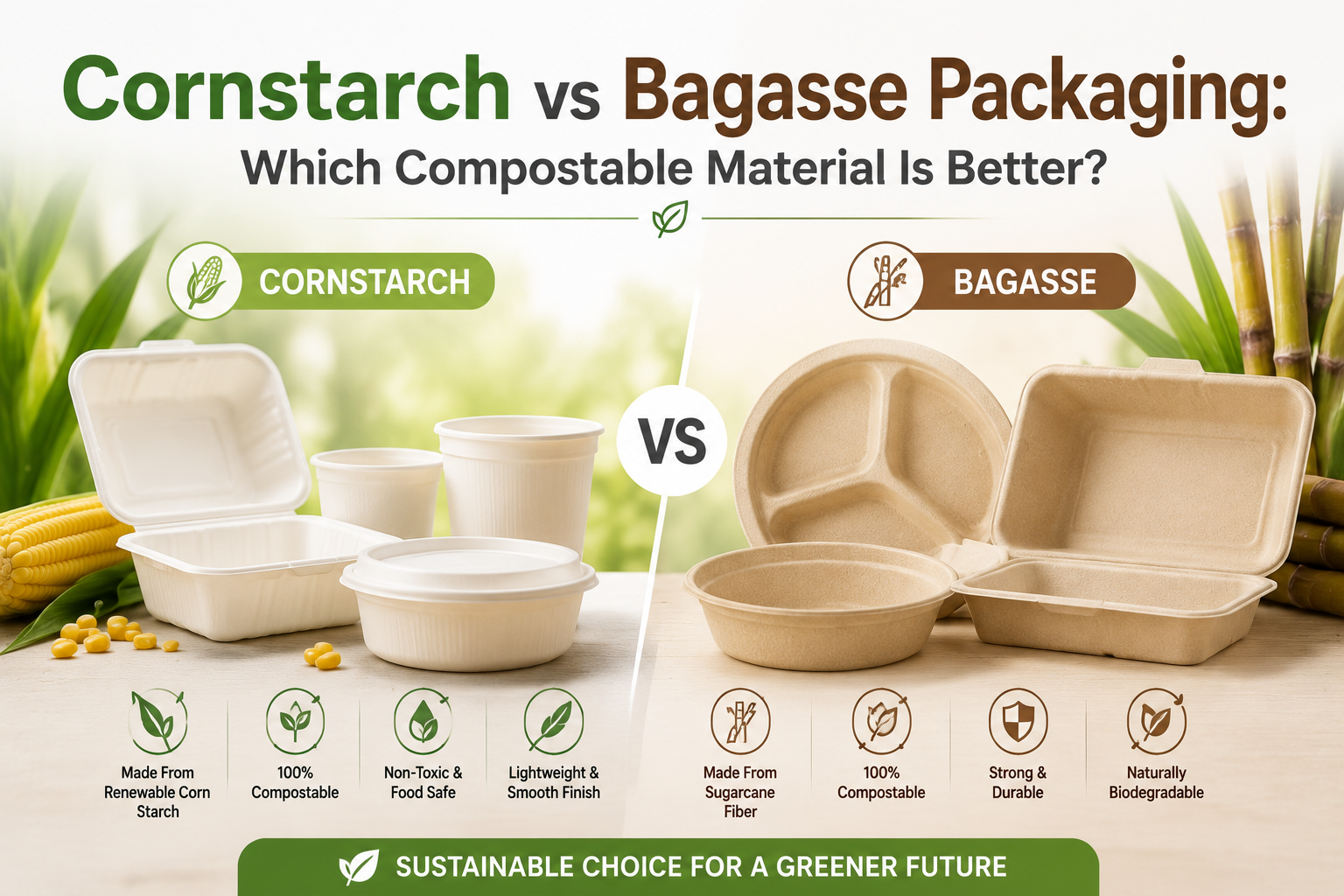
Introduction: Choosing the Right Compostable Packaging Requires More Than Just Sustainability
As governments, retailers, and consumers continue to demand more sustainable packaging solutions, compostable food packaging has become an important alternative to traditional plastic products.
Around the world, companies are looking for packaging materials that can reduce environmental impact while still meeting practical requirements such as:
- Food safety
- Durability
- Heat resistance
- Cost efficiency
- Supply chain reliability
Among the growing number of compostable packaging options, cornstarch packaging and bagasse packaging are two materials receiving significant attention.
Both materials are plant-based and offer advantages compared with conventional petroleum-based plastics. However, they are designed differently and perform better in different applications.
For food manufacturers, restaurants, catering companies, and packaging distributors, the question is not simply:
“Which material is more environmentally friendly?”
The more important question is:
“Which material provides the best balance between sustainability, performance, and practical application?”
Cornstarch packaging may be suitable for certain lightweight foodservice products, while bagasse packaging often performs better in applications requiring strength, heat resistance, and moisture protection.
Understanding the differences between these two materials helps buyers make better packaging decisions and avoid selecting solutions that do not match their actual needs.
This article compares cornstarch and bagasse packaging from multiple perspectives, including:
- Raw material sources
- Manufacturing processes
- Functional performance
- Food applications
- Cost considerations
- Sustainability factors
- Procurement requirements
1. Understanding the Two Materials: Different Origins, Different Packaging Characteristics
Although both cornstarch and bagasse are considered compostable packaging materials, their origins and manufacturing processes are completely different.
These differences directly influence their final performance.
1.1 Cornstarch Packaging: A Plant-Based Polymer Solution
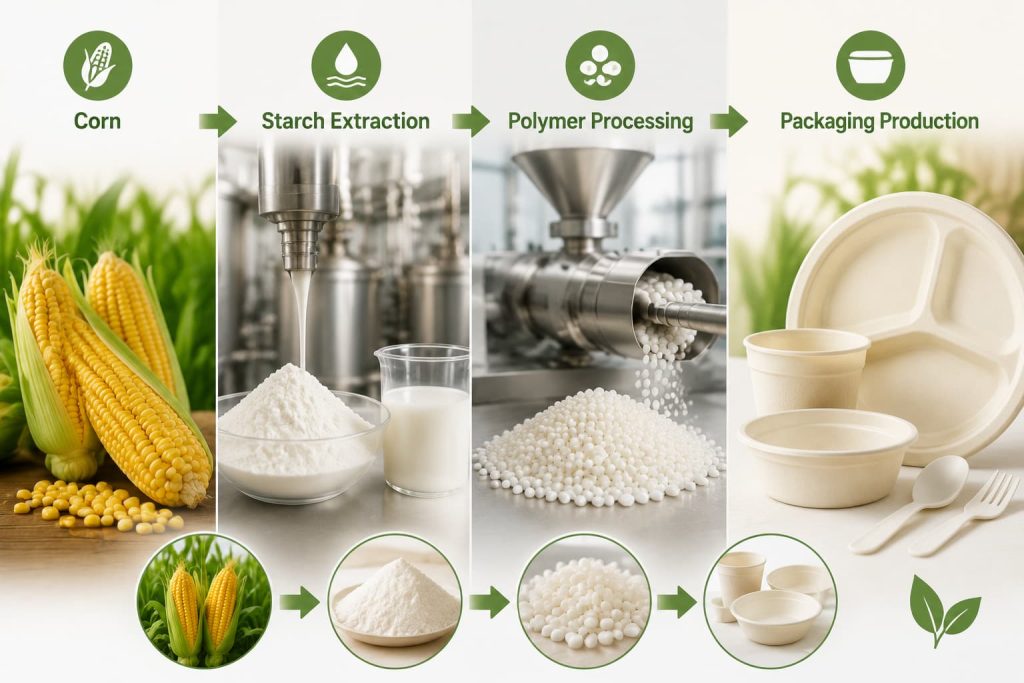
Cornstarch packaging is produced using starch extracted from corn.
Through industrial processing, starch can be converted into biodegradable polymers, commonly including PLA (Polylactic Acid), which can then be processed into food packaging products.
The general production process includes:
Corn → Starch Extraction → Polymer Processing → Packaging Production
Unlike traditional molded fiber products, cornstarch-based materials are closer to plastic manufacturing systems. They can often achieve smoother surfaces and more plastic-like appearances.
Common applications include:
- Cups
- Cutlery
- Small food containers
- Disposable tableware
- Cold food packaging
The main advantage of cornstarch-based packaging is its ability to provide a lightweight, attractive alternative for certain disposable products.
However, performance depends heavily on product design and formulation. Some cornstarch-based products may have limitations when exposed to high temperatures or high moisture environments.
1.2 Bagasse Packaging: Turning Agricultural Waste Into Food Containers
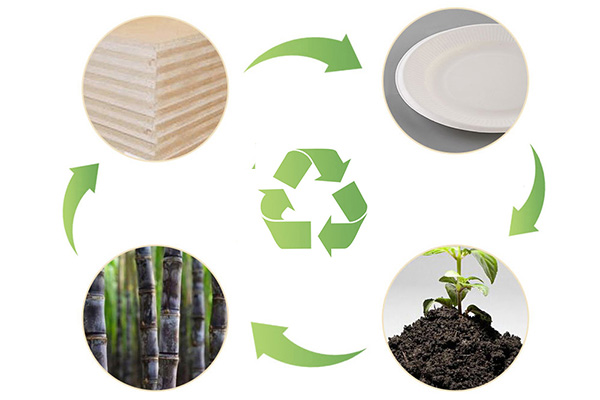
Bagasse packaging is made from sugarcane fiber.
After sugarcane is processed to extract juice, the remaining fibrous material is called bagasse. Instead of being discarded, this agricultural by-product can be processed into molded fiber packaging.
The production process generally follows:
Sugarcane → Juice Extraction → Bagasse Fiber → Pulp Processing → Molded Packaging
This approach gives bagasse packaging a unique sustainability advantage because it utilizes agricultural waste.
Common bagasse products include:
- Clamshell food boxes
- Lunch containers
- Bowls
- Plates
- Trays
- Takeaway packaging
Because bagasse products are made from natural fibers, they typically provide excellent rigidity and structural strength.
This makes them particularly suitable for foodservice applications where packaging must withstand hot meals, transportation, and repeated handling.
2. Material Performance Comparison: Which One Performs Better?
When selecting compostable packaging, environmental claims are important, but actual performance determines whether a product succeeds in real-world applications.
Different foods create different packaging challenges.
A salad container, a hot takeaway meal box, and a disposable cup do not require the same material characteristics.
2.1 Heat Resistance: Bagasse Has an Advantage for Hot Food Applications
Heat resistance is one of the most important factors for foodservice packaging.
Restaurants and catering businesses often require containers that can handle:
- Hot meals
- Fried foods
- Soups
- Microwave reheating
- Warm transportation
Cornstarch Packaging
Cornstarch-based materials generally perform better in:
- Cold food applications
- Room temperature products
- Short-term usage scenarios
However, some cornstarch products may have limitations when exposed to high temperatures.
Bagasse Packaging
Bagasse naturally performs well in hot food applications because its molded fiber structure provides:
- Good heat resistance
- Strong shape retention
- Better performance with hot meals
Typical applications include:
- Takeaway meals
- Restaurant food boxes
- Catering containers
For businesses serving hot food, bagasse is often the preferred option.
2.2 Moisture and Oil Resistance
Food packaging must protect against liquids, oils, and sauces.
Common challenges include:
- Leakage
- Softening
- Loss of structural strength
Bagasse Packaging Performance
Bagasse has a naturally strong fiber structure that provides good resistance for many food applications.
It performs well with:
- Rice dishes
- Fried foods
- Burgers
- Hot meals
Many bagasse products can also be treated or coated to improve moisture resistance.
Cornstarch Packaging Performance
Cornstarch-based packaging can provide good performance for suitable applications, but performance varies depending on the formulation and product design.
It is commonly selected for:
- Cups
- Cutlery
- Small containers
For products with long contact times with liquids or oily foods, buyers should carefully evaluate testing results before selection.
2.3 Structural Strength and Transportation Performance
Modern food packaging must survive complex supply chains.
Products may experience:
- Stacking pressure
- Transportation vibration
- Temperature changes
- Multiple handling processes
Bagasse packaging has an advantage because the molded fiber structure provides:
- High rigidity
- Good compression resistance
- Stable shape
This makes it suitable for:
- Food delivery
- Catering services
- Large-volume packaging
Cornstarch packaging can be effective for lightweight products but may not always provide the same structural strength as molded fiber containers.
3. Sustainability Comparison: Are Both Materials Truly Better?
Both cornstarch and bagasse offer environmental benefits, but their sustainability advantages come from different sources.
Choosing the better option requires understanding the complete lifecycle.
3.1 Cornstarch: Renewable Crop-Based Material
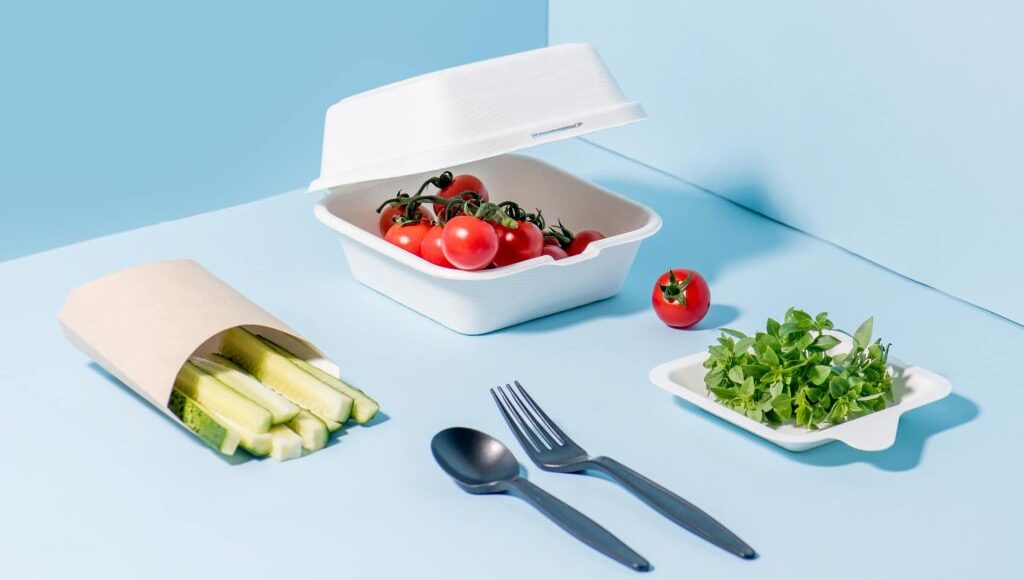
Cornstarch packaging uses corn as its primary raw material.
Advantages:
- Renewable agricultural source
- Reduced dependence on petroleum-based plastics
- Suitable for compostable applications
However, crop-based materials also require consideration of:
- Agricultural resources
- Land usage
- Farming practices
- Processing energy
Therefore, sustainability evaluation should consider the entire production chain rather than only the raw material source.
3.2 Bagasse: Agricultural Waste Utilization
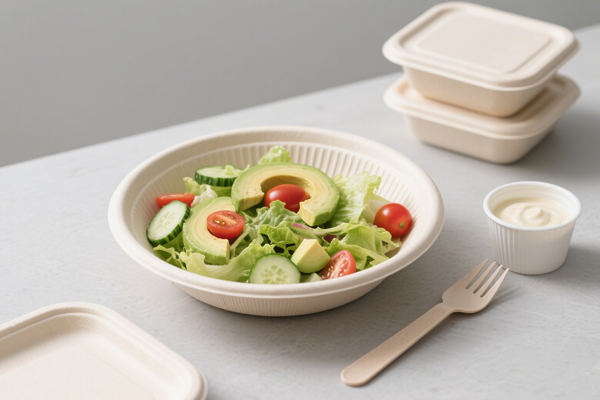
Bagasse has gained popularity because it transforms agricultural waste into useful packaging.
Instead of treating sugarcane fiber as waste, manufacturers convert it into valuable products.
Advantages include:
- Uses existing agricultural by-products
- Reduces waste from sugar production
- Supports resource efficiency
For many companies focused on circular economy principles, bagasse represents an attractive packaging solution because it follows a waste-utilization model.
4. Compostability: Understanding What Really Makes Packaging Sustainable
When companies choose compostable packaging, they often focus on one simple question:
“Will this material decompose?”
However, professional buyers understand that compostability is more complex than material selection alone.
A truly sustainable packaging solution depends on several factors:
- Material composition
- Certification standards
- Local waste management systems
- Industrial composting availability
- Product application
Both cornstarch and bagasse packaging can offer compostable solutions, but their environmental performance depends on how they are produced, used, and managed after disposal.
4.1 Industrial Composting vs Home Composting
One common misunderstanding is that all compostable packaging can naturally disappear anywhere after disposal.
In reality, many certified compostable packaging products are designed for industrial composting environments, where specific conditions are available:
- Controlled temperature
- Sufficient moisture
- Microbial activity
- Proper processing time
Industrial composting facilities provide the conditions needed for materials to break down efficiently.
For international buyers, it is important to understand the difference between:
Industrial Compostability
Products are tested under controlled composting conditions according to standards such as:
- EN 13432 (Europe)
- ASTM D6400 (United States)
These standards evaluate factors such as:
- Disintegration
- Biodegradation
- Ecotoxicity
- Heavy metal limits
Home Compostability
Home composting requires materials to break down under much less controlled conditions.
Not every compostable packaging product is suitable for home composting.
Therefore, companies should avoid making general environmental claims without confirming certification requirements and local disposal systems.
4.2 Sustainability Should Consider the Entire Lifecycle
A common mistake is judging packaging sustainability only by the raw material.
A more complete evaluation considers:
Raw Material → Manufacturing → Transportation → Usage → Disposal
For example:
A lightweight package may reduce transportation emissions, while a stronger package may reduce food waste by protecting products better.
The most sustainable packaging solution is often the one that provides the best balance between environmental impact and real-world performance.
5. Application Comparison: Which Material Fits Different Food Categories?
The best compostable packaging material depends largely on the intended application.
A restaurant serving hot meals has very different requirements from a company selling cold desserts.
5.1 Best Applications for Bagasse Packaging
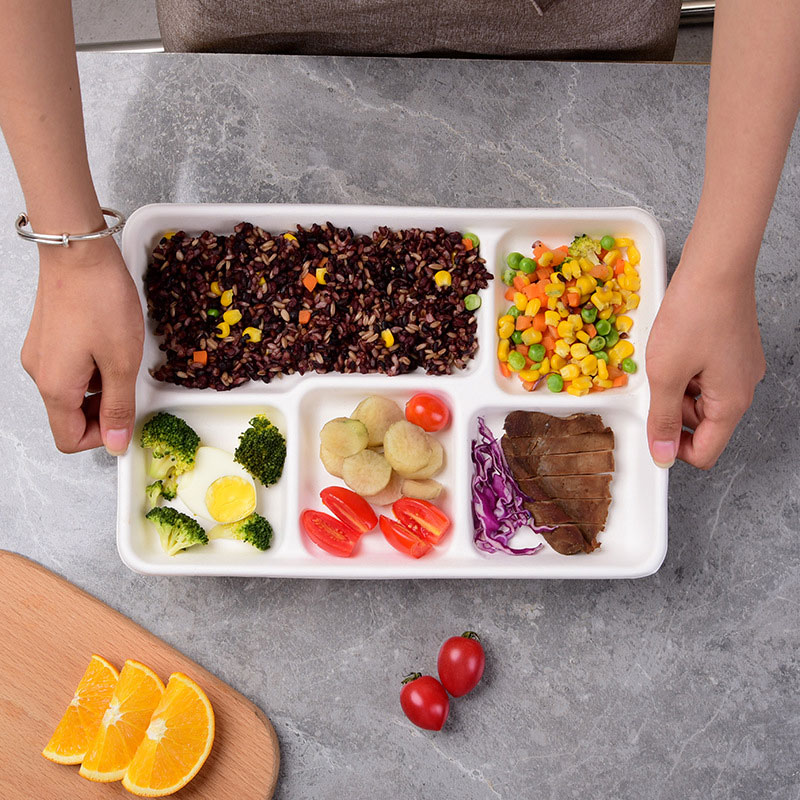
Bagasse has become especially popular in foodservice because of its strength and heat resistance.
Takeaway Food
Food delivery and takeaway businesses require packaging that can handle:
- Hot food
- Sauces
- Transportation
- Repeated handling
Bagasse containers are commonly used for:
- Rice meals
- Fried food
- Noodles
- Combination meals
Advantages:
- Strong structure
- Good heat performance
- Leak-resistant design possibilities
Catering and Large-Scale Food Service
Catering companies often require packaging that can be:
- Stacked efficiently
- Transported safely
- Used for large-volume meals
Bagasse plates, bowls, and trays are suitable for these applications because they maintain their shape better than many lightweight alternatives.
Restaurant Packaging
Restaurants increasingly use bagasse packaging to replace traditional disposable plastic containers.
Popular products include:
- Clamshell boxes
- Lunch boxes
- Bowls
- Plates
The natural appearance of molded fiber packaging also supports brands that want to communicate sustainability.
5.2 Best Applications for Cornstarch Packaging
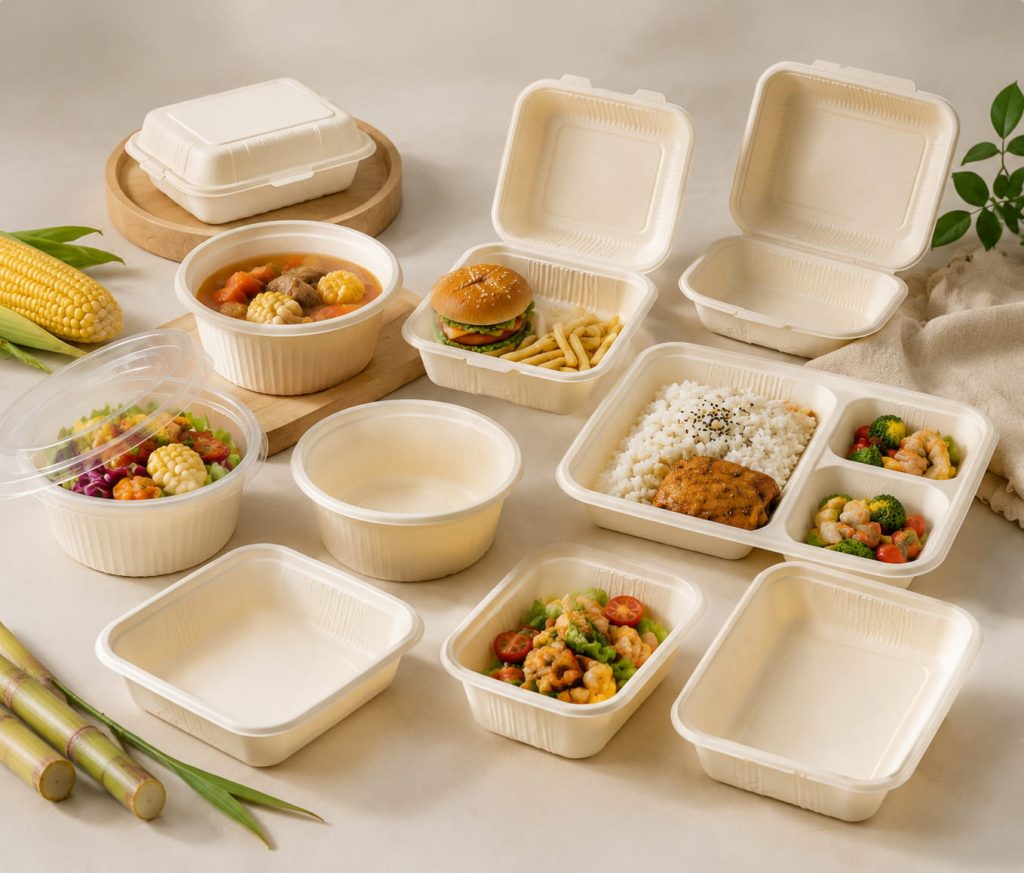
Cornstarch-based packaging is often selected for applications where lightweight design and appearance are important.
Disposable Tableware
Cornstarch materials are commonly used for:
- Cutlery
- Cups
- Small food containers
Benefits:
- Lightweight
- Smooth surface
- Similar appearance to conventional plastic products
Cold Food Applications
For products such as:
- Desserts
- Snacks
- Cold beverages
cornstarch-based materials can provide suitable performance.
These applications usually have lower temperature and moisture requirements compared with hot food packaging.
Short-Term Food Service Products
For events, cafés, and environmentally focused brands, cornstarch products can provide a compostable alternative for specific disposable applications.
However, buyers should always evaluate whether the product matches the intended usage conditions.
6. Cost Comparison: Which Material Provides Better Value?
Price is one of the most important factors for packaging buyers.
However, the lowest unit price does not always represent the lowest overall cost.
A professional purchasing evaluation should consider:
- Material cost
- Manufacturing process
- Shipping efficiency
- Product failure rate
- Customer acceptance
- Certification requirements
6.1 Raw Material Availability
Cornstarch Packaging
The cost of cornstarch-based packaging can be influenced by:
- Crop prices
- Agricultural supply conditions
- Processing technology
Because it depends on agricultural raw materials, pricing may fluctuate with market conditions.
Bagasse Packaging
Bagasse benefits from being derived from sugarcane processing waste.
Its availability is closely connected with:
- Sugar production
- Agricultural regions
- Fiber processing capacity
The use of agricultural by-products can provide cost advantages in certain markets.
6.2 Manufacturing Considerations
Cornstarch and bagasse require different production methods.
Cornstarch Production
Often uses processes closer to plastic manufacturing.
Advantages:
- Smooth appearance
- Flexible product design
- Suitable for certain thin-wall products
Bagasse Production
Uses molded fiber technology.
Advantages:
- Strong structure
- Suitable for large containers
- Better performance for hot food applications
The manufacturing method influences not only price but also product performance.
6.3 Total Cost Matters More Than Unit Price
A cheaper container may create additional costs if it causes:
- Food leakage
- Product damage
- Customer complaints
- Transportation issues
For example:
A stronger bagasse takeaway box may have a slightly higher unit cost but reduce product failures during delivery.
Therefore, buyers should evaluate packaging based on:
Cost per successful application, not only cost per piece.
7. How Should Buyers Choose Between Cornstarch and Bagasse Packaging?
There is no universal answer because each material has different strengths.
The right choice depends on:
- Food type
- Temperature requirements
- Transportation conditions
- Brand positioning
- Sustainability goals
Choose Bagasse Packaging If You Need:
✔ Hot food containers
✔ Takeaway packaging
✔ Catering products
✔ Strong structural performance
✔ Oil-resistant food packaging
✔ Restaurant applications
Typical products:
- Clamshell boxes
- Lunch containers
- Bowls
- Plates
Choose Cornstarch Packaging If You Need:
✔ Lightweight disposable products
✔ Cold food applications
✔ Cups and cutlery
✔ Plastic-like appearance
✔ Short-term food service items
Typical products:
- Cups
- Cutlery
- Small containers
8. What Should Buyers Check Before Importing Compostable Packaging?
Selecting the right material is only the first step.
When importing compostable packaging, buyers should also evaluate supplier capability and compliance documentation.
8.1 Certification Requirements
Depending on the target market, buyers may request certifications such as:
- EN13432
- ASTM D6400
- BPI Certification
- TÜV OK Compost
These certifications help demonstrate that products meet recognized compostability requirements.
8.2 Product Performance Testing
Before large-scale purchasing, buyers should confirm:
- Heat resistance
- Leakage performance
- Oil resistance
- Mechanical strength
- Shelf stability
Testing should match the actual application.
For example:
A takeaway food container should be tested with hot, oily meals rather than only general laboratory conditions.
8.3 Supplier Manufacturing Capability
A reliable compostable packaging supplier should provide:
- Stable production capacity
- Consistent quality control
- Export experience
- Technical documentation
- Customization support
For international buyers, supplier reliability is as important as material selection.
9. How DASHAN Provides Compostable Packaging Solutions
As demand for sustainable food packaging continues to grow, DASHAN provides compostable packaging solutions designed for different market applications.
Rather than recommending one material for every situation, DASHAN helps customers select packaging based on:
- Food category
- Usage environment
- Performance requirements
- Export market regulations
Bagasse Packaging Solutions
DASHAN offers bagasse products suitable for:
- Takeaway meals
- Catering services
- Restaurant applications
Including:
- Clamshell boxes
- Lunch containers
- Plates
- Bowls
Advantages:
- Strong structure
- Suitable for hot food
- Natural fiber appearance
- Compostable material options
Cornstarch Packaging Solutions
Cornstarch-based products are suitable for applications requiring lightweight compostable alternatives.
Applications include:
- Cups
- Disposable tableware
- Small foodservice products
Advantages:
- Plant-based material
- Lightweight design
- Suitable for specific disposable applications
Through OEM and ODM capabilities, DASHAN works with global customers to develop packaging solutions that meet:
- Product requirements
- Market expectations
- Sustainability targets
- Regulatory needs
FAQ
1. What is the difference between cornstarch and bagasse packaging?
Cornstarch packaging is made from corn-based biopolymers, while bagasse packaging is made from sugarcane fiber left after sugar extraction. Cornstarch products usually have a smoother, more plastic-like appearance, while bagasse products have a natural fiber texture and stronger structural performance.
2. Is bagasse packaging better than cornstarch packaging for hot food?
In most cases, bagasse packaging is better suited for hot food applications because it offers higher rigidity, good heat resistance, and strong performance for takeaway meals, catering, and restaurant use.
3. Is cornstarch packaging compostable?
Cornstarch packaging can be compostable when it meets recognized compostability standards. Buyers should check certifications such as EN 13432, ASTM D6400, BPI, or TÜV OK Compost depending on the target market.
4. Which material is better for restaurants: cornstarch or bagasse?
For restaurants serving hot meals, fried food, and takeaway dishes, bagasse is often the preferred option because of its strength and heat resistance. Cornstarch packaging may be more suitable for beverages, utensils, and lightweight foodservice applications.
5. Are cornstarch and bagasse packaging safe for food contact?
Both materials can be used for food packaging when manufactured according to food contact safety requirements. Suppliers should provide relevant documentation, including migration testing reports and compliance declarations.
6. Which compostable packaging material is more sustainable?
Both cornstarch and bagasse are renewable materials. The more sustainable choice depends on factors such as raw material sourcing, production methods, transportation distance, product lifespan, and end-of-life management.
Conclusion: The Best Compostable Packaging Is the One That Fits the Application
Cornstarch and bagasse packaging both provide valuable alternatives to traditional plastic packaging, but they serve different purposes.
Bagasse is often the better choice for:
- Hot food
- Takeaway meals
- Catering
- Strong containers
Cornstarch packaging may be more suitable for:
- Lightweight products
- Cups
- Cutlery
- Specific disposable applications
The future of sustainable food packaging will not depend on a single material replacing all others. Instead, successful packaging solutions will come from selecting the right material for each application.
For food brands, retailers, and distributors, the most effective approach is to evaluate packaging based on the complete picture:
Performance + Sustainability + Cost + Real-World Usability
Choosing the right compostable packaging partner allows businesses to meet environmental goals while maintaining the quality and reliability customers expect.
References
- ASTM D6400 – Standard Specification for Compostable Plastics
ASTM International
https://www.astm.org/d6400.html - EN 13432 – Requirements for Compostable Packaging
European Committee for Standardization (CEN) - BPI Compostable Certification Program
Biodegradable Products Institute
https://bpiworld.org/ - EU Food Contact Materials Regulation (EC) No 1935/2004
European Commission
https://food.ec.europa.eu/safety/chemical-safety/food-contact-materials_en - FDA Food Contact Substances Regulations
U.S. Food and Drug Administration
https://www.fda.gov/food/packaging-food-contact-substances-fcs - OECD Global Plastics Outlook
Organisation for Economic Co-operation and Development
https://www.oecd.org/environment/plastics/
Copyright Statement
© 2026 Dashan Packing. All rights reserved.
This article is an original publication by the Dashan Packing team based on industry research, market analysis, and packaging expertise. Unauthorized reproduction, distribution, or copying of this content is prohibited without prior written permission.
Dashan Packing is committed to delivering reliable, original, and professional information for the global food packaging industry.