
Introduction
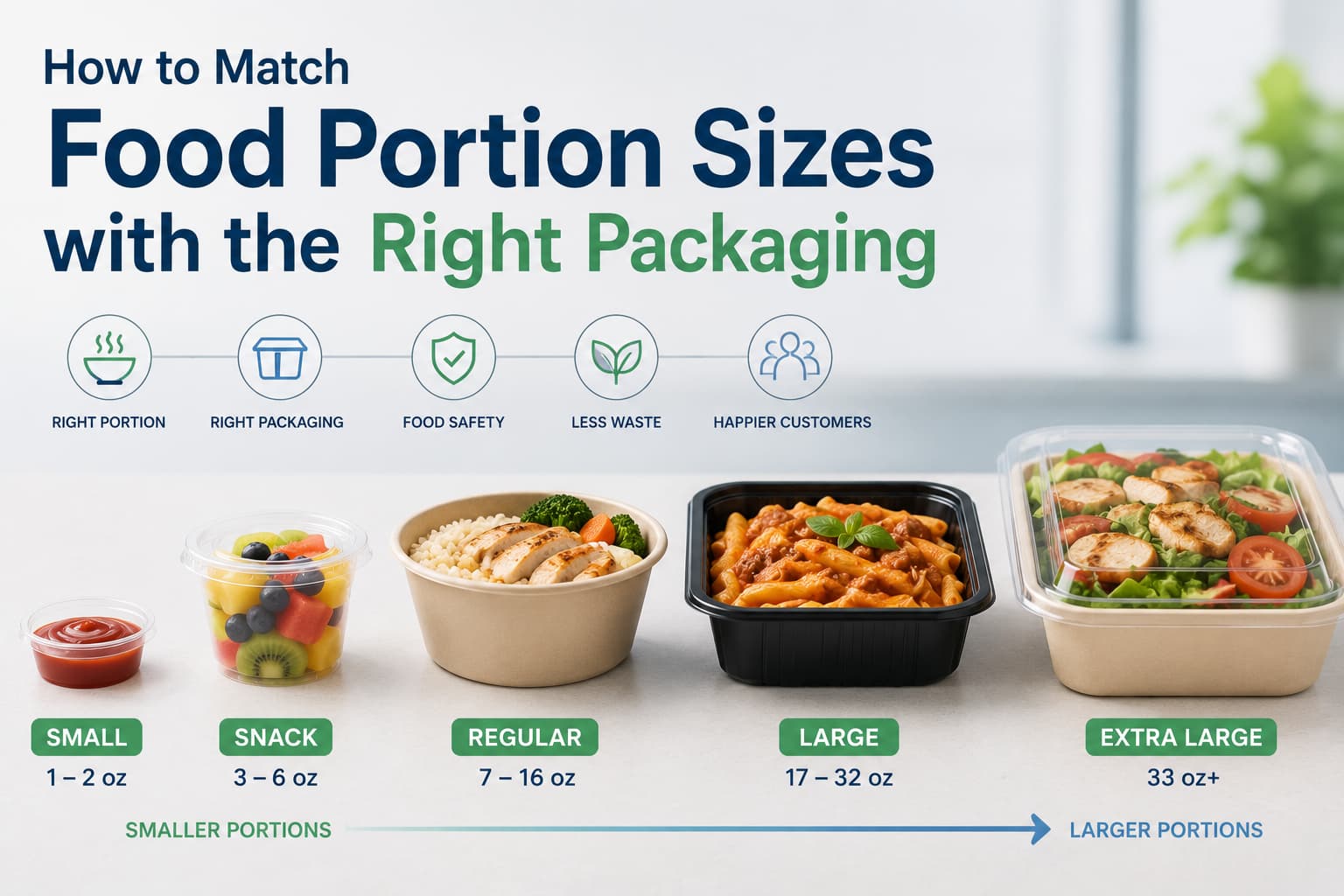
Food packaging is often evaluated by its material, appearance, or cost, but one of the most overlooked factors is whether the packaging size matches the portion of food it contains. A container that is too small may cause leakage, deformation, or poor product presentation, while one that is too large can increase packaging costs, waste storage space, and create the impression that a product contains less food than customers expect.
As the global foodservice industry continues to evolve, restaurants, meal-prep companies, supermarkets, airlines, and food manufacturers are paying greater attention to portion control. Consistent portion sizes improve production efficiency, help control food costs, and ensure customers receive the same dining experience every time. Selecting packaging that accurately matches those portions has therefore become an important part of product development rather than simply a purchasing decision.
Packaging size also influences logistics and sustainability. Containers that closely fit the food require less material, occupy less space during transportation, and reduce unnecessary packaging waste. At the same time, properly sized packaging protects food during handling while improving shelf presentation and customer satisfaction.
There is no universal “best” container size. The ideal packaging depends on the type of food, serving portion, storage conditions, transportation requirements, and intended sales channel. A fresh salad, for example, requires enough space to preserve its appearance, while a rice meal should fit securely to prevent movement during delivery. Soup requires sufficient headspace to minimize spills, whereas bakery products often need packaging that protects delicate decorations without compressing them.
This guide explains how food businesses can match food portion sizes with the right packaging by considering food characteristics, packaging performance, and operational requirements. Whether you produce ready meals, fresh produce, takeaway foods, or retail packaged products, selecting the correct container size can improve efficiency, reduce costs, and enhance the overall customer experience.
Why Portion Size Matters in Food Packaging
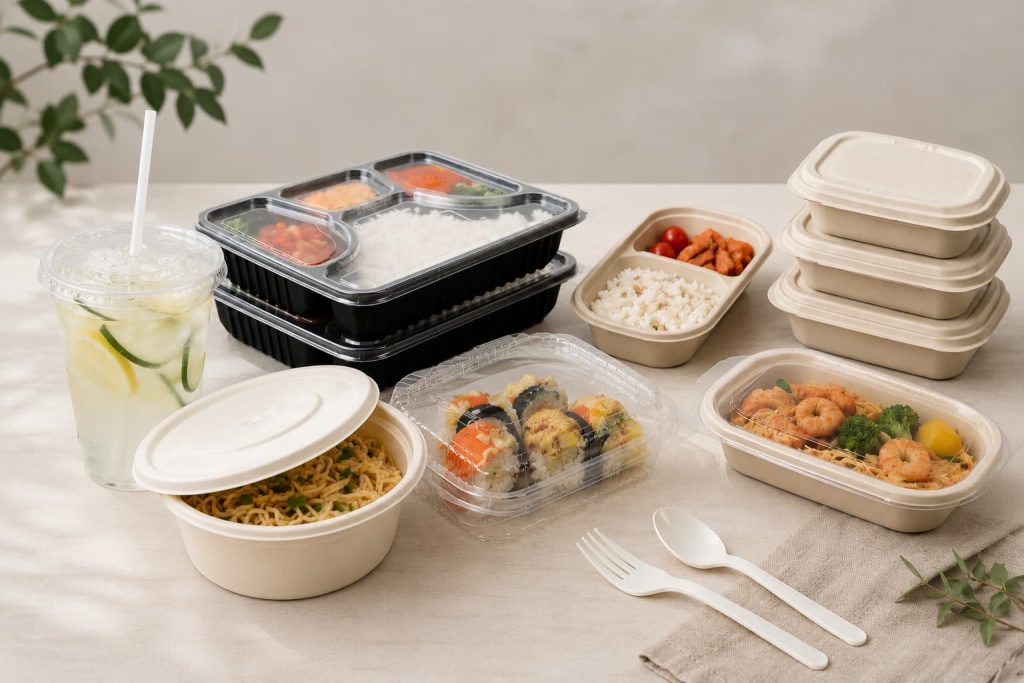
Many companies view packaging as a simple container for transporting food. In reality, packaging size directly affects nearly every stage of the food supply chain—from production and logistics to retail display and consumer satisfaction.
When packaging capacity closely matches the food portion, manufacturers can standardize production, improve packing efficiency, and reduce unnecessary material consumption. Consistent sizing also simplifies inventory management because fewer packaging variations are needed for similar products.
From a customer’s perspective, the relationship between food and packaging influences perceived value. A meal served in an oversized container often appears smaller than it actually is because excessive empty space creates the impression of insufficient portions. Conversely, a container that is filled beyond its intended capacity may appear untidy, making the product more difficult to transport and increasing the risk of leakage.
Properly matched packaging also contributes to food protection. During transportation, excessive empty space allows food to shift inside the container, potentially damaging delicate ingredients or affecting product presentation. Choosing the correct capacity helps keep food stable while maintaining its appearance from production to consumption.
For businesses operating at scale, these small improvements translate into measurable operational benefits.
Business Benefits of Matching Portion Size with Packaging
| Benefit | Business Value |
|---|---|
| Portion consistency | Delivers a uniform customer experience across every order |
| Lower packaging costs | Reduces unnecessary material usage and packaging waste |
| Improved food presentation | Enhances perceived product quality and value |
| Better transport efficiency | Minimizes food movement and damage during delivery |
| Easier inventory management | Simplifies packaging selection and warehouse storage |
| Improved customer satisfaction | Creates a cleaner and more professional presentation |
Ultimately, selecting the correct container size is not only about fitting the food—it is about optimizing the entire packaging process.
Start with the Food, Not the Container
One of the most common mistakes in packaging selection is choosing a container first and then trying to make every product fit into that size.
A more effective approach is to begin with the food itself. Every food product has unique physical characteristics that influence the type and capacity of packaging required.
For example, two meals may each weigh 500 grams but require completely different containers. A compact rice dish occupies relatively little volume and fits well in a shallow rectangular container. A mixed salad of the same weight contains significantly more air between ingredients and therefore requires a much larger container to preserve freshness and presentation.
Similarly, foods containing sauces need additional headspace to reduce the risk of spills during transportation, while fried foods may benefit from packaging that minimizes condensation. Bakery products often require taller containers to protect toppings or decorations, and fresh fruit packaging should allow adequate space to prevent bruising while maintaining an attractive retail display.
When selecting packaging, manufacturers should evaluate several characteristics together rather than considering food weight alone.
Important Factors to Evaluate
- Portion weight
- Food volume
- Product shape
- Moisture content
- Sauce or liquid content
- Expansion after cooking or reheating
- Storage temperature
- Transportation method
- Consumer handling requirements
Considering these factors early in product development allows manufacturers to choose packaging that performs reliably throughout production, transportation, retail display, and final consumption.
Match Packaging Capacity to Different Food Applications
Different foods require different container capacities, even when the serving size appears similar. Packaging should provide enough internal space to protect the food while avoiding unnecessary empty volume.
The table below illustrates common packaging capacities used across a variety of food applications.
| Food Application | Recommended Capacity | Typical Packaging |
|---|---|---|
| Side dishes | 300–500 ml | PP container |
| Rice meals | 650–800 ml | PP meal container |
| Noodle dishes | 700–1000 ml | PP bowl |
| Soups | 500–1000 ml | PP soup bowl with lid |
| Fresh salads | 1000–1500 ml | PET salad container |
| Fresh fruit | 750–1200 ml | PP clamshell container |
| Bakery products | Product-dependent | PET hinged container |
| Desserts | 150–300 ml | PET dessert cup |
These capacities should be viewed as general guidelines rather than fixed standards. The final choice depends on recipe composition, serving style, and customer expectations.
Ready Meals
Ready meals should fit securely within the container to minimize movement during transportation. Proper sizing improves presentation while helping maintain food temperature. PP containers are widely used because they provide excellent heat resistance and are suitable for microwave reheating.
Fresh Salads
Salads require considerably more volume than their weight suggests. Ingredients such as lettuce, spinach, and mixed vegetables need space to maintain their natural appearance without becoming compressed. Transparent PET salad containers are particularly suitable because they combine generous internal capacity with excellent product visibility.
Fresh Produce
Fruit packaging must balance protection with presentation. Containers should provide enough room to avoid crushing delicate produce while keeping the fruit securely in place during transportation. PET clamshell containers are commonly used because they offer rigidity, ventilation options, and high transparency for retail display.
Soups and Noodle Dishes
Liquid-based foods require additional headspace to reduce the likelihood of spills during handling and delivery. Noodle dishes may also expand after cooking, making sufficient container capacity essential for maintaining product quality and ease of consumption.
Rather than selecting packaging based solely on capacity, successful food businesses evaluate how the container supports the specific characteristics of each food category. This application-based approach improves operational efficiency while enhancing the overall customer experience.