

Understanding Migration Testing for Food Packaging: A Practical Guide for Manufacturers and Exporters

Introduction
As global food packaging regulations continue to evolve, migration testing has become one of the most frequently discussed topics between packaging manufacturers, food brands, and international buyers. Whether exporting polypropylene (PP) meal containers to Europe, PET fruit packaging to Australia, or reusable foodservice products to North America, suppliers are increasingly asked to provide migration test reports before products can enter the market.
For many manufacturers, however, migration testing remains misunderstood. Some believe it is simply another laboratory procedure required by regulators, while others assume that testing a raw material is enough to demonstrate compliance. In reality, migration testing is far more comprehensive. It evaluates how finished food packaging behaves under real conditions of use and helps determine whether substances from packaging may transfer into food during storage, transportation, heating, or repeated use.
The importance of migration testing has grown alongside international trade. Food packaging today often crosses multiple borders before reaching consumers, and each destination market may have different regulatory expectations. Although the European Union, the United States, Australia, Japan, and China each operate under different legal frameworks, they all share a common objective: ensuring that food contact materials do not release substances at levels that could affect human health or food quality.
Understanding migration testing is therefore no longer just the responsibility of regulatory specialists. It has become essential knowledge for product designers, packaging engineers, purchasing managers, and exporters who want to build long-term partnerships in global markets.
Rather than viewing migration testing as a final compliance step, successful manufacturers increasingly treat it as an integral part of product development, material selection, and quality assurance.
Why Migration Testing Matters
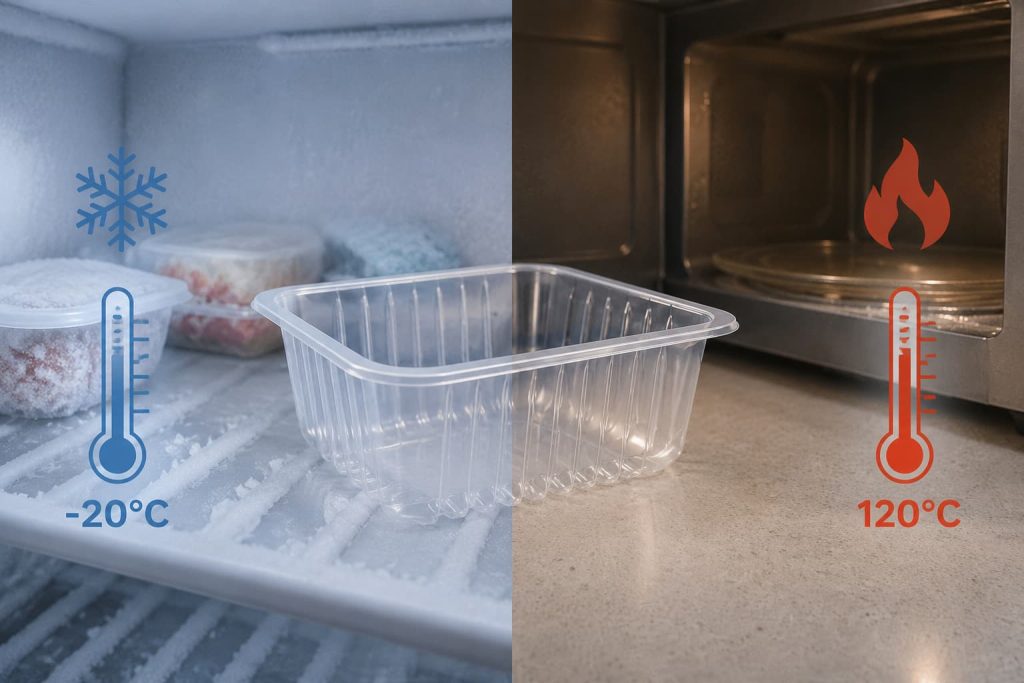
Food packaging is designed to protect food, preserve freshness, and improve convenience. Throughout its lifecycle, however, packaging remains in continuous contact with food under a wide variety of conditions. Containers may be exposed to freezing temperatures during storage, high temperatures during microwave heating, acidic foods, oily sauces, long transportation periods, or repeated consumer use.
These conditions create the possibility that very small quantities of substances within the packaging material could migrate into food. Migration does not necessarily indicate that packaging is unsafe. Every packaging material contains molecules that may interact with surrounding environments to some extent. The critical question is whether the amount of migration remains within scientifically established safety limits.
Migration testing provides this answer.
Instead of relying on assumptions about raw materials alone, laboratory testing evaluates finished packaging under conditions that simulate actual food contact. This scientific approach allows regulators and food manufacturers to verify that packaging performs safely throughout its intended application.
Without migration testing, neither manufacturers nor customers can confidently demonstrate compliance with food contact regulations or verify that packaging continues to perform safely under real-world conditions.
For this reason, migration testing has become one of the most important technical documents requested by international buyers.
Migration Is a Scientific Concept, Not a Manufacturing Defect
One of the biggest misconceptions surrounding migration testing is the belief that migration itself represents a product failure.
In reality, migration is a natural physical phenomenon.
Packaging materials consist of polymers, additives, stabilizers, pigments, processing aids, and other substances that contribute to product performance. Under certain conditions, extremely small quantities of these substances may move from the packaging into food or food simulants.
Scientific research has shown that migration depends on several factors working together rather than a single property of the packaging material.
Temperature is one of the most significant variables. Higher temperatures generally increase molecular movement, which explains why microwaveable meal containers require more demanding testing conditions than refrigerated fruit trays.
Contact time also influences migration. Packaging intended for long-term food storage typically undergoes different evaluations than products used for short takeaway applications.
Food composition is equally important. Fatty foods, acidic foods, aqueous foods, and alcoholic products interact differently with packaging materials. Consequently, testing methods are designed to reflect the actual foods that packaging is expected to contact.
The structure of the packaging itself also plays a role. Material thickness, surface area, additives, pigments, and manufacturing processes may all influence migration performance.
Migration testing therefore evaluates the complete packaging system rather than simply analyzing the polymer resin.
Understanding Overall Migration and Specific Migration
Although migration testing may appear highly technical, most regulatory systems evaluate packaging using two fundamental concepts: Overall Migration and Specific Migration.
Overall Migration measures the total amount of non-volatile substances that transfer from packaging into food simulants under defined testing conditions. Rather than identifying individual chemicals, it provides an overall indication of how stable the packaging material remains during food contact.
Because it evaluates the combined migration of all transferable substances, overall migration is often regarded as an indicator of general material quality and manufacturing consistency.
Specific Migration focuses on individual substances that have established regulatory limits. These substances may include certain monomers, additives, stabilizers, or other intentionally added components used during material production.
Instead of measuring the total migration, specific migration determines whether particular chemicals remain below their permitted limits for consumer safety.
Both assessments are complementary.
A product may demonstrate excellent overall migration performance while still requiring evaluation of specific substances depending on its formulation and intended application.
For this reason, customers frequently request both types of migration information when qualifying new packaging suppliers.
Why Food Simulants Are Used Instead of Real Food

Many people are surprised to learn that migration testing is rarely performed using actual food products.
Instead, laboratories use carefully selected food simulants.
Testing every possible food would be practically impossible. Food products differ enormously in fat content, acidity, moisture, alcohol concentration, sugar levels, and storage conditions. Standardized food simulants provide consistent scientific conditions while representing broad categories of foods.
Different simulants are selected according to the intended application of the packaging.
| Food Type | Typical Food Simulant | Common Packaging Applications |
|---|---|---|
| Aqueous foods | Ethanol solution | Drinking cups, beverage containers |
| Acidic foods | Acetic acid solution | Salad containers, fruit packaging |
| Alcohol-containing foods | Ethanol solutions of various concentrations | Beverage packaging |
| Fatty foods | Vegetable oil or approved substitutes | Ready meals, meat trays, takeaway packaging |
| Dry foods | Alternative test methods | Bakery products, dry snacks |
By using standardized simulants, laboratories can compare results consistently across different manufacturers and regulatory jurisdictions.
This scientific consistency helps international buyers evaluate packaging from different suppliers using comparable testing conditions.
Why Intended Use Determines Testing Conditions
A migration report has little value without understanding the intended application of the packaging.
This is because migration testing is always linked to how the product will actually be used.
Consider two food containers manufactured from the same polypropylene resin.
The first is designed for chilled salads stored at 4°C for several days.
The second is intended for microwaveable ready meals heated to high temperatures immediately before consumption.
Although both containers use the same material, they experience completely different food contact conditions.
As a result, laboratories apply different temperatures, contact times, and food simulants during migration testing.
This principle explains why experienced customers often ask detailed technical questions before requesting migration reports.
They want to confirm that testing conditions accurately reflect the real application rather than relying on generic laboratory data.
For exporters, understanding intended use early in product development helps avoid unnecessary testing, repeated evaluations, and customer approval delays.
How Different Packaging Materials Are Evaluated
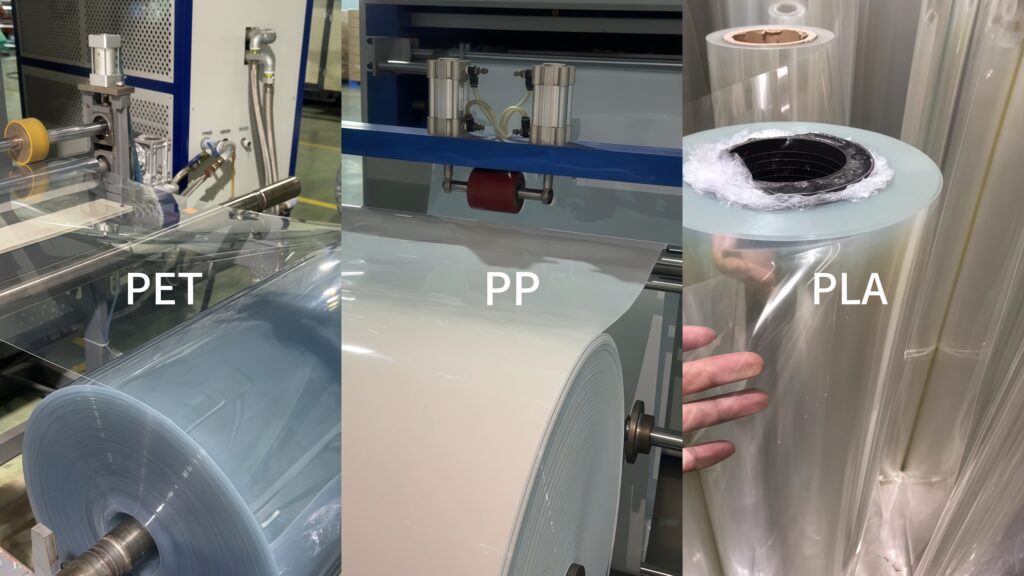
Migration testing does not determine whether one material is better than another. Instead, it verifies whether a packaging material is safe for its intended use.
For example, PP is widely used for microwaveable meal containers, takeaway boxes, and reusable food containers because it performs well at high temperatures. PET is commonly used for fresh produce, bakery packaging, and cold food applications thanks to its excellent clarity and strength.
Each material is tested under conditions that match its actual application. A microwave container and a refrigerated fruit box may use different materials, temperatures, and testing methods, even if both are designed for food contact.
This application-based approach helps ensure that food packaging remains safe throughout its intended lifecycle.
Why Customers Request Migration Test Reports
Many international buyers ask for migration test reports before approving a new supplier.
The report provides evidence that the packaging has been tested for food contact safety under defined conditions. It also helps customers verify compliance with local regulations and simplify their supplier approval process.
For many food brands and distributors, a migration report is considered just as important as product specifications or quality certifications.
Providing complete technical documentation can therefore improve customer confidence and shorten approval time.
Common Compliance Mistakes
Migration testing is only meaningful when it matches the product’s intended use.
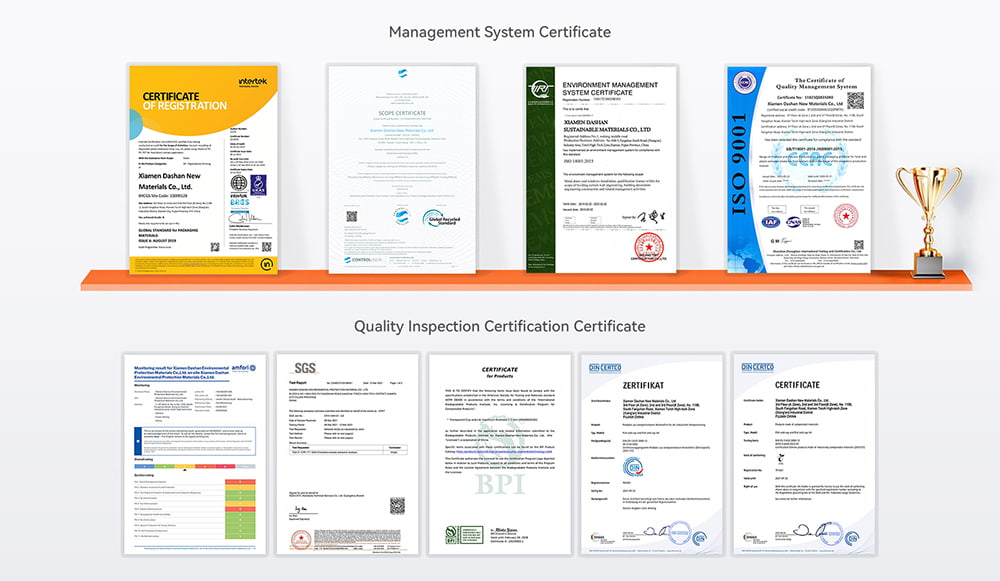
Some exporters rely on old test reports or assume one report can be used for every product. Others overlook additional components such as printing inks, color additives, or sealing films, which may also affect food contact compliance.
Keeping documentation up to date and ensuring testing reflects actual product applications helps reduce unnecessary delays and customer questions.
Building Compliance from the Beginning
Migration testing should not be viewed as the final step before export.
Good compliance starts with selecting suitable materials, maintaining consistent manufacturing processes, and preparing accurate technical documentation throughout production.
When these elements are managed together, migration testing becomes a confirmation of product quality rather than an obstacle during customer approval.
Supporting Global Food Packaging Compliance
Reliable food packaging requires more than quality materials—it also depends on engineering, manufacturing consistency, and technical support.
With years of experience in international food packaging, DASHAN supplies PP food containers, PET packaging, airline meal trays, reusable PP cups, and customized OEM and ODM solutions for global markets. By combining stable production with comprehensive technical documentation, DASHAN helps customers simplify supplier qualification and meet food contact compliance requirements more efficiently.
FAQ
1. What is migration testing in food packaging?
Migration testing evaluates whether substances from food packaging migrate into food within safe and acceptable limits under intended use conditions.
2. Why is migration testing important?
It helps verify food contact safety, supports regulatory compliance, and provides customers with confidence in the packaging’s performance.
3. What is the difference between overall migration and specific migration?
Overall migration measures the total amount of substances transferred, while specific migration evaluates individual substances that have established safety limits.
4. Do all food packaging materials require migration testing?
Migration testing requirements depend on the packaging material, intended food type, and target market’s regulations. Many food-contact products require testing before entering international markets.
5. How can DASHAN help with migration compliance?
DASHAN provides PP and PET food packaging along with technical documentation and export support to help customers meet food contact compliance requirements.
Conclusion
Migration testing is an essential part of modern food packaging compliance. It helps verify that packaging materials are safe for their intended applications while supporting regulatory requirements and customer confidence.
As global food packaging standards continue to evolve, manufacturers that combine appropriate material selection, quality manufacturing, and reliable documentation will be better positioned to serve international markets. Rather than viewing migration testing as a regulatory burden, successful exporters use it as a valuable tool to demonstrate product quality and strengthen long-term partnerships with customers.
References
- European Commission – Food Contact Materials
https://food.ec.europa.eu/plants-and-pesticides/food-contact-materials_en - European Food Safety Authority (EFSA) – Food Contact Materials
https://www.efsa.europa.eu - U.S. Food & Drug Administration (FDA) – Food Contact Substances
https://www.fda.gov/food/packaging-food-contact-substances-fcs - Food Packaging Forum
https://www.foodpackagingforum.org - Food Standards Australia New Zealand (FSANZ)
https://www.foodstandards.gov.au - World Packaging Organisation (WPO)
https://www.worldpackaging.org - Society of Plastics Engineers (SPE)
https://www.4spe.org - DASHAN Food Packaging
https://www.dashanpacking.com