

Introduction
Innovation has always been a defining characteristic of the food packaging industry. Every year, new materials are introduced with the promise of improving sustainability, reducing environmental impact, or replacing conventional plastics. Bio-based polymers, compostable packaging, molded fiber, and advanced composite materials continue to receive significant attention as governments, manufacturers, and consumers search for packaging solutions that meet increasingly demanding environmental expectations.
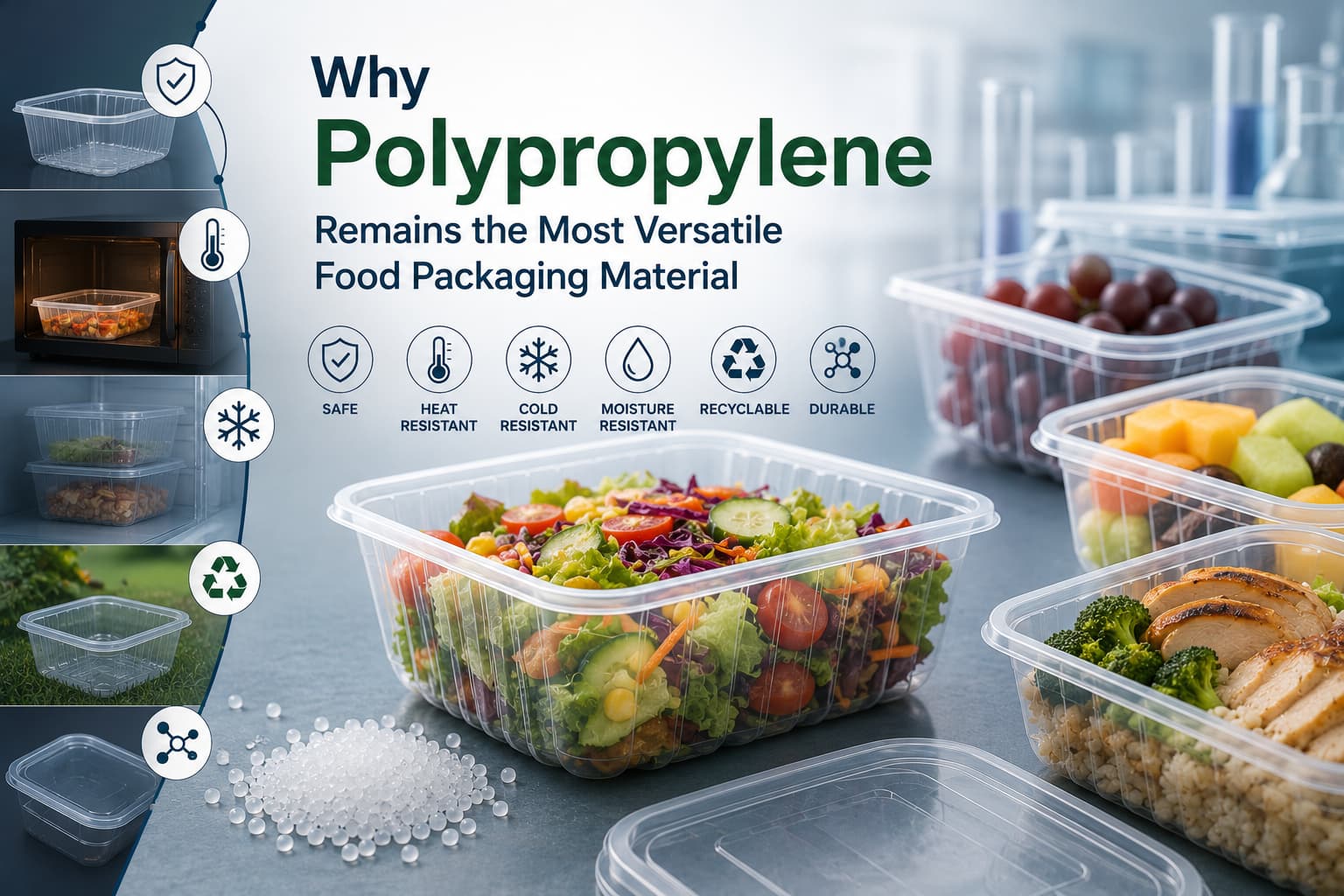
Against this backdrop of constant innovation, one material has quietly maintained its position as one of the world’s most widely used food packaging materials: polypropylene (PP).
For more than half a century, PP has been used to manufacture everything from takeaway meal containers and microwaveable trays to reusable foodservice products, airline catering trays, fresh food packaging, and beverage cups. Rather than being displaced by newer alternatives, it has continued to evolve alongside changing market demands.
This longevity is not the result of habit or industry conservatism. It reflects a fundamental engineering reality. The success of a packaging material is rarely determined by a single property. Instead, it depends on how effectively that material balances food safety, mechanical strength, thermal performance, manufacturing efficiency, logistics, regulatory compliance, and commercial viability.
That balance explains why polypropylene remains one of the most versatile materials available to the food packaging industry today.
Versatility Is About Balance, Not Perfection
When discussing packaging materials, many comparisons focus on identifying the “best” option. In practice, however, packaging engineers rarely approach material selection this way.
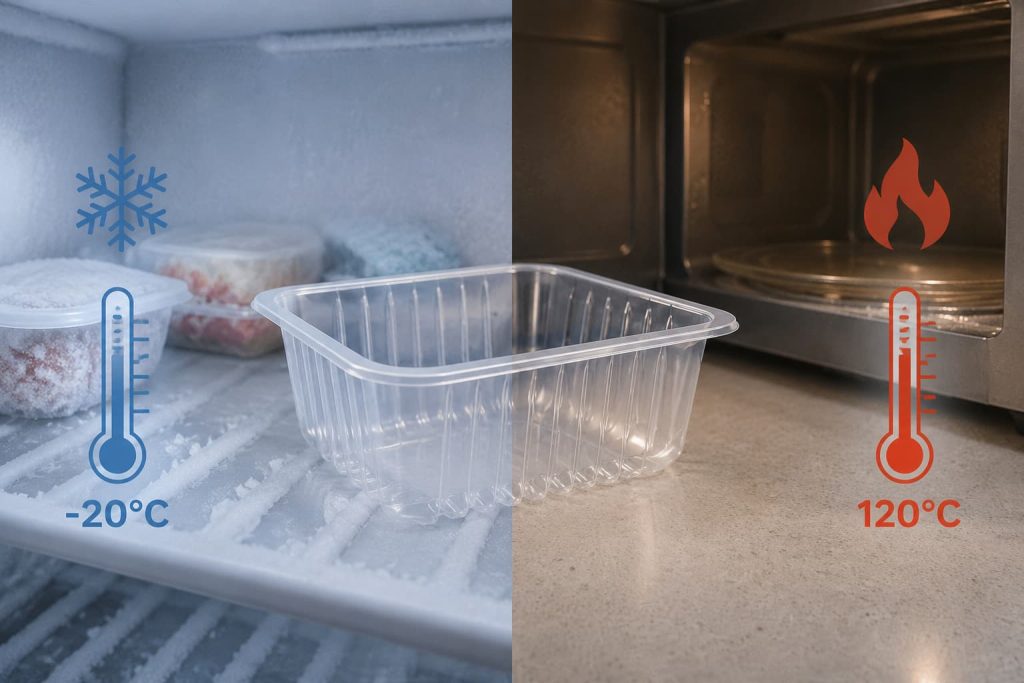
Every food product presents a unique combination of technical requirements. A container designed for a hot ready meal must tolerate microwave temperatures without losing its shape. Fresh fruit packaging needs exceptional transparency to showcase product quality. Frozen meals require materials capable of maintaining impact resistance at low temperatures, while airline catering trays must combine lightweight construction with sufficient rigidity to withstand stacking, transportation, and repeated handling.
No single material can excel equally in every one of these applications.
Instead, successful packaging materials are those capable of delivering the most balanced combination of properties across a wide range of conditions.
This is precisely where polypropylene has established its value. Rather than offering the highest performance in one specific characteristic, PP consistently performs well across multiple criteria that matter most to food packaging manufacturers and brand owners.
Its durability, thermal stability, lightweight nature, chemical resistance, processing flexibility, and recyclability allow it to adapt to diverse packaging requirements without requiring entirely different production systems or supply chains.
In many respects, the versatility of polypropylene comes not from being exceptional in one area, but from being remarkably reliable across many.
Polypropylene Has Continued to Adapt as Food Packaging Has Changed
One reason PP has remained relevant for decades is that the food industry itself has changed dramatically.
Consumers today expect convenience that was uncommon twenty years ago. Ready-to-eat meals, online food delivery, supermarket meal kits, convenience stores, and airline catering have all expanded significantly, creating new performance requirements for food packaging.
Packaging is no longer expected merely to contain food. It must survive transportation through increasingly complex logistics networks, preserve product quality over longer distribution periods, withstand microwave reheating, remain lightweight enough to reduce transportation costs, and present products attractively on retail shelves.
Rather than becoming obsolete as these expectations evolved, polypropylene proved capable of adapting to them.
Advances in resin technology, molding techniques, and product design have enabled manufacturers to produce thinner yet stronger containers, improve dimensional stability, and create packaging formats that better align with modern foodservice operations.
The material itself has therefore evolved alongside the industry, demonstrating that versatility is not simply a fixed characteristic but an ongoing ability to respond to changing market demands.
Why Engineers Continue to Trust Polypropylene
Although purchasing decisions often focus on price, packaging engineers tend to evaluate materials through a different lens. Their primary concern is whether a material can consistently perform throughout manufacturing, distribution, and consumer use.
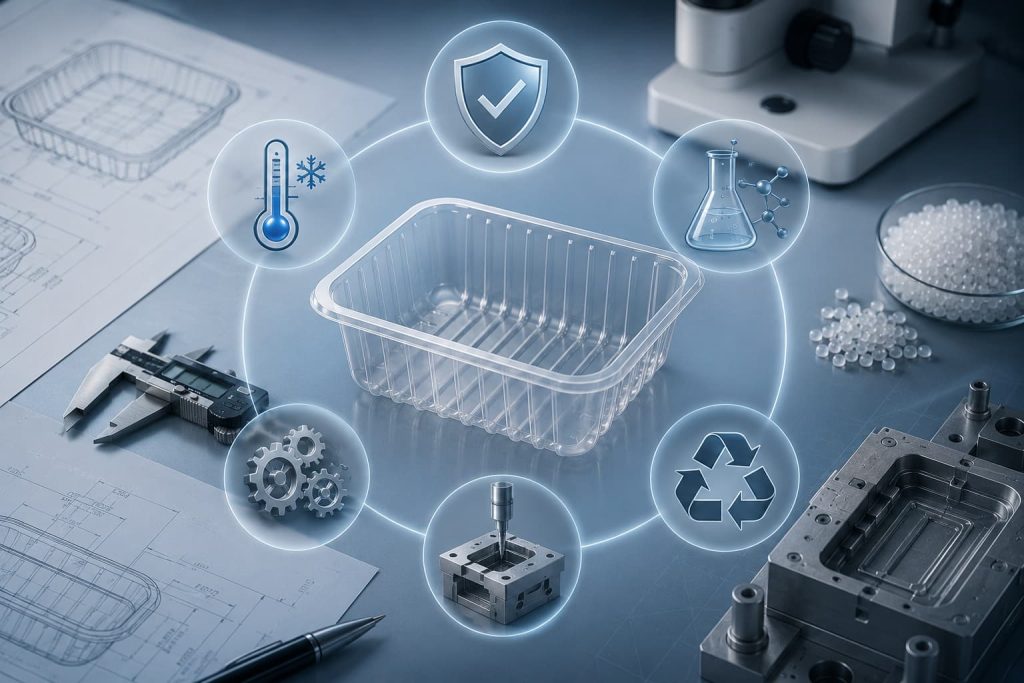
Polypropylene offers several engineering advantages that contribute to this confidence.
Its relatively wide processing window allows manufacturers to achieve stable production across high-speed injection molding and thermoforming operations. This improves manufacturing efficiency while reducing process variation, helping maintain consistent product quality over millions of production cycles.
Equally important is PP’s dimensional stability. Food containers must maintain precise shapes to ensure lids fit securely, stacking remains reliable, and automated packaging equipment operates efficiently. Even small dimensional variations can affect sealing performance or reduce production efficiency. Polypropylene’s predictable processing characteristics make it well suited for applications where consistency is essential.
Its resistance to oils, fats, and many food ingredients also contributes to long-term product performance. Containers designed for prepared meals or takeaway applications frequently encounter sauces, oils, and elevated temperatures simultaneously. PP maintains its structural integrity under these conditions without compromising food safety.
These engineering characteristics may not be immediately visible to consumers, yet they are among the primary reasons why manufacturers continue to rely on polypropylene for demanding food packaging applications.
Manufacturing Efficiency Has Made PP an Industry Standard
Material performance alone does not determine commercial success. Equally important is how efficiently a material can be converted into finished products.
Polypropylene has earned widespread adoption because it integrates exceptionally well with modern manufacturing systems.
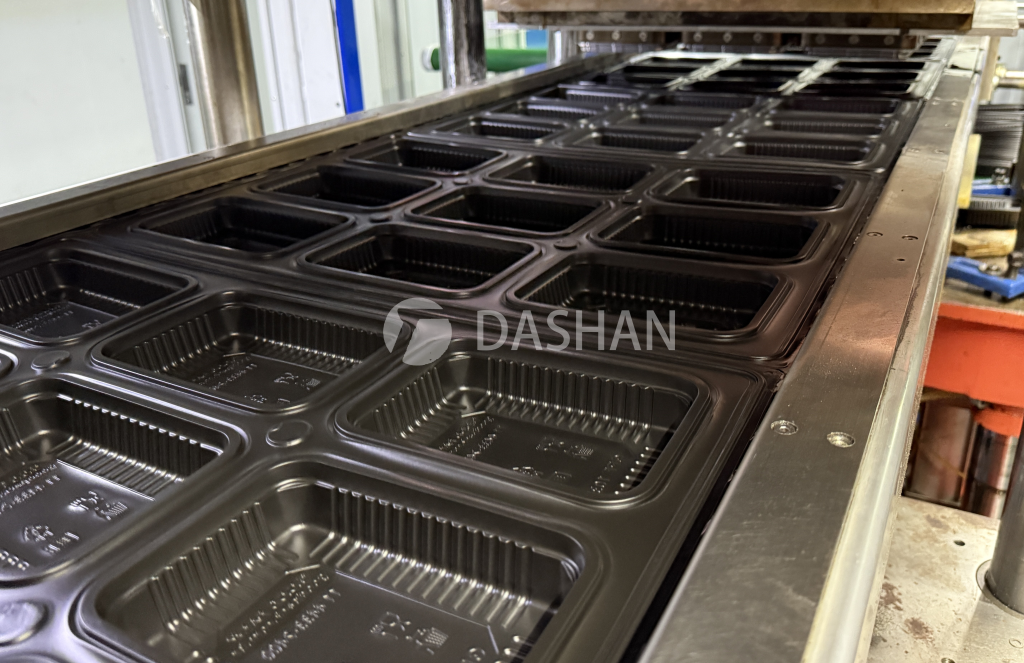
Whether processed through injection molding or thermoforming, PP supports high-volume production with relatively short cycle times and stable processing conditions. These characteristics allow manufacturers to produce large quantities of packaging while maintaining consistent dimensions and minimizing material waste.
For packaging companies serving global food brands, consistency is often as valuable as performance. Customers expect every container to perform identically regardless of when or where it is produced. PP’s manufacturing stability helps meet these expectations while supporting automation, quality control, and efficient mold operation.
Its compatibility with lightweight design strategies also contributes to manufacturing efficiency. Engineers can reduce wall thickness through structural optimization without sacrificing functional performance, allowing manufacturers to lower material consumption while maintaining product reliability.
As production volumes continue to grow worldwide, these efficiencies become increasingly important for controlling costs and reducing environmental impact simultaneously.
Sustainability Has Changed the Way PP Is Designed
Public discussion about plastics often creates the impression that traditional materials are simply being replaced. In reality, the evolution of food packaging is far more nuanced.
The industry’s focus has shifted from eliminating specific materials to improving how those materials are designed, manufactured, used, and recovered.
For polypropylene, this shift has encouraged significant innovation.
Packaging designers increasingly apply Design for Recycling principles by simplifying product structures, reducing unnecessary material combinations, and improving compatibility with existing recycling systems. Lightweight engineering has further reduced material usage while maintaining structural performance, lowering both resource consumption and transportation emissions.
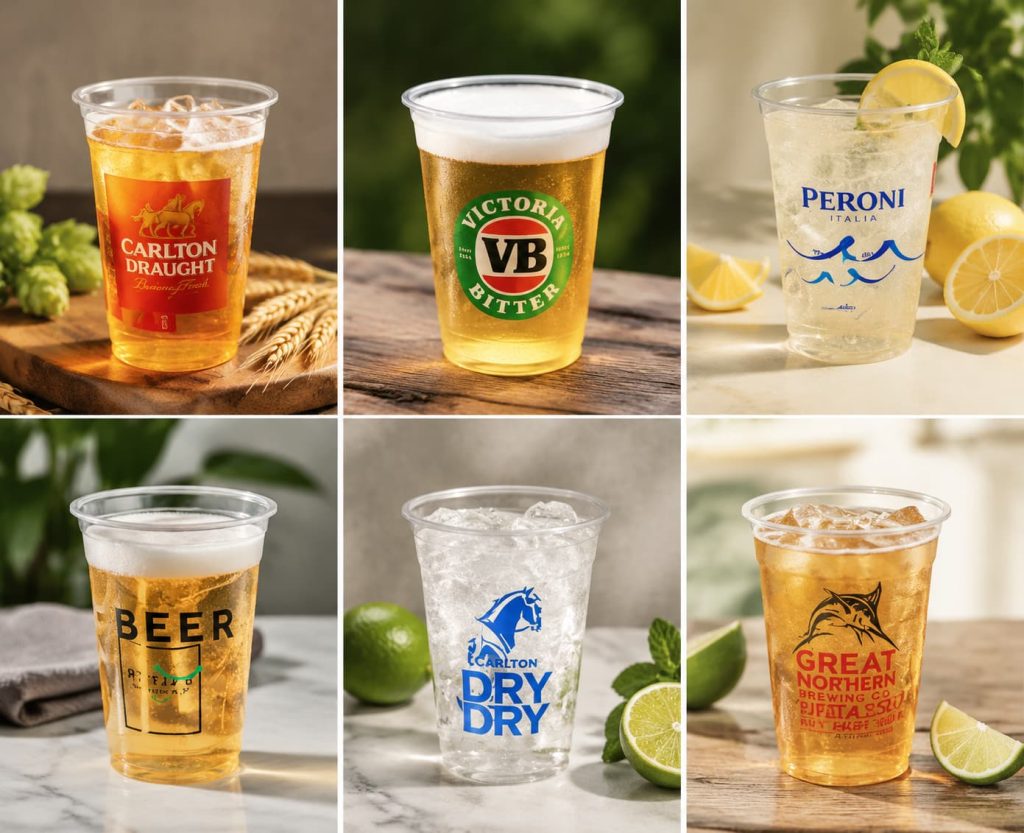
In parallel, many foodservice operators have expanded the use of reusable PP containers and cups, taking advantage of the material’s durability across multiple use cycles. These developments demonstrate that sustainability is influencing not only which materials are selected but also how those materials are engineered throughout their lifecycle.
Rather than diminishing the importance of polypropylene, sustainability initiatives have encouraged manufacturers to use it more intelligently and more efficiently.
Why Material Alone Does Not Determine Packaging Performance
An important misconception within the packaging industry is that selecting the right material automatically guarantees a high-quality product.
In reality, two food containers manufactured from the same grade of polypropylene can perform very differently.
The difference lies in engineering.
Structural design influences compression strength, stacking stability, and resistance to deformation. Mold precision affects dimensional consistency and lid fit. Manufacturing parameters determine wall thickness distribution, surface quality, and production repeatability. Even transportation performance depends on engineering decisions made long before production begins.
This is why leading packaging manufacturers invest heavily in product development rather than relying solely on material selection.
For customers, choosing a packaging supplier is therefore about far more than selecting PP as the material. It involves selecting a partner capable of transforming that material into packaging solutions optimized for real-world foodservice environments.
With years of experience in OEM and ODM food packaging, DASHAN combines polypropylene material expertise with structural engineering, precision manufacturing, and application-driven product development. From microwaveable meal containers and airline catering trays to reusable PP cups and customized food packaging solutions, every product is designed to balance functionality, manufacturing efficiency, and long-term market requirements.
Conclusion
Polypropylene has remained one of the world’s most versatile food packaging materials not because it has remained unchanged, but because it has continually adapted to the evolving needs of the food industry.
Its enduring value lies in its ability to balance engineering performance, manufacturing efficiency, food safety, and commercial practicality across an exceptionally broad range of applications. As packaging regulations become more sophisticated and sustainability expectations continue to grow, these strengths remain highly relevant.
The future of food packaging will undoubtedly introduce new materials and technologies. Yet versatility will continue to depend on the same principle that has sustained polypropylene for decades: the ability to solve multiple challenges simultaneously rather than excelling in only one.
For packaging manufacturers, food brands, and global buyers, understanding polypropylene means recognizing that the success of modern food packaging is not defined by novelty alone, but by the thoughtful integration of material science, engineering, and practical application.
FAQ
1. Why is polypropylene (PP) considered one of the most versatile food packaging materials?
Polypropylene is highly versatile because it offers a balanced combination of heat resistance, mechanical strength, lightweight performance, chemical resistance, and cost efficiency. These properties allow it to be used in a wide range of food packaging applications, from microwaveable meal containers to reusable foodservice products.
2. Why is PP widely used for hot food and microwaveable packaging?
PP has excellent thermal stability and can withstand high temperatures without significant deformation. This makes it suitable for microwave-ready meals, takeaway containers, airline catering trays, and other food packaging applications that require reliable heat resistance.
3. Has the rise of sustainable packaging reduced the use of polypropylene?
Not necessarily. Instead of replacing PP entirely, the industry is improving how it is used. Modern packaging focuses on lightweight structures, mono-material designs, and Design for Recycling principles, allowing polypropylene packaging to better support circular economy initiatives while maintaining high performance.
4. What makes PP an efficient material for large-scale food packaging production?
PP is compatible with both injection molding and thermoforming, offering stable processing, short production cycles, and consistent product quality. These manufacturing advantages help reduce production costs while supporting high-volume packaging operations.
5. Why is engineering expertise just as important as the material itself?
The performance of a food container depends not only on the material but also on its structural design, mold precision, manufacturing process, and application-specific engineering. Experienced manufacturers like DASHAN optimize these factors to produce PP food packaging that delivers reliable performance, efficient production, and long-term value for global customers.
References
- Food Packaging Forum. Food Contact Materials and Packaging Science
https://www.foodpackagingforum.org - Plastics Industry Association
https://www.plasticsindustry.org - Society of Plastics Engineers (SPE)
https://www.4spe.org - World Packaging Organisation (WPO)
https://www.worldpackaging.org - PMMI – The Association for Packaging and Processing Technologies
https://www.pmmi.org - Smithers. Packaging Market Reports and Industry Insights
https://www.smithers.com - European Plastics Converters (EuPC)
https://www.plasticsconverters.eu - DASHAN Food Packing
https://www.dashanpacking.com
Copyright Statement
© 2026 Dashan Packing. All rights reserved.
This article is an original publication by the Dashan Packing team based on industry research, market analysis, and packaging expertise. Unauthorized reproduction, distribution, or copying of this content is prohibited without prior written permission.
Dashan Packing is committed to delivering reliable, original, and professional information for the global food packaging industry.