

Quick Summary
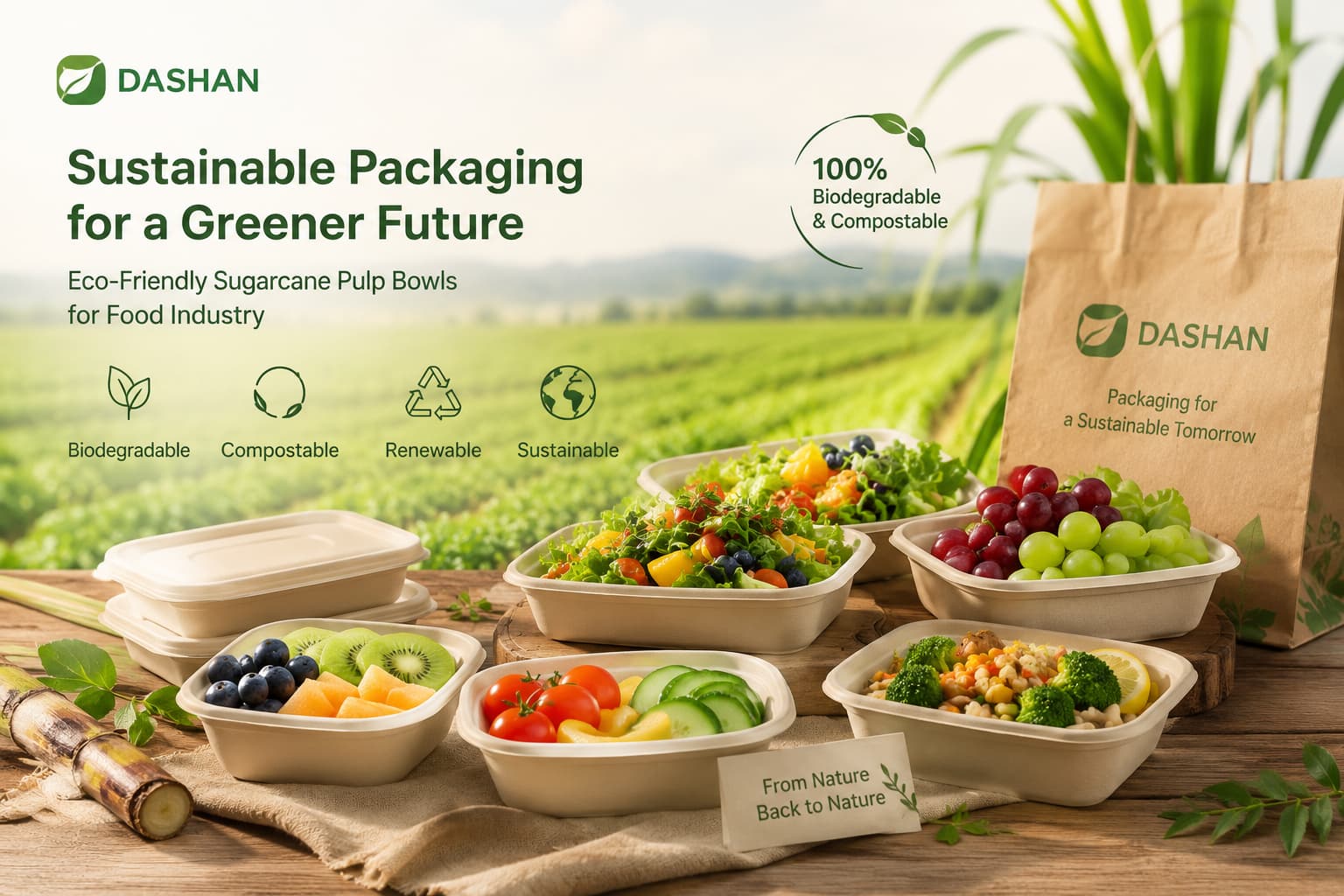
Fresh produce and ready meals may serve different markets, but they share common packaging challenges, including product protection, transportation performance, food safety, convenience, and sustainability. As businesses seek alternatives to conventional packaging materials, bagasse packaging made from renewable sugarcane fiber is gaining popularity. From fresh produce trays and clamshells to compartment meal containers, bagasse solutions offer a practical balance of functionality and environmental responsibility, helping food brands meet evolving consumer and regulatory expectations.
Introduction
Fresh produce and ready meals are among the fastest-growing categories in modern food retail. Consumers are purchasing more salads, fruit packs, meal-prep products, takeaway lunches, and ready-to-eat meals than ever before. At the same time, retailers and foodservice operators are facing increasing pressure to reduce packaging waste while maintaining food quality, convenience, and supply-chain performance.
For many years, packaging discussions in these categories focused primarily on plastic formats such as PET produce containers and PP meal trays. Those materials still play important roles in many applications. However, growing interest in renewable packaging materials has pushed many food businesses to evaluate alternatives that better align with sustainability goals.
Bagasse packaging—made from sugarcane fiber left after juice extraction—has emerged as one of the most practical options for this transition. It combines renewable raw material sourcing with the structural performance needed for many fresh-food and prepared-meal applications.
Rather than treating sustainability as an afterthought, an increasing number of brands are designing packaging programs around materials that can meet both operational and environmental requirements.
Why Fresh Produce and Ready Meals Share Similar Packaging Challenges
Fresh berries, salad mixes, and cut fruit may seem very different from bento meals, takeaway lunches, or corporate catering trays. Yet both categories face several common packaging challenges.
Product Protection
Food must be protected from compression, handling damage, and transportation stress.
Transportation Performance
Packaging must survive warehousing, retail distribution, and increasingly, last-mile delivery.
Food Safety
Containers must be suitable for direct food contact and maintain product integrity throughout the supply chain.
Consumer Convenience
Modern consumers expect packaging that is easy to carry, open, store, and dispose of.
Sustainability Expectations
Retailers, foodservice operators, and consumers are placing greater emphasis on renewable materials, waste reduction, and responsible sourcing.
These shared pressures explain why packaging decisions for both fresh produce and ready meals are increasingly being evaluated through the same lens: Can the package protect the food while supporting sustainability goals?
Fresh Produce Packaging Needs More Than Just Visibility
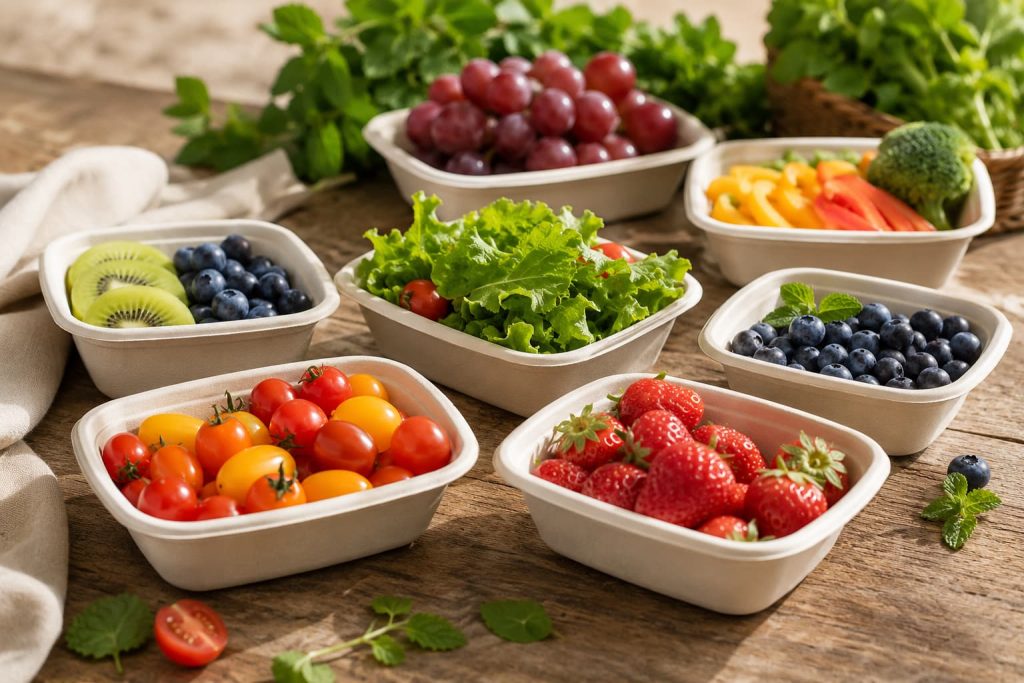
Fresh produce packaging is often associated with transparent containers that showcase product appearance. Visibility remains important, but it is not the only requirement.
For many fresh-food programs, the more critical questions are:
- Will the product be crushed during transportation?
- Can the package maintain its shape under stacking pressure?
- Is it practical for retail handling?
- Does it help reduce unnecessary packaging waste?
This is particularly relevant for:
- Cut fruit packs
- Fresh salads
- Vegetable mixes
- Snack-size produce portions
- Organic and natural food programs
In these applications, rigid fiber-based trays are gaining attention as alternatives to fully plastic formats.
Why Bagasse Trays Are Gaining Popularity in Fresh Produce Programs
Lightweight Yet Protective
Bagasse trays provide a useful combination of low weight and structural rigidity. Properly designed trays can help support produce during transportation and retail handling without adding excessive packaging mass.
Made from Renewable Resources
Bagasse is derived from sugarcane fiber that remains after juice extraction. Using this agricultural byproduct as a packaging feedstock is attractive to brands seeking renewable material solutions.
Supports Natural Brand Positioning
While bagasse is not transparent like PET, its natural fiber appearance can reinforce messaging around:
- Organic foods
- Fresh produce
- Natural ingredients
- Sustainability initiatives
For many retailers, the visual character of molded fiber packaging has become part of the product presentation strategy rather than a limitation.
Ready Meals Are Creating New Demand for Sustainable Packaging
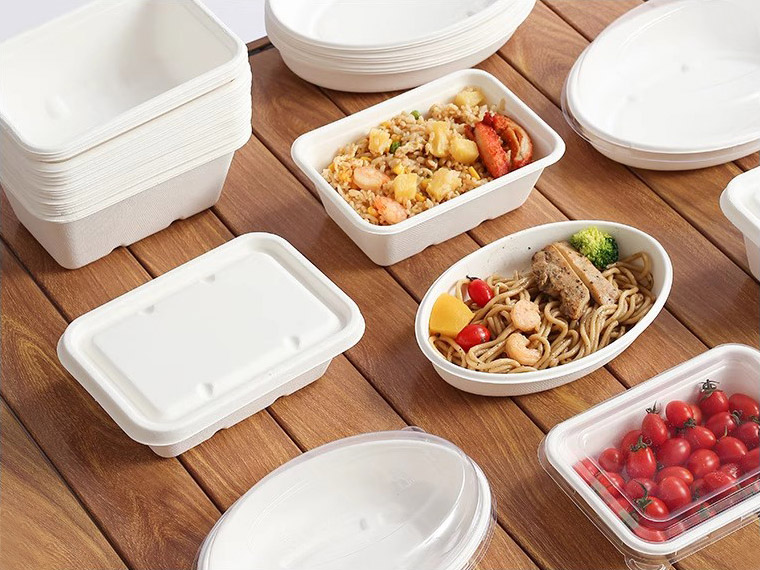
The growth of urban food consumption is reshaping prepared-meal packaging.
Consumers increasingly purchase:
- Meal-prep products
- Bento lunches
- Takeaway meals
- Corporate catering meals
- Convenience-store food programs
These products create a different set of packaging requirements. Containers must often accommodate hot foods, multiple components, sauces, and reheating.
As foodservice operators face pressure to reduce single-use plastic waste, bagasse meal containers have become a practical option for many takeaway and prepared-food applications.
Why Bagasse Meal Containers Fit Modern Ready-Meal Programs
Heat Resistance for Hot Foods
Bagasse containers are commonly used for hot food applications such as rice meals, noodle dishes, curries, and mixed entrée programs. Their fiber structure provides better heat tolerance than many lightweight paper alternatives.
Microwave Compatibility
Many prepared meals are reheated by consumers after purchase or delivery. Microwave-compatible bagasse containers help simplify this workflow while supporting convenience-oriented food programs.
Compartment Designs Improve Meal Organization
One of the strongest advantages of molded fiber meal packaging is the ability to create compartment layouts that separate:
- Rice
- Protein
- Vegetables
- Side dishes
- Sauces
Compartment separation helps preserve texture, reduce flavor transfer, and improve presentation.
Strong Enough for Delivery Operations
Food delivery places significant stress on packaging. Containers may be stacked, tilted, and transported over long distances. Well-designed bagasse meal boxes can provide the rigidity needed for many delivery-focused foodservice programs.
How DASHAN Supports Fresh Produce and Ready-Meal Brands
As food businesses move toward more sustainable packaging strategies, they increasingly need suppliers that can support both retail produce programs and prepared-meal operations.
DASHAN develops bagasse packaging solutions across multiple food categories.
Bagasse Trays for Fresh Produce
Applications include:
- Fruit trays
- Produce trays
- Fresh food display trays
- Organic produce programs
These formats help retailers present fresh foods in renewable fiber packaging while maintaining practical handling performance.
Bagasse Clamshell Containers
Suitable for:
- Salads
- Bakery products
- Fruits
- Grab-and-go foods
Clamshell formats provide convenient opening and closing while supporting retail merchandising and takeaway use.
Bagasse Meal Containers
Designed for:
- Takeaway meals
- Bento programs
- Meal-prep services
- Corporate catering
- Convenience-food applications
Both standard and multi-compartment configurations are available depending on meal structure requirements.
Custom Packaging Solutions
Food brands often require packaging tailored to specific products and operations. DASHAN can support customization such as:
- Custom sizes
- Compartment configurations
- Logo embossing
- OEM manufacturing
- Bulk supply programs
For B2B buyers, this flexibility is often as important as the base material itself.
Sustainability Is Becoming a Business Requirement, Not Just a Marketing Claim
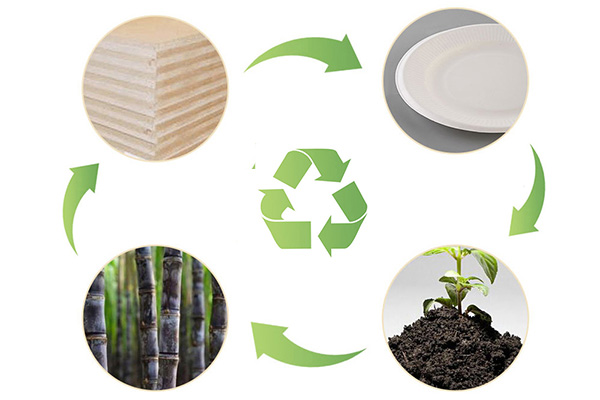
Many food operators are no longer evaluating sustainable packaging purely as a branding exercise.
Procurement teams increasingly face practical requirements related to:
- Single-use plastic reduction initiatives
- Retailer sustainability policies
- Corporate ESG targets
- Waste reduction programs
- Consumer demand for renewable materials
In this environment, bagasse packaging is often considered alongside recyclability, operational performance, food protection, and total system cost—not just material origin.
The most successful packaging programs are those that balance environmental goals with real-world foodservice and retail requirements.
FAQ
1. Why is bagasse packaging suitable for both fresh produce and ready meals?
Bagasse packaging provides structural strength, food-contact safety, and versatility across multiple food categories. It can be used for fresh fruits, salads, vegetables, takeaway meals, and meal-prep programs while supporting sustainability initiatives.
2. What is bagasse packaging made from?
Bagasse packaging is made from sugarcane fiber, a byproduct left after sugarcane stalks are processed for juice extraction. The fiber is molded into trays, bowls, clamshells, and food containers.
3. Can bagasse trays be used for fresh produce packaging?
Yes. Bagasse trays are commonly used for fresh fruits, vegetables, salad packs, and organic produce. They provide protection during transportation and offer a natural appearance that aligns with eco-conscious branding.
4. Are bagasse meal containers microwave-safe?
Most bagasse meal containers are suitable for microwave reheating under normal foodservice conditions, making them ideal for takeaway meals, meal-prep programs, and ready-to-eat foods.
5. What are the advantages of compartment bagasse meal containers?
Compartment containers help separate rice, proteins, vegetables, sauces, and side dishes. This improves food presentation, preserves texture, reduces flavor transfer, and enhances the consumer dining experience.
6. Can bagasse packaging handle hot foods?
Yes. Bagasse containers are widely used for hot meals, including rice dishes, noodles, curries, and takeaway lunches because they offer good heat resistance and structural stability.
Conclusion
Fresh produce and ready meals have different packaging needs, but both categories increasingly require solutions that combine food protection, convenience, transportation performance, and sustainability.
For fresh produce, bagasse trays and clamshells offer renewable packaging options that support retail presentation and product handling. For ready meals, bagasse meal containers provide heat resistance, microwave compatibility, compartment organization, and delivery-ready performance for a wide range of takeaway and prepared-food programs.
As regulations, retailer policies, and consumer expectations continue to evolve, bagasse packaging is moving from a niche alternative to a mainstream consideration in modern food packaging strategies. For brands seeking to reduce reliance on conventional plastic formats while maintaining practical performance, molded sugarcane-fiber packaging has become an increasingly credible solution.
References
Sustainable Packaging & Renewable Materials
- United Nations Environment Programme (UNEP) – Packaging and Plastic Pollution Resources
- Food and Agriculture Organization (FAO) – Food Loss and Sustainable Food Systems
Fiber-Based Food Packaging
- European Bioplastics – Sustainable Packaging Materials Overview
- Sustainable Packaging Coalition (SPC)
Food Contact & Food Packaging Regulations
- U.S. FDA – Food Packaging and Food Contact Substances
- European Food Safety Authority (EFSA) – Food Contact Materials
Packaging and Food Waste Reduction
- World Resources Institute (WRI) – Food Loss and Waste Resources
- Ellen MacArthur Foundation – Packaging and Circular Economy
Copyright Statement
© 2026 Dashan Packing. All rights reserved.
This article is an original publication by the Dashan Packing team based on industry research, market analysis, and packaging expertise. Unauthorized reproduction, distribution, or copying of this content is prohibited without prior written permission.
Dashan Packing is committed to delivering reliable, original, and professional information for the global food packaging industry.