

Quick Summary
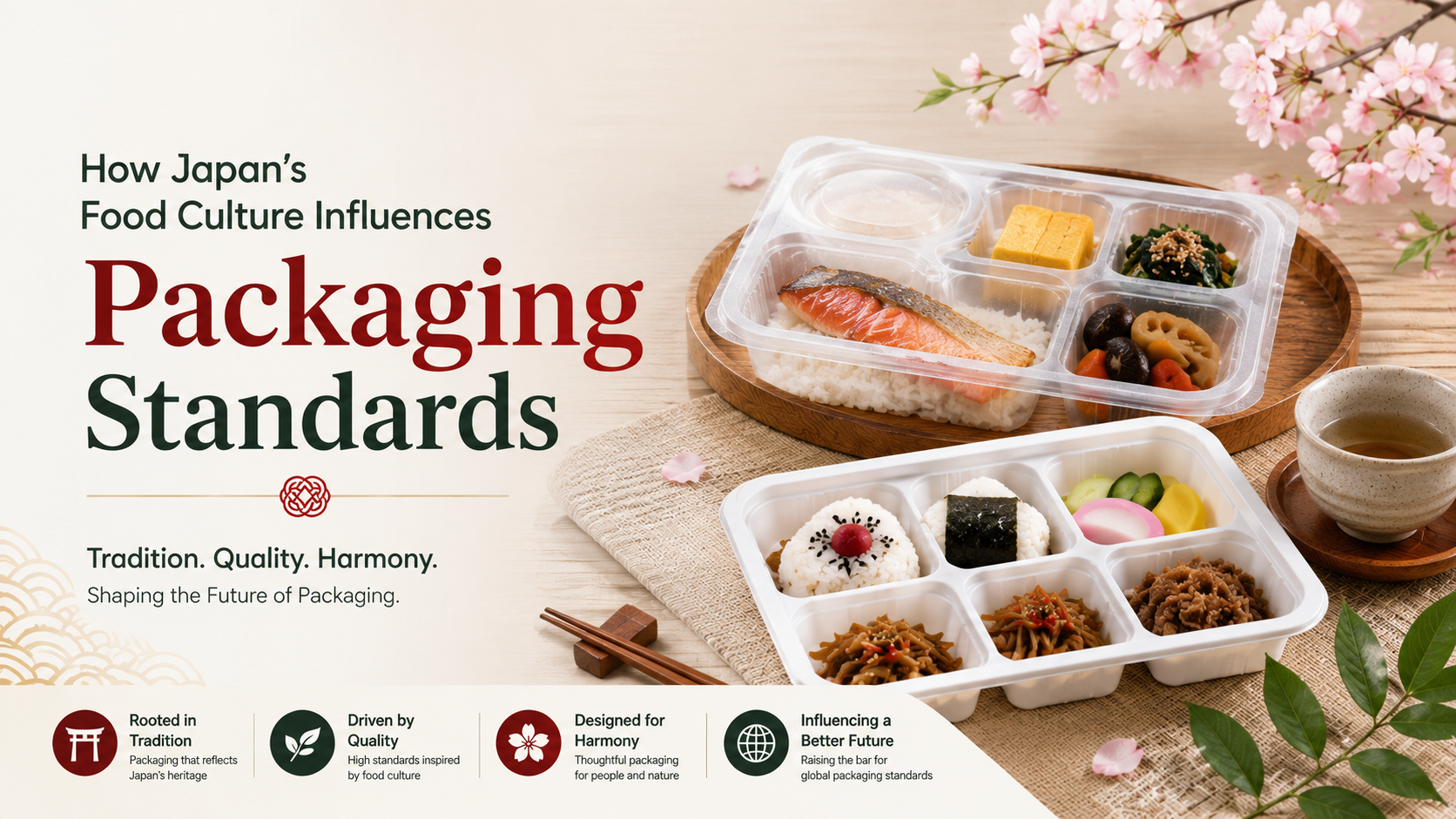
Japan’s food culture has significantly influenced global packaging standards through its emphasis on freshness, presentation, hygiene, convenience, and precision. From bento packaging to convenience-store meal systems, Japanese packaging design continues driving innovation in functional, premium, and sustainable food packaging solutions worldwide.
Japan has long been recognized for having some of the world’s most refined food standards. From sushi counters and department store delicatessens to convenience-store bento meals and seasonal desserts, food presentation in Japan is treated as an essential part of the consumer experience. In many cases, customers judge food quality before even tasting the product, and packaging plays a critical role in shaping that perception.
Unlike markets where packaging is viewed primarily as a protective layer, Japan treats packaging as an extension of hospitality, precision, cleanliness, and cultural aesthetics. This philosophy has influenced not only domestic foodservice operations, but also global packaging trends across Asia, Europe, and North America.
Today, many international food brands and packaging manufacturers study Japanese packaging systems because Japan has successfully combined:
- visual presentation,
- operational efficiency,
- food safety,
- convenience,
- and increasingly, sustainability.
As consumer expectations continue evolving worldwide, Japan’s food culture is becoming an important reference point for the future development of food packaging standards.
Food Presentation Is Deeply Connected to Packaging Design in Japan
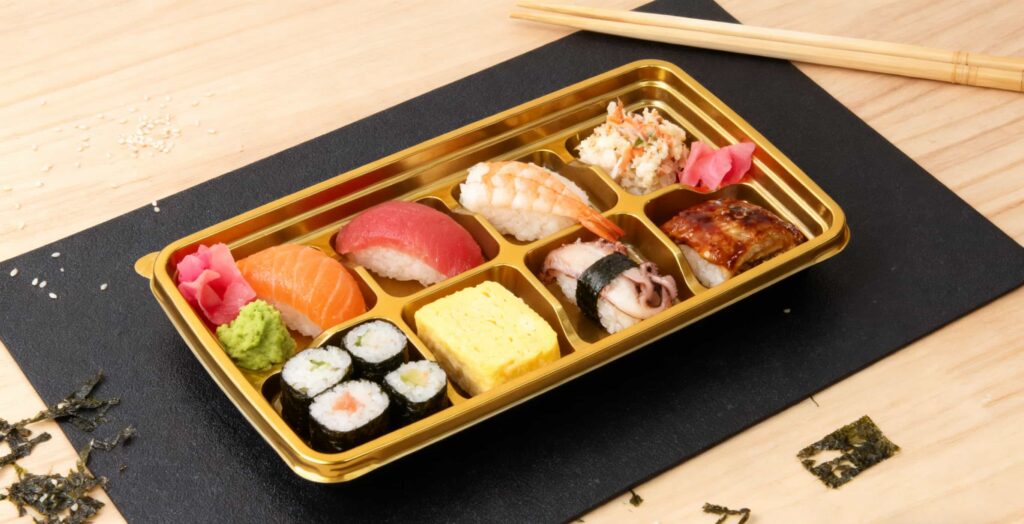
One of the most distinctive aspects of Japanese food culture is the importance placed on visual balance and presentation. Even simple meals are carefully arranged to create harmony between color, texture, shape, and portion placement.
This philosophy directly influences packaging design.
For example, bento packaging in Japan is rarely designed as a single open container. Instead, most bento trays use compartment structures that separate rice, vegetables, sauces, and proteins into visually organized sections. The goal is not only practicality, but also preserving the aesthetic integrity of the meal.
A convenience-store seafood bento in Tokyo may include:
- individually separated pickled vegetables,
- precisely positioned salmon,
- sauce isolation compartments,
- and transparent lids that allow consumers to immediately evaluate freshness and presentation.
This attention to visual detail has significantly influenced food packaging development throughout Asia.
| Packaging Feature | Cultural Influence | Common Applications |
|---|---|---|
| Transparent lids | Freshness visibility | Bento and sushi |
| Compartment trays | Organized presentation | Ready meals |
| Minimalist design | Premium appearance | Retail food packaging |
| Precision sealing | Hygiene expectations | Convenience foods |
Transparent PET lids are especially common in Japan because consumers strongly associate visibility with freshness and quality assurance. In supermarkets and department stores, customers often inspect the exact color and texture of sushi, sashimi, fruit, and desserts before making purchasing decisions.
This differs from some Western packaging systems that rely more heavily on printed branding than direct product visibility.
Japanese packaging also tends to avoid excessive graphic clutter. Minimalist designs, soft colors, and clean layouts are widely preferred because they communicate precision and premium quality without overwhelming the customer.
Convenience Store Culture Has Become a Packaging Innovation Engine
Japan’s convenience-store industry has played a major role in shaping modern food packaging standards.
Chains such as 7-Eleven Japan, FamilyMart, and Lawson are not simply retail stores. They function as highly advanced foodservice systems capable of delivering fresh meals with exceptional operational consistency.
Millions of consumers purchase ready-to-eat meals from convenience stores every day, creating intense pressure for packaging that performs efficiently under strict logistical conditions.
For example, convenience-store packaging in Japan must often satisfy multiple requirements simultaneously:
- microwave compatibility,
- leak prevention,
- stackability,
- freshness preservation,
- easy transportation,
- and attractive shelf presentation.
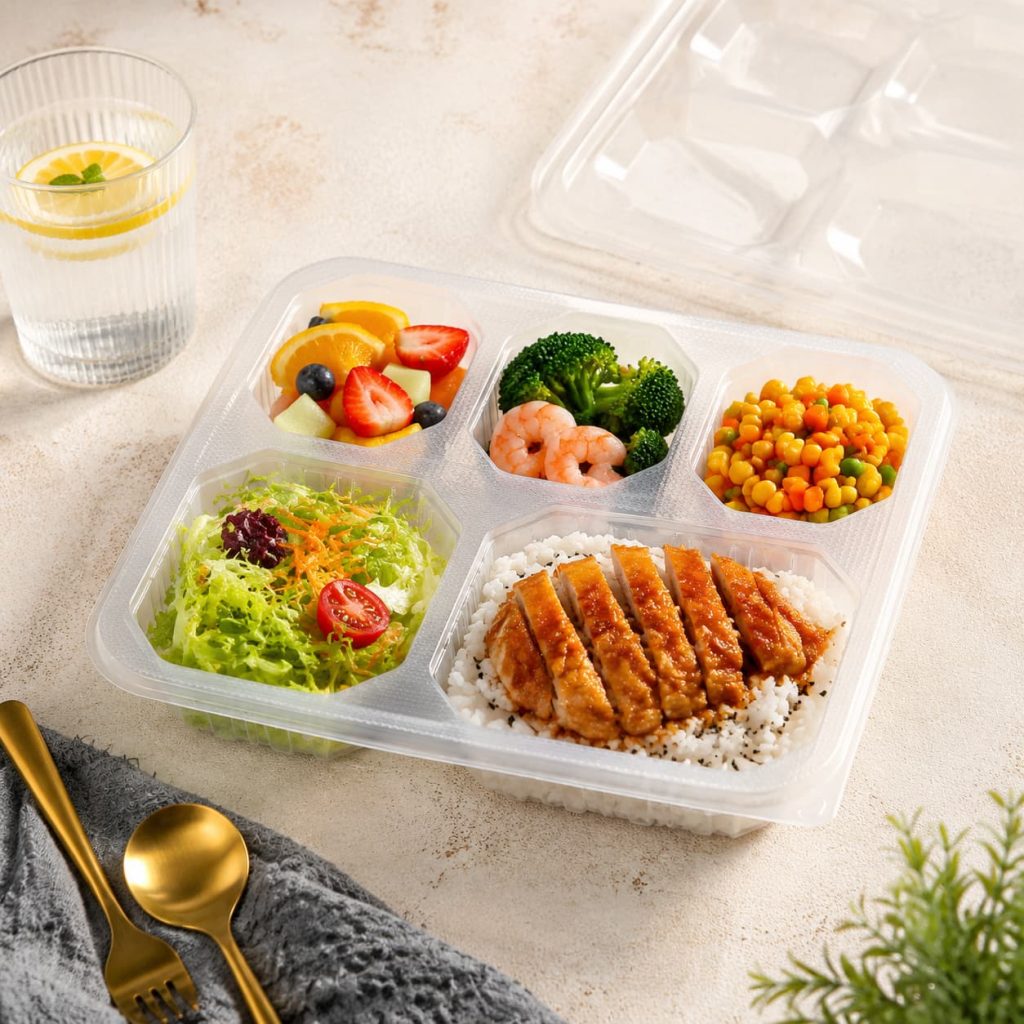
A typical convenience-store pasta container may include a separated sauce compartment that automatically mixes with noodles when heated. Some rice-ball packaging systems are engineered with multi-layer film structures that allow seaweed to remain crisp until the consumer opens the package.
These are not small design decisions. They reflect a packaging culture focused on maximizing eating experience through engineering precision.
Japan’s convenience-store industry has also heavily influenced anti-fog lid technology. Cold noodle dishes, salads, and desserts require clear visibility while minimizing condensation buildup. As a result, anti-fog PET lids became increasingly important for maintaining shelf appeal.
Many international packaging manufacturers now adopt similar anti-fog and compartment-based packaging systems originally popularized in Japan.
Freshness and Hygiene Standards Are Exceptionally High
Japanese consumers are highly sensitive to freshness, hygiene, and food integrity. Packaging therefore functions as both a protective system and a trust mechanism.
In Japan, even small packaging defects can negatively affect consumer perception. A slightly misaligned label, sauce leakage, or condensation inside a lid may reduce perceived food quality.
This expectation has encouraged extremely high standards in:
- sealing precision,
- leak resistance,
- temperature stability,
- and contamination prevention.
For example, sushi packaging in Japan often includes absorbent pads beneath fish slices to manage moisture while preserving presentation quality. Dessert packaging commonly uses internal support structures to prevent movement during transportation.

Tamper evidence is also increasingly important, especially in takeaway and delivery applications.
During the expansion of food delivery services in urban areas such as Tokyo and Osaka, restaurants began adopting more secure sealing systems to reassure customers about food safety during transportation. This accelerated demand for tamper-evident lids and tighter container-locking mechanisms.
The emphasis on hygiene also explains why individually packaged items remain common in Japan, even while sustainability concerns continue growing.
Manufacturers such as DASHAN are increasingly developing food packaging solutions that combine strong sealing performance, premium presentation, and operational durability to meet evolving international foodservice expectations inspired by Japanese market standards.
Packaging Functionality Is Considered Part of Customer Service
In Japan, packaging functionality is closely connected to the concept of customer convenience and hospitality.
Consumers expect packaging to feel intuitive and efficient. Small usability improvements can strongly influence purchasing decisions.
For example:
- easy-open corners reduce frustration,
- resealable lids improve portability,
- compact stacking improves storage efficiency,
- and microwave-safe structures support convenience lifestyles.
These details are particularly important because Japanese urban living environments often involve limited space and fast-paced daily routines.
A well-designed convenience-store lunch package is expected to:
- fit neatly inside small bags,
- open cleanly without spilling,
- heat evenly in microwaves,
- and remain visually attractive after transportation.
Even beverage packaging reflects this philosophy. Many bottled drinks sold in Japan feature ergonomic shapes optimized for crowded commuter environments where consumers may hold bags, phones, and beverages simultaneously.
This focus on functional precision has helped Japan become one of the global leaders in user-centered packaging design.
Sustainability Is Reshaping Traditional Packaging Standards
Japan has historically been criticized for generating high volumes of packaging waste due to extensive wrapping culture and individual portion packaging. However, sustainability concerns are now significantly reshaping industry practices.
Retailers, manufacturers, and foodservice operators are increasingly attempting to balance:
- hygiene,
- convenience,
- visual presentation,
- and environmental responsibility.
This balance is particularly challenging because Japanese consumers still maintain extremely high expectations regarding cleanliness and product protection.
As a result, the market is increasingly focusing on:
- lightweight packaging,
- recyclable PET and rPET materials,
- mono-material structures,
- and packaging reduction strategies.
| Sustainability Trend | Packaging Response |
|---|---|
| Plastic reduction | Lightweight packaging |
| Recycling initiatives | Recyclable PET/rPET |
| Convenience demand | Functional mono-material designs |
| Premium presentation | Sustainable premium packaging |
For example, some supermarket operators in Japan have reduced tray thickness while maintaining structural strength through improved material engineering. Beverage companies are also introducing labels designed for easier separation during recycling.
Convenience stores have started reducing unnecessary plastic components such as oversized lids, secondary wrappers, and excess cutlery distribution.
However, Japan’s approach to sustainability differs from some Western markets because functional performance and cleanliness remain non-negotiable priorities.
This means packaging innovation in Japan often focuses on optimization rather than simply removing packaging altogether.
Japanese Packaging Standards Are Influencing Global Markets
Japanese packaging philosophies are increasingly influencing global foodservice and retail markets, especially in premium takeaway and convenience-food sectors.
International consumers are becoming more sensitive to:
- food presentation,
- portability,
- packaging cleanliness,
- and visual quality.
As a result, many packaging trends originally associated with Japan are now spreading internationally, including:
- compartment meal trays,
- premium transparent lids,
- minimalist branding,
- easy-open packaging systems,
- and anti-fog technology.
Asian supermarkets and convenience-store chains outside Japan have already adopted many Japanese-inspired packaging systems for sushi, prepared meals, desserts, and takeaway products.
Global hospitality brands are also increasingly recognizing that packaging directly influences customer perception and social media presentation.
For packaging manufacturers, this creates strong opportunities for suppliers capable of combining:
- precision engineering,
- premium aesthetics,
- sustainable materials,
- and scalable production capacity.
Companies such as DASHAN are expanding PET, PP, and sustainable food packaging product lines designed to support high-standard foodservice applications where both presentation and operational functionality are critical purchasing factors.
The Future of Japanese Food Packaging
Japan’s packaging industry is expected to continue evolving through advanced material development, automation, and sustainability innovation.
Several trends are likely to shape the future market:
Smart Packaging Technology
Packaging may increasingly include freshness indicators, traceability systems, and digital labeling integration.
More Recyclable Mono-Material Designs
Simplified structures will help improve recycling efficiency while maintaining product performance.
Lightweight Premium Packaging
Manufacturers will continue reducing material usage without sacrificing structural integrity or visual quality.
Advanced Anti-Fog Technology
Visibility will remain essential for ready-to-eat food presentation.
Automation-Friendly Packaging
As labor shortages continue affecting Japan’s food industry, packaging systems compatible with automated filling and sealing equipment will become increasingly important.
The future success of food packaging in Japan will likely depend on balancing:
- sustainability,
- convenience,
- hygiene,
- functionality,
- and premium customer experience simultaneously.
FAQ
1. Why does Japan have such high food packaging standards?
Japanese consumers place strong importance on freshness, cleanliness, presentation, and convenience, which encourages businesses to maintain extremely high packaging quality and functionality standards.
2. How does Japanese food culture influence packaging design?
Japanese food culture emphasizes visual balance, portion organization, and customer experience. This leads to packaging designs that focus on aesthetics, food visibility, precision, and ease of use.
3. Why are transparent PET lids commonly used in Japan?
Transparent PET lids allow consumers to directly evaluate food freshness, color, and presentation, which strongly influences purchasing decisions in Japan’s retail and takeaway markets.
4. How have Japanese convenience stores influenced packaging innovation?
Convenience stores such as 7-Eleven Japan and FamilyMart have driven innovation in microwave-safe containers, anti-fog lids, leak-resistant packaging, and compact ready-to-eat meal systems.
5. How is sustainability changing Japanese packaging standards?
Japan is increasingly adopting recyclable PET, rPET, lightweight packaging, and mono-material structures to reduce environmental impact while maintaining hygiene and food protection standards.
6. What packaging trends from Japan are influencing global markets?
Japanese-inspired trends such as compartment meal trays, premium transparent lids, minimalist packaging design, and convenience-focused packaging systems are becoming increasingly popular worldwide.
Conclusion
Japan’s food culture has created some of the world’s most sophisticated packaging standards. Packaging is not viewed simply as a disposable container, but as an essential part of freshness preservation, presentation quality, operational efficiency, and customer satisfaction.
From convenience-store bento systems to premium sushi packaging, Japanese packaging design reflects deep cultural values centered on precision, cleanliness, and hospitality.
As global foodservice markets continue evolving, many international brands and manufacturers are increasingly adopting Japanese-inspired packaging principles to improve customer experience and product presentation.
For packaging suppliers, the future opportunity lies in combining advanced functionality with sustainability and aesthetic value.
Companies such as DASHAN are continuing to develop innovative PET, PP, and sustainable food packaging solutions designed to support the next generation of modern foodservice and hospitality industries influenced by these evolving global standards.
References
- Japan Packaging Institute
- Ministry of the Environment, Japan
- Japan External Trade Organization (JETRO)
- 7-Eleven Japan
- FamilyMart
- DASHAN Food Packaging