

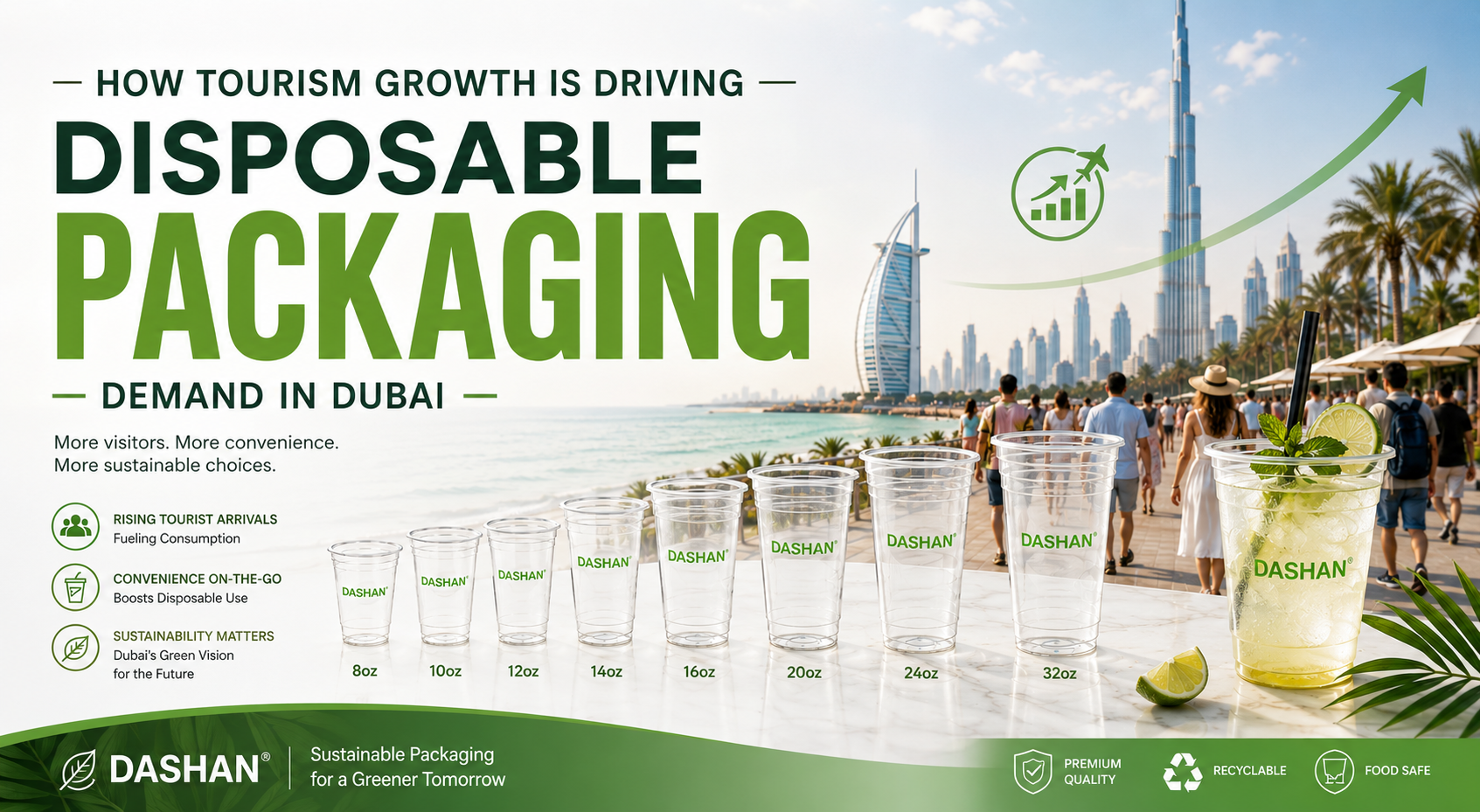
Dubai has transformed itself from a regional trading center into one of the world’s most influential tourism and hospitality destinations. Every year, millions of international travelers pass through the city for business events, luxury shopping, leisure vacations, international exhibitions, and transit travel. As tourism continues to expand, another industry is quietly growing alongside it: disposable food packaging.
From airport coffee cups and hotel takeaway containers to airline meal trays and food delivery packaging, disposable packaging has become deeply integrated into Dubai’s tourism economy. Restaurants, cafes, hotels, airlines, entertainment venues, and delivery platforms all rely on packaging solutions that are durable, visually appealing, food-safe, and increasingly sustainable.
For global food packaging manufacturers, Dubai represents more than just a local market. It reflects a broader shift happening across international tourism hubs where convenience, branding, and sustainability are reshaping purchasing decisions throughout the foodservice supply chain.
Dubai’s Tourism Industry Is Creating Massive Demand for Food Packaging
Dubai consistently ranks among the world’s busiest tourism and aviation centers. Large-scale tourism activity naturally drives high-frequency food consumption across multiple scenarios:
- Airport dining
- Hotel room service
- Tourist attractions
- Food courts
- Street cafes
- Luxury restaurants
- Delivery kitchens
- Airline catering
Unlike traditional dine-in environments, tourism-heavy cities rely heavily on portable and disposable packaging because travelers prioritize convenience, speed, hygiene, and mobility. A tourist exploring Dubai Mall, visiting Burj Khalifa, or attending an international exhibition is far more likely to purchase takeaway beverages and ready-to-eat meals than prepare food independently.
This directly increases consumption of products such as PET cups, PP meal containers, lids, cutlery, trays, and takeaway bowls.
| Tourism Sector | Common Packaging Products |
|---|---|
| Hotels | PP food containers, disposable cutlery |
| Airlines | CPET trays, sealed meal trays |
| Cafes | PET cold cups, dome lids |
| Food Delivery | Microwave-safe takeaway boxes |
| Tourist Attractions | Disposable bowls and beverage cups |
| Events & Exhibitions | Catering trays and takeaway packaging |
The scale of this demand becomes even larger during peak tourism seasons, international conferences, shopping festivals, and sporting events, where foodservice businesses must rapidly serve high customer volumes without compromising efficiency.
As a result, buyers increasingly prefer packaging suppliers capable of offering diversified product lines under one supply chain system. Manufacturers such as DASHAN have responded to this market trend by providing integrated solutions that include PET, PP, PLA, and bagasse packaging products for international foodservice customers.
The Rise of Food Delivery in Dubai Is Accelerating Packaging Consumption
Tourism growth in Dubai is closely connected to the rapid expansion of online food delivery. Many travelers today rely on mobile ordering platforms rather than traditional restaurant dining, especially in hotels, business districts, and tourist hotspots.
This shift has dramatically increased demand for delivery-oriented packaging that can maintain food quality during transportation.
Restaurants are no longer simply purchasing basic containers. They now require packaging that can:
- Prevent leakage
- Maintain temperature stability
- Protect food presentation
- Support branding
- Improve customer experience
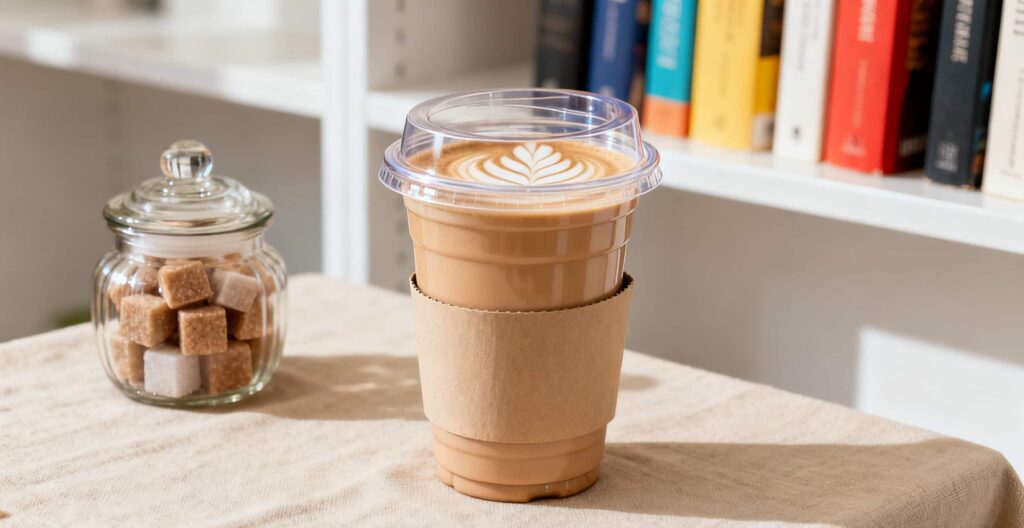
For example, premium cafes increasingly prefer crystal-clear PET cups because visual presentation plays a major role in social media marketing and consumer perception. Meanwhile, hot meal providers prioritize PP containers due to their microwave resistance and durability during delivery.
In Dubai’s competitive hospitality market, packaging has become part of the brand experience itself.
A luxury dessert shop serving tourists cannot rely on low-quality packaging that leaks or loses shape under high temperatures. Similarly, hotels offering takeaway breakfast or late-night delivery services require packaging that reflects premium positioning while remaining operationally efficient.
This has encouraged many buyers to work with experienced export-oriented suppliers like DASHAN Packing that understand both large-scale production requirements and hospitality-focused customization needs.
Today’s foodservice buyers increasingly look for suppliers that can provide:
- OEM and ODM customization
- Logo printing
- Stable international shipping
- Food-grade compliance
- Flexible product combinations
- Consistent quality across bulk orders
Dubai’s Climate Also Influences Packaging Requirements

Dubai’s hot climate creates unique technical requirements for disposable packaging.
High outdoor temperatures can affect packaging performance, particularly for beverages, sauces, and delivery meals. Packaging materials must withstand heat exposure while preserving structural integrity and food safety.
This is one reason PP packaging remains highly popular in hot food applications throughout the Middle East. PP containers offer strong heat resistance and are suitable for microwave reheating, making them ideal for takeaway meals and delivery operations.
At the same time, PET products continue dominating the cold beverage sector due to their excellent transparency and presentation quality.
| Material | Key Advantages | Common Applications |
|---|---|---|
| PET/rPET | High clarity, recyclable | Cold drinks, desserts |
| PP | Heat resistant, durable | Hot meals, takeaway |
| PLA | Compostable appearance | Eco cafes and events |
| Bagasse | Plastic-free image | Sustainable foodservice |
Tourism-heavy businesses in Dubai often require multiple packaging material categories simultaneously. A single hotel chain may use:
- PET cups for iced beverages
- PP containers for hot meals
- Bagasse trays for eco-focused events
- PLA cutlery for sustainability campaigns
This creates opportunities for full-range suppliers capable of supporting diverse operational needs under one procurement system.
Sustainability Is Becoming a Major Purchasing Factor
While convenience remains critical, sustainability has become increasingly important throughout Dubai’s hospitality and tourism sectors.
International travelers are more environmentally conscious than ever before, especially visitors from Europe and North America where sustainable packaging regulations are already influencing consumer behavior.
Hotels, cafes, airlines, and international restaurant brands operating in Dubai are therefore under growing pressure to improve packaging sustainability.
This trend is accelerating demand for:
- Recyclable PET and rPET packaging
- Compostable PLA products
- Bagasse takeaway containers
- Lightweight packaging designs
- Reduced plastic usage solutions
Many foodservice operators are now attempting to balance three priorities simultaneously:
- Cost control
- Brand presentation
- Environmental responsibility
This balance is not always easy. Some eco-friendly materials increase procurement costs, while others may reduce performance in hot climates or delivery environments.
As a result, buyers increasingly seek suppliers capable of recommending practical material solutions rather than simply selling standard products.
Manufacturers such as DASHAN are expanding both recyclable and compostable packaging portfolios to support international customers adapting to evolving sustainability expectations across tourism-driven markets.
Packaging Has Become Part of the Customer Experience
In modern tourism economies, packaging no longer functions only as a protective container. It has become part of the overall customer experience.
A tourist purchasing a premium iced coffee in Dubai is influenced not only by taste, but also by:
- Cup appearance
- Lid functionality
- Branding design
- Carry convenience
- Perceived sustainability
Social media has further amplified the importance of visual packaging. Attractive beverage cups, dessert containers, and takeaway presentation often appear in travel photography and influencer content, indirectly becoming marketing tools for hospitality brands.
This is especially important in Dubai, where luxury presentation and premium experiences strongly influence consumer expectations.
Consequently, restaurants and cafes are investing more heavily in:
- Custom-printed packaging
- Premium transparent cups
- Minimalist sustainable designs
- High-end takeaway presentation
For packaging manufacturers, this means production capabilities alone are no longer sufficient. Buyers increasingly value suppliers that can support product development, visual branding, and market-oriented packaging innovation.
Why Reliable Packaging Partners Matter More Than Low Prices
As tourism volumes fluctuate seasonally, supply chain reliability becomes essential for Dubai’s foodservice industry.
Hotels, airlines, and restaurant chains cannot risk inventory shortages during high-demand periods. Packaging delays can directly affect operations, customer satisfaction, and brand reputation.
This is why many international buyers are shifting away from purely price-driven sourcing strategies. Instead, they increasingly prioritize long-term packaging partners capable of offering:
- Stable production capacity
- Consistent quality control
- Export experience
- Flexible customization
- Fast communication
- Reliable shipping coordination
For large hospitality businesses, packaging consistency is especially important. Customers expect the same product experience regardless of location or season.
Suppliers with strong OEM and export experience, such as DASHAN Food Packaging, are becoming increasingly attractive because they can support both standardized bulk production and customized hospitality projects simultaneously.
The Future of Dubai’s Disposable Packaging Market
Dubai’s tourism economy is expected to continue growing through international investment, aviation expansion, luxury hospitality development, and large-scale global events.
As this growth continues, disposable food packaging demand will evolve in several important directions:
- Greater demand for recyclable materials
- More premium takeaway packaging
- Increased customization and branding
- Lightweight packaging for logistics efficiency
- Stronger airline sustainability requirements
- Higher food safety expectations
- More integrated packaging supply partnerships
At the same time, hospitality brands will continue searching for packaging solutions that combine operational practicality with environmental responsibility.
As demand for innovative and sustainable food packaging continues growing across the Middle East hospitality sector, international manufacturers are also strengthening their regional presence. To better connect with distributors, hospitality buyers, and foodservice brands in the UAE market, DASHAN plans to participate in the 15th Gulf Print & Pack Exhibition in Dubai from September 28–30, where the company will showcase its latest PET, PP, PLA, and bagasse food packaging solutions for tourism-driven industries.
Suppliers capable of balancing:
- sustainability,
- scalability,
- cost efficiency,
- and branding flexibility
will likely become preferred long-term partners throughout the Middle East hospitality sector.
FAQ
1. Why does tourism growth increase disposable packaging demand in Dubai?
Tourism growth leads to higher consumption of takeaway food, beverages, airline meals, hotel catering, and food delivery services. This directly increases demand for disposable cups, meal containers, trays, lids, and cutlery throughout the hospitality industry.
2. Which disposable packaging products are most commonly used in Dubai’s tourism sector?
Popular products include PET cold drink cups, PP microwave-safe food containers, airline meal trays, takeaway bowls, disposable cutlery, and sustainable packaging made from PLA or bagasse materials.
3. Why is PP packaging widely used for takeaway meals in Dubai?
PP packaging offers strong heat resistance, durability, and microwave compatibility, making it suitable for hot meals and food delivery applications in Dubai’s high-temperature climate.
4. How is sustainability affecting Dubai’s food packaging market?
Hotels, restaurants, and international hospitality brands are increasingly adopting recyclable and compostable packaging solutions to meet environmental goals and changing consumer expectations from global travelers.
5. What packaging features are important for Dubai food delivery businesses?
Food delivery operators prioritize leak resistance, heat retention, food safety, visual presentation, and secure lids to improve customer experience during transportation.
6. Why are hospitality brands looking for long-term packaging suppliers instead of low-cost vendors?
Reliable suppliers help ensure consistent product quality, stable inventory, faster customization, export compliance, and dependable delivery during peak tourism seasons.
Conclusion
Dubai’s booming tourism industry is reshaping the disposable food packaging market in significant ways. Rising visitor numbers are increasing demand across hotels, cafes, airlines, food delivery services, and tourist attractions, while simultaneously raising expectations for packaging quality, convenience, and sustainability.
Disposable packaging is no longer viewed as a simple operational necessity. It has become part of the hospitality experience, brand identity, and customer perception.
As tourism-driven foodservice markets continue evolving, businesses increasingly require packaging suppliers that can provide not only large-scale manufacturing capacity, but also innovation, customization, regulatory awareness, and sustainable product development.
Companies such as DASHAN are responding to these global market shifts by developing diversified disposable packaging solutions tailored to the changing needs of modern hospitality and tourism industries.
References
- Dubai Department of Economy and Tourism
- UAE Government Portal – Sustainability Initiatives
- International Air Transport Association (IATA)
- Statista – UAE Food Delivery Market Insights
- World Tourism Organization (UN Tourism)
- DASHAN Food Packaging
Copyright Statement
© 2026 Dashan Packing. All rights reserved.
This article is an original work created by the Dashan Packing editorial team.
All text, data, and images are the result of our independent research, industry experience,
and product development insights. Reproduction or redistribution of any part of this content
without written permission is strictly prohibited.
Dashan Packing is committed to providing accurate, evidence-based information and
to upholding transparency, originality, and compliance with global intellectual property standards.