

Quick Answer: The Cost of a Spill
In the era of third-party delivery apps like UberEats and DoorDash, a 1% container leak rate can lead to a 10% spike in customer refunds, platform penalties, and 1-star reviews. Precision-engineered, leak-proof food containers are no longer just a packaging expense; they are a critical, defensive financial investment to protect your restaurant’s bottom line and ensure the food arrives exactly as the executive chef intended.
1. The Third-Party Delivery Nightmare: A Chain Reaction of Losses
Before the food delivery boom, takeaway containers only had to survive a brief walk from the restaurant counter to the customer’s car. Today, a bowl of hot Pho or a highly sauced pasta dish must survive a brutal 30-minute journey in a vibrating, swaying delivery backpack mounted on a bicycle or scooter.
When a restaurant uses low-quality packaging to save a few pennies, they trigger a catastrophic chain reaction:
-
The Driver’s Nightmare: The container lid pops open when the scooter hits a pothole. Soup floods the driver’s thermal delivery bag, ruining their equipment and delaying their entire shift.
-
The Customer’s Disgust: The customer opens their expensive delivery order to find a soggy, contaminated paper bag. The visual appeal is destroyed, and the meal is ruined.
-
The Restaurant’s Financial Hit: The customer instantly requests a refund through the delivery app. The app automatically deducts the cost of the meal from the restaurant’s payout, keeps the delivery commission, and flags the restaurant’s algorithm for poor quality. The restaurant loses the cost of the food, the potential profit, and, most importantly, the lifetime value of that customer.
2. The Engineering Behind “Leak-Proof” (The Factory Truth)
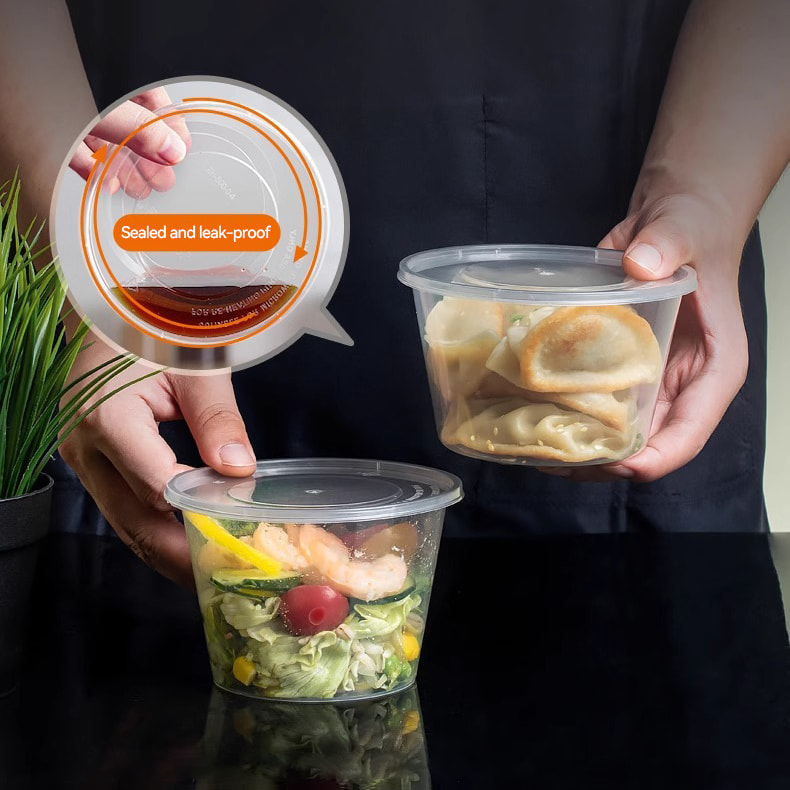
Many restaurant owners assume that “plastic is plastic” and all lids are created equal. This is a fatal procurement mistake. True leak-proof performance is a matter of micro-millimeter engineering.
To achieve a perfect seal, top-tier packaging suppliers focus on three core manufacturing pillars:
Advanced Thermoforming vs. Outdated Methods
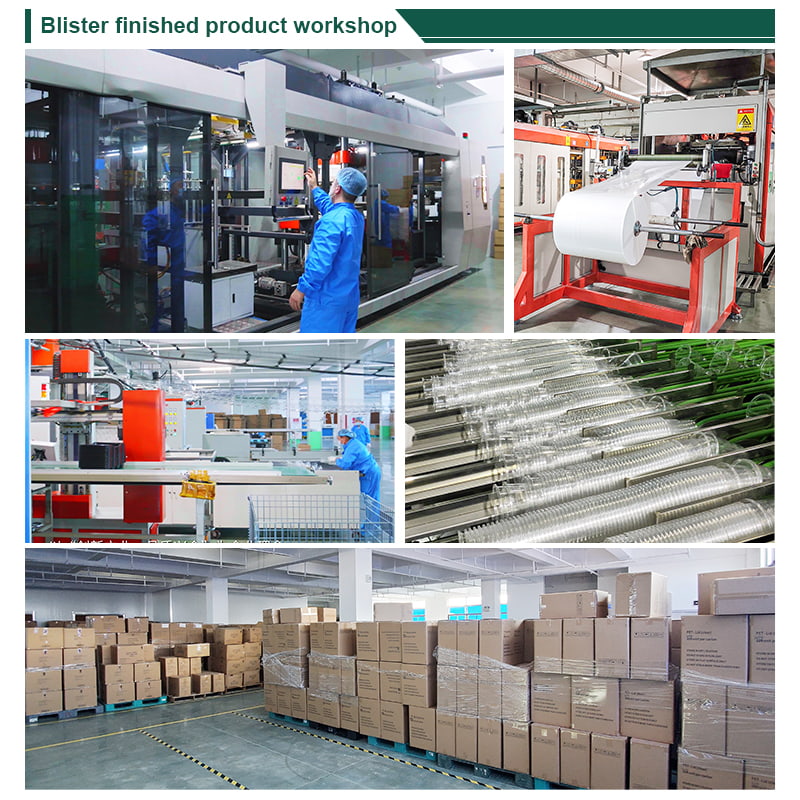
The secret to a flawless lid-to-container fit lies in the manufacturing process. Designed to meet the strictest US and European quality standards, our state-of-the-art manufacturing facility in Xiamen specifically utilizes advanced thermoforming (吸塑) processes, rather than standard injection molding, for our premium food containers.
-
Thermoforming allows for incredibly uniform wall thickness and extreme dimensional accuracy.
-
When the container and the lid are both thermoformed using synchronized, high-precision molds, the tolerance variance is kept to less than 0.1mm, ensuring a hermetic seal every single time.
The Mechanical Snap-Fit (The “Click” of Confidence)
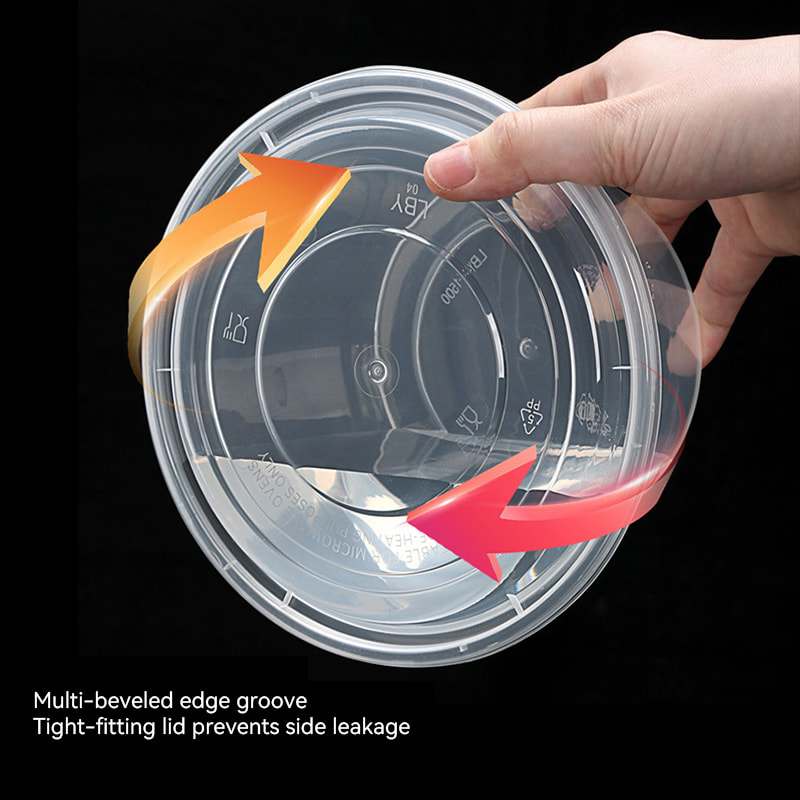
A truly leak-proof container does not just rest its lid on top; it locks it mechanically. Engineered PP (Polypropylene) lids feature an inverted inner groove that acts as a locking mechanism. When the barista or chef presses the lid down, the flexible thermoformed rim of the bowl snaps perfectly into this groove, creating an audible “click.” This tension holds the lid securely in place, even if the container is inverted or squeezed during transit.
Rolled Rim Technology
For PET cold drink cups and round PP soup bowls, the top edge of the container undergoes a secondary curling process to create a perfectly smooth, rigid “rolled rim.” This rim provides the necessary structural integrity to resist the downward pressure of applying the lid, preventing the cup from buckling and ensuring the seal remains completely watertight.
3. The ROI Calculation: Why Cheap Packaging is Bankrupting You
To understand why upgrading to premium leak-proof containers is highly profitable, procurement managers must look at the math. Let’s calculate the ROI of upgrading your packaging to prevent spills.
The Financial Trap of “Cheap” Containers:
-
Savings on a cheap container vs. a premium thermoformed container: $0.02 per order
-
Cost of one spilled meal (Food Cost + Lost Profit + Refund): $25.00
The Break-Even Reality:
To make up for the financial loss of just one spilled meal, you need to successfully deliver 1,250 orders using the cheap container just to break even on the $0.02 packaging savings.
When you factor in that a dissatisfied customer is likely to leave a 1-star review—driving away dozens of potential future customers—the “cheap” container becomes the most expensive item in your kitchen. Premium leak-proof packaging acts as a low-cost insurance policy on your highest-margin delivery items.
4. Strategic Material Selection for Delivery Menus
Not every leak-proof container is suitable for every type of food. Maximizing the delivery experience requires matching your menu items to the correct high-performance material:
| Menu Item Type | The Ideal Packaging Solution | The Engineering Reason |
| Hot Soups, Curries, and Ramen | Heavy-Duty PP Bowls with PP Lids | PP (Polypropylene) can withstand temperatures up to 120°C without warping. The matching PP lid ensures the thermal expansion rates are identical, so the seal does not pop off when the hot steam builds pressure inside. |
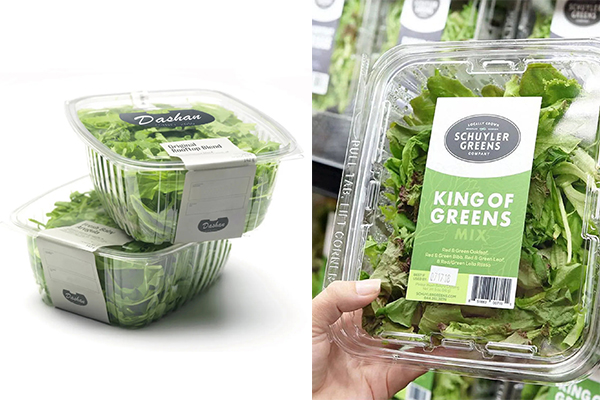
| Cold Salads, Sushi, and Poke Bowls | High-Clarity PET Containers | PET offers glass-like transparency for premium visual merchandising. Its high flexibility allows for a tight, leak-proof friction seal, keeping dressings safely contained. |
| Burgers, Fries, and Eco-Conscious Meals | PFAS-Free Sugarcane Bagasse with PET Lids | Bagasse breathes naturally, preventing fried food from getting soggy. By pairing a compostable bagasse base with a precision-fit PET transparent lid, you get an eco-friendly presentation with a highly secure, modern seal. |
5. Conclusion: Elevate Your Brand Delivery
In the highly competitive world of food delivery, your packaging is your final touchpoint with the customer. It represents your brand’s commitment to quality. Serving a $30 gourmet meal in a container that leaks grease onto the customer’s dining table instantly degrades the perceived value of your food.
By investing in precision-engineered, leak-proof containers, you eliminate delivery friction, protect your profit margins from unnecessary refunds, and guarantee that your customers receive a restaurant-quality presentation right at their doorstep.
At Dashan Packing, we manufacture millions of perfectly sealed food containers every month. Operating with a global mindset from our advanced thermoforming hub in Xiamen, we supply high-volume restaurant chains with packaging that survives the toughest delivery conditions.
👉 [Contact Dashan’s Export Team] today to request physical samples of our leak-proof PP, PET, and Bagasse containers and test the ultimate “snap-fit” for yourself.
FAQ: Leak-Proof Food Packaging
1. Why do some plastic container lids pop off during hot food delivery?
This usually happens due to mismatched thermal expansion. If a factory uses cheap materials or pairs a hot soup with an incompatible lid type, the steam pressure builds up inside, and the heat causes the cheap plastic to soften and warp, breaking the mechanical seal and causing the lid to pop off.
2. Are leak-proof containers completely airtight?
While highly leak-proof against liquids (soups, sauces, dressings), very few standard takeaway containers are 100% hermetically airtight (like a vacuum-sealed jar). However, precision thermoformed containers with a tight snap-fit create a seal secure enough to prevent any liquid spillage during normal, bumpy delivery transit.
3. What is thermoforming and why does it matter for leak prevention?
Thermoforming is a manufacturing process where a plastic sheet is heated and molded over a precise tool using vacuum pressure. Compared to basic injection molding, thermoforming allows for incredibly consistent wall thickness and exact dimensional tolerances, ensuring the lid and base lock together flawlessly.
4. Can I get a leak-proof seal on eco-friendly Bagasse containers?
Yes. While bagasse-to-bagasse lids (pulp lids) provide a decent closure, they are not entirely leak-proof for heavy liquids. For a truly leak-proof eco-friendly option, restaurants pair a compostable Bagasse base with a precision-molded PET or PP plastic lid, which locks securely onto the rim of the bagasse bowl.
5. How can I test if a container is truly leak-proof before buying in bulk?
Always request physical samples. Fill the sample container halfway with water, snap the lid on securely, and invert the container completely for 60 seconds. Then, shake it vigorously to simulate delivery conditions. If a single drop escapes, the tooling tolerance is poor, and you should find a new supplier.
References & Authoritative Industry Data
To provide our clients with accurate operational and quality assurance strategies, Dashan Packing bases its manufacturing standards and ROI calculations on data from the following authorities:
-
McKinsey & Company: Making online food delivery work in a post-pandemic world (Industry analysis detailing the financial impact of customer refunds, order accuracy, and packaging quality on the profitability of third-party delivery operations).
-
International Organization for Standardization (ISO): ISO 9001:2015 Quality Management Systems (The globally recognized framework establishing criteria for manufacturing precision, emphasizing the importance of dimensional tolerances in thermoformed plastics).
-
National Restaurant Association: State of the Restaurant Industry Report (Comprehensive data highlighting consumer expectations for off-premises dining, emphasizing that packaging integrity is a top driver of repeat delivery business).
Copyright & Legal Disclaimer
© 2026 Dashan Packing. All rights reserved.
This Food Delivery Packaging Guide is an original work created by the Dashan Packing engineering and export teams. All manufacturing insights (including thermoforming tolerances), ROI calculations, and material performance evaluations are the result of our independent technical research and extensive B2B packaging experience. Reproduction, redistribution, or unauthorized use of any part of this content without explicit written permission from Dashan Packing is strictly prohibited. Dashan Packing provides this information for strategic procurement and educational purposes only.