

Quick Answer: The Hidden Costs of Bad Sourcing
The most fatal food packaging mistakes importers make are focusing entirely on the lowest unit price while ignoring shipping volume (CBM), fake compliance documents, and inconsistent batch quality. Sourcing from China offers the world’s most robust and cost-effective supply chain, but navigating it requires expertise. To protect your margins and brand reputation, you must perform a strict China packaging factory audit, verify all food-grade certificates directly with third-party labs, and calculate your exact landed costs before signing a contract.
👉 Want to skip the risks and work with a vetted manufacturer? [Explore Dashan Packing’s Factory Capabilities].
Mistake 1: Chasing the Lowest Price (The Weight Trap)
In Chinese manufacturing, you get exactly what you pay for. If a supplier quotes you a price that is 20% lower than the market average for a PET cup or bagasse bowl, they are likely cutting corners on the raw material.
❌ The Trap: The easiest way to lower the price is to reduce the gram weight of the product. A cup that should weigh 12 grams is secretly downgraded to 9 grams.
✅ The Fix: Always specify the exact gram weight (+/- 5% tolerance) in your Purchase Order (PO). When samples arrive, weigh them on a digital scale before approving mass production.
Mistake 2: Mistaking a Trading Company for a Factory
Many “manufacturers” on Alibaba are actually trading companies (middlemen) sitting in an office. They outsource your order to the cheapest available factory, leading to unstable quality, delayed communication, and higher prices.
❌ The Trap: You lose control over your supply chain. If an issue arises, the trader blames the factory, and you are left waiting.
✅ The Fix: Request a live video tour of the production lines and the raw material warehouse. Alternatively, work off a curated list of verified direct manufacturers.
To save time, check our vetted list: [Top 10 Food Packaging Manufacturers in China (2026 Update)].

Comparison Table: Trading Company vs. True Factory
Use this quick checklist during your initial supplier vetting process:
| Verification Metric | Red Flag (Likely a Trading Company) | Green Flag (True Manufacturer) |
| Product Catalog | Sells everything (shoes, electronics, and cups) | Deeply specialized in 1 or 2 packaging materials |
| ISO 9001/BRC Certs | Name on certificate does not match business license | Certificate matches the exact company name and address |
| Custom Molds | “We need to check with our engineer” (Takes days) | Has an in-house tooling/mold workshop; instant feedback |
| Factory Audit | Makes excuses to avoid live video calls | Welcomes live video tours and third-party inspectors |
Mistake 3: Falling for the “Golden Sample”
A “Golden Sample” is a perfect, hand-picked product sent to you to win your business. However, when the 40HQ container of mass production arrives, the quality is terrible—cups are cracked, and printing is misaligned.
❌ The Trap: Approving mass production based solely on one perfect sample without setting an Acceptable Quality Limit (AQL).
✅ The Fix: Hire a third-party inspector (like SGS or V-Trust) to conduct a pre-shipment inspection based on an AQL 2.5 standard before you pay the final balance.
Mistake 4: Ignoring CBM and Shipping Density
When shipping food containers from China, you are often shipping “air.” Food packaging is bulky. If your supplier does not know how to optimize the nesting (how tightly cups or bowls stack inside each other), your shipping costs will destroy your profit margin.
❌ The Trap: Buying a cheap product but paying double for ocean freight because the carton design wastes 30% of the container space.
✅ The Fix: Before ordering, ask the supplier for the precise Carton Dimensions, Gross Weight, and the exact quantity that fits into a 20FT or 40HQ container.
Mistake 5: Skipping Food Grade Certification Verification
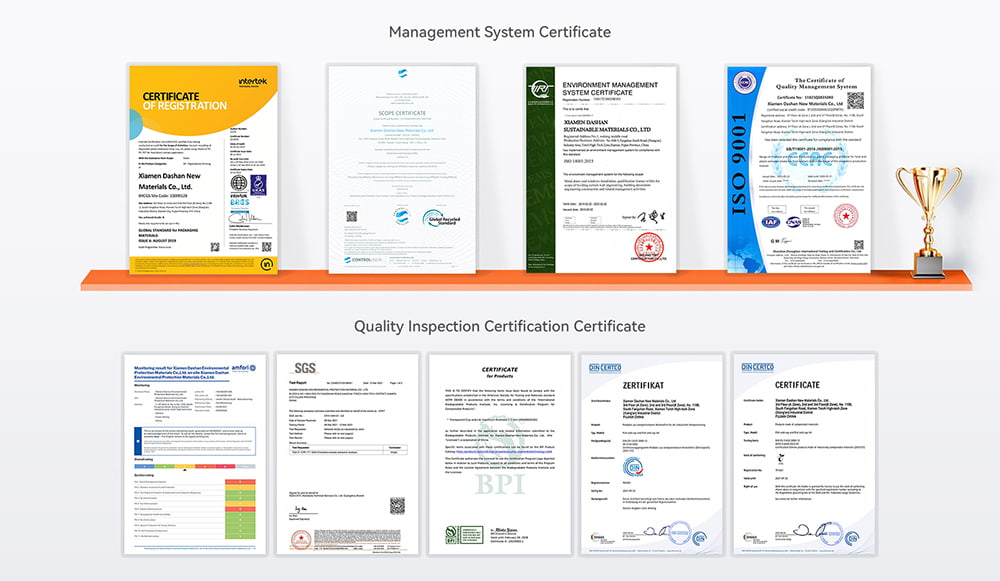
Never assume a product is safe just because a supplier says “FDA Approved.” Many suppliers use outdated certificates, or worse, Photoshop certificates that belong to other factories.
❌ The Trap: Your goods arrive at the destination port and are seized by customs because they fail heavy metal or PFAS chemical migration tests.
✅ The Fix: Strict food grade certification verification is mandatory. Ask for the full PDF report. Check the date (it should be within the last 12-24 months). Contact the issuing lab (TÜV, SGS, Intertek) with the Report Number to verify its authenticity.
Mistake 6: Unclear Custom Packaging Lead Times
“We will finish in 15 days, don’t worry.” This verbal promise is the most common lie in overseas procurement.
❌ The Trap: Factory delays cause you to miss a major product launch or run out of inventory during peak season.
✅ The Fix: Custom packaging lead times must be broken down in the contract. Define the timeline for: 1) Mold creation (e.g., 10 days), 2) Pre-production sample (5 days), 3) Mass production (20 days). Add a late-delivery penalty clause to the contract.
Mistake 7: Using Flimsy Outer Cartons
Your beautifully branded custom cups mean nothing if they arrive crushed. Many Chinese suppliers use cheap, 3-ply single-wall corrugated boxes to save a few dollars.
❌ The Trap: Ocean freight is brutal. Cartons at the bottom of the pallet will collapse under the weight of the boxes above them, crushing your products.
✅ The Fix: Explicitly demand 5-ply, double-wall corrugated export cartons (K=K material). It costs a few cents more per box but guarantees a 0% damage rate during transit.
Mistake 8: No Clear Defect Rate (AQL) Agreement
In mass production, a 0% defect rate is physically impossible. However, what happens when 5% of your lids don’t fit the cups? Who pays for that?
❌ The Trap: Fighting with a supplier over refunds after the goods are already in your warehouse.
✅ The Fix: Establish a Defect Compensation Clause. A standard acceptable defect rate for plastic/bagasse packaging is 1% to 2%. State in your contract that any defects exceeding 2% will be deducted from your next order or refunded immediately.
Mistake 9: Ignoring Custom Mold Ownership
If you pay thousands of dollars to open a custom mold for your unique container shape, who owns that mold?
❌ The Trap: The supplier registers your design, uses your mold to produce products for your competitors, and refuses to give the mold back if you try to switch suppliers.
✅ The Fix: Sign an NNN (Non-Disclosure, Non-Use, Non-Circumvention) agreement tailored to Chinese law. Explicitly state that the mold is your exclusive property and must be transferred to you upon request.
Mistake 10: Unrealistic MOQs (Minimum Order Quantities)
Trading companies often push you to buy massive quantities (e.g., 500,000 pieces) because they need to meet the true factory’s requirements.
❌ The Trap: Tying up too much cash flow in inventory that takes years to sell, risking warehouse damage and material degradation.
✅ The Fix: Work with a flexible, direct manufacturer. True factories with their own printing machines can often offer reasonable pilot-run MOQs (e.g., 30,000 – 50,000 pieces) to help you test the market before committing to massive volumes.
Conclusion: Partner with a Supply Chain You Can Trust
Avoiding these 10 mistakes requires constant vigilance, endless emails, and expensive third-party inspectors—unless you partner with the right factory from day one.
Still unsure how to evaluate a factory? Download our comprehensive checklist: [How to Choose a Reliable Food Packaging Supplier in China].
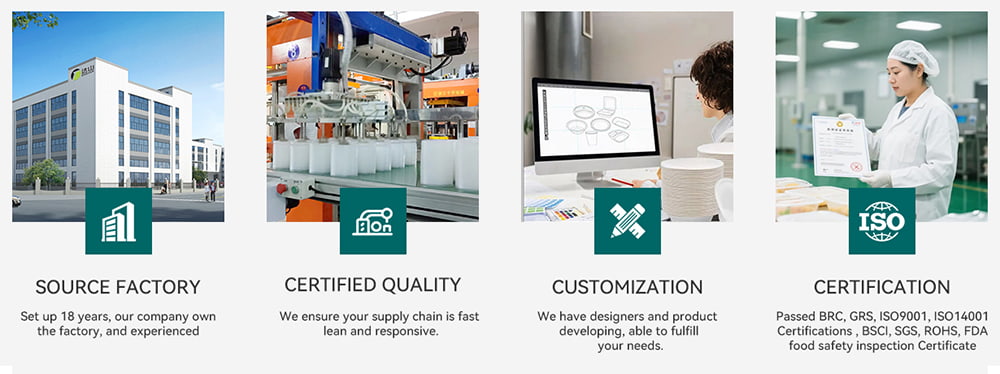
At Dashan Packing, we eliminate these procurement headaches. We are a direct manufacturer with in-house tooling, transparent CBM calculations, verifiable BPI/TÜV/FDA certifications, and premium 5-ply export packaging. We don’t just quote prices; we build secure, long-term supply chains for global brands.
👉 [Contact Dashan’s Export Team Today] to request verified certificates, a live factory video tour, and a bulletproof quote for your next packaging project.
FAQ: Importing Packaging from China
1. Do I need an import license to buy packaging from China? In most Western countries (like the US, UK, and EU), a specific import license is not required for standard food packaging. However, you will need a Customs Broker and an EORI number (in the EU) or an EIN/Tax ID (in the US) to clear the goods through customs.
2. What are the standard payment terms for Chinese factories? The industry standard is a 30% deposit via T/T (Telegraphic Transfer) before production begins, and a 70% balance payment after production is finished but before shipment (usually against the Bill of Lading or a passed inspection report).
3. Why is CBM so important in packaging procurement? CBM stands for Cubic Meter. Because cups and bowls take up a lot of space, ocean freight is charged by volume (CBM), not weight. Optimizing the stacking design of your packaging can reduce your shipping costs by thousands of dollars per container.
4. How can I ensure my Chinese supplier doesn’t steal my custom design? Before sharing any 3D drawings or paying for a mold, have the supplier sign an NNN (Non-Disclosure, Non-Use, Non-Circumvention) agreement drafted by a lawyer familiar with Chinese intellectual property law. A standard Western NDA is often unenforceable in China.
5. What should I do if my goods arrive damaged? If you used the correct 5-ply export cartons and goods are still damaged, document everything immediately with photos and videos. If the damage was caused by the factory’s poor packing, invoke your Defect Compensation Clause. If caused by the shipping line, file a claim through your freight forwarder’s marine insurance.
References & Authoritative Industry Standards
To ensure our clients navigate global procurement with absolute security, Dashan Packing aligns its manufacturing, quality control, and legal frameworks with the following international standards and authorities:
-
U.S. Food and Drug Administration (FDA): Packaging & Food Contact Substances (FCS) (The definitive regulatory framework governing the safety, testing, and compliance of materials in contact with food).
-
International Organization for Standardization (ISO): ISO 2859-1:1999 (AQL Standards) (The globally recognized statistical standard for Acceptable Quality Limits (AQL) used in pre-shipment inspections to determine bulk order acceptance).
-
SGS (Société Générale de Surveillance): Pre-Shipment Inspection (PSI) Guidelines (Industry-leading protocols for verifying product quality, quantity, and packaging integrity before container loading).
-
World Intellectual Property Organization (WIPO) & International Trade Law: Consensus on NNN (Non-Disclosure, Non-Use, Non-Circumvention) Agreements (Legal best practices emphasizing why standard Western NDAs are insufficient, and why China-specific NNN agreements are mandatory for protecting custom molds and designs).
(Note: International trade protocols, freight regulations, and compliance standards are dynamic. The procurement strategies provided in this guide are for due diligence and educational purposes. We advise all importers to conduct independent verifications through certified third-party laboratories and legal counsel before finalizing international purchase agreements.)
Copyright & Legal Disclaimer
© 2026 Dashan Packing. All rights reserved.
This China Packaging Procurement Guide is an original work created by the Dashan Packing supply chain and export teams. All risk management strategies, AQL recommendations, and factory audit protocols are the result of our independent manufacturing expertise and extensive international trade experience. Reproduction, redistribution, or unauthorized use of any part of this content without explicit written permission from Dashan Packing is strictly prohibited. Dashan Packing is committed to providing transparent, actionable data to help global buyers build resilient and compliant supply chains.