

Quick Summary
Cornstarch and sugarcane bagasse are two leading materials in sustainable food packaging, but they serve different business needs. In the cornstarch vs sugarcane bagasse comparison, bagasse stands out for its durability, heat resistance, and lower carbon footprint, making it ideal for hot and oily takeout foods. Cornstarch, on the other hand, offers a smoother finish and lighter weight, better suited for controlled environments like airline catering.
From a cost and supply chain perspective, bagasse is generally more stable and economical, especially for bulk orders through eco friendly takeout boxes wholesale channels. Cornstarch products often require higher MOQ and industrial composting conditions.
For most foodservice applications, working with a reliable biodegradable takeout box manufacturer ensures the right balance between performance, compliance, and long-term scalability.
Introduction: Why Material Choice Matters in Sustainable Takeout Packaging
The global foodservice industry is undergoing a structural shift. As governments tighten restrictions on single-use plastics and consumers become more environmentally conscious, businesses are under increasing pressure to adopt sustainable packaging solutions. Among the many alternatives available, the debate around cornstarch vs sugarcane bagasse has become central to decision-making for restaurants, distributors, and packaging buyers.
However, choosing between these two materials is not as simple as selecting the “more eco-friendly” option. Each material comes with distinct performance characteristics, cost structures, supply chain implications, and regulatory considerations. For buyers working with a biodegradable takeout box manufacturer or sourcing from a biodegradable food packaging factory, understanding these differences is critical for making a cost-effective and scalable decision.
This guide provides a comprehensive, data-driven comparison of cornstarch and sugarcane bagasse takeout boxes, focusing on real-world applications, technical performance, and procurement strategy.
What Are Cornstarch Takeout Boxes?
Raw Material and Production Process
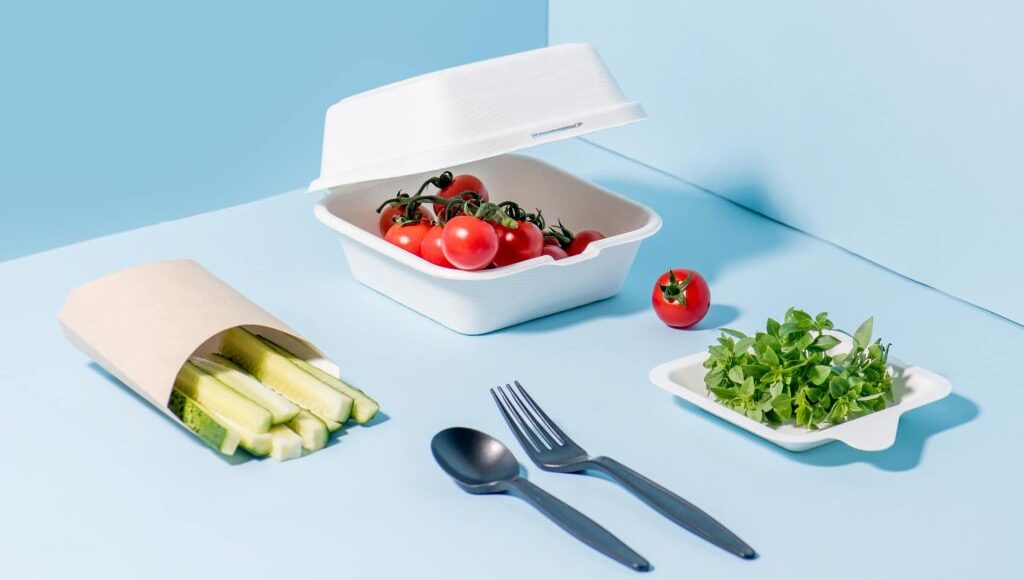
Cornstarch takeout boxes are typically made from polylactic acid (PLA) or PLA-based composite materials derived from fermented corn starch. The process involves converting corn glucose into lactic acid through fermentation, followed by polymerization into PLA resin. This resin is then processed using thermoforming or injection molding to create rigid containers.
In many commercial applications, cornstarch containers are not 100% PLA but blended with other biodegradable polymers to improve mechanical strength and heat resistance.
Material Properties and Performance
Cornstarch-based packaging offers a balance of rigidity and lightweight performance. It is especially valued in applications requiring uniform structure and clean aesthetics.
Key technical parameters:
| Property | Typical Range |
|---|---|
| Heat Resistance | 80°C – 120°C |
| Density | 1.20 – 1.25 g/cm³ |
| Tensile Strength | 50 – 70 MPa |
| Oil Resistance | Moderate |
| Compost Time | 90–180 days (industrial) |
While cornstarch containers perform well under moderate heat, prolonged exposure to high temperatures or oily foods may lead to deformation or reduced structural integrity.
Common Applications
Cornstarch takeout boxes are widely used in:
- Airline catering due to lightweight design
- Pre-packaged meals with controlled temperature conditions
- Institutional food services
- Eco-conscious takeaway brands
Their smooth surface also makes them suitable for branding and labeling, especially when working with a custom biodegradable packaging manufacturer OEM.
What Are Sugarcane Bagasse Takeout Boxes?
Raw Material and Manufacturing Process
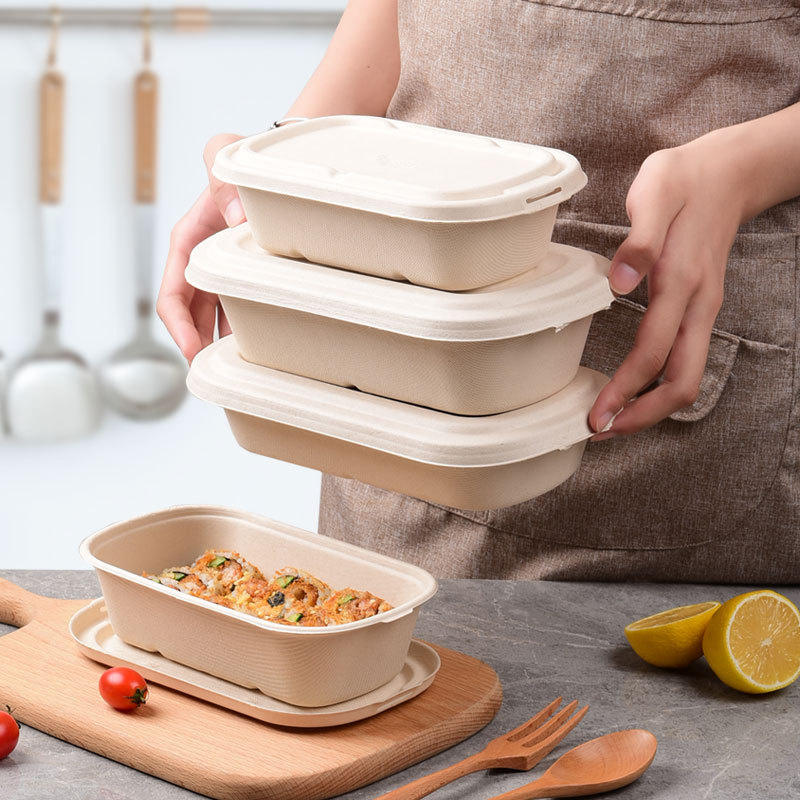
Sugarcane bagasse is a natural byproduct of sugar extraction. After juice is extracted from sugarcane stalks, the remaining fibrous pulp is processed into a slurry and molded into containers using high-pressure, high-temperature pulp molding technology.
Unlike cornstarch plastics, bagasse products rely on natural fiber bonding rather than polymerization.
Material Properties and Performance
Bagasse packaging is known for its robustness and superior heat resistance. The fibrous structure provides natural insulation and breathability.
Key technical parameters:
| Property | Typical Range |
|---|---|
| Heat Resistance | Up to 120°C+ |
| Density | 0.7 – 1.0 g/cm³ |
| Compression Strength | High |
| Oil Resistance | High |
| Compost Time | 60–120 days |
Bagasse containers maintain structural integrity even with hot, oily, or moist foods, making them highly versatile.
Common Applications
Sugarcane bagasse is widely used in:
- Fast food chains
- Takeout meal packaging
- Supermarket ready meals
- Street food vendors
For businesses sourcing from an eco friendly takeout boxes wholesale supplier, bagasse is often the preferred choice due to its durability.
Cornstarch vs Sugarcane Bagasse: Core Differences Explained
Material Composition and Sustainability
The primary distinction in the cornstarch vs sugarcane bagasse comparison lies in raw material sourcing.
Cornstarch relies on agricultural crops, which require land, water, and energy inputs. In contrast, bagasse utilizes agricultural waste, making it inherently more resource-efficient.
From a lifecycle perspective, studies indicate that bagasse-based products can reduce carbon emissions by up to 30–50% compared to conventional plastics, while PLA-based materials typically achieve a 20–30% reduction.
Physical Performance Comparison
Performance differences become evident in real-world usage.
Cornstarch containers provide a smoother, more uniform finish but are less resistant to oil and prolonged heat. Bagasse containers, while slightly rougher in texture, offer superior durability and resistance to deformation.
Compostability and Degradation Speed
Both materials are compostable, but conditions matter.
- Cornstarch (PLA): Requires industrial composting facilities with controlled temperature and humidity
- Bagasse: Can degrade in both industrial and some home composting environments
Comparison Table
| Feature | Cornstarch | Sugarcane Bagasse |
|---|---|---|
| Raw Material | Corn-based polymer | Agricultural waste |
| Heat Resistance | Medium | High |
| Oil Resistance | Moderate | High |
| Compostability | Industrial only | Industrial + partial home |
| Cost Stability | Moderate | High (more stable) |
Cost Analysis: Which Material Is More Economical?
Raw Material Cost Comparison
Corn prices are subject to global agricultural fluctuations, impacting PLA production costs. Bagasse, as a byproduct, benefits from lower and more stable raw material costs.
Manufacturing and Processing Costs
PLA production involves chemical processing and polymerization, which are energy-intensive. Bagasse molding, while requiring specialized equipment, generally consumes less energy per unit.
Wholesale Pricing Trends
| Quantity | Cornstarch Unit Price | Bagasse Unit Price |
|---|---|---|
| 10,000 | $0.06 – $0.09 | $0.05 – $0.08 |
| 50,000 | $0.04 – $0.07 | $0.035 – $0.06 |
| 100,000+ | $0.03 – $0.05 | $0.025 – $0.045 |
For buyers working with a biodegradable takeout box manufacturer, bagasse often provides better cost efficiency at scale.
MOQ and Supply Chain Considerations
Typical MOQ Differences
Cornstarch products often require higher MOQ due to polymer processing setup, typically starting at 20,000–50,000 units. Bagasse products can be produced at lower MOQ levels, sometimes as low as 10,000 units.
Lead Time and Production Efficiency
Bagasse production cycles are generally shorter (15–25 days), while cornstarch products may require 20–35 days due to additional processing steps.
Choosing the Right Supplier
A reliable biodegradable food packaging factory should offer:
- Stable raw material sourcing
- Flexible MOQ options
- Consistent quality control
- Export experience
When choosing the right supplier, it is essential to evaluate not only pricing but also production capacity, quality control systems, and long-term reliability. At Dashan Packing, we focus on delivering consistent product quality, supported by strict manufacturing standards and scalable production capabilities to meet global demand.
Food Safety and Regulatory Compliance
Both materials must comply with global food safety standards.
Key Requirements:
- FDA food contact compliance
- EU Regulation (EC) No 1935/2004
- Compostability certifications (EN13432, ASTM D6400)
Bagasse products often have an advantage in natural composition, while PLA-based materials require stricter chemical compliance verification.
Environmental Impact and Sustainability Trends
Carbon Footprint Comparison
Lifecycle assessments show:
| Material | CO₂ Emissions (kg per 1,000 units) |
|---|---|
| Plastic | 120 – 150 |
| Cornstarch | 80 – 110 |
| Bagasse | 60 – 90 |
Bagasse demonstrates the lowest carbon footprint due to waste utilization.
Market Trends
The demand for eco friendly takeout boxes wholesale is growing at over 6–8% annually, driven by regulations and consumer preference.
Real-World Use Cases
Fast Food Chains
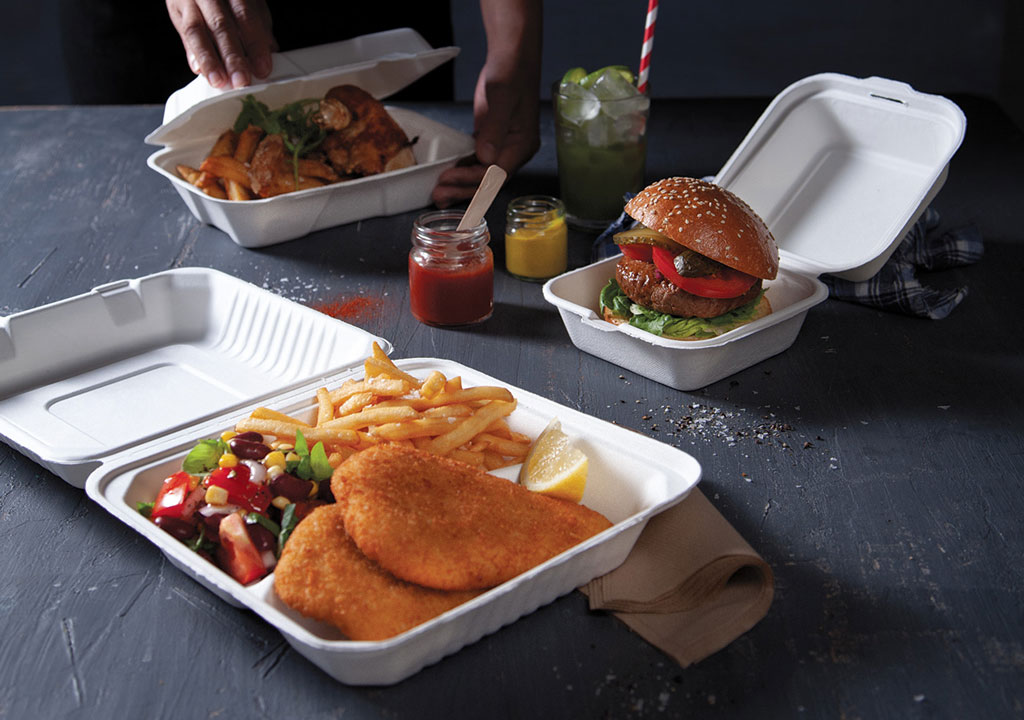
Many global chains have switched to bagasse due to durability and cost efficiency.
Airline Catering
Cornstarch is preferred in controlled environments where lightweight packaging is critical.
Supermarket Applications
Bagasse is favored for hot meal packaging due to moisture resistance.
Pros and Cons Summary
Cornstarch
Advantages:
- Smooth finish
- Lightweight
- Suitable for branding
Limitations:
- Lower heat resistance
- Requires industrial composting
Bagasse
Advantages:
- High strength
- Better heat and oil resistance
- Lower environmental impact
Limitations:
- Slightly rough texture
- Limited transparency
How to Choose the Best Option for Your Business
The decision depends on your operational priorities.
- Choose cornstarch for lightweight, controlled environments
- Choose bagasse for durability, hot food, and cost efficiency
Working with a professional custom biodegradable packaging manufacturer OEM ensures the right balance between performance and cost.
Future Trends in Biodegradable Packaging
The industry is evolving toward hybrid materials, improved coatings, and scalable production technologies. Demand for biodegradable packaging factory solutions will continue to grow as regulations tighten globally.
Frequently Asked Questions (FAQ)
1. Which is better: cornstarch or sugarcane bagasse for takeout boxes?
In the cornstarch vs sugarcane bagasse comparison, sugarcane bagasse is generally better for hot, oily, and heavy foods due to its higher heat resistance and structural strength. Cornstarch is more suitable for lightweight applications and controlled environments.
2. Are cornstarch takeout boxes truly biodegradable?
Yes, cornstarch-based (PLA) takeout boxes are biodegradable, but they typically require industrial composting facilities with controlled temperature and humidity. This means they may not decompose efficiently in natural environments.
3. Can sugarcane bagasse boxes be composted at home?
Sugarcane bagasse products can decompose in both industrial and some home composting conditions. Compared to PLA, they break down more easily due to their natural fiber composition.
4. Which material is more cost-effective for bulk orders?
For bulk sourcing, bagasse is usually more cost-effective because it uses agricultural waste as raw material. Many buyers working with a biodegradable food packaging factory find bagasse offers better price stability and lower unit costs.
5. What is the typical MOQ from a biodegradable packaging supplier?
MOQ depends on the product and manufacturing process. Bagasse takeout boxes often start around 10,000 units, while cornstarch products may require 20,000–50,000 units. A flexible biodegradable takeout box manufacturer may offer lower MOQ options for standard designs.
6. Are both materials safe for food contact?
Yes, both cornstarch and bagasse takeout boxes are food-safe when produced by certified suppliers. They must comply with regulations such as FDA and EU food contact standards.
7. Which material is more environmentally friendly?
Bagasse is generally considered more environmentally friendly because it is made from agricultural waste and has a lower carbon footprint. Cornstarch is renewable but requires more processing and industrial composting.
8. Can I customize both types of takeout boxes?
Yes, both materials can be customized in terms of size, shape, and branding. Many businesses work with a custom biodegradable packaging manufacturer OEM to create tailored solutions for their brand.
References (with links)
1. OECD – Global Plastics Outlook
Title: Global Plastics Outlook: Economic Drivers, Environmental Impacts and Policy Options
Author/Institution: Organisation for Economic Co-operation and Development
Link: https://www.oecd.org/environment/plastics/plastics-outlook/
2. European Commission – Food Contact Materials
Title: Food Contact Materials – Plastics Regulation (EU) No 1935/2004
Author/Institution: European Commission
Link: https://food.ec.europa.eu/food-safety/chemical-safety/food-contact-materials_en
3. U.S. FDA – Food Contact Substances Guidance
Title: Food Contact Substances (FCS) Guidance Documents
Author/Institution: U.S. Food and Drug Administration
Link: https://www.fda.gov/food/packaging-food-contact-substances-fcs
4. PlasticsEurope – Plastics Market Data
Title: Plastics – The Facts 2023
Author/Institution: PlasticsEurope
Link: https://plasticseurope.org/knowledge-hub/plastics-the-facts-2023/
5. World Economic Forum – Sustainable Packaging
Title: Global Commitment to the New Plastics Economy
Author/Institution: World Economic Forum
Link: https://www.weforum.org/agenda/archive/plastics-and-the-environment/
6. European Bioplastics – PLA & Bioplastics Data
Title: Bioplastics Market Data Report
Author/Institution: European Bioplastics
Link: https://www.european-bioplastics.org/market/
7. FAO – Agricultural Byproducts (Bagasse)
Title: Sugarcane Processing and By-products
Author/Institution: Food and Agriculture Organization
Link: https://www.fao.org/
Copyright Statement
© 2026 Dashan Packing. All rights reserved.
This content has been carefully developed by Dashan Packing, combining product innovation, material science expertise, and industry insights.
All text, data, and images are proprietary and represent our commitment to authenticity and quality.Unauthorized reproduction or commercial use is strictly prohibited.
Dashan Packing values transparency, credibility, and long-term trust with our global clients.