

Quick Summary
Ready meal packaging in 2026 is defined by engineering optimization rather than simple material substitution. Trays must survive thermal cycling from freezing to microwave reheating while maintaining structural integrity and seal performance. At the same time, regulatory pressure is pushing for mono-material designs, higher recycled content, and verified recyclability.
Polypropylene (PP) remains dominant for hot applications due to heat resistance, while PET and RPET lead in chilled formats because of clarity and stiffness. Fiber-based solutions serve niche categories but face barrier and moisture limitations. Delivery logistics introduce new stress factors, making seal integrity and structural reinforcement critical.
Success in 2026 depends on balancing performance, compliance, cost modeling, and circular design—not prioritizing one at the expense of others.
Introduction: Why 2026 Is a Structural Turning Point
The ready meal sector has evolved from a convenience-driven niche into one of the most technically demanding segments in food packaging. By 2026, it sits at the intersection of changing consumer behavior, intensified regulatory frameworks, delivery-platform expansion, and rising ESG expectations.
Unlike beverages, snacks, or dry goods, ready meals impose simultaneous and often conflicting requirements on packaging systems. A single tray may need to:
-
Withstand freezing at –18°C
-
Maintain structural integrity during distribution
-
Prevent leakage under vibration
-
Resist steam pressure during microwave reheating
-
Preserve freshness through controlled barrier performance
-
Meet recyclability criteria under tightening regulations
This convergence of demands makes ready meal packaging less of a commodity and more of an engineered system. The design decisions made in 2026 are increasingly influenced not only by material cost, but by system risk, compliance exposure, and lifecycle impact.
1. Thermal Cycling: The Most Underrated Engineering Challenge
Ready meal packaging typically experiences multi-stage thermal exposure:
| Stage | Temperature | Mechanical Risk |
|---|---|---|
| Frozen storage | -18°C to -25°C | Brittleness and crack propagation |
| Chilled display | 0°C to 5°C | Condensation accumulation |
| Ambient logistics | 10°C to 25°C | Seal relaxation |
| Microwave reheating | 100°C steam | Warping, lid burst |
The problem is not a single extreme temperature. It is repeated thermal cycling.
Each cycle alters polymer behavior:
-
Crystallinity shifts in polypropylene
-
Impact resistance changes in RPET
-
Dimensional expansion under steam
-
Seal layer softening
Design margins that once appeared safe in static lab tests may fail under real-world cycling conditions.
Structural Reinforcement Strategies in 2026
Manufacturers increasingly use:
-
Ribbed base geometries to redistribute stress
-
Controlled wall-thickness gradients
-
Steam-vent micro-perforation patterns
-
Finite element modeling (FEM) prior to mold fabrication
The goal is not overbuilding the tray, but optimizing stress flow paths. Material reduction must not compromise reheating reliability — the most visible consumer-use moment.
2. The Barrier vs Recyclability Conflict
Historically, ready meals relied heavily on multilayer constructions to maximize shelf life. Common structures included:
-
PET / PE laminates
-
EVOH oxygen barrier layers
-
Aluminum-coated films
These improved oxygen barrier performance and moisture resistance, extending product life and reducing food waste.
However, recyclability frameworks in 2026 increasingly penalize multi-material combinations that cannot be separated in standard mechanical recycling streams.
The Emerging Design Philosophy: “Right-Sized Barrier”
Instead of maximizing barrier, designers now optimize barrier to:
-
Achieve required shelf life
-
Maintain mono-material compatibility
-
Preserve recyclability scores
For example:
-
RPET trays paired with mono PE lidding
-
PP trays using compatible PP-based films
-
Reduced barrier thickness with improved cold-chain management
The industry recognizes that over-engineered barrier layers may create more environmental burden at end-of-life than the marginal shelf-life benefit they provide.
3. Polypropylene (PP): Evolution of the Workhorse Material
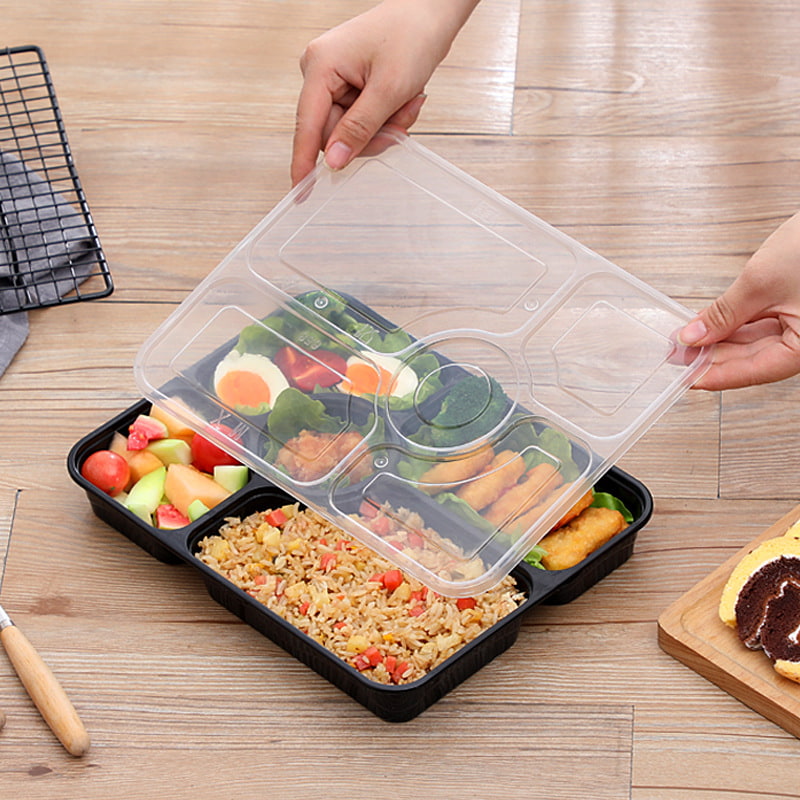
Polypropylene remains dominant for hot and microwave-ready meals because of:
-
High heat deflection temperature
-
Resistance to fatty and oily foods
-
Relatively favorable cost-performance ratio
However, PP in 2026 is engineered differently than in previous decades.
Key Advancements:
-
Improved nucleating agents to enhance crystallinity
-
Structural rib optimization to prevent base collapse
-
Flange redesign for stronger heat-seal interfaces
-
Material downgauging with reinforcement geometry
The challenge lies in balancing lightweighting initiatives with mechanical reliability. Reducing resin weight by 5% may increase deformation risk by 15% under steam stress if geometry is not redesigned accordingly.
PP recycling infrastructure is expanding, but remains uneven globally. Therefore, recyclability claims must be region-specific.
4. PET and RPET: Clarity, Compliance, and Constraint
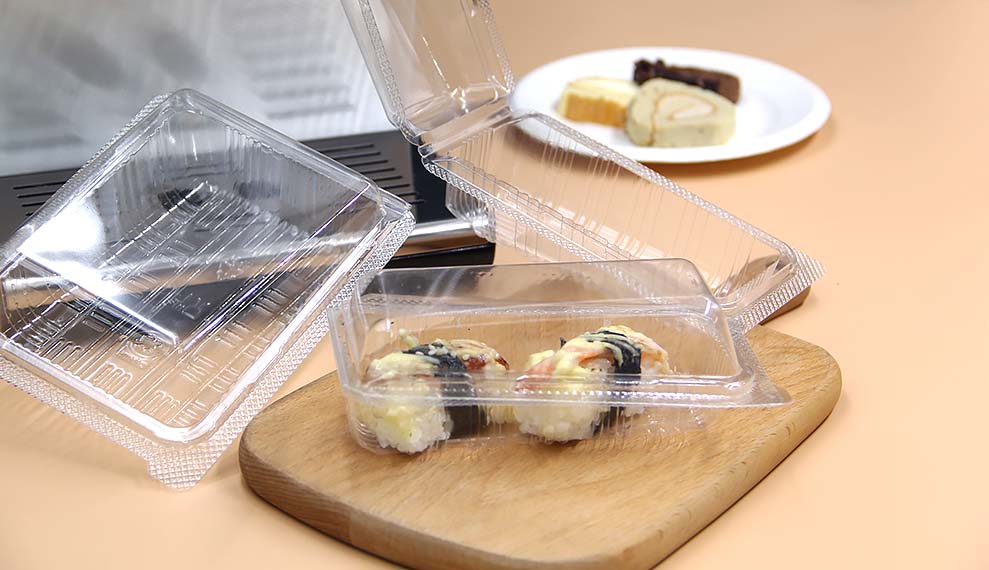
For chilled and cold ready meals, PET and recycled PET (RPET) dominate due to:
-
Superior clarity
-
Strong stiffness
-
Good oxygen barrier performance
By 2026, recycled content mandates in multiple markets increase RPET demand significantly.
Structural Limitations of RPET
RPET introduces technical complexities:
-
Slight brittleness at low temperatures
-
Color variability
-
Processing instability in some batches
Manufacturers mitigate this through:
-
Blending ratios (virgin + recycled)
-
Impact modifiers
-
Adjusted cooling profiles during thermoforming
However, food-grade RPET supply remains constrained by decontamination capacity and collection system efficiency.
In some markets, the competition for high-quality RPET leads to price premiums exceeding virgin PET costs.
5. Fiber-Based Packaging: Promise and Limits
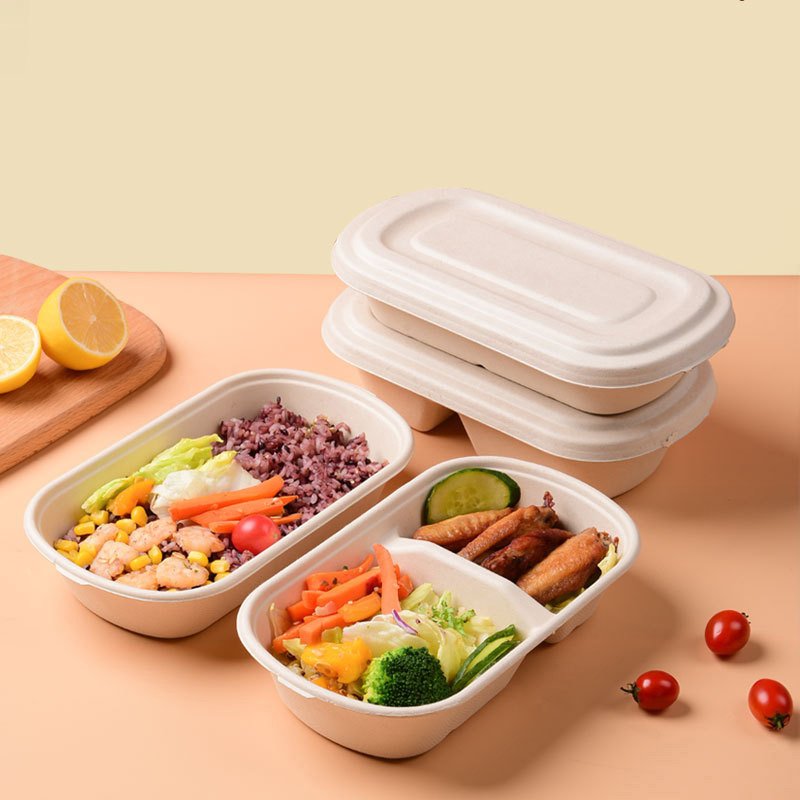
Fiber and molded pulp solutions are often positioned as environmentally superior alternatives.
Advantages include:
-
Renewable feedstock
-
Lower perceived plastic impact
-
Compostability claims in some regions
However, ready meal applications expose performance constraints:
-
Oil penetration without coating
-
Steam absorption leading to softening
-
Structural deformation in high-moisture meals
Coatings can improve barrier performance, but may compromise recyclability or compostability depending on composition.
In 2026, fiber solutions perform best in:
-
Dry ready meals
-
Cold noodle bowls
-
Short-hold products
They are less suited for high-fat, steam-intensive reheating applications unless heavily modified.
6. E-Commerce and Last-Mile Logistics: The New Stress Environment
Traditional packaging was designed for static shelf display.
Delivery ecosystems introduce dynamic stresses:
-
Vibration from motorbike transport
-
Vertical compression in insulated bags
-
Tilting during rapid acceleration
Leakage has become the highest-cost failure mode in ready meals.
Engineering responses include:
-
Wider sealing flanges
-
Higher seal-strength targets
-
Elastic lidding films
-
Anti-warp structural design
Damage rate reduction is now a measurable KPI in packaging procurement.
7. Regulatory Pressure Reshaping Design Decisions
Packaging design in 2026 is directly influenced by:
-
Recyclability criteria definitions
-
Recycled content mandates
-
Extended Producer Responsibility (EPR) fees
-
Labeling standardization requirements
These factors affect:
-
Material selection
-
Layer combinations
-
Ink and adhesive compatibility
-
Packaging geometry
Cost models now include regulatory exposure. A packaging format that increases EPR fees or fails recyclability classification may create downstream financial penalties.
Compliance is no longer reactive; it is integrated into design.
8. Total Cost of Ownership: Beyond Resin Price
Procurement strategies are shifting from resin-cost comparison to system-level evaluation.
Total cost now includes:
-
Material cost
-
Mold amortization
-
Regulatory contributions
-
Damage and return rates
-
Brand reputation risk
-
Retail acceptance thresholds
A tray that reduces resin weight but increases leakage complaints may be economically inferior overall.
In 2026, data-driven cost modeling becomes standard among large food brands.
9. Digital Integration and Traceability
Advanced packaging now integrates:
-
QR codes for recycling instructions
-
Batch traceability systems
-
Digital product passports in regulated markets
This increases transparency but also increases documentation burden.
Suppliers must provide certification, recyclability data, and performance validation reports.
10. The Strategic Role of Advanced Packaging Suppliers
Forward-looking manufacturers invest in:
-
Structural simulation tools
-
Thermal testing facilities
-
Recyclability assessment protocols
-
Regulatory expertise
For example, companies developing:
focus on engineering compatibility with real-world use cases rather than generic substitution.
The value proposition shifts from “lowest unit cost” to “lowest lifecycle risk.”
11. Outlook: Optimization, Not Extremes
The defining characteristic of 2026 ready meal packaging is optimization.
No single material solves all challenges. Instead:
-
PP dominates high-heat applications
-
RPET serves chilled clarity demands
-
Fiber serves limited niche categories
-
Compostables remain infrastructure-dependent
The industry is moving toward:
-
Data-backed material selection
-
Lifecycle-based cost modeling
-
Region-specific compliance alignment
-
Performance-verified design
Packaging decisions are no longer ideological; they are engineering-driven and compliance-aware.
FAQ
1. Why is ready meal packaging more complex than other food packaging?
Ready meals must handle multiple thermal stages (freezing, ambient storage, reheating) while preventing leakage and maintaining freshness. This combination of thermal, mechanical, and barrier requirements makes them technically demanding.
2. What material is most commonly used for hot ready meals?
Polypropylene (PP) is the dominant material for microwave-ready meals because of its heat resistance, oil compatibility, and structural stability under steam exposure.
3. Is recycled PET (RPET) suitable for ready meal trays?
Yes, particularly for chilled and cold meals. However, RPET can present supply constraints, optical variability, and slightly different mechanical properties compared to virgin PET. Proper formulation and processing adjustments are necessary.
4. Are fiber or bagasse trays replacing plastic in 2026?
Not universally. Fiber-based packaging works well for dry or short-hold meals but faces challenges with high-moisture or high-oil applications unless coatings are used, which may affect recyclability or compostability.
5. How does e-commerce affect ready meal packaging design?
Delivery environments introduce vibration, compression, and tilt stress. This increases the importance of seal strength, flange width, and structural reinforcement to prevent leakage during transport.
6. What is the biggest regulatory pressure influencing 2026 packaging?
Recyclability standards and recycled content mandates are major drivers. Packaging must increasingly meet mono-material criteria, labeling requirements, and Extended Producer Responsibility (EPR) cost frameworks.
Conclusion
Ready meal packaging in 2026 represents a complex intersection of thermal science, material engineering, regulatory compliance, and economic modeling.
Success requires:
-
Managing thermal cycling without structural failure
-
Balancing barrier and recyclability
-
Integrating recycled content responsibly
-
Surviving delivery logistics stress
-
Complying with evolving global regulations
The companies that lead this category are not those that simply reduce material weight or switch substrates. They are those that engineer packaging as a performance system — integrating design, material science, logistics reality, and regulatory foresight into a cohesive strategy.
Ready meal packaging is no longer a passive container. It is a technical platform shaping brand reliability, compliance exposure, and environmental accountability.
References
-
Ellen MacArthur Foundation – Global Commitment & Plastics Reports
https://ellenmacarthurfoundation.org/topics/plastics/overview -
OECD – Global Plastics Outlook: Policy Scenarios to 2060
https://www.oecd.org/environment/plastics/ -
European Commission – Packaging and Packaging Waste Regulation (PPWR)
https://environment.ec.europa.eu/topics/waste-and-recycling/packaging-waste_en -
McKinsey & Company – How Sustainable Packaging Can Create Value
https://www.mckinsey.com/business-functions/sustainability/our-insights/how-sustainable-packaging-can-create-value -
Smithers – The Future of Sustainable Packaging
https://www.smithers.com/services/market-reports/packaging -
PlasticsEurope – Plastics Market Data & Recycling Information
https://plasticseurope.org/knowledge-hub/ -
Statista – Ready Meal Market Size & Growth (Global)
https://www.statista.com/topics/5972/ready-meals/ -
United Nations Environment Programme – Single-Use Plastics Report
https://www.unep.org/resources/report/single-use-plastics-roadmap-sustainability -
European Environment Agency – Packaging Waste Statistics
https://www.eea.europa.eu/themes/waste/packaging-waste -
Food and Agriculture Organization – Food Packaging for Safety & Sustainability
http://www.fao.org/food-safety/en/
Copyright Statement
© 2026 Dashan Packing. All rights reserved.
This article is an original work created by the Dashan Packing editorial team.
All text, data, and images are the result of our independent research, industry experience,
and product development insights. Reproduction or redistribution of any part of this content
without written permission is strictly prohibited.
Dashan Packing is committed to providing accurate, evidence-based information and
to upholding transparency, originality, and compliance with global intellectual property standards.