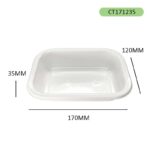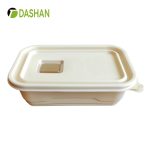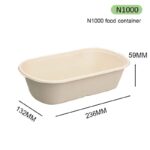

Quick Summary
Bagasse food containers perform well for dry or lightly moist foods consumed quickly, but they have clear limits under steam, oil, and extended holding time. Most failures are caused by misapplication, not poor quality. Understanding when bagasse works—and when alternatives like PP are more suitable—reduces complaints, waste, and costly packaging changes.
What Bagasse Does Well — and Where It Clearly Does Not
Bagasse food containers have become one of the most popular alternatives to plastic in recent years. Driven by sustainability goals, regulations, and consumer expectations, many brands and importers now see bagasse as a default “eco-friendly” solution.
However, real-world feedback tells a more complex story.
Bagasse containers often perform exactly as designed — yet still fail in certain applications. These failures are rarely caused by poor manufacturing quality. Instead, they occur when bagasse is used outside its functional limits.
Understanding those limits is essential for reducing complaints, preventing food quality issues, and avoiding costly packaging changes after launch.
Why Bagasse Is Often Misunderstood
Bagasse is a natural fiber material made from sugarcane residue. Its sustainability credentials are clear: renewable source, compostable under proper conditions, and widely accepted in many foodservice markets.
The misunderstanding begins when environmental attributes are confused with performance capabilities.
Many buyers assume that if a container is:
-
Compostable
-
Food-contact compliant
-
Rigid when empty
…it should work for most foods.
In reality, bagasse is designed for specific food conditions, not all of them.
What Bagasse Containers Are Designed to Do Well
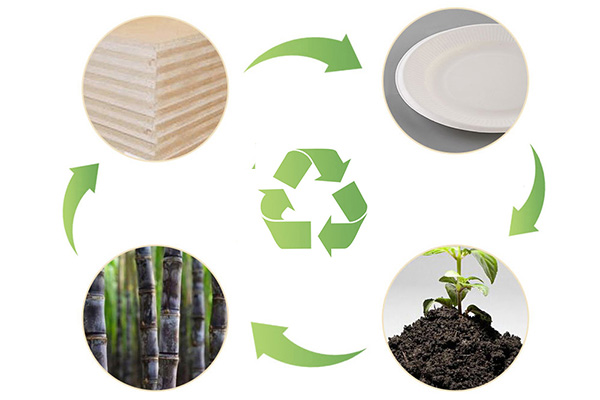
Bagasse containers perform reliably in scenarios that match their structural behavior.
They are well suited for:
-
Dry or semi-dry foods
-
Short holding times
-
Immediate consumption
-
In-store dining or takeaway with minimal sealing time
Structurally, bagasse offers:
-
Good initial rigidity
-
Stable shape when dry
-
Natural heat tolerance for short exposure
For applications like bakery items, rice dishes consumed quickly, or light meals with low oil content, bagasse can be an effective and responsible choice.
Problems arise when the use case changes, not when the material changes.
How Moisture Affects Bagasse Performance
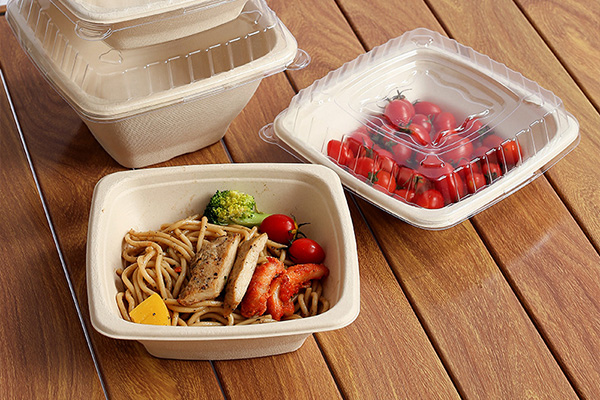
Moisture is the first major limitation of bagasse.
Because bagasse is a fiber-based material, it naturally interacts with water vapor. When hot food is placed inside a container, steam is released and trapped in the enclosed space.
Over time, this leads to:
-
Fiber softening
-
Loss of rigidity
-
Warping at edges and corners
-
Reduced stacking strength
Importantly, steam is more damaging than liquid water. Steam repeatedly condenses and evaporates, creating continuous moisture exposure even when no visible liquid is present.
This is why bagasse containers may look stable at first but soften noticeably after 30–60 minutes.
Oil and Fat Exposure: Where Problems Begin
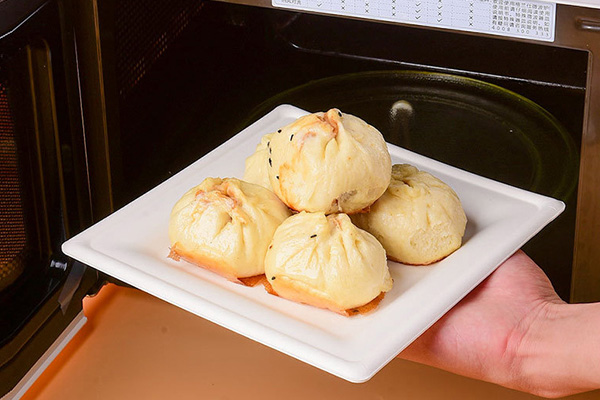
Oil introduces a second layer of stress.
Hot oils and fats can:
-
Penetrate fiber structures
-
Reduce stiffness over time
-
Combine with heat to accelerate deformation
While surface coatings can delay oil absorption, they do not eliminate it. Coatings slow down penetration; they do not block it entirely — especially during extended holding or delivery.
Foods such as fried rice, curries, pasta with sauce, or grilled meats create conditions where oil and moisture work together, significantly reducing the structural integrity of bagasse containers.
Time: The Most Ignored Limitation
Time is often overlooked during packaging selection.
Many tests focus on:
-
Immediate filling
-
Short heat exposure
-
Visual inspection within minutes
But in real operations, food containers are often sealed and held for:
-
30 minutes during preparation and dispatch
-
45–60 minutes in delivery
-
Even longer in hot display scenarios
As time increases:
-
Moisture absorption continues
-
Oil migration deepens
-
Structural weakening accumulates
This is why complaints frequently appear after market launch, not during sampling.
Bagasse in Delivery and Sealed Packaging Scenarios
Delivery is where bagasse faces its greatest challenges.
A typical delivery scenario includes:
-
Hot food
-
A sealed container
-
Extended holding time
-
Stacking and movement during transport
In this environment, bagasse containers are exposed to combined stress:
-
Steam softens fibers
-
Oil weakens the base
-
Stacking pressure accelerates collapse
These failures are not defects. They are predictable outcomes when bagasse is used in applications it was never designed for.
Common Misapplications of Bagasse Containers
Based on real market feedback, the most frequent misuses include:
-
Using bagasse for high-oil, high-moisture hot foods
-
Treating bagasse as a direct replacement for PP or CPET
-
Selecting bagasse solely to meet sustainability targets
-
Ignoring holding time and delivery conditions
In many cases, the container performs exactly as engineered — but expectations were misaligned.
When Bagasse Is the Right Choice
Bagasse works best when:
-
Food is dry or lightly moist
-
Oil content is low
-
Consumption is immediate or near-immediate
-
Containers are not sealed for long periods
It can also work effectively when used strategically, such as:
-
Pairing bagasse bases with alternative lids
-
Limiting use to dine-in or short takeaway
-
Combining with other materials across a product range
Correct use reduces failure rates and improves both sustainability and customer satisfaction.
Bagasse vs PP Application Boundary Comparison
| Use Condition | Bagasse Containers | PP Containers |
|---|---|---|
| Dry food | ✅ Suitable | ✅ Suitable |
| Low-moisture hot food | ⚠️ Limited time only | ✅ Suitable |
| High-moisture food | ❌ Not recommended | ✅ Suitable |
| Oily or fatty food | ❌ High risk | ✅ Suitable |
| Sealed packaging | ⚠️ Short duration only | ✅ Stable |
| Food delivery | ❌ High failure risk | ✅ Reliable |
| Long holding time | ❌ Not suitable | ✅ Suitable |
| Stacking during transport | ❌ Structural risk | ✅ Good resistance |
| Sustainability goals | ✅ Compostable | ⚠️ Depends on recycling system |
| Replacement for plastic | ❌ Not direct | — |
How Experienced Suppliers Evaluate Bagasse Applications
Experienced suppliers do not start by asking, “Do you want bagasse?”
They start by asking:
-
What food is being packed?
-
How hot is it at filling?
-
How long will it remain sealed?
-
Will it be delivered or stacked?
At DASHAN, bagasse is treated as one solution among many, not a universal answer. By evaluating food behavior and usage conditions first, packaging choices can be aligned with real performance requirements — avoiding unnecessary complaints and redesigns.
FAQ
1. Are bagasse food containers suitable for hot food?
Yes, but only for hot foods with low moisture and oil content, and for short holding times. Extended sealing or delivery increases failure risk.
2. Why do bagasse containers soften over time?
Bagasse is fiber-based and absorbs moisture from steam. Over time, this reduces rigidity and structural strength, especially in sealed environments.
3. Can coatings fully protect bagasse from oil and moisture?
No. Coatings slow penetration but do not completely block oil or steam, particularly during long holding periods.
4. Is bagasse a direct replacement for plastic containers?
No. Bagasse and plastics like PP behave differently under heat, oil, and time. Substitution without evaluating the food application often leads to failure.
5. When should PP be considered instead of bagasse?
PP is better suited for hot, oily foods, long holding times, and delivery scenarios where sealing and stacking are required.
Conclusion: Sustainability Starts with Correct Use
Bagasse is not a flawed material.
It is a specific solution.
Using bagasse outside its functional limits leads to failure, waste, and frustration — outcomes that contradict sustainability goals rather than support them.
True sustainable packaging starts with selecting materials that perform reliably in real conditions. When bagasse is used correctly, it delivers both environmental and operational value. When misused, it creates avoidable problems.
Understanding the real limits of bagasse is not a rejection of sustainability — it is how sustainability actually works.
References
-
FDA – Food Contact Substances
https://www.fda.gov/food/food-ingredients-packaging/food-contact-substances -
European Commission – Food Contact Materials
https://food.ec.europa.eu/safety/chemical-safety/food-contact-materials_en -
Packaging Europe – Fiber-Based Food Packaging
https://packagingeurope.com -
Smithers – Foodservice Packaging Market Analysis
https://www.smithers.com/industries/packaging
Copyright Statement
© 2026 Dashan Packing. All rights reserved.
This article is an original work created by the Dashan Packing editorial team.
All text, data, and images are the result of our independent research, industry experience,
and product development insights. Reproduction or redistribution of any part of this content
without written permission is strictly prohibited.
Dashan Packing is committed to providing accurate, evidence-based information and
to upholding transparency, originality, and compliance with global intellectual property standards.