

Quick Summary
Despite sustainability pressure, polypropylene (PP) remains the most reliable material for hot food packaging. Its thermal stability, oil resistance, and structural consistency outperform many “greener” alternatives such as PLA, bagasse, and coated paper under real hot food conditions. In applications involving heat, steam, oil, and time, packaging performance directly impacts food waste and operational reliability—making PP a practical and often more sustainable choice in use.
Introduction: When Sustainability Promises Meet Hot Food Reality
Over the past decade, food packaging has become a frontline topic in sustainability discussions. Compostable fibers, bio-based plastics, and paper alternatives are widely promoted as greener solutions, often positioned as direct replacements for traditional plastics.
Yet in hot food packaging—where temperature, oil, steam, and time interact simultaneously—many of these materials fail not because they are poorly made, but because they are misapplied.
Despite mounting sustainability pressure, polypropylene (PP) remains the dominant material for hot food containers across quick-service restaurants, airline catering, central kitchens, and delivery platforms. This persistence is not accidental. It reflects a material reality that sustainability claims alone cannot override.
This article explains why PP continues to outperform “greener” materials in hot food applications, and why material selection must begin with food behavior, not environmental narratives.

1. What Hot Food Packaging Really Demands from Materials
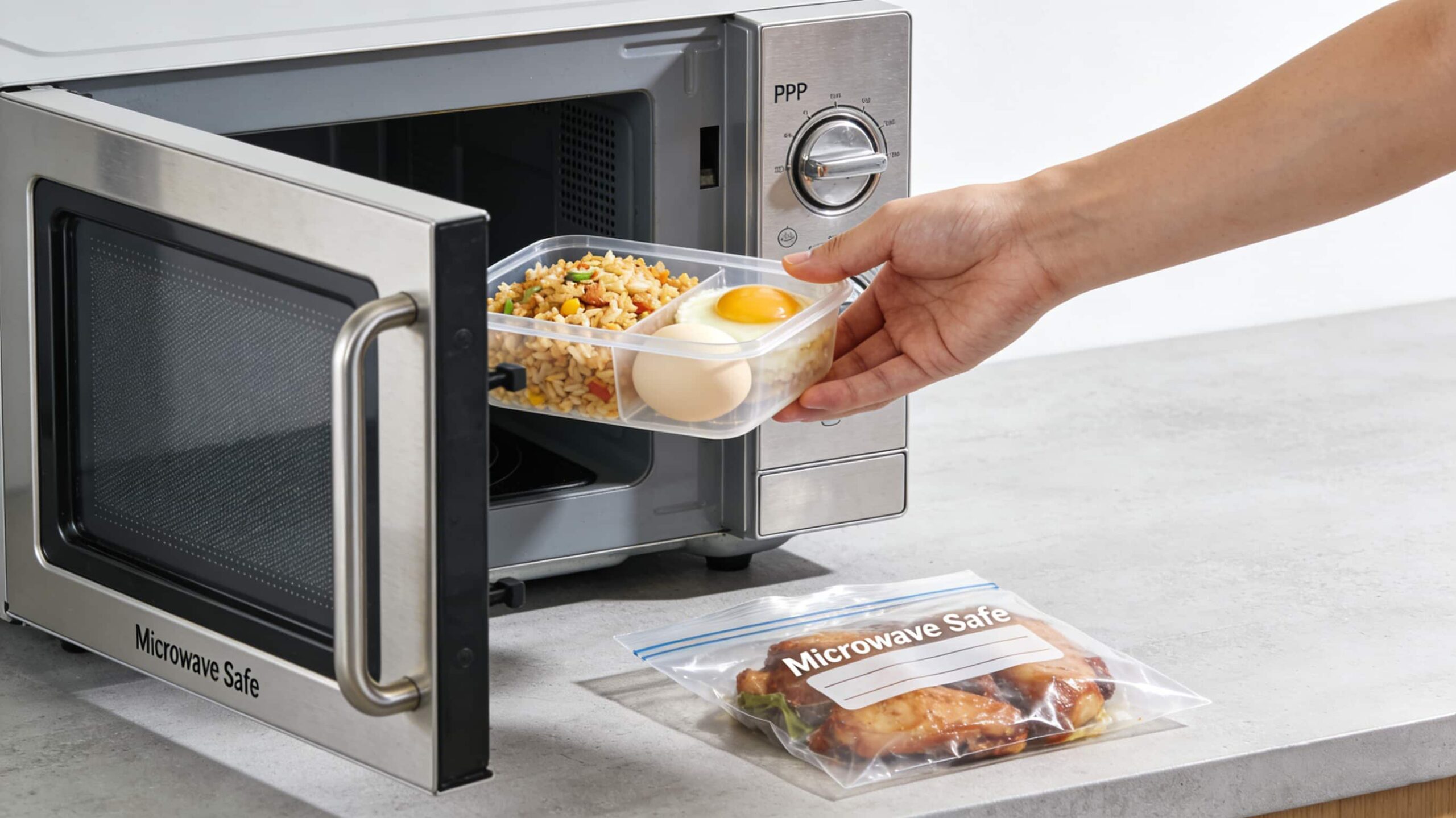
Hot food packaging is one of the most demanding use cases in food service. Unlike cold or ambient foods, hot meals subject packaging to multiple stresses at once:
-
Elevated temperature (often 80–100°C at filling)
-
Sustained heat retention, not just brief exposure
-
Oil and fat contact, sometimes under heat
-
Steam generation and condensation
-
Mechanical load during stacking and transport
-
Time, especially in delivery scenarios
A material that survives short heat exposure may still fail after 20–40 minutes of thermal and moisture stress. This distinction is critical—and frequently overlooked.
Key performance requirements include:
-
High heat deflection temperature (HDT)
-
Structural rigidity under heat
-
Resistance to oil penetration
-
Dimensional stability during cooling
-
Predictable behavior across large production volumes
PP meets these requirements in ways most alternative materials do not.
2. Why Polypropylene Performs So Well Under Heat
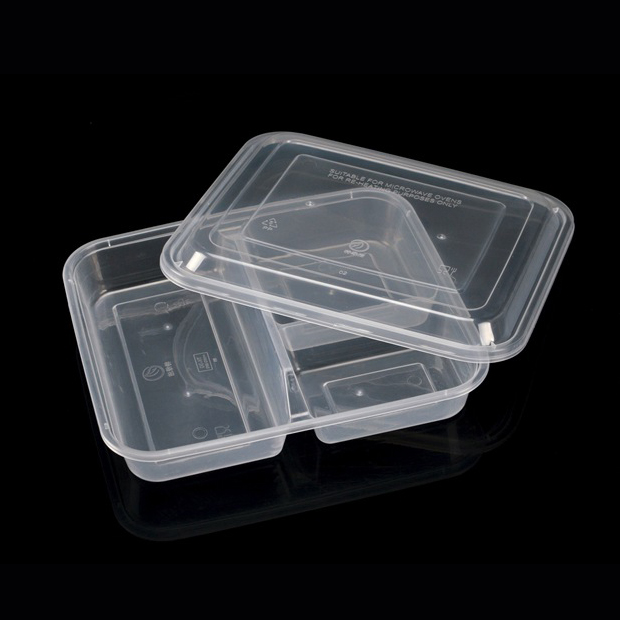
2.1 Semi-crystalline structure and thermal stability
PP is a semi-crystalline polymer with a relatively high melting point (around 160–170°C). More importantly, its heat deflection temperature aligns well with real hot food conditions.
Under hot fill and holding:
-
PP retains stiffness longer
-
Shape deformation occurs gradually, not suddenly
-
Structural collapse is rare when designs are correct
This controlled response to heat is a major reason PP is trusted in foodservice environments.
2.2 Oil and grease resistance
Hot foods often contain fats that become more aggressive at elevated temperatures. PP is chemically inert to most oils and fats, meaning:
-
No absorption
-
No softening
-
No leakage through the material wall
This performance is intrinsic to PP’s molecular structure and does not rely on surface coatings or additives that may degrade over time.
2.3 Stability across repeated heat exposure
In real foodservice workflows, packaging may experience:
-
Hot filling
-
Holding under heat lamps
-
Partial cooling
-
Reheating (especially in microwaves)
PP tolerates these cycles with minimal loss of mechanical integrity, making it suitable for complex food distribution systems.
3. Why Many “Greener” Materials Struggle with Hot Food
3.1 PLA: Compostable, but thermally limited
Polylactic acid (PLA) is often marketed as a compostable alternative to plastic. While suitable for cold drinks and ambient foods, PLA has a glass transition temperature around 55–60°C.
In hot food scenarios:
-
Containers soften rapidly
-
Lids lose sealing force
-
Structural rigidity drops sharply
Even heat-treated PLA variants struggle with prolonged exposure to hot, oily foods. Compostability does not compensate for functional failure in use.
3.2 Bagasse and molded fiber: Heat + moisture = weakness
Bagasse and other molded fiber materials are frequently promoted as plastic-free solutions. However, their performance is highly sensitive to moisture.
Hot food introduces:
-
Steam from the food itself
-
Condensation on container walls
-
Moisture migration into fiber structure
As moisture increases:
-
Mechanical strength decreases
-
Walls soften
-
Oil penetration accelerates
To compensate, coatings are often added—creating new recyclability and compostability challenges.
3.3 Paper-based laminates: Coatings become the bottleneck
Paper containers designed for hot food rely on plastic or bio-based coatings for performance. Under heat and oil:
-
Delamination can occur
-
Coatings may crack or blister
-
Barrier performance depends entirely on coating integrity
In these systems, the coating—not the paper—determines success or failure.
4. Performance Comparison: PP vs “Greener” Alternatives
| Property | PP | PLA | Bagasse / Fiber | Coated Paper |
|---|---|---|---|---|
| Heat resistance | High | Low–Medium | Medium (moisture-sensitive) | Medium |
| Oil resistance | Excellent | Moderate | Poor without coating | Coating-dependent |
| Structural stability | High | Low under heat | Degrades with moisture | Variable |
| Microwave suitability | Good (grade-dependent) | Limited | Poor | Limited |
| Consistency at scale | High | Medium | Medium–Low | Medium |
This comparison highlights a key reality: many greener materials require ideal conditions to perform, while PP performs reliably under imperfect, real-world use.
5. Compliance Does Not Equal Suitability
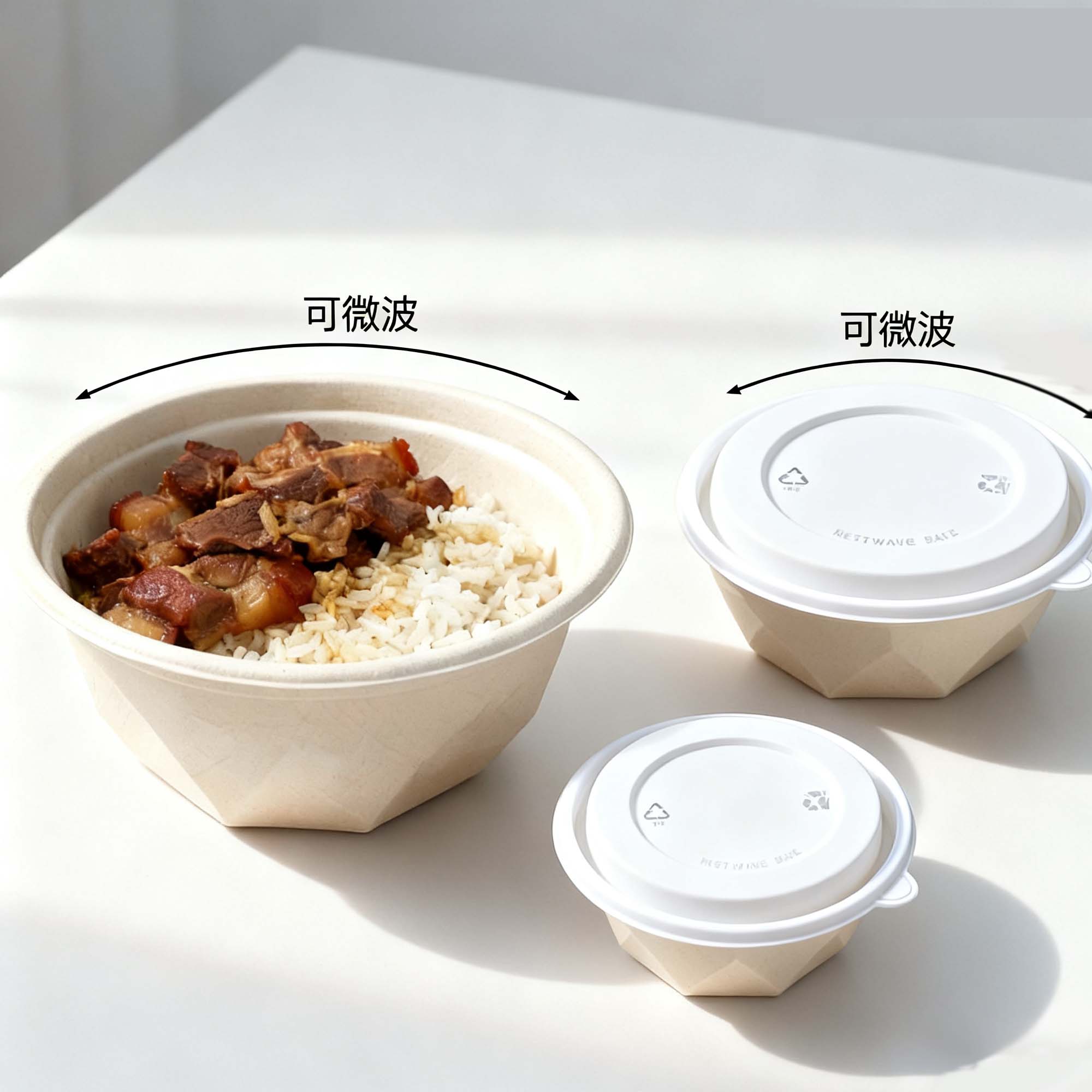
Many alternative materials meet food contact regulations. However:
-
Regulatory compliance confirms safety
-
It does not guarantee functional performance
A material may be approved for food contact yet still fail in:
-
Hot oil exposure
-
Long holding times
-
Delivery vibration combined with heat
PP’s dominance persists because it performs well beyond the test environment.
6. Why PP Remains the Default at Scale
Large-scale foodservice operations prioritize:
-
Consistency
-
Predictability
-
Low failure rates
-
Process stability
In airline catering, quick-service chains, and central kitchens, a small increase in packaging failure translates into:
-
Food waste
-
Customer complaints
-
Operational disruption
PP minimizes these risks. This is why it remains the baseline material for hot food, even as sustainability expectations rise.
7. Sustainability Reframed: Performance as an Environmental Metric
Sustainability is often framed in terms of material origin or end-of-life. However, use-phase performance is equally important.
A compostable container that collapses and causes food waste may have a worse environmental impact than a recyclable PP container that protects the meal successfully.
In lifecycle assessments, food waste frequently outweighs packaging footprint. From this perspective, functional durability becomes a sustainability feature.
8. Where “Greener” Materials Still Make Sense
This is not an argument against alternative materials. They perform well when:
-
Food is cold or ambient
-
Use time is short
-
Oil content is low
-
Structural demands are minimal
The mistake lies in applying one sustainability solution universally, without regard for food behavior.
9. Design Matters More Than Labels
Material choice alone does not determine success. Design plays a decisive role.
Manufacturers with long-term experience in hot food packaging often:
-
Increase wall thickness strategically
-
Reinforce corners and rims
-
Optimize venting to manage steam
At DASHAN, for example, PP trays used for hot food are developed with material-specific design rules rather than generic container geometries. This approach prioritizes real-world performance over material substitution.
FAQ
1. Why is PP still widely used for hot food packaging?
PP offers high heat resistance, excellent oil and grease stability, and consistent structural performance under prolonged heat exposure, making it suitable for demanding hot food applications.
2. Are compostable materials suitable for hot food?
Some compostable materials can handle short heat exposure, but many struggle with prolonged heat, steam, and oil. Functional failure is common when they are used outside ideal conditions.
3. Why does PLA deform with hot food?
PLA has a relatively low glass transition temperature. When exposed to hot food, it softens quickly and loses rigidity, especially over time.
4. Does food contact compliance guarantee hot food performance?
No. Regulatory approval confirms safety but does not ensure structural or thermal suitability for real hot food scenarios such as delivery or holding.
5. Is PP less sustainable than fiber or compostable materials?
Not necessarily. When packaging failure leads to food waste, the overall environmental impact can exceed that of a recyclable PP container that protects food effectively.
6. When do “greener” materials make sense?
They work well for cold, dry, or short-use applications where heat and oil resistance are not critical.
Conclusion: Why PP Persists Despite Sustainability Pressure
PP continues to outperform greener materials in hot food packaging because it aligns with the realities of heat, oil, moisture, and time. Its success is not due to marketing inertia, but to material science and operational reliability.
True sustainability cannot ignore usability. In hot food applications, PP remains the most dependable choice—not because it is perfect, but because it works when conditions are least forgiving.
References
-
PlasticsEurope — Polypropylene (PP) Material Properties and Applications
https://plasticseurope.org/knowledge-hub/polypropylene-pp/ -
U.S. FDA — Packaging & Food Contact Substances
https://www.fda.gov/food/packaging-food-contact-substances-fcs -
European Food Safety Authority (EFSA) — Food Contact Materials
https://www.efsa.europa.eu/en/topics/topic/food-contact-materials -
WRAP UK — Packaging, Food Waste, and Sustainability
https://wrap.org.uk/resources/guide/food-packaging-and-food-waste -
Smithers — Heat Resistance and Performance of Food Packaging Materials
https://www.smithers.com/services/packaging/packaging-materials-testing
Copyright Statement
© 2026 Dashan Packing. All rights reserved.
This article is an original work created by the Dashan Packing editorial team.
All text, data, and images are the result of our independent research, industry experience,
and product development insights. Reproduction or redistribution of any part of this content
without written permission is strictly prohibited.
Dashan Packing is committed to providing accurate, evidence-based information and
to upholding transparency, originality, and compliance with global intellectual property standards.