

Quick Summary
Anti-fog lids play a critical role in cold food delivery by maintaining clear product visibility under high humidity and temperature differences. Unlike standard lids, anti-fog lids prevent condensation from forming droplets, improving food presentation, customer trust, and brand perception. For salads, desserts, sushi, and ready-to-eat meals, anti-fog packaging is becoming a functional standard rather than a premium option. At DASHAN, anti-fog PET and RPET lids are designed to balance clarity, durability, food safety compliance, and sustainability.
How Clear Packaging Impacts Customer Trust, Food Perception, and Brand Value
Introduction: The Hidden Packaging Problem in Cold Food Delivery
As cold food delivery continues to grow—driven by ready-to-eat meals, salads, desserts, sushi, and fresh fruit cups—packaging performance is under greater scrutiny than ever before. While much attention is placed on container strength, sealing, and sustainability, one critical factor is often overlooked: lid visibility.
Fogging on transparent lids may seem like a minor aesthetic issue, but in reality, it directly influences consumer trust, product appeal, and brand perception. When condensation obscures the food inside, customers may perceive the meal as less fresh, less premium, or poorly packaged, even if the food quality is excellent.
This is where anti-fog lids play a significant role. Designed to maintain visual clarity in high-humidity, cold-temperature environments, anti-fog lids are becoming an essential upgrade for brands seeking to improve customer experience in cold food delivery.
What Causes Fogging in Cold Food Packaging?
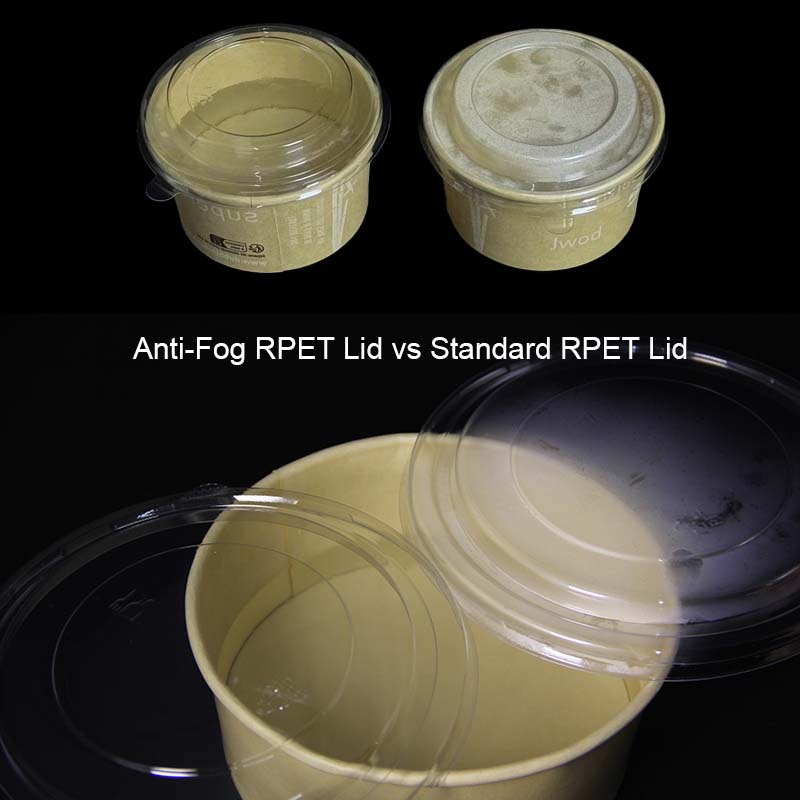
Fogging is primarily caused by condensation, which occurs when warm external air meets a cold lid surface. The moisture in the air turns into droplets, forming a misty or cloudy appearance that blocks product visibility.
Key Factors That Accelerate Fogging
1. Temperature Differences
Cold food stored at low temperatures creates a strong thermal contrast with surrounding air, increasing condensation formation.
2. High-Moisture Food Content
Foods such as salads, fruit, cold noodles, and desserts release moisture into sealed containers, raising internal humidity levels.
3. Sealed Packaging Environments
Airtight packaging traps moisture, preventing evaporation and intensifying fog buildup.
4. Standard PET or RPET Lid Limitations
While conventional transparent lids offer excellent clarity initially, they lack surface treatments to manage condensation, leading to rapid fogging over time.
What Is an Anti-Fog Lid?
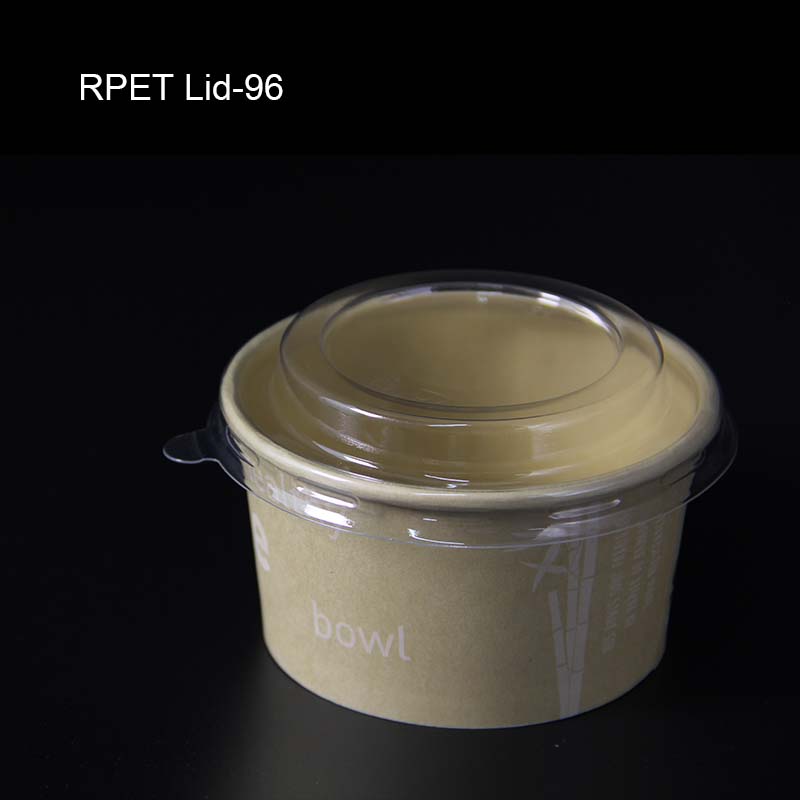
An anti-fog lid is engineered to prevent water droplets from forming visible condensation on the lid surface. Instead of moisture forming scattered droplets that scatter light, anti-fog technology helps create a uniform, transparent water film, keeping the product visible.
Common Anti-Fog Technologies
| Technology Type | Description | Typical Application |
|---|---|---|
| Anti-Fog Coating | Surface-applied layer that spreads moisture evenly | Premium cold food packaging |
| Anti-Fog Masterbatch | Anti-fog additives blended into plastic resin | PET / RPET thermoformed lids |
| Surface Treatment | Physical or chemical surface modification | High-performance lids |
At DASHAN, anti-fog lids are typically produced using material-modified PET or RPET formulations, combined with controlled thermoforming processes to ensure consistent clarity, durability, and food safety compliance.
Why Anti-Fog Lids Matter in Cold Food Delivery
1. Visual Appeal Directly Drives Purchase Decisions
Consumers make rapid judgments based on appearance—especially on delivery platforms and in retail displays. Clear food presentation signals freshness, quality, and hygiene.
Fogged lids, on the other hand, can cause customers to question:
-
Food freshness
-
Storage conditions
-
Overall brand reliability
Maintaining a clear product view helps reinforce positive first impressions and repeat purchases.
2. Anti-Fog Lids Enhance Brand Perception
Packaging quality reflects brand positioning. Premium or health-focused brands increasingly use anti-fog lids to support a clean, professional, and modern image.
This is especially valuable for:
-
Healthy meal prep brands
-
Salad and cold bowl chains
-
High-end dessert and pastry packaging
-
Sushi and fresh food retailers
At DASHAN, we often see brands upgrading to anti-fog lids as part of a broader effort to differentiate visually in crowded marketplaces.
3. Reduced Customer Complaints and Returns
Visual fogging can lead customers to assume:
-
The food is stale
-
Packaging failed
-
The product was mishandled
This may result in negative reviews, refund requests, or decreased brand loyalty. Investing in anti-fog packaging helps prevent misunderstandings that originate purely from visual presentation.
Anti-Fog Lids vs. Standard Lids: Practical Comparison
| Feature | Standard PET / RPET Lid | Anti-Fog Lid |
|---|---|---|
| Initial Clarity | High | High |
| Fog Resistance | Low | High |
| Visibility Over Time | Decreases | Remains Clear |
| Suitability for Cold Food | Limited | Excellent |
| Customer Perception | Neutral to Negative | Premium / Professional |
| Cost | Lower | Slightly Higher |
| Return on Investment | Low to Medium | Medium to High |
While anti-fog lids may carry a slightly higher unit cost, the improved customer experience and brand value often justify the investment.
Key Applications Where Anti-Fog Lids Are Essential
1. Cold Salad & Meal Prep Containers
Clear visibility improves appetite appeal and reinforces freshness perception.
2. Dessert & Pastry Packaging
Cake slices, puddings, and parfaits benefit from unobstructed presentation.
3. Sushi, Fruit Cups & Cold Noodle Boxes
Transparency supports premium positioning and hygiene confidence.
4. Supermarket Ready-to-Eat Displays
Anti-fog lids enhance shelf presentation and increase impulse purchases.
At DASHAN, anti-fog lids are widely paired with PET / RPET trays and containers, ensuring both visual clarity and structural compatibility.
What Buyers Should Consider When Choosing Anti-Fog Lids
1. Material Compatibility (PET vs RPET)
Buyers should evaluate:
-
Whether anti-fog additives impact recyclability
-
Compatibility with sustainable RPET goals
-
Compliance with FDA / EU food contact regulations
DASHAN ensures that anti-fog materials meet international food safety standards while supporting recycled-content options where applicable.
2. Durability of Anti-Fog Performance
Not all anti-fog lids perform equally over time. Important questions include:
-
How long does fog resistance last?
-
Does performance degrade during long delivery routes?
-
Does washing or refrigeration affect clarity?
For large-scale buyers, real-world performance testing is recommended before mass adoption.
3. Lid Fit, Seal & Stackability
Anti-fog features should not compromise:
-
Airtight sealing
-
Secure lid locking
-
Stackability for logistics efficiency
DASHAN integrates anti-fog technology while maintaining precise mold tolerances and consistent sealing performance.
Manufacturing Perspective: How Quality Anti-Fog Lids Are Made
Producing reliable anti-fog lids requires careful coordination between materials, tooling, and forming processes.
Key Manufacturing Factors
| Factor | Why It Matters |
|---|---|
| Material Formulation | Determines clarity and fog resistance |
| Thermoforming Precision | Ensures uniform lid thickness |
| Weight Tolerance Control | Prevents warping and sealing failure |
| Surface Quality | Impacts optical transparency |
| Quality Inspection | Ensures batch-to-batch consistency |
At DASHAN, anti-fog lid production is supported by automated thermoforming lines, strict weight tolerance standards, and multi-stage quality control, ensuring stable performance across high-volume orders.
Cost vs Value: Are Anti-Fog Lids Worth It?
While anti-fog lids typically increase packaging cost slightly, the business value often outweighs the price difference.
Cost–Benefit Considerations
| Benefit | Business Impact |
|---|---|
| Better Product Visibility | Higher sales conversion |
| Improved Brand Image | Stronger market positioning |
| Fewer Complaints | Reduced customer service costs |
| Higher Customer Satisfaction | Increased repeat purchases |
For brands competing in visually driven food markets, anti-fog lids can become a high-impact, low-risk upgrade.
Sustainability Considerations
Many buyers worry that anti-fog treatments may conflict with sustainability goals. In practice, modern anti-fog technologies can be integrated into PET and RPET packaging while maintaining:
-
Recyclability
-
Food contact compliance
-
Lightweight packaging design
DASHAN supports sustainable packaging strategies by offering RPET anti-fog lids designed to balance performance, environmental responsibility, and cost efficiency.
FAQ
1. What is an anti-fog lid?
An anti-fog lid is a transparent food packaging lid designed to prevent condensation from forming visible water droplets. It keeps food clearly visible by allowing moisture to spread into a uniform, transparent film.
2. Why do standard lids fog up in cold food delivery?
Fogging occurs due to temperature differences between cold food and warm air, combined with moisture released from food. Standard PET or RPET lids lack surface treatments to manage condensation effectively.
3. Are anti-fog lids necessary for cold food packaging?
For cold, high-moisture foods such as salads, desserts, sushi, and fruit cups, anti-fog lids significantly improve visual appeal and reduce customer complaints, making them highly recommended.
4. Do anti-fog lids affect food safety or compliance?
High-quality anti-fog lids are designed to meet FDA and EU food contact regulations. At DASHAN, anti-fog solutions are selected to ensure food safety compliance and stable performance.
5. Can anti-fog lids be made from RPET?
Yes. Modern anti-fog technologies can be integrated into RPET lids while maintaining recyclability and transparency, supporting sustainability goals.
6. Are anti-fog lids much more expensive than standard lids?
Anti-fog lids usually cost slightly more per unit, but the improved customer experience, reduced returns, and stronger brand perception often deliver a higher overall return on investment.
7. How long does the anti-fog effect last?
Performance depends on material formulation and manufacturing quality. Well-designed anti-fog lids maintain clarity throughout typical cold storage and delivery periods.
Conclusion: A Small Packaging Upgrade with a Big Impact
Anti-fog lids are no longer a luxury reserved for premium brands—they are becoming a functional standard in cold food delivery and ready-to-eat packaging.
By maintaining clear product visibility, anti-fog lids:
-
Strengthen consumer trust
-
Enhance visual appeal
-
Reduce negative customer feedback
-
Elevate brand perception
For food brands, retailers, and importers looking to improve packaging performance, anti-fog lids represent a practical and future-proof investment.
At DASHAN, we view anti-fog packaging not as a marketing feature, but as a performance-driven solution built on material science, manufacturing consistency, and real-world application experience.
References
-
U.S. Food & Drug Administration (FDA)
Food Contact Substances (FCS) Overview
https://www.fda.gov/food/packaging-food-contact-substances-fcs -
European Commission
Food Contact Materials – Legislation
https://food.ec.europa.eu/safety/chemical-safety/food-contact-materials_en -
PlasticsEurope
PET Packaging: Properties and Applications
https://plasticseurope.org/knowledge-hub/pet-polyethylene-terephthalate/ -
Smithers
The Future of Rigid Plastic Food Packaging
https://www.smithers.com/services/market-reports/packaging/rigid-plastic-packaging -
Packaging Europe
How Anti-Fog Technology Improves Food Packaging Performance
https://packagingeurope.com/features/how-anti-fog-technology-works-in-food-packaging/ -
ScienceDirect
Condensation and Anti-Fogging Mechanisms on Polymer Surfaces
https://www.sciencedirect.com/topics/materials-science/anti-fogging -
Journal of Food Packaging and Shelf Life
Effect of Packaging Transparency on Consumer Perception of Fresh Food
https://www.sciencedirect.com/journal/food-packaging-and-shelf-life -
European PET Bottle Platform (EPBP)
PET & RPET Recycling and Food Contact Safety
https://www.petplatform.org/