

Introduction
In recent years, Europe has witnessed a major shift in the food packaging sector towards eco-friendly materials. Driven by environmental concerns, regulatory policies, and increasing consumer demand for sustainability, eco-friendly food packaging has become the gold standard in Europe. The food industry is now prioritizing biodegradable, compostable, and recycled materials as part of an effort to reduce plastic waste and its environmental impact.
The following article explores the reasons behind this transformation, delving into environmental concerns, regulations, consumer behavior, corporate responsibility, and the economic advantages of choosing sustainable materials. The article will also analyze trends, innovations, and the future direction of the packaging industry in Europe, and conclude with frequently asked questions (FAQs) and references.
1. The Environmental Crisis and Its Impact on Food Packaging
1.1. Plastic Waste and Pollution in Europe
Europe faces a mounting environmental challenge due to plastic pollution, particularly from single-use plastics and food packaging. According to a report from the European Commission, plastic packaging waste in Europe has reached alarming levels. In 2020 alone, over 12 million tons of plastic waste were generated in the European Union, with plastic packaging accounting for around 40% of that waste. This stark reality has driven policymakers to act.
Key Data:
-
The European Plastics Strategy aims to ensure that all plastic packaging in the EU is recyclable by 2030.
-
Only 30% of plastic packaging is currently recycled, while the rest ends up in landfills or the environment.
Figure 1: Plastic Packaging Waste in Europe
| Year | Total Plastic Waste (Million Tons) | Plastic Packaging Waste (%) |
|---|---|---|
| 2015 | 25 | 40% |
| 2018 | 28 | 38% |
| 2020 | 30 | 40% |
1.2. The Growing Environmental Impact of Packaging Waste
Plastic packaging is a significant contributor to environmental degradation, particularly in oceans. The European Environmental Agency (EEA) reports that over 150,000 tons of plastic end up in European rivers each year, contributing to the growing problem of marine litter. The EU has set ambitious goals to curb this problem by reducing single-use plastics and encouraging businesses to adopt sustainable packaging materials.
2. Regulatory Landscape in Europe
2.1. The Role of EU Policies and Regulations
Europe has been at the forefront of regulating plastic waste and food packaging. The Single-Use Plastics Directive (SUPD) enacted by the EU in 2019 is a cornerstone in Europe’s efforts to tackle plastic pollution. It bans the use of certain single-use plastic items, including plastic cutlery, plates, and straws.
Key Regulations:
-
The European Plastics Strategy aims for 100% recyclability of plastic packaging by 2030.
-
Extended Producer Responsibility (EPR) schemes in various European countries make manufacturers responsible for the entire lifecycle of their packaging, encouraging them to invest in recyclable and eco-friendly materials.
Incentives and Penalties: The EU is offering tax incentives to companies adopting sustainable packaging. Conversely, manufacturers who do not meet sustainability targets face penalties and higher taxes.
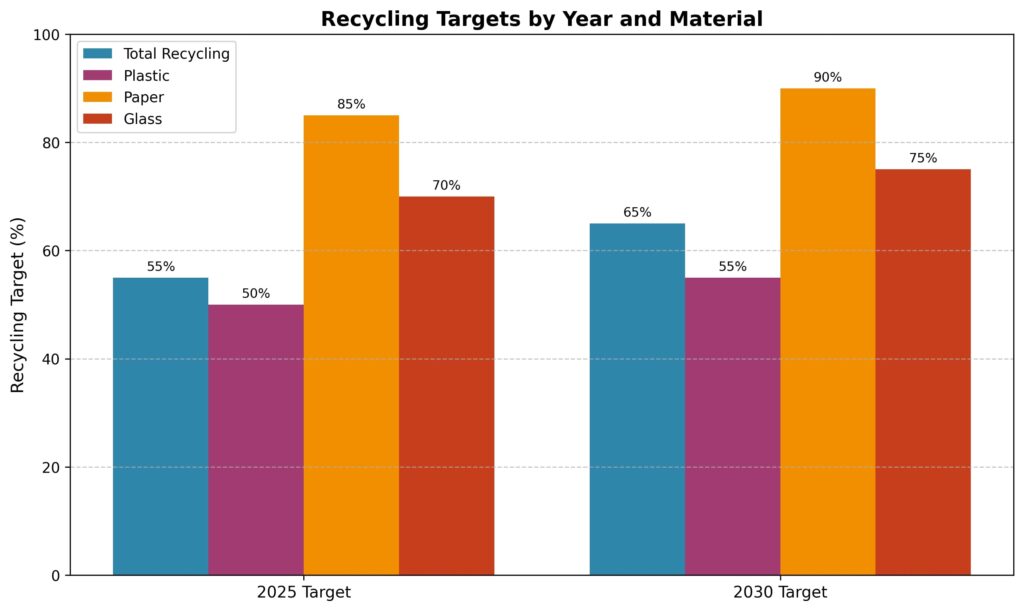
Figure 2: Recycling Targets for European Packaging Materials
| Year | Total Recycling Target (%) | Specific Material Recycling Targets |
|---|---|---|
| 2025 | 55% | Plastic 50%, Paper 85%, Glass 70% |
| 2030 | 65% | Plastic 55%, Paper 90%, Glass 75% |
2.2. National Initiatives and Regulations
Beyond EU-wide policies, many European countries have introduced national regulations to encourage eco-friendly food packaging. Germany has been a leader with its Packaging Act, which sets stringent requirements for recycling rates and encourages companies to use recycled materials in packaging.
3. Consumer Preferences for Sustainable Packaging
3.1. Consumer Awareness and Environmental Concerns
European consumers are increasingly aware of the environmental impact of food packaging. Surveys have shown that over 80% of European consumers consider the environmental impact of packaging when making purchasing decisions. In countries like Germany, Sweden, and the Netherlands, eco-conscious consumers are driving the demand for biodegradable and compostable packaging.
Key Data:
-
78% of European consumers say they would choose products with sustainable packaging over those with conventional plastic.
-
Over 60% of European consumers are willing to pay more for products packaged in eco-friendly materials.
3.2. Impact of Sustainable Packaging on Brand Perception
Adopting eco-friendly packaging is not just an environmental choice; it’s also a powerful marketing tool. Brands that use sustainable materials in their packaging are often seen as more socially responsible and innovative, which enhances their reputation in the market.
Case Study:
Brands like IKEA, Carrefour, and Unilever have implemented significant sustainability initiatives by switching to recycled materials for their product packaging. These brands have gained a competitive edge, attracting millennial and Generation Z consumers, who are highly driven by environmental values.
4. Corporate Social Responsibility (CSR) and Its Role in Sustainability
4.1. CSR Strategies in the Packaging Industry
Many European companies are integrating sustainability into their corporate social responsibility (CSR) strategies. By adopting eco-friendly packaging, companies can demonstrate their commitment to reducing waste and supporting a circular economy.
CSR in Action:
-
Nestlé has committed to making 100% of its packaging recyclable or reusable by 2025.
-
Danone is using 100% recycled PET (rPET) in its packaging across several product lines.
Table 1: Examples of Companies Adopting Sustainable Packaging
| Company | Sustainable Packaging Commitment |
|---|---|
| Unilever | 100% recyclable packaging by 2025 |
| Coca-Cola | 50% recycled content in bottles by 2030 |
| IKEA | All packaging materials 100% renewable by 2030 |
4.2. Economic Benefits of Eco-Friendly Packaging
Investing in sustainable packaging can offer long-term economic benefits. Companies can reduce waste management costs, improve operational efficiencies, and enhance their reputation, ultimately leading to increased consumer loyalty and sales.
Figure 3: Cost Comparison – Virgin Plastic vs. Recycled PET
| Material | Production Cost | Environmental Impact |
|---|---|---|
| Virgin Plastic | High | High |
| rPET | Lower | Lower |
5. Technological Innovations in Eco-Friendly Food Packaging
5.1. Bioplastics: PLA, PHA, and Beyond
Innovations in bioplastics have revolutionized the food packaging industry. PLA (Polylactic Acid) and PHA (Polyhydroxyalkanoates) are two biodegradable plastics that are replacing conventional plastics in food packaging. These materials are derived from renewable resources and are compostable.
PLA:
PLA is used in a variety of eco-friendly food packaging products, including beverage cups, food containers, and trays. It is made from plant-based materials such as corn starch or sugarcane, making it a biodegradable alternative to PET and PP plastics.
5.2. Advancements in Recycling Technologies
Technological advancements have also made recycling more efficient. Chemical recycling processes can break down complex plastics (such as mixed PET) into usable raw materials, allowing more plastic waste to be recycled into new products.
6. Market Trends and Future of Eco-Friendly Food Packaging
6.1. Growth of the Sustainable Packaging Market
The global market for eco-friendly food packaging is expected to grow substantially in the coming years. According to Statista, the market size of sustainable packaging in Europe is projected to reach EUR 25 billion by 2025.
Figure 4: Market Growth of Eco-Friendly Food Packaging (Europe)
| Year | Market Size (Billion EUR) |
|---|---|
| 2021 | 16.5 |
| 2022 | 18.2 |
| 2025 | 25.0 |
7. FAQ
Q1: What is the most popular eco-friendly packaging material in Europe?
A1: PLA (Polylactic Acid) is one of the most popular eco-friendly packaging materials in Europe due to its biodegradability and compostability. Additionally, recycled PET (rPET) is widely used due to its versatility and lower environmental impact.
Q2: Why is biodegradable food packaging important?
A2: Biodegradable food packaging helps reduce the accumulation of plastic waste in landfills and oceans. It breaks down naturally, reducing environmental pollution and supporting a circular economy.
Q3: How do eco-friendly packaging regulations impact businesses in Europe?
A3: EU regulations encourage businesses to switch to eco-friendly materials by offering incentives for adopting recyclable and compostable packaging. Non-compliance with these regulations can result in fines and increased costs.
8. Conclusion
The growing shift towards eco-friendly food packaging in Europe is a response to environmental, regulatory, and consumer-driven forces. As governments enforce stricter regulations, and consumers increasingly demand sustainable solutions, the food packaging industry is transforming to meet these needs. With continued innovation and technological advancements, eco-friendly packaging will play a crucial role in shaping a more sustainable future for Europe and beyond.
References
-
European Commission – “Plastic Waste in Europe: Challenges and Strategies” (2021). Available at: ec.europa.eu
-
European Environmental Agency – “Marine Litter in European Seas: Sources, Trends, and Solutions” (2020). Available at: eea.europa.eu
-
Statista – “Market for Sustainable Food Packaging in Europe” (2022). Available at: statista.com
Copyright Statement
© 2025 Dashan Packing. All rights reserved.
This article is an original work created by the Dashan Packing editorial team.
All text, data, and images are the result of our independent research, industry experience,
and product development insights. Reproduction or redistribution of any part of this content
without written permission is strictly prohibited.
Dashan Packing is committed to providing accurate, evidence-based information and
to upholding transparency, originality, and compliance with global intellectual property standards.