

Quick Summary
Sugarcane bagasse products are eco-friendly food packaging and tableware solutions made from the fibrous by-product of sugar production. Instead of relying on fossil-based plastics, bagasse utilizes renewable agricultural waste to create compostable plates, bowls, clamshells, and trays suitable for hot and oily foods.
These molded fiber products are typically plastic-free and increasingly PFAS-free, aligning with tightening global regulations and sustainability goals. When processed in industrial composting systems, certified bagasse packaging can break down within months, supporting circular economy initiatives and reducing landfill dependency.
As global pressure mounts to reduce single-use plastic waste, sugarcane bagasse has emerged as one of the most promising materials in sustainable food packaging and disposable tableware. Derived from agricultural by-products rather than fossil fuels, bagasse-based products offer a renewable, compostable, and commercially viable alternative for foodservice operators and packaging buyers.
This article provides a comprehensive overview of sugarcane bagasse products, including their material properties, environmental profile, performance characteristics, regulatory considerations, and practical applications.
1. What Is Sugarcane Bagasse?
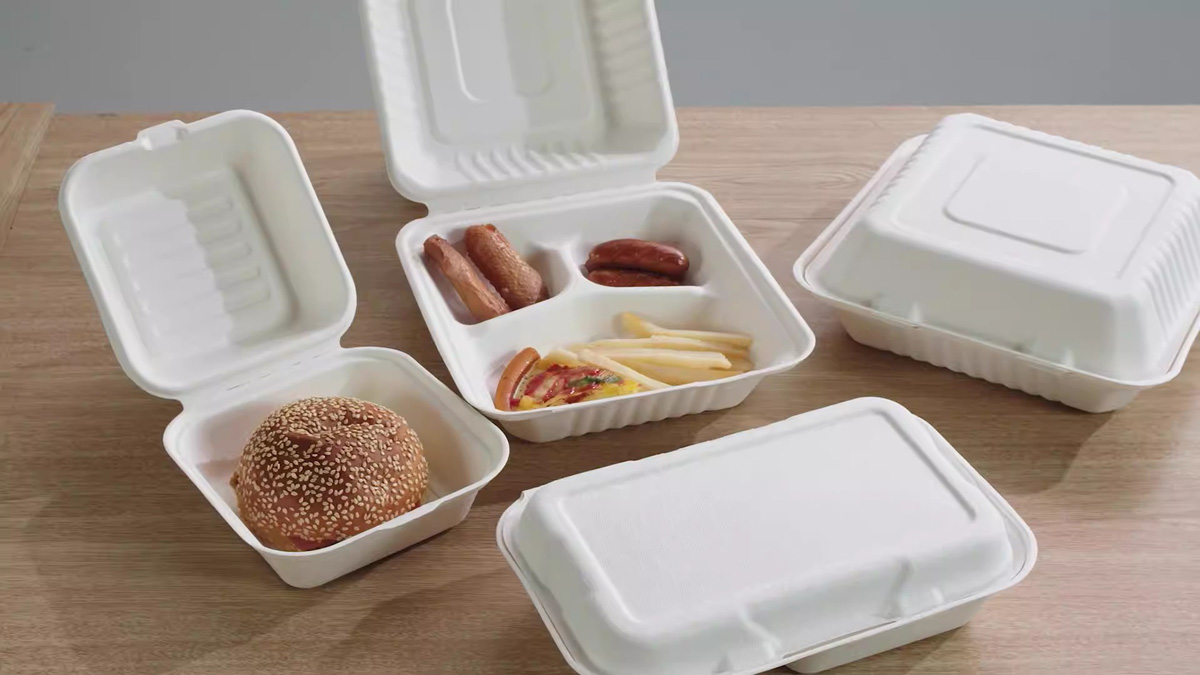
Bagasse is the fibrous residue left after sugarcane stalks are crushed to extract juice during sugar production. Traditionally considered agricultural waste, bagasse is now repurposed into pulp for molded fiber packaging and tableware.
Instead of being burned or discarded, the fiber is processed into:
-
Lids
-
Cutlery (in some formulations)
This valorization of agricultural by-products supports resource efficiency and waste reduction.
2. How Bagasse Products Are Manufactured
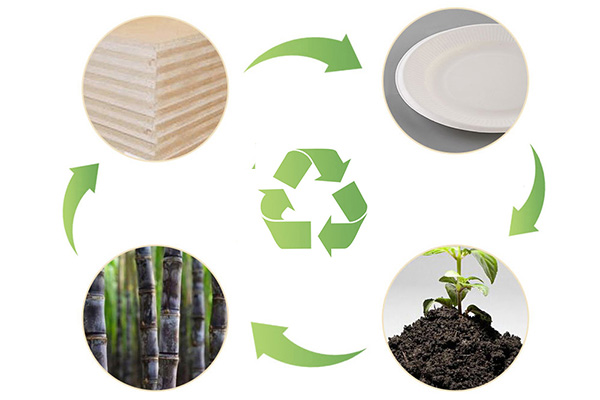
The production of sugarcane bagasse tableware involves several steps:
-
Fiber Collection – Residual bagasse is collected from sugar mills.
-
Pulping Process – Fibers are cleaned and mechanically processed into pulp.
-
Molding and Forming – Wet pulp is shaped under pressure using heated molds.
-
Drying and Finishing – Products are dried, trimmed, and sterilized.
This molded fiber process creates sturdy, single-piece items without the need for petroleum-based plastics.
3. Material Characteristics
Sugarcane bagasse products possess distinct performance attributes.
Table 1: Key Properties of Bagasse Tableware
| Property | Performance |
|---|---|
| Raw Material Source | Renewable agricultural by-product |
| Heat Resistance | Up to ~100°C (varies by product) |
| Oil Resistance | Good (without fluorinated coatings in modern versions) |
| Microwave Safe | Yes (short-duration heating) |
| Freezer Safe | Yes |
| Compostability | Industrially compostable |
| Plastic Content | Typically plastic-free |
Modern bagasse products are often designed to be PFAS-free and free from plastic lamination, aligning with tightening global chemical safety expectations.
4. Environmental Advantages
4.1 Renewable and Circular Resource Use
Bagasse is a secondary agricultural output, meaning no additional farmland is required to produce it. Utilizing waste streams improves overall material efficiency.
The European Commission promotes resource efficiency and bio-based materials as part of its circular economy strategy.
4.2 Reduced Fossil Fuel Dependency
Unlike traditional polypropylene (PP) or polystyrene (PS) containers, bagasse products do not rely on petroleum feedstocks.
This reduces exposure to fossil fuel price volatility and lowers reliance on non-renewable resources.
4.3 Compostability
Most certified bagasse tableware complies with:
-
ASTM D6400 (United States)
-
EN 13432 (European Union)
When processed in industrial composting facilities, products can break down within 90–180 days under controlled conditions.
The U.S. Environmental Protection Agency emphasizes that compostable materials must be properly managed within waste systems to achieve environmental benefits.
5. Performance in Foodservice Applications
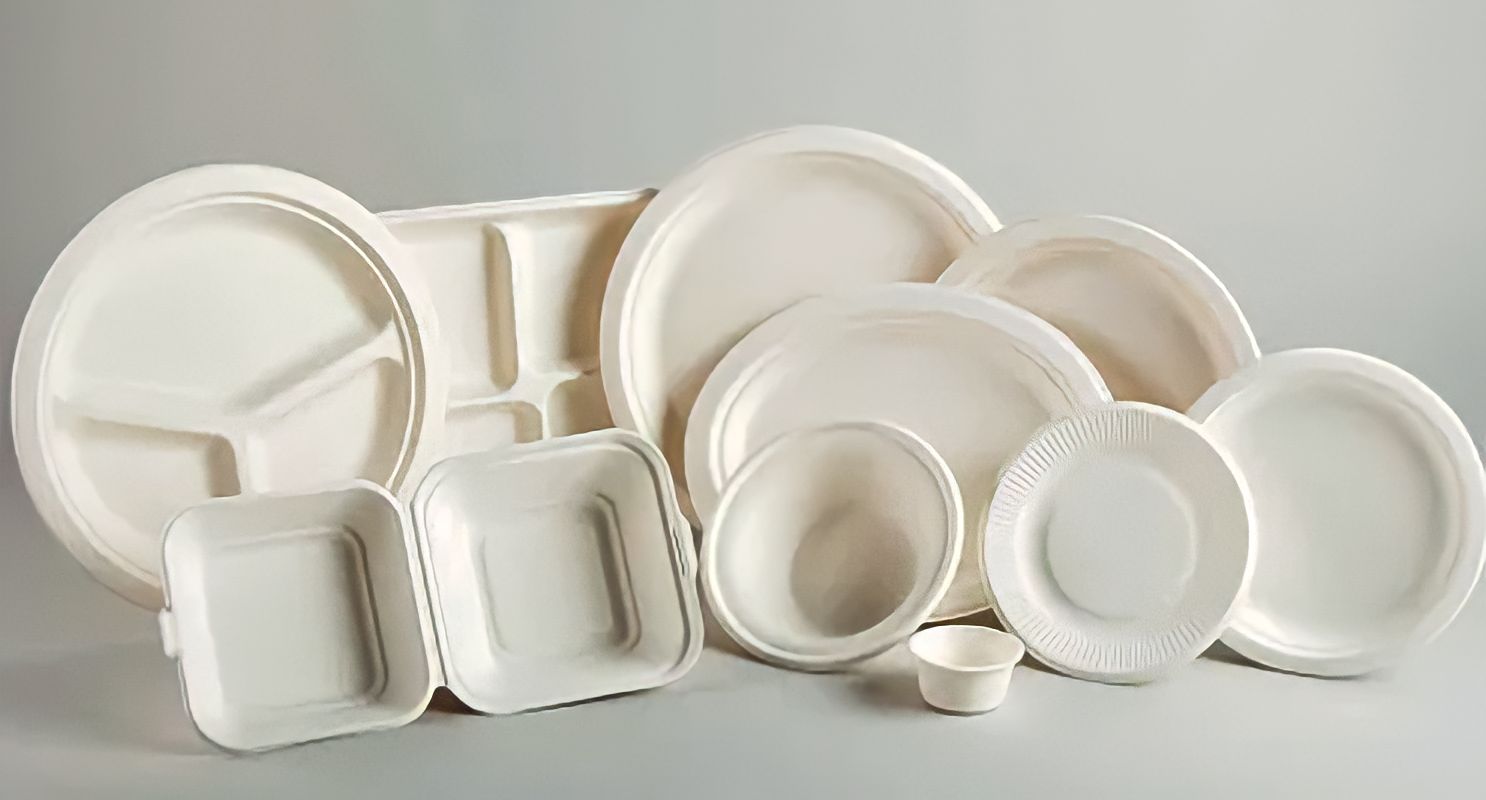
Bagasse tableware is widely adopted across various sectors.
5.1 Quick-Service Restaurants (QSR)
-
Takeaway clamshells
-
Burger boxes
-
Side dish containers
5.2 Catering and Events
-
Disposable plates
-
Compartment trays
-
Buffet service ware
5.3 Airline and Institutional Dining
-
Meal trays
-
Portion bowls
-
Cold and hot meal containers
Bagasse performs particularly well with:
-
Hot foods
-
Oily foods
-
Sauces and gravies
6. Chemical Safety Considerations
Earlier generations of molded fiber packaging sometimes used PFAS-based coatings to enhance grease resistance. However, increasing regulatory scrutiny has led many manufacturers to adopt fluorine-free barrier technologies.
Authorities such as the European Chemicals Agency are advancing proposals to restrict PFAS across industries.
Modern bagasse products marketed as:
-
PFAS-free
-
Plastic-free
-
BPA-free
are better aligned with evolving compliance expectations.
Buyers should request:
-
Third-party migration test reports
-
PFAS non-detection certification
-
Food-contact compliance documentation
7. Limitations and Trade-Offs
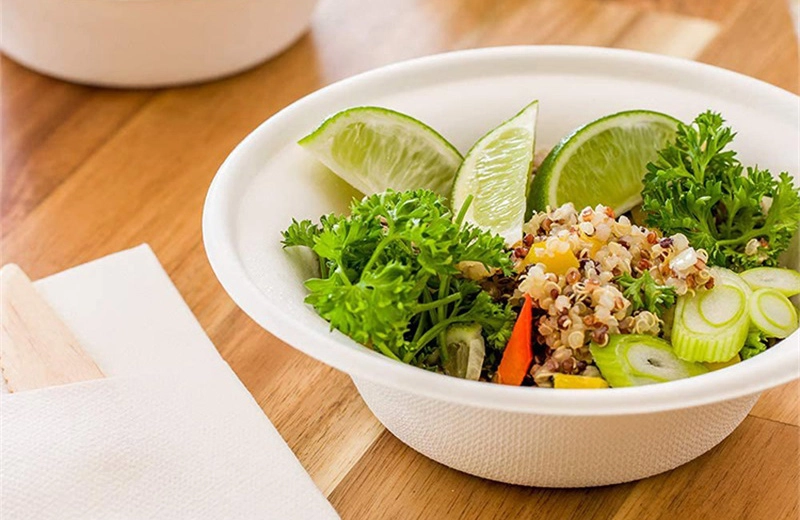
While bagasse offers significant sustainability advantages, it is not without constraints.
7.1 Composting Infrastructure
Industrial composting facilities are required for optimal degradation. In regions without composting access, products may end up in landfill, where decomposition slows significantly.
7.2 Moisture Sensitivity
Extended exposure to high humidity may weaken structural integrity compared to plastic alternatives.
7.3 Surface Texture
Fiber-based products have a more natural, matte texture compared to smooth plastic containers. While many consumers associate this with sustainability, it may not suit all branding aesthetics.
8. Lifecycle Considerations
Environmental impact should be evaluated using lifecycle assessment (LCA), considering:
-
Agricultural inputs
-
Pulping energy use
-
Transportation distance
-
End-of-life processing
When integrated into compost systems, bagasse products can contribute to nutrient return and reduced landfill burden.
9. Market Trends
Adoption of sugarcane bagasse packaging is increasing due to:
-
Single-use plastic bans
-
Corporate ESG commitments
-
Consumer demand for sustainable packaging
-
Retailer-imposed restricted substance lists
Europe and North America remain leading markets, with rapid growth in Asia-Pacific food delivery sectors.
10. How to Evaluate Suppliers
Procurement managers should assess:
-
PFAS-free verification
-
Compostability certification
-
Mechanical strength testing
-
Heat resistance validation
-
Regulatory compliance (EU/US food-contact standards)
-
Production capacity and supply stability
Performance reliability must match sustainability claims.
11. Industry Example: Integrated Manufacturing Capabilities
As demand for compostable and PFAS-free molded fiber packaging grows, supplier capability becomes increasingly important. Manufacturers with integrated production systems, quality control infrastructure, and international compliance experience are better positioned to deliver consistent performance at scale.
DASHAN, for example, specializes in sugarcane bagasse food packaging and eco-friendly tableware, offering a wide portfolio that includes clamshell containers, plates, bowls, trays, and customized molded fiber solutions. With a focus on plastic-free formulations and PFAS-free production processes, DASHAN supports foodservice operators and distributors seeking compliant and export-ready products.
By combining automated molding technology, food-contact testing standards, and scalable production capacity, suppliers like DASHAN help bridge the gap between sustainability goals and operational reliability in global food packaging markets.
FAQ
1. What is sugarcane bagasse?
Sugarcane bagasse is the fibrous residue left after extracting juice from sugarcane. It is repurposed into molded fiber packaging and disposable tableware instead of being discarded or burned.
2. Is bagasse tableware compostable?
Most certified bagasse products are industrially compostable under standards such as ASTM D6400 or EN 13432. They require controlled composting facilities to break down efficiently.
3. Is sugarcane bagasse packaging microwave safe?
Yes. Most bagasse containers are microwave-safe for short heating durations and can withstand temperatures up to approximately 100°C, depending on product design.
4. Are bagasse products plastic-free?
High-quality bagasse tableware is typically plastic-free and increasingly manufactured without PFAS-based grease coatings. Buyers should request certification to verify material composition.
5. How does bagasse compare to plastic packaging?
Bagasse reduces fossil fuel dependency and supports renewable resource use. However, environmental benefits depend on proper composting infrastructure and lifecycle management.
6. Are there regulations supporting compostable packaging?
Yes. Policies aligned with circular economy goals are promoted by organizations such as the European Commission. In the United States, the U.S. Environmental Protection Agency provides guidance on sustainable materials management and composting systems.
Conclusion
Sugarcane bagasse products represent a practical and scalable solution in the transition toward eco-friendly food packaging and tableware. By converting agricultural by-products into molded fiber containers and utensils, manufacturers reduce fossil resource dependency while supporting circular material flows.
When supported by proper composting infrastructure and verified chemical safety standards, bagasse-based packaging offers meaningful environmental advantages without sacrificing performance in hot, oily, or takeaway food applications.
As regulatory frameworks tighten and consumer expectations evolve, sugarcane bagasse products are positioned as a core component of sustainable foodservice strategies worldwide.
References
-
European Commission – Circular economy and sustainable materials policy
https://environment.ec.europa.eu/topics/plastics_en -
U.S. Environmental Protection Agency – Sustainable materials management and composting guidance
https://www.epa.gov/smm -
ASTM International – ASTM D6400 Standard Specification for Compostable Plastics
https://www.astm.org/d6400-21.html -
European Bioplastics – EN 13432 industrial compostability standards
https://www.european-bioplastics.org/bioplastics/standards/
Copyright Statement
© 2025 Dashan Packing. All rights reserved.
This article is an original work created by the Dashan Packing editorial team.
All text, data, and images are the result of our independent research, industry experience,
and product development insights. Reproduction or redistribution of any part of this content
without written permission is strictly prohibited.
Dashan Packing is committed to providing accurate, evidence-based information and
to upholding transparency, originality, and compliance with global intellectual property standards.