

Quick Summary
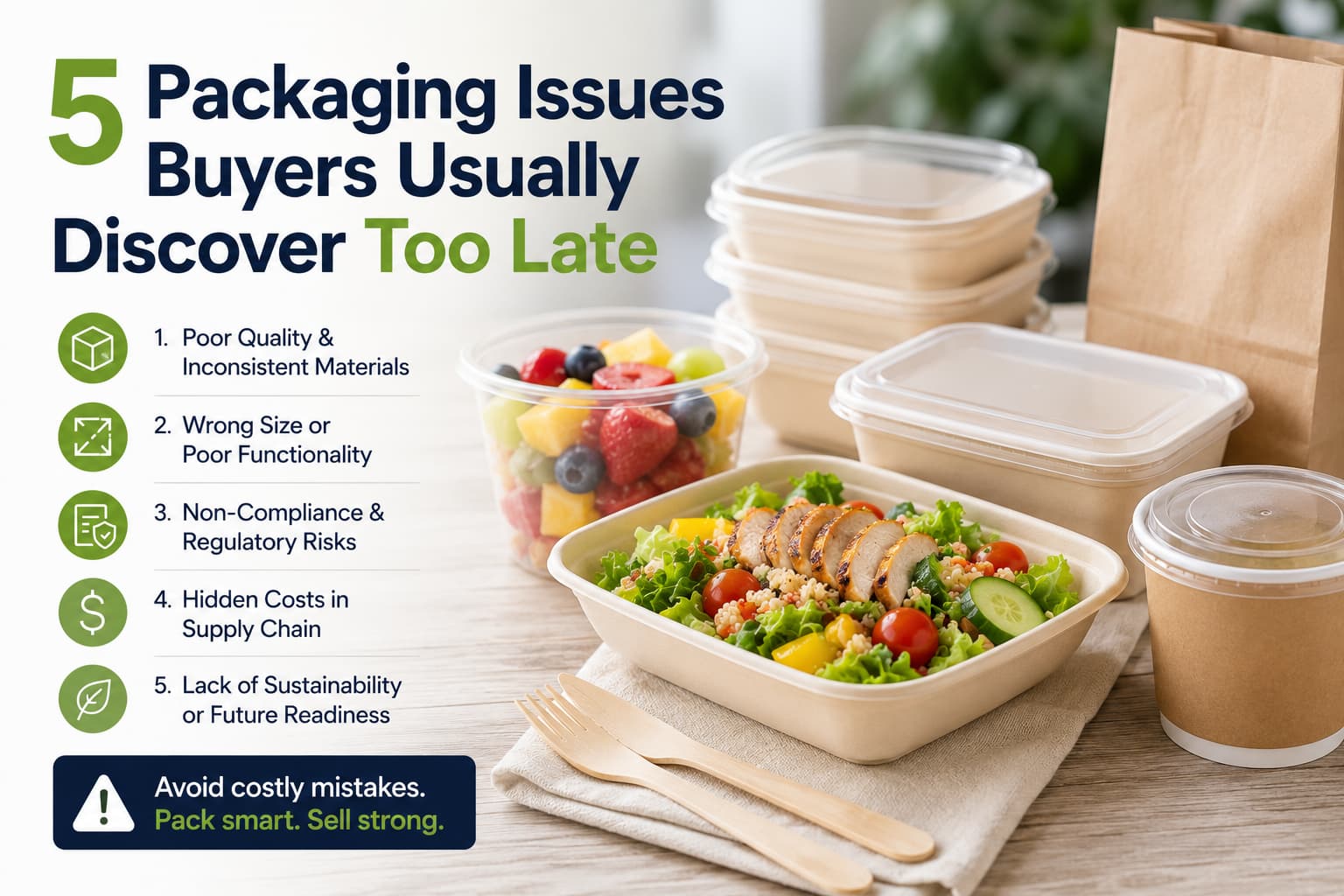
Many packaging problems are not discovered during quotation reviews or sample evaluations but only after products enter transportation, warehousing, retail distribution, or consumer use. Common issues include transportation damage, leakage, inefficient storage, poor alignment with consumer behavior, and sustainability compliance challenges. By evaluating packaging performance beyond price and material specifications, buyers can reduce risk, improve operational efficiency, and avoid costly post-launch corrections.
Introduction
When sourcing food packaging, buyers often focus on the factors that are easiest to compare: price, material, dimensions, minimum order quantity, and lead time. These considerations are important, but they do not always determine whether a packaging program will succeed once products enter the market.
Many packaging issues only become visible after production begins, products are shipped, or consumers start using the packaging in real-world conditions. By that point, the cost of correcting a mistake can be significantly higher than the savings achieved during procurement.
For food manufacturers, distributors, retailers, and foodservice operators, successful packaging selection requires looking beyond the quotation sheet. Structural performance, logistics efficiency, user experience, and compliance can all have a major impact on long-term results.
This article explores five packaging issues that buyers frequently discover too late and explains how a more comprehensive evaluation process can help avoid costly surprises.
1. The Package Performs Well in Samples but Fails During Transportation
One of the most common sourcing mistakes occurs when buyers evaluate packaging based solely on sample performance.
A sample container sitting on a desk often looks perfect. The lid fits properly, the material feels strong, and the product presentation appears attractive. However, real supply chains create conditions that are difficult to replicate during a basic sample review.
Packaging may be exposed to:
- Long-distance transportation
- Repeated loading and unloading
- Warehouse stacking
- Temperature fluctuations
- Delivery vibrations
A container that performs adequately under light testing may deform, crack, or lose its structural integrity under actual distribution conditions.
Common Transportation Problems
| Issue | Potential Result |
|---|---|
| Container deformation | Product damage |
| Lid displacement | Leakage complaints |
| Stack collapse | Logistics losses |
| Structural cracking | Product contamination risks |
| Compression failure | Reduced shelf appeal |
For example, fresh produce trays must maintain their shape during stacking and transportation, while takeaway meal containers must withstand the movement associated with food delivery operations.
The true performance of packaging can only be understood when transportation conditions are considered alongside product requirements.
2. Poor Lid Fit Causes Leakage Complaints
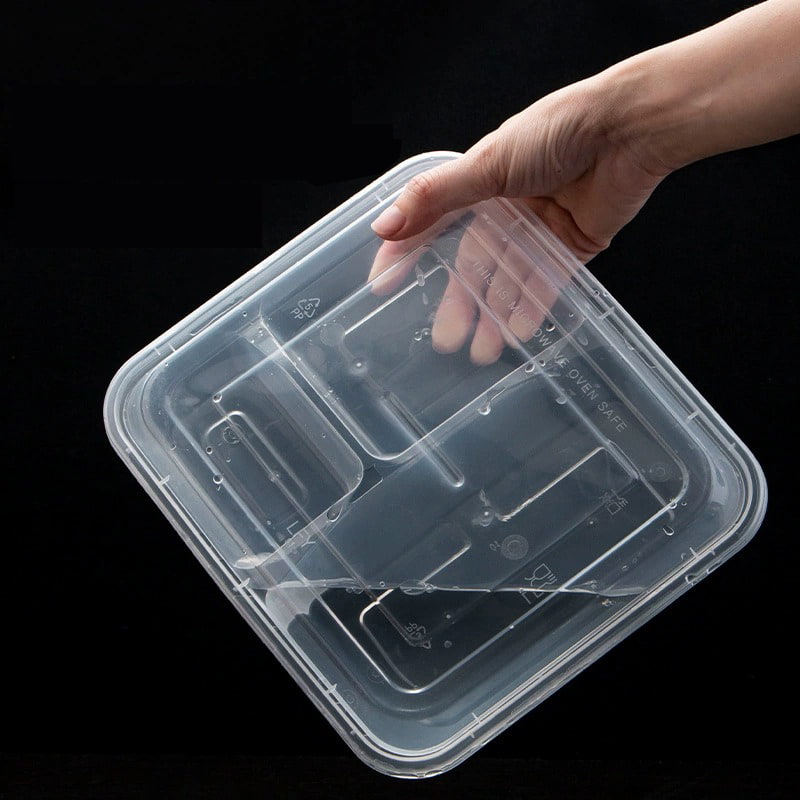
Leakage remains one of the most frequent causes of customer dissatisfaction in food packaging.
Many buyers pay close attention to container dimensions and material specifications but underestimate the importance of lid compatibility and sealing performance.
A container and lid may appear compatible during sampling, yet minor variations in manufacturing tolerances can affect sealing performance during large-scale production.
This becomes especially problematic for:
- Ready meals
- Takeaway foods
- Saucy dishes
- Soup products
- Food delivery applications
Why Rim Design Matters
The sealing performance of a package depends on more than the lid itself.
Factors include:
- Rim geometry
- Locking mechanisms
- Material flexibility
- Manufacturing consistency
- Filling conditions
Even a small gap between the lid and container can lead to leakage during transportation.
This is why professional packaging development often focuses as much on the container rim as on the lid design itself.
For compartment meal containers and takeaway packaging, proper lid engagement can significantly reduce complaints and improve customer satisfaction.
3. Packaging Takes Up More Storage Space Than Expected
Packaging costs do not end when products leave the factory.
Warehousing and transportation expenses can significantly influence the total cost of ownership.
Many buyers compare unit prices while overlooking how packaging design affects:
- Pallet utilization
- Warehouse efficiency
- Container loading
- Inventory management
A slightly cheaper container may ultimately cost more if it occupies excessive storage space.
Storage Efficiency Matters
| Packaging Feature | Operational Benefit |
|---|---|
| Nesting design | Reduced storage volume |
| Efficient stacking | Improved warehouse utilization |
| Stable dimensions | Easier palletization |
| Optimized packaging density | Lower freight costs |
This issue is particularly important for high-volume foodservice operators, distributors, and importers managing large inventories.
Packaging that supports efficient storage can generate significant long-term savings across the supply chain.
4. The Packaging Does Not Match Real Consumer Behavior
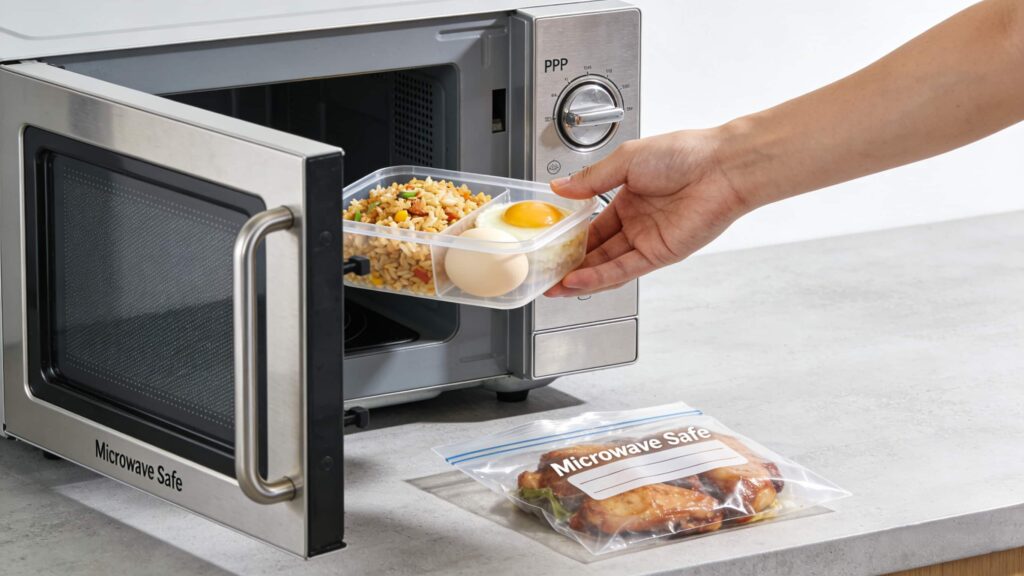
Packaging is often evaluated based on technical specifications rather than actual usage patterns.
However, consumers rarely interact with packaging exactly as designers expect.
Consider a typical takeaway meal.
A consumer may:
- Carry it in a vehicle
- Place it in a delivery bag
- Store it in a refrigerator
- Reheat it in a microwave
- Reuse the container temporarily
Each step creates different performance requirements.
Similarly, fresh produce packaging may be handled repeatedly by consumers before purchase, while ready meals may experience significant movement during delivery.
Understanding End-Use Scenarios
| Consumer Action | Packaging Requirement |
|---|---|
| Carrying food | Structural strength |
| Food delivery | Leak resistance |
| Refrigeration | Material stability |
| Microwave reheating | Heat resistance |
| Product inspection | Good visibility |
Packaging that performs well in laboratory testing but poorly during actual use often generates avoidable complaints.
The most successful packaging programs are designed around consumer behavior rather than theoretical assumptions.
5. Sustainability Claims Do Not Match Market Requirements
Sustainability has become an important consideration for packaging buyers worldwide.
However, many companies discover compliance issues only after products reach customers or enter new markets.
Terms such as:
- Recyclable
- Compostable
- Renewable
- Plastic-free
- Eco-friendly
may have different meanings depending on local regulations, certification standards, and customer expectations.
Verification Is Essential
Before selecting a packaging solution, buyers should evaluate:
- Material specifications
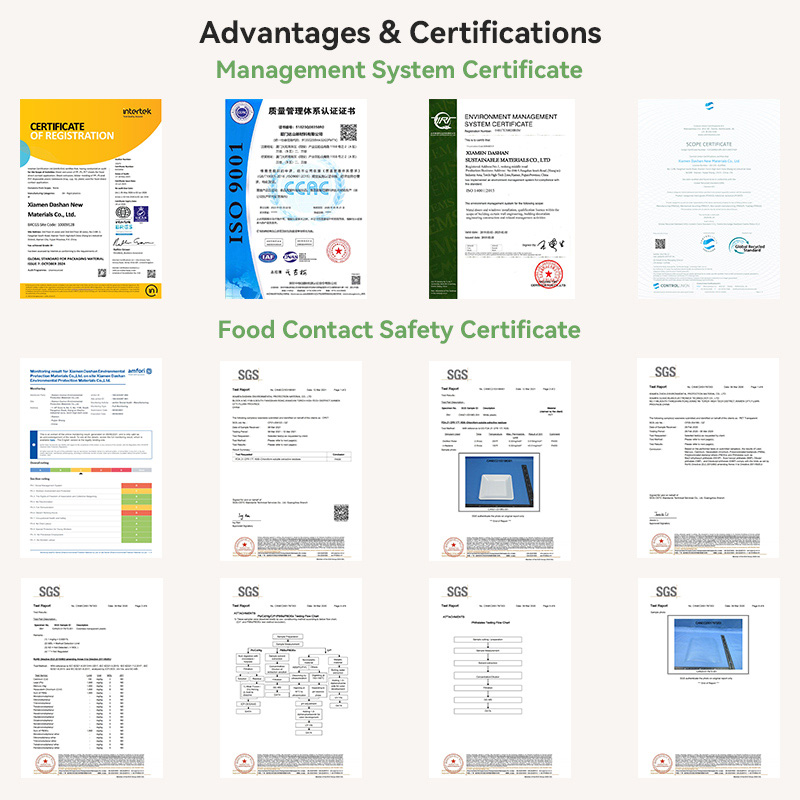
- Compliance documentation
- Food-contact certifications
- Regulatory requirements
- Market-specific sustainability expectations
A packaging claim that is acceptable in one market may not satisfy requirements in another.
As sustainability regulations continue to evolve globally, documentation and transparency have become increasingly important procurement criteria.
What Smart Buyers Evaluate Before Placing Orders
Experienced buyers often assess packaging performance from multiple perspectives rather than focusing solely on unit cost.
Packaging Evaluation Checklist
| Evaluation Area | Key Question |
|---|---|
| Transportation Performance | Will the package survive distribution? |
| Leakage Prevention | Has sealing performance been verified? |
| Storage Efficiency | Does the design maximize warehouse space? |
| Consumer Experience | Is it suitable for actual usage conditions? |
| Compliance | Are certifications and documentation available? |
| Sustainability | Do environmental claims match market requirements? |
This broader approach helps reduce operational risks and improves long-term packaging performance.
How DASHAN Helps Buyers Reduce Packaging Risks
Successful packaging programs begin with understanding how products will be used throughout the supply chain.
Rather than offering a single packaging format for every application, DASHAN works with customers to identify solutions based on product characteristics, transportation requirements, and end-user expectations.
For fresh produce applications, molded bagasse trays and clamshell containers can provide a balance between product protection and sustainability objectives.
For ready meals and takeaway foods, compartment containers help organize multiple food components while supporting convenience and presentation.
Application-Based Recommendations
Different products require different packaging strategies.
| Food Category | Typical Packaging Priorities |
|---|---|
| Fresh Produce | Protection, ventilation, presentation |
| Ready Meals | Heat resistance, food separation |
| Takeaway Foods | Leakage prevention, durability |
| Catering Programs | Portion organization, stackability |
By evaluating the complete packaging environment rather than focusing solely on material selection, buyers can reduce the likelihood of costly post-launch issues.
FAQ
1. Why do packaging problems often appear after mass production rather than during sampling?
Samples are usually evaluated under controlled conditions, while real-world supply chains involve stacking pressure, transportation vibration, temperature changes, and repeated handling. These factors can reveal weaknesses that are not visible during initial sample testing.
2. What causes leakage issues in food packaging?
Leakage is often caused by poor lid-to-container compatibility, inconsistent manufacturing tolerances, inadequate rim design, or packaging being used outside its intended application. Proper sealing verification is essential before large-scale production.
3. How can packaging design affect logistics costs?
Packaging that is difficult to stack, nest, or palletize can increase warehouse space requirements and reduce transportation efficiency. Even if a package has a low unit cost, poor logistics performance can increase overall operating expenses.
4. Why should buyers consider consumer behavior when selecting packaging?
Consumers may carry, refrigerate, microwave, or transport food differently than expected. Packaging that does not match real usage conditions can lead to complaints, product damage, and reduced customer satisfaction.
5. What sustainability documents should packaging buyers request from suppliers?
Buyers should request material specifications, food-contact compliance documentation, regulatory declarations, test reports, and any relevant recyclability or compostability certifications required by their target market.
Conclusion
The most expensive packaging problems are often not visible during the quotation or sampling stage. Instead, they emerge later during transportation, storage, retail display, or actual consumer use.
Issues such as transportation failure, leakage, inefficient storage, poor user experience, and incomplete sustainability verification can all affect product performance and customer satisfaction.
For buyers, the key lesson is that successful packaging selection requires looking beyond price alone. A thorough evaluation of logistics, functionality, compliance, and real-world performance can help prevent problems before they occur.
In an increasingly competitive food industry, packaging should be viewed not simply as a purchasing decision, but as a strategic component of product quality, operational efficiency, and brand reputation.
References
Packaging Performance & Transportation
- ISTA – International Safe Transit Association
- ASTM International – Packaging Standards and Testing Methods
Food Packaging & Food Contact Compliance
- U.S. FDA – Food Packaging and Food Contact Substances
- European Food Safety Authority (EFSA) – Food Contact Materials
Sustainable Packaging & Circular Economy
- Ellen MacArthur Foundation – Packaging and Circular Economy
- Sustainable Packaging Coalition (SPC)
Packaging Logistics & Supply Chain Efficiency
- World Packaging Organisation (WPO)
- International Trade Centre (ITC) – Packaging for Export Guidance
Copyright Statement
© 2026 Dashan Packing. All rights reserved.
This article is an original publication by the Dashan Packing team based on industry research, market analysis, and packaging expertise. Unauthorized reproduction, distribution, or copying of this content is prohibited without prior written permission.
Dashan Packing is committed to delivering reliable, original, and professional information for the global food packaging industry.